From S.D. to ESPN, local company’s golf innovation gains national notice, celebrity clients
Jan. 2, 2025
By Steve Young, for SiouxFalls.Business
A new golf league debuting this January on ESPN ─ a creation of golf legends Tiger Woods, Rory McIlroy and others that fuses traditional play with advanced simulator action in an indoor arena ─ has South Dakota’s handprints all over it.
TGL, or Tomorrow’s Golf League, is combining advanced technology with teams of top players from the PGA Tour for two-hour weekly competitions in prime time, with the first match to be broadcast starting at 8 p.m. Jan. 7.
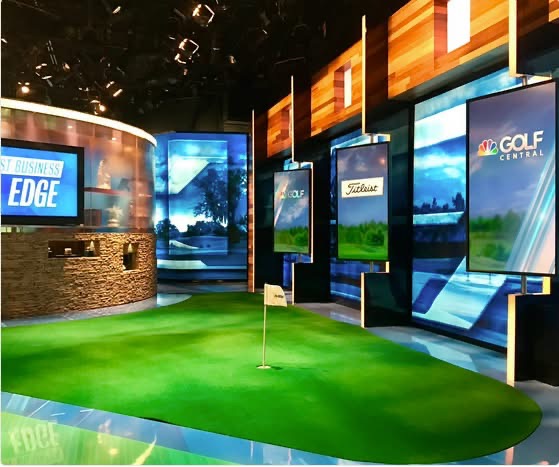
Six TGL teams representing six different cities will go head-to-head in the season-long competition at SoFi Center, a first-of-its-kind venue built specifically for TGL on the campus of Palm Beach State College in Florida. Matches will air on ESPN and ESPN+ with every shot live.
The 250,000-square-foot SoFi Center seats 1,500 fans and houses a massive simulator screen 53 feet tall and 64 feet wide ─ almost 24 times larger than a standard simulator. Once the simulator shots are within the boundary of what TGL calls a Greenzone, players will actually pitch out of rough, hit out of bunkers or chip onto a mechanical putting surface that was developed and produced right here in Sioux Falls.
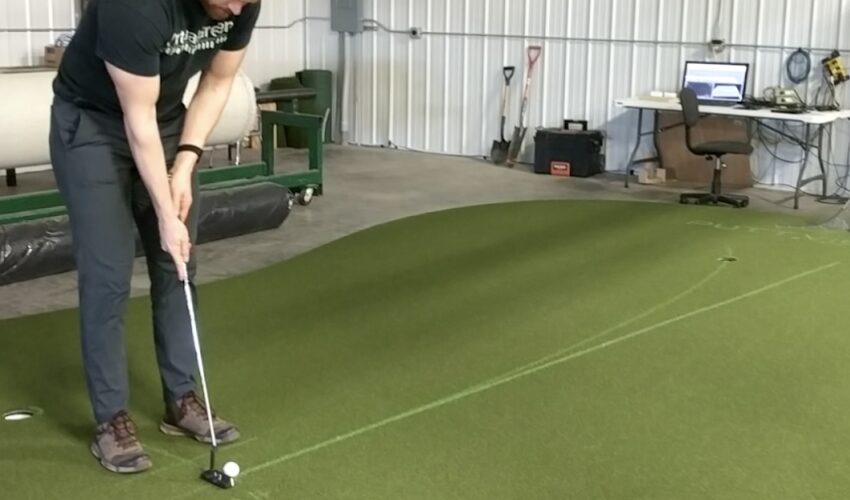
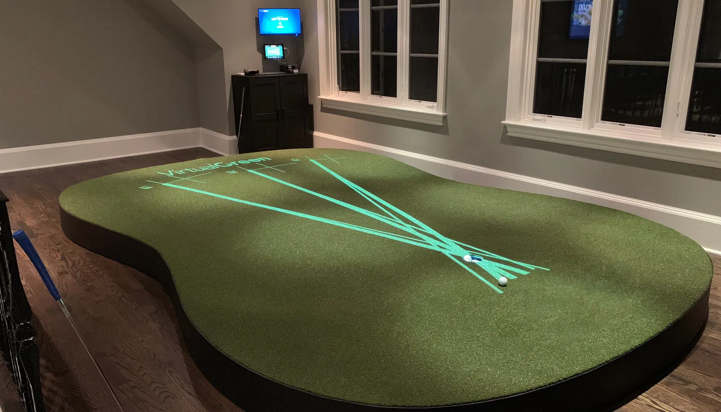
A putting surface called Virtual Green.
The story of how this fascinating bit of South Dakota ingenuity, as is often the case, was born out of a moment of frustration and wonder. Carsforsale.com CEO Sean Coffman and colleagues were playing on a simulator at Golf Addiction in Sioux Falls in the spring of 2013 when the round turned ugly.
“Sean was putting, and if you know simulators, it is easy to ruin a round with a five or six,” recalled Chris Heinemeyer, who worked for Coffman at Carsforsale.com and is one of the early developers of Virtual Green. “Afterward, he said, ‘Wouldn’t it be great if you get to the green on this simulator, and you could come out and actually do real putts on an actual green that simulates what was on the course?’ That’s kind of where the idea came from.”
Coffman quickly started researching what was out there for artificial greens that could be manipulated mechanically to alter their slope and undulations. Finding none, he set about pursuing patents on the idea and tasked one of his staff, Bryan David, and others at Carsforsale.com to start coming up with prototypes.
Their initial efforts, Heinemeyer said with a laugh, involved a whole lot of baling wire, zip ties, duct tape and plow discs among other things.
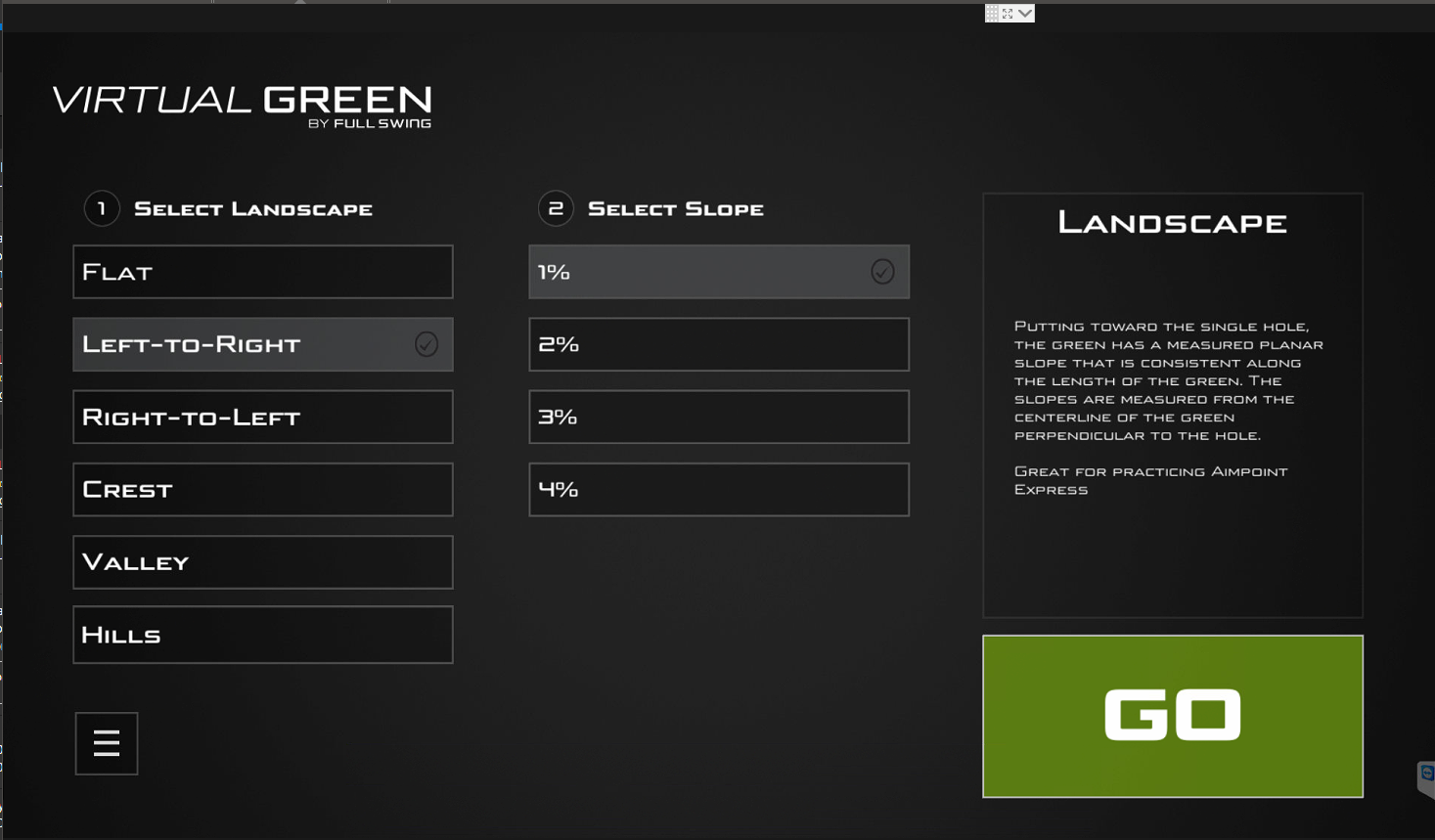
Now, a decade later, the Virtual Green products used in the TGL competition can manipulate almost 600 actuators beneath the putting surface to change the contours of the green in five seconds, all with a key-strike on a computer. That ability allows the green’s surface to play differently from hole to hole. What’s more, the entire green and bunker platform will rotate 360 degrees for the TGL competition, allowing for approaches to come into the green at different angles for different holes. As a result, each hole will be unique ─ just as it would be in real golf.
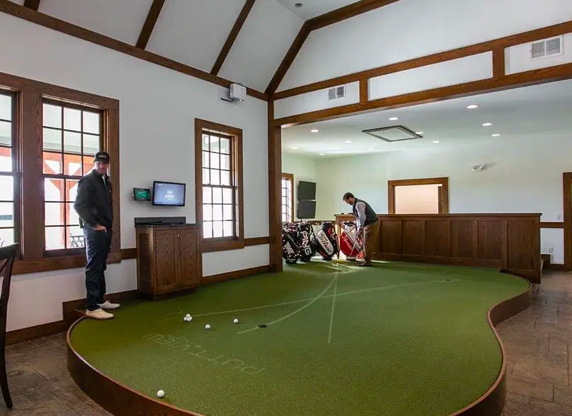
TGL isn’t the only beneficiary of this South Dakota wizardry. Virtual Green products now reside in the homes of such PGA stars as Woods, Jon Rahm, Justin Rose, Jason Day, Phil Mickelson and Gary Woodland. Former Arizona Cardinal football star Larry Fitzgerald has one too. And NBA star Steph Curry had a Virtual Green until he underwent a change of addresses.
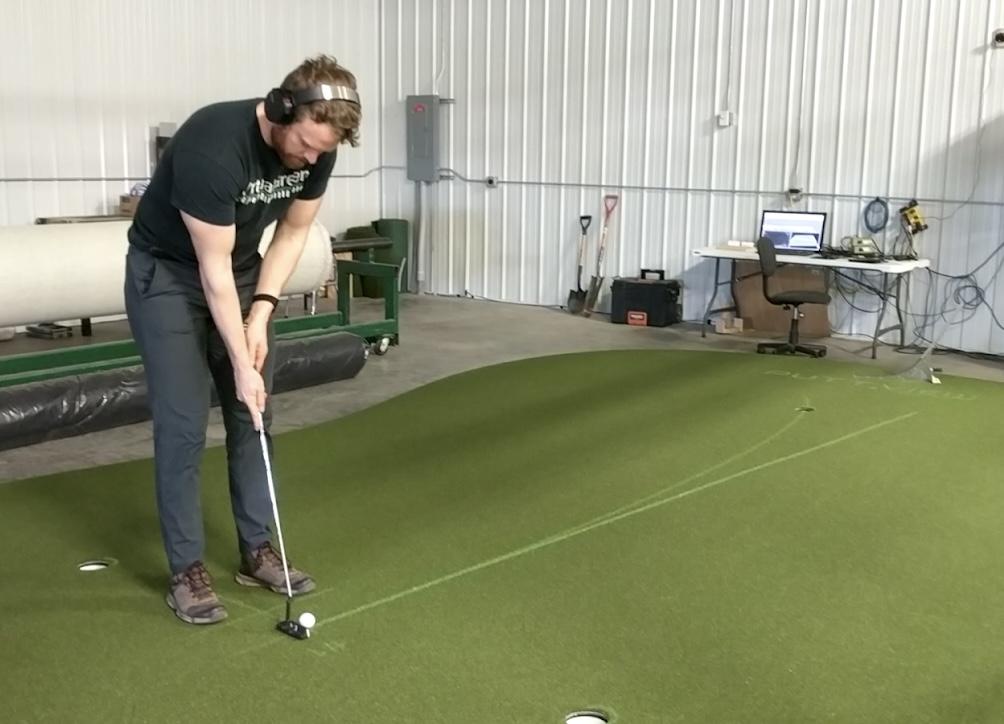
“Corporations have bought them too,” Heinemeyer said. “And we’re selling them globally … Taiwan, Korea, Japan.”
The trajectory of all this success, Heinemeyer said, is not something he could have imagined 10 years ago. He came into the development of Virtual Green with a background primarily in fitness and sales, though both of his grandparents had owned machine shops, “so I’ve been working with machinery and tools in my hands since I was a little kid.”
Coffman brought in Kurt Gildemaster as one of the first members of the team in the late summer of 2013, just as Gildemaster was transitioning from a military defense research project at South Dakota State University. His specialty is electronics. He designs computers and writes embedded software for those computers.
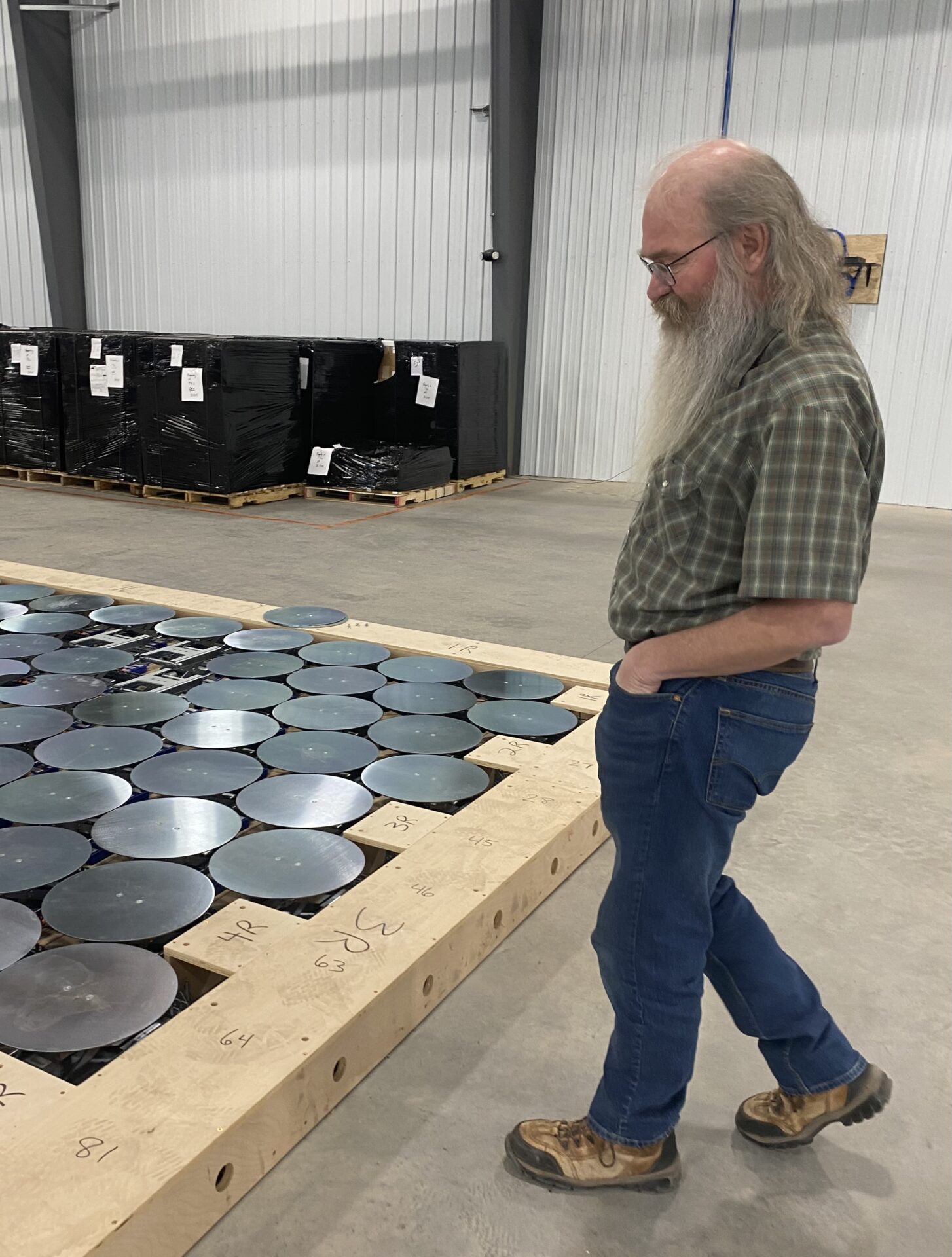
The third member of what came to be known as Virtual Green’s Core Four was Keith Lipetzky, a Sioux Falls native with a degree in computer science fresh out of Dakota State University. And then there was David, whose carpentry and electric wiring abilities that he brought from Carsforsale.com were instrumental in helping create the prototypes.
Gildemaster said one of the original ideas was to take a giant plate of half-inch-thick steel, 4 feet by 8 feet, with carriage bolts tapped through the steel every couple of inches that would raise up and down using tiny motors. While he thought he could make that idea work, Gildemaster admits that it didn’t seem very practical.
“I did have a background with actuators and stuff like that to know that, yeah, there’s a better way,” he said.
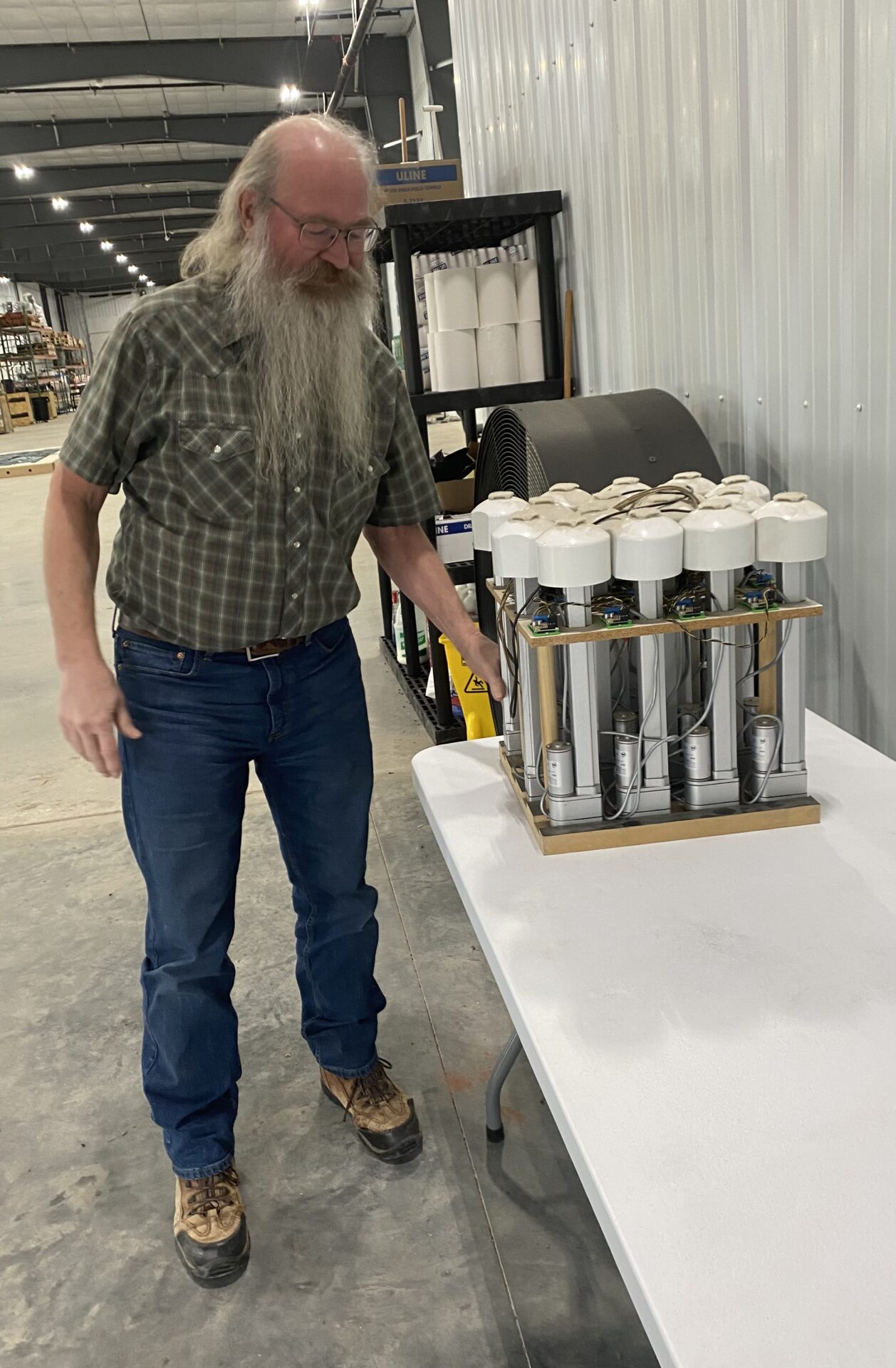
Actuators are devices that control or cause other devices to move or operate. In time, Gildemaster and the others figured out how to send digital control signals from computer software to actuators built into a Virtual Green platform. Those actuators then would cause scissor jacks with 16-inch circular steel plates atop them to move up and down and create undulations and slope on the surface of their artificial green.
Of course, it took awhile to get to that point.
Coffman, whose successful Carsforsale.com venture in Sioux Falls connects auto dealers across the nation with millions of active car buyers, had his patents in place and wanted to show off Virtual Green at his Christmas party in 2013. Unfortunately, all the work getting electrical and mechanical movements figured out meant the computer software to operate those movements never got written in time, Gildemaster said.
They needed more help. So Lipetzky was hired in 2014. Others from Carsforsale.com were enlisted at the same time to help with a variety of tasks in the development phase. While that was going on, Coffman told them he wanted to bring Virtual Green to the PGA Merchandise Show in Orlando, Florida, in January 2015.
What they delivered to that show “was a very overbuilt prototype,” Lipetzky recalled. They had strung together 1,536 footlong vertical actuators – each one able to move the putting surface up and down as much as another foot.
“It looked amazing,” he said. “But yes, it was held together by duct tape and baling wire. We had to have a staircase with a railing just to climb up on the surface because it was what, two, three feet up.”
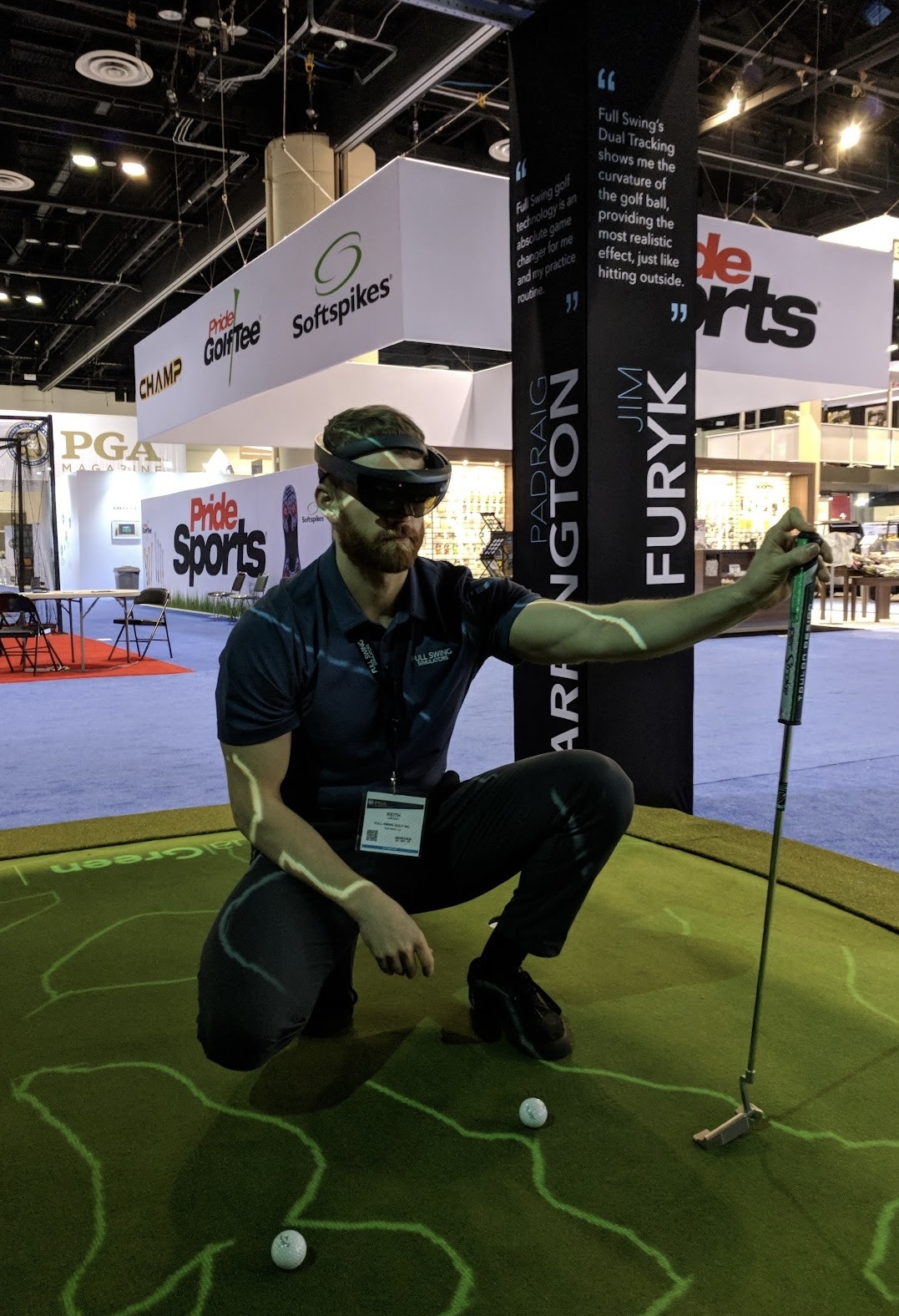
Coffman’s hope was to catch the eye of someone at the trade show whom he might partner with to help manufacture Virtual Green and turn it into a viable venture, Lipetzky said. And it just so happened that the company next to them at that 2015 show, California-based Full Swing Golf, was in the business of producing golf simulators.
“We didn’t have any intentions of going to market yet,” Heinemeyer said. “But we’ve got videos from that show where everybody was packed around it all the time. There was nothing else on the market like it. So this was a one-of-a-kind big showstopper.”
The Full Swing team ended up drumming up a conversation with their neighbors at the show, and a relationship was struck. There was another PGA trade show in August 2015 in Las Vegas, and Full Swing wanted to feature Virtual Green at its booth. But they wanted the South Dakotans to make the green smaller, half the size, and to cut down the height so users didn’t have to climb stairs to get onto it.
What they brought to Las Vegas “worked a lot better,” Heinemeyer said. “We worked out a lot of the kinks. The software was better, less buggy. And it was really successful, and it just snowballed from there.”
Full Swing wanted to see a green that could be installed indoors, that was no more than 8 inches off the ground. After a lot of brainstorming, they figured out they could create a scissor jack with a large base, something similar to a snowmobile jack. Actuators then were laid horizontally at the base of the jacks, and on top of them, they attached circular plow discs.
“And it worked,” Heinemeyer said. “That’s kind of the design we’re using now.”
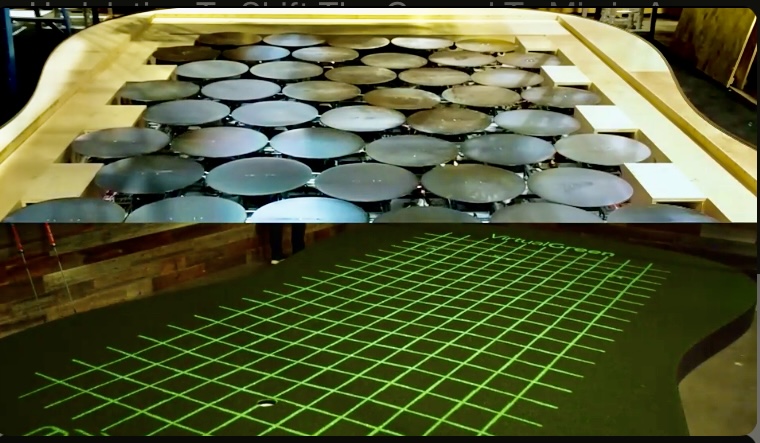
The smaller Virtual Green with less height was shown off at the PGA trade show in January 2016. Later that year, Full Swing arranged for a large model of the green to be installed at an Under Armour retail store in Chicago. And after that, the South Dakotans created another Virtual Green to be highlighted on the Golf Channel.
Under Armour “was a good experience because it allowed us to get some really good testing and really good results on the durability of the jacks because this was something that was actually used every single day for multiple hours at their store,” Heinemeyer said.
The Golf Channel, which featured Virtual Green in seminars, training videos and professionals offering tips, showcased the product to a wide viewing audience. Its place in the golfing world was growing.
As 2016 rolled around, a merger of sorts was formed between Coffman and Full Swing, Heinemeyer said, where the South Dakotan bought into the California company, and Full Swing acquired some rights to Virtual Green. At the time, the Virtual Green staff was starting to do a lot of demonstration floors, taking the product to events, fundraisers and corporate gatherings.
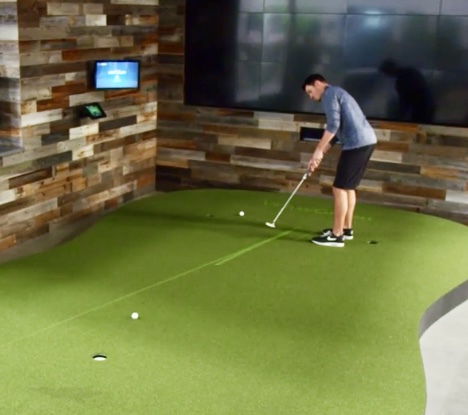
“We still hadn’t sold any products yet,” Heinemeyer said. “It was more just demonstrating and getting our name out there and getting people excited about the product while we’re still trying to dial it all in.”
In May 2017, new ownership at Full Swing resulted in Coffman’s interests being bought out, as well as the rights to Virtual Green, and the South Dakotans became employees of the California company. As research and development continued and the product improved, Full Swing partnered with a German company in roughly 2018 to 2019 to add another element to Virtual Green ─ the projection of lines onto the putting surface with a product called Putt View. That technology uses slope data to calculate and project an accurate, animated light path onto the putting surface, so golfers actually see the path their ball needs to roll to get to the cup.
As that was going on, Virtual Green products started going out the door. They got a lot busier, Lipetzky said, selling the artificial greens to corporations and individuals. Interest in the product was such that he even had to enlist his father, Bob, a retired diesel mechanic, to help with their assembly.
With their volume of work increasing, the Virtual Green folks moved out of a space in Tea last year and into a larger warehouse in Corson to accommodate production.
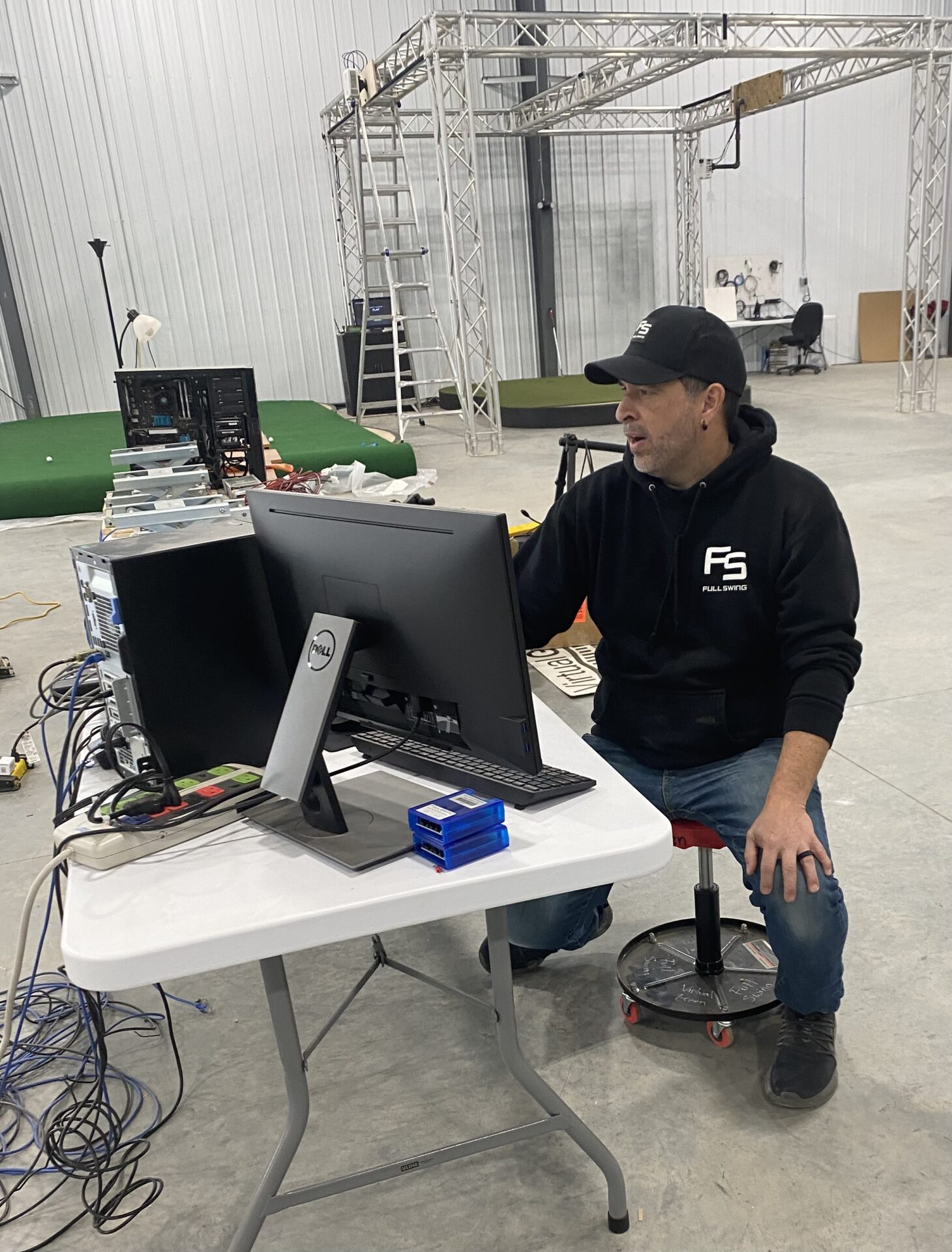
The Tomorrow’s Golf League venture has only added to that busyness. TGL was supposed to launch in January 2024, but a power outage in November 2023 caused deflation and damage to the air-supported dome section of the Florida venue, “when we just happened to have all of our stuff finally installed and ready to go,” Gildemaster said.
As a result, Heinemeyer added, “we had to go back couple of months later and throw every last piece of our floors into a dumpster and start over.”
Fortunately, that work is done now. The South Dakotans, with fingers crossed, are anxious for TGL to launch after the yearlong delay. And in the meantime, the innovation has continued. They are constantly working to improve the two models of Virtual Green: VG1, which is a smaller version, and VG2, which is bigger and more commercial grade.
Full Swing is thinking beyond golf as well.
“There are other products on the horizon that are associated with Virtual Green,” Heinemeyer said. “Can’t really get into it yet because it hasn’t been announced. All I know is that the company is moving forward into a lot more than golf simulation. They’re really focusing on a lot of different sports.”
For now, Full Swing would like the folks in South Dakota to see if they can bring down the cost of a Virtual Green, so it’s not only the well-to-do who can afford a mechanized green. There’s also discussion about coming up with better ways to integrate Virtual Greens into simulators.
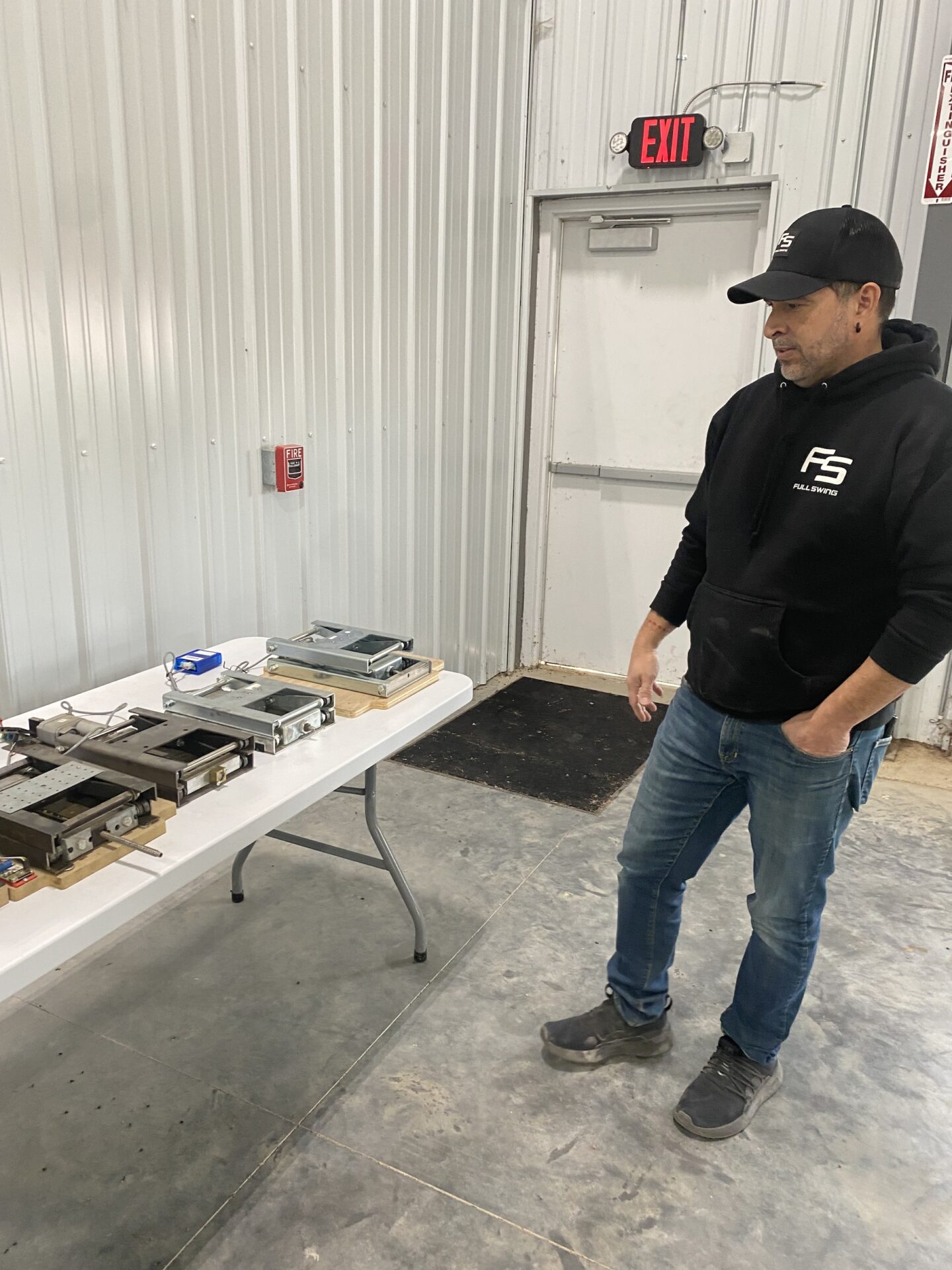
But that’s for tomorrow. Today, with TGL almost ready to debut, members of the Virtual Green team are watching anxiously and hoping that everything goes well Jan. 7. “Even with our product now,” Heinemeyer said, laughing, “we’re looking at the stuff, and all I see is problems. That’s just the nature of the beast.”
That said, he and the others believe the TGL launch will go fine. And when it does, there will be a lot of pride to be found back here in South Dakota.
“I’ll tell you this,” Lipetzky said. “I don’t think in a lot of states you’d see this kind of innovation with such a small team. To throw together a concept, prove it works in a very impressive way and then do your best to hide the prototype-ness of it, and then capture the attention and actually bring it into the world, that’s something.
“I mean, I think a lot of times with inventions like this that get caught up in the corporate world, it gets too compartmentalized, too regulated, really to the point where I don’t think you could stand up and spit out a product as quickly as we did. But we did. So yeah, sure, we are proud of it.”