Avera CEO talks about demand for care, federal policy changes, future vision
March 10, 2025
An aggressive influenza season, continued COVID-19 cases and complications such as pneumonia kept the inquiries coming at Avera Health’s in-house transfer center this winter.
As patients required greater care from rural areas, “it’s not necessarily destination Sioux Falls” anymore, said Jim Dover, who became CEO in October 2023.
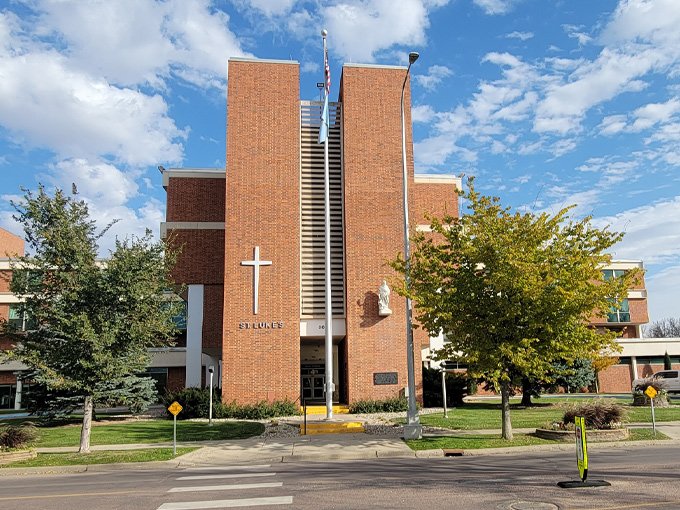
It might be destination St. Luke’s Hospital in Aberdeen, for instance, which last year handled 27 in-patient transfers — a number that jumped to 47 transfers in one month once the transfer center ramped up.
“We want to keep as much care local as possible for all the people in the entire four-state region. So if they can go to Aberdeen, an hour from home, why wouldn’t we want them to do that?” Dover said. “What it looks like functionally for us is that we’ve added the capacity for an additional 100 patients a day, heads on beds, compared to 18 months ago.”
During the peak of flu season last month, the system, like many nationwide, was hitting capacity.
“We were doing a lot of very active bed management,” said Dover, comparing it to a busy airport in trying to manage arrivals and departures.
“It’s a different way of looking at it, and to their credit, the team said: ‘We’re hitting capacity. What else can we do?’ We have bed capacity elsewhere. Why are we having people drive to Sioux Falls when they can drive two hours less? Let’s find a way to do that. We’re not doing open heart surgery in Aberdeen, but if someone has COPD or pneumonia that can be taken care of in Aberdeen and the transport time is much shorter from the rural area.”
Since becoming CEO, moving to Sioux Falls from Sparrow Health in Lansing, Michigan, Dover said he has been impressed by Avera’s resilience.

“A lot of health systems across the United States are still struggling. They have never recovered from the financial pandemic that followed COVID,” Dover said.
“We had such a strong foundation two ways. One is culture. Avera’s culture is unique and special, and it’s foundational. And the other is our organizational structure. We’re designed to be resilient.”

Jim Dover with former Avera Health CEO John Porter, Penny Porter and Sister Mary Kay Panowicz
It has allowed for “an incredibly positive financial year,” which ended June 30, 2024, and an AA- rating from Fitch Ratings and S&P Global Ratings, paving the way for $500 million in capital spending over the next three years, including implementing the electronic health record system Epic.
From the CEO’s perspective, other key indicators show the system heading in a positive direction. Retention hit its highest rate ever last year, including hiring 3,000 individuals, and Avera Health Plan grew for the first time in five years, with close to a 15 percent increase in covered lives.
“So we’re hitting on a lot of positive results and deliverables, but the only reason is we’re not constrained by workforce capacity issues or financial capacity issues,” Dover said.
A question of capacity
The conversation in health care, though, increasingly is around physical capacity to support growing patient demand.
By 2032, the average U.S. hospital occupancy will rise from 75 percent to 85 percent, according to a report last month from researchers at University of California, Los Angeles. That compares with 64 percent occupancy in the 2010s and 75 percent post-pandemic, which the report called “dangerously close to a bed shortage,” leading to “daily bed turnover, seasonal fluctuations in hospitalizations and unexpected surges.”
If hospitalization and staffed bed supply rates do not change, the average occupancy could reach 85 percent by 2032 for adult hospital beds, the report continued.
Avera is responding with multiple approaches, from continuing to hone its air transport program to advancing virtual health. Training family medicine doctors to deliver babies with virtual backup from an obstetrician is one example, Dover said.
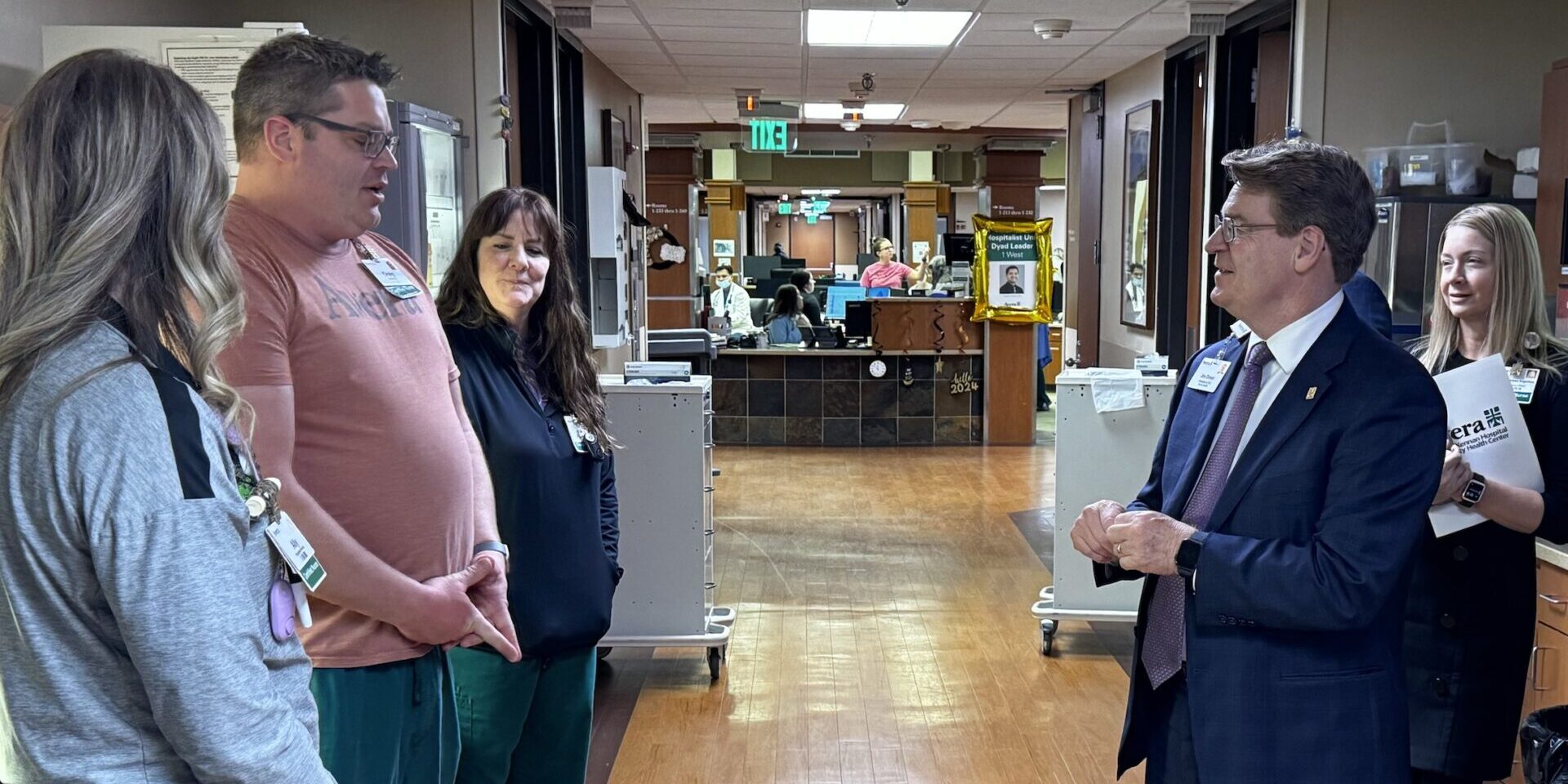
“I feel passionately about keeping care local. Our sponsors feel that way,” he said. “Avera’s culture of compassion and for hospitality drives what we do, and there’s a real can-do attitude amongst our staff.”
The system’s home health option also is expanding, caring for 2,100 patients on any given day. Avera’s Hospital@Home program, in which patients actually are admitted to a hospital within their home while services are brought to them, just passed more than 500 admissions, “which eliminated or reduced the need for 1,000 bed days at Avera McKennan,” Dover said. “So that’s how we create more capacity.”
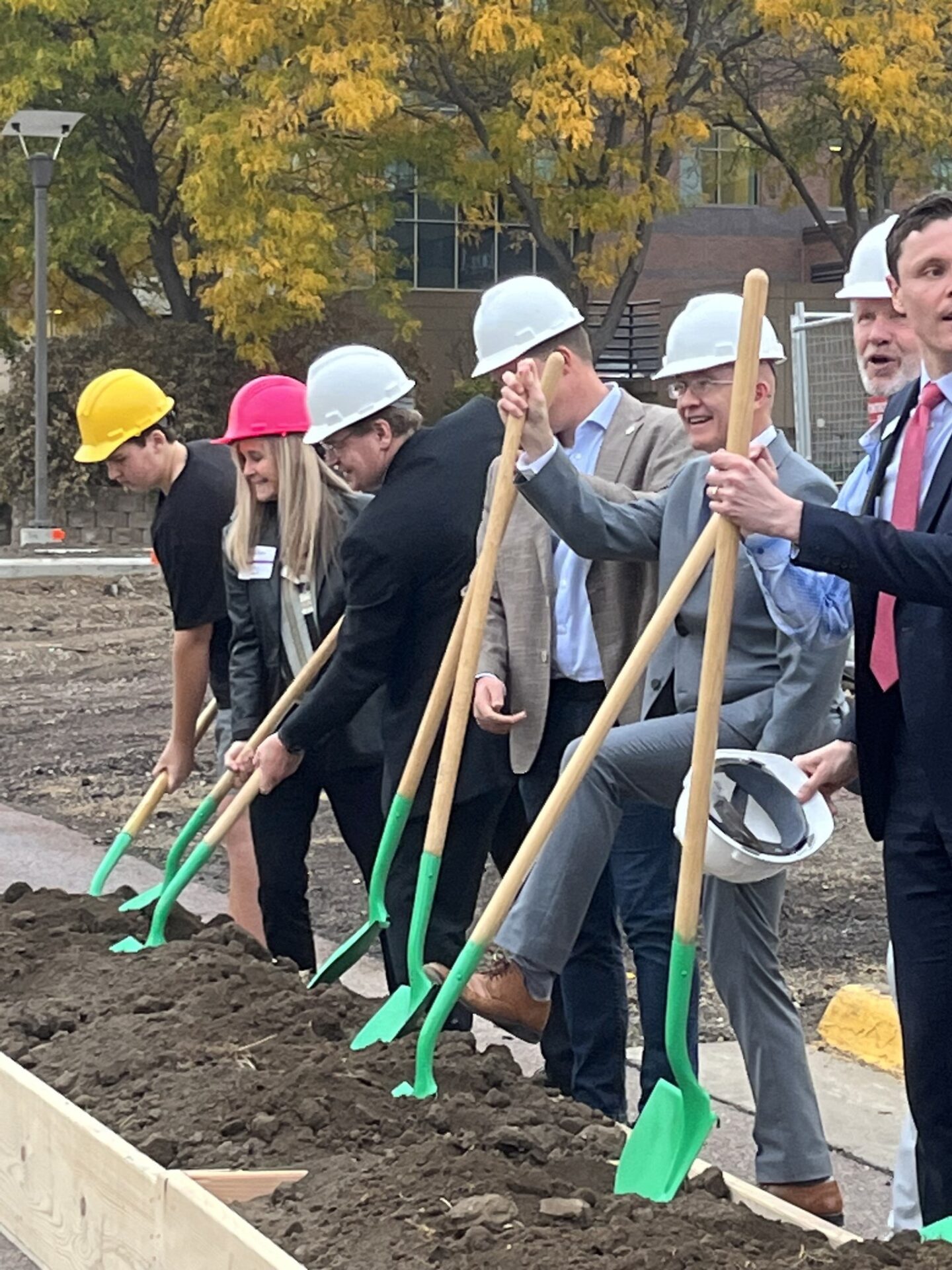
Construction naturally plays a role too. The Avera on Louise new medical office building, which will open next year, will house gastroenterology services and will be for outpatient procedures, freeing up space in the adjacent orthopedic hospital.
The Avera McKennan addition will house women’s and children’s services and add 158 beds, expanding surgery, medical/surgical inpatient care and more when it opens in the spring of 2027.
New U.S. administration brings questions
The construction timeline for Avera on Louise meant the health system dodged potential tariffs on steel. Avera McKennan’s addition might not be as lucky. If coming tariffs stay in place, Dover estimates that it means a 20 percent cost increase.
That’s not what’s driving his primary concern, though.
Proposed reductions to Medicaid across the U.S. would eliminate some provisions of the Affordable Care Act.
“What I worry about is how will our fellow South Dakotans get their care who are enrolled in South Dakota Medicaid if these changes are to be enacted,” he said, citing research that found 128,000 people in South Dakota are enrolled in Medicaid, representing more than one in 10 people. Two in seven children are covered by Medicaid.
“What are we saying to them? We’re going to cut your benefits. Where are they going to go?” he said. “They’ll continue to come to us, and the cost gets shifted to everybody else.”
Immigration-related enforcement also is “a daily conversation because it changes daily,” he said, adding that health systems are required by federal law to care for anyone who comes in the door, regardless of immigration status, and face fines if they don’t.
Executive orders aren’t legislation based in regulation, “so if we get stuck in the middle, we have to be really smart about how we do that, but culturally and based on our belief statements, we take care of anyone who shows up to our door,” he said.
Other federal changes could affect grants.
“Our executive director of the Avera Research Institute is the single largest collector or awardee of NIH grants from the federal government to the state of South Dakota,” Dover said, adding all federal grants to Avera total about $45 million.
“When the executive orders come out and say, ‘We’re stopping grants,’ or they’re not going to pay for indirect overhead, and the courts get involved, on a daily basis we’re having to pay attention to that.”
Future focus
Those are the issues of the day, though. Dover has spent much of his first 18 months guiding Avera through a new three-year strategic plan, which launched last month.
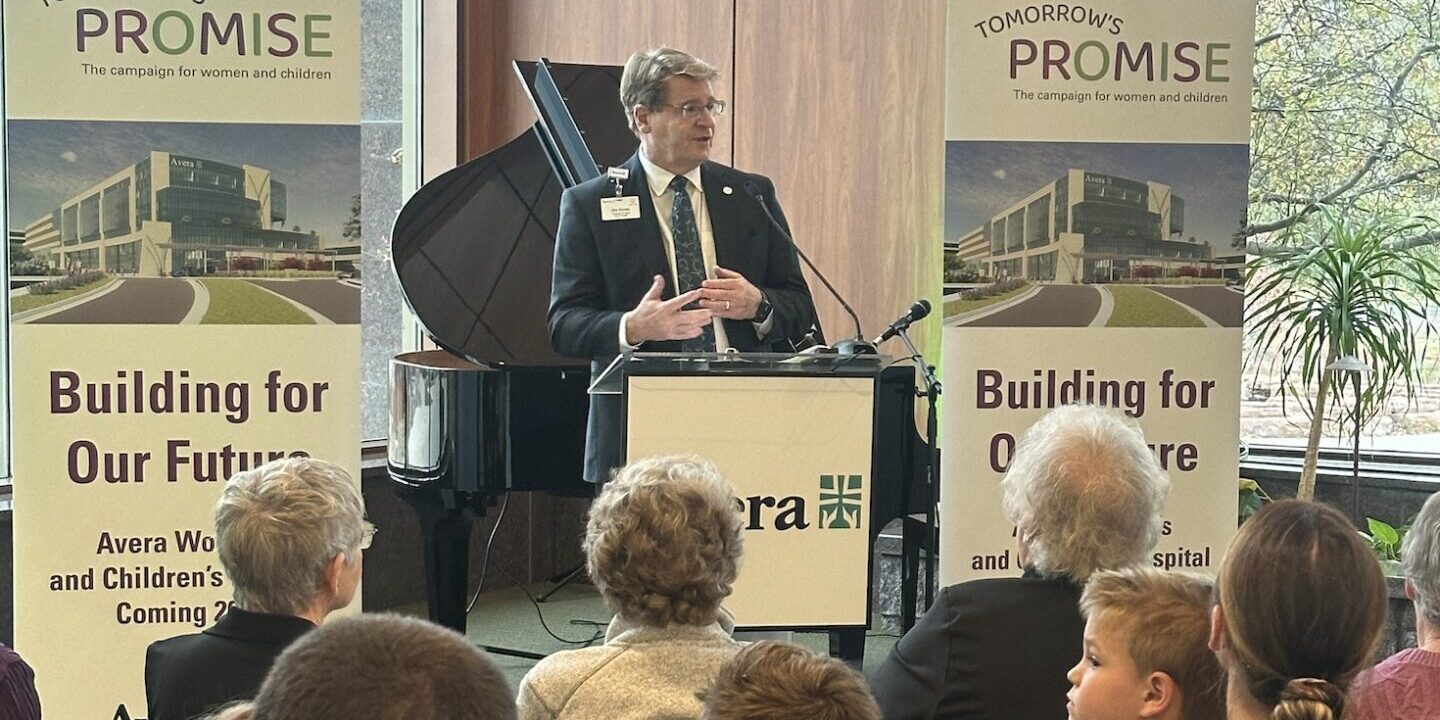
More than 200 stakeholders were interviewed for the creation of the plan, from hospital leadership and board members to physicians, nurses and partner facilities. The five pillars are:
- Exceptional patient, employee and community experience.
- Dynamic physician and provider enterprise.
- Innovative care models across the continuum.
- Broaden geographic reach.
- Leadership and essentiality in the markets served.
“We’re excited about it. All the regions have individual plans that roll up into those five,” Dover said.
“We’ll continue to create new locations across the Sioux Falls geographic area in terms of our clinics. We’ll continue to expand the clinics we have. We’ll continue to add deeper bench strength of some services.”
On the main campus, Avera is determining what services it will move into the recently fully vacated Orthopedic Institute space.
Across the health system’s footprint and its 400 sites of care, the goal is patients “get top-decile quality,” he continued. “So they don’t have the need to go to Rochester, the Twin Cities, Nebraska or anywhere else for their care.”
In terms of further expanding Avera’s own geographic reach, Dover said it’s possible through both organic growth and mergers.
“The short answer is yes,” he said, adding that with any prospective merger, “we view ourselves as the convener. … Our system is so strong culturally it allows us to be strong financially, and we would never be at risk of acquisition. (Growth potential) is both organically and through acquisition and through partnerships, and all of the above are always in play.”
Supporting growth at any scale continues to demand a focus on workforce, he added. Avera Health marks 25 years since its founding this year, and many employees have been there the entire time and even before it.
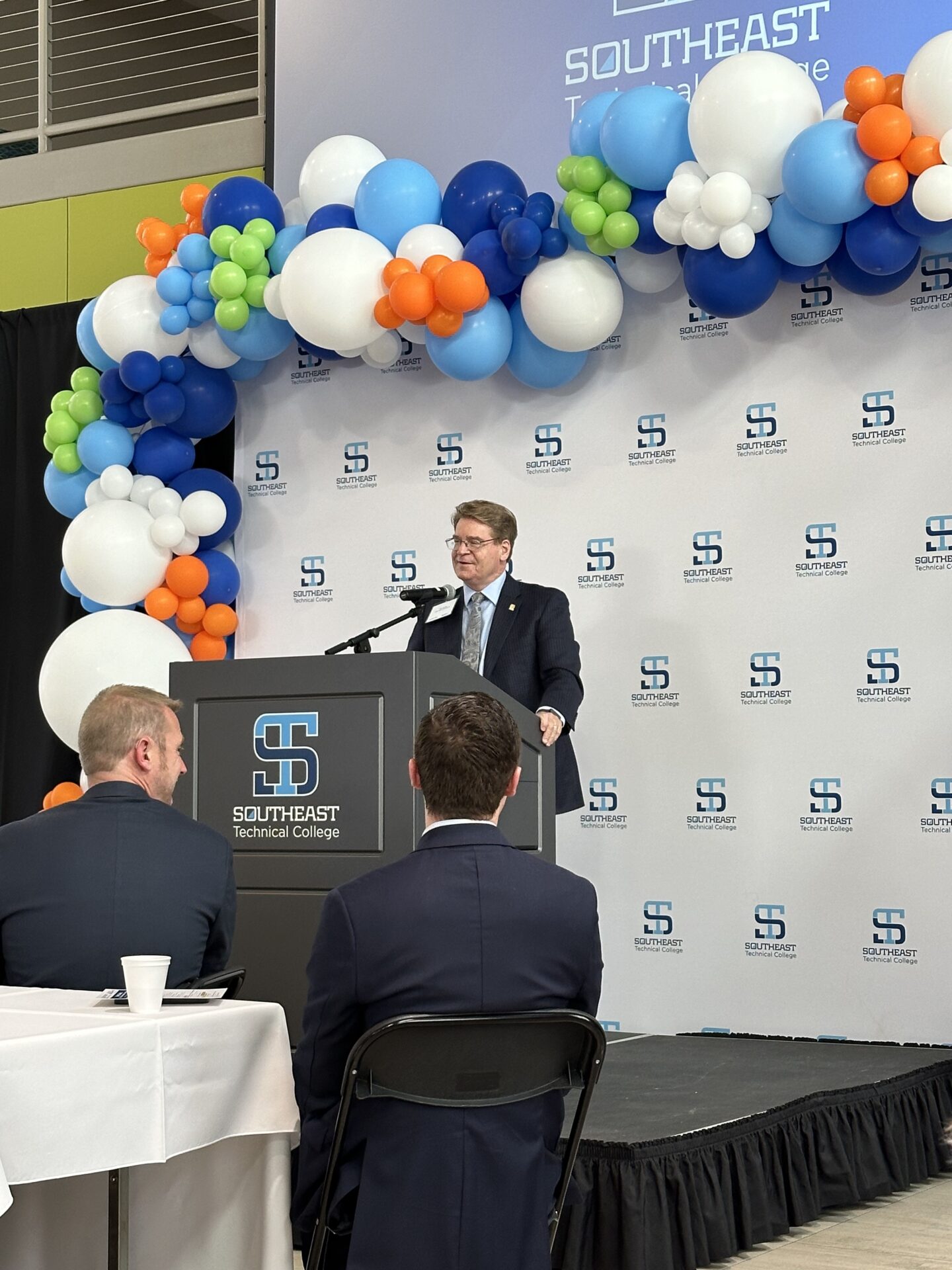
“We’re able to attract physicians to South Dakota because they want to be part of our culture,” Dover continued, while adding that “South Dakota does not produce enough nurses to keep up with the number who are retiring and our growth needs.”
Avera exceeded last year’s hiring goal by 30 nurses. But it needs a net gain of 600 by 2029 to meet demand, he said.
“For me, this is still a No. 1 priority when it comes to workforce,” Dover said. “We don’t have enough nurses. There’s a limit how many you can bring in from travelers, and that means patients have to go elsewhere for care.”