DSU researchers tackle use of AI in agriculture
March 4, 2026
This piece is sponsored by Dakota State University.
Why does a farmer or rancher choose or not choose to incorporate artificial intelligence into an ag operation?
What advantages are seen in the technology? What barriers exist?
Those are a few of the foundational questions around agriculture and artificial intelligence that professors and researchers at Dakota State University are hoping to answer.
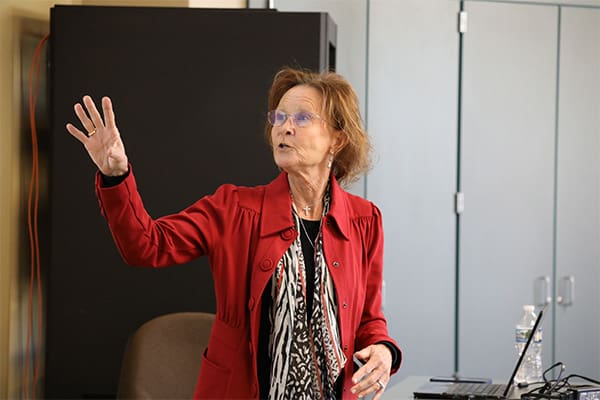
“Artificial intelligence in agriculture has advanced rapidly, but adoption and integration have been lagging behind the innovation,” said Cherie Noteboom, DSU information systems professor.
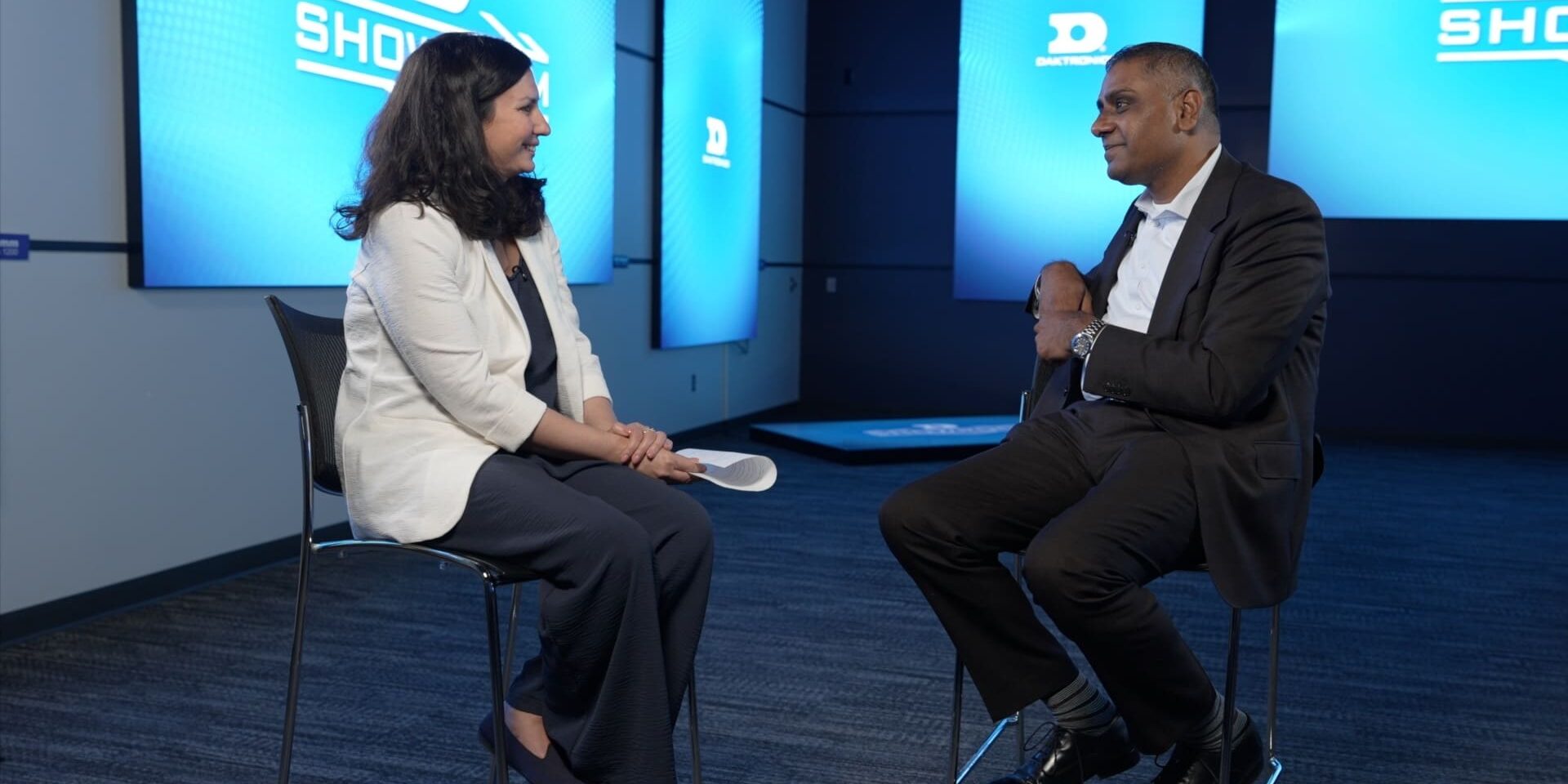
Together with her colleague Abeer Alkhwaldi, information systems professor, they launched a research study to determine what influences ag producers’ decisions to adopt AI in their practices.
“The use isn’t yet widespread in the Midwest or evenly distributed, particularly among small and medium-sized farms, and we want to understand the human element,” Alkhwaldi said. “Trust, perception, social norms.”
Noteboom, who joined DSU in 2009, has spent a lifetime in the Midwest. Her relatives immigrated to the U.S. to farm, and her father served as a veterinarian in South Dakota for more than 60 years.

To her, “the work represents both an academic opportunity and a form of services,” she said. “It’s a chance to contribute meaningfully to both scholarship and regional agricultural advancement.”
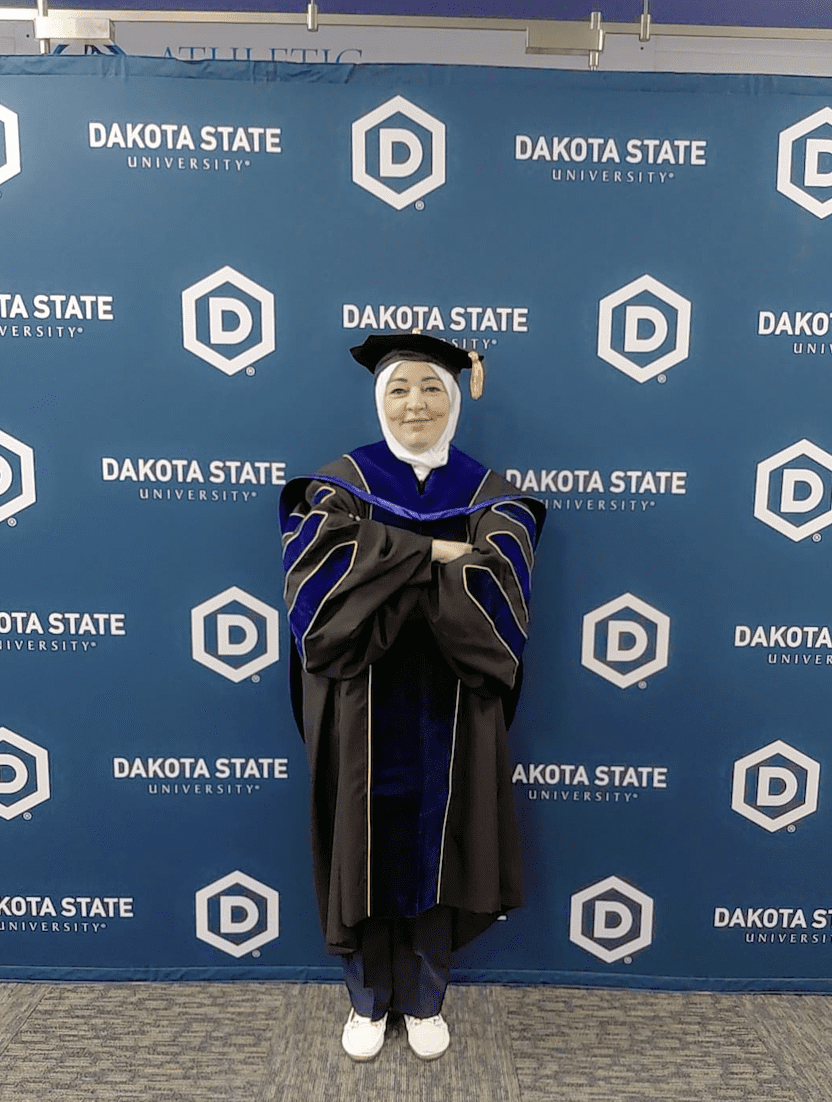
Alkhwaldi joined DSU in 2025 after serving as head of the management information systems department at Mutah University in the country of Jordan.
She recently was named a Top 2% Scientist worldwide in a prestigious list compiled by Stanford University and Elsevier. The list identifies influential researchers based on six metrics, including research impact and citations by peers.
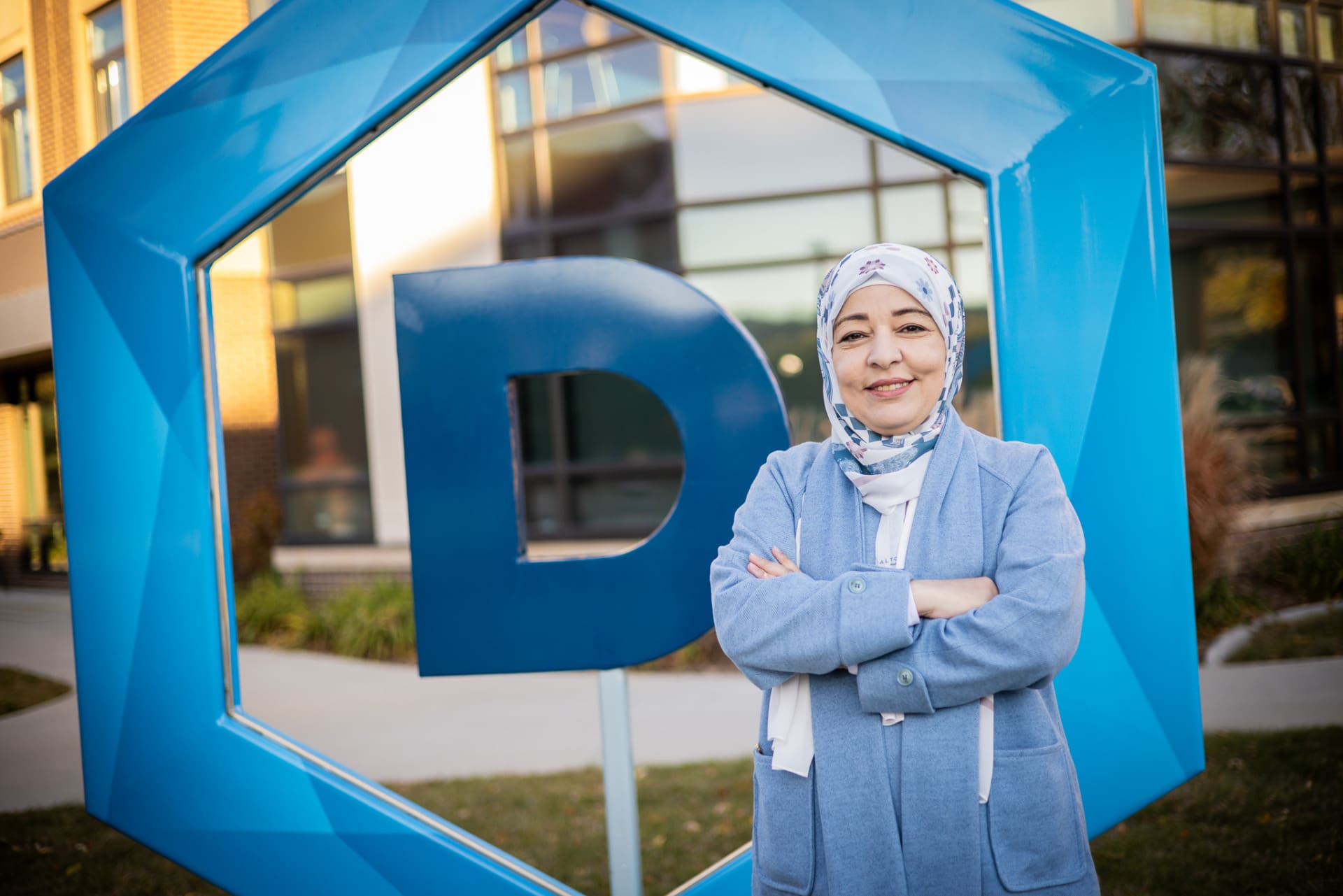
“I’ve done AI adoption research but in different sectors,” she said. “My career has always been dedicated to ensuring that technology serves people — a ‘socio-technical’ approach. By conducting this research here at DSU, my goal is to provide the scientific evidence needed to create secure, responsible and farmer-centered AI solutions that keep South Dakota competitive on a global scale.”
The professors’ backgrounds blended and created “a real opportunity for both of us,” Noteboom said.
The research began with two literature reviews and moved “very, very quickly,” she said. “We then were able to deploy a survey and are finding this is very relevant work in the Midwest.”
They reached out to the ag community in 12 Midwest states and so far have had input from more than 400 ag producers in an online survey.
While the survey is still open for participation, early results align with what the researchers concluded from their literature review.
“The main driver in AI adoption is performance expectancy — the idea that AI will improve yields or reduce costs,” Alkhwaldi said. “Other influencing factors include how easy a farmer perceives the tools are to use, as well as trust that the technology is reliable and acts in their business interest.”
Barriers include the cost of equipment with AI functionality and concerns around data security and transparency.
“So many AI systems are in a black box — the farmer receives the recommendation but doesn’t understand the reasoning or how it works,” Alkhwaldi said. “So it’s not a digital divide. It’s a trust divide. We need systems that are transparent or aligned with traditional agro-economic reasoning to let farmers know how it works.”
Clear regulation or standards around data ownership and privacy would create “a safe environment for these tools,” she added.
The early findings point to a need for more education and awareness, as well as additional policy considerations, Noteboom said.
“Farmers adopt technology when it fits their workflow and when they begin to trust the system,” she said. “For producers, ag stakeholders and policy providers, a lot of it is the ability to do outreach and build awareness.”
The survey closes this month. To participate, visit here.
The researchers plan to continue to build on their work.
“I’m interested in the data security factor and the responsible AI use,” Alkhwaldi said. “We realize farmers are worried about unauthorized access, surveillance and data being misused by a third party like a large competitor. These tools rely heavily on cloud computing and the Internet of Things, which naturally creates questions about access to data and how it is protected. Our research shows that if farmers feel they lack control over the information, they will resist adoption even if the tool offers clear productivity benefits.”
The research team plans multiple papers and is scheduled to present at a conference. Future work could include looking at not just how ag producers decide to use AI but also how they actually are using it.
The DSU research findings “could provide a kind of road map for policymakers to create more intervention in terms of AI tools,” Alkhwaldi added. “The industry needs to focus on co-designing tools with farmers to make sure these tools fit daily operations, tasks and are easy to use. In the long term, we hope this research can overcome the divide, leading to more resilient data-driven farming systems that protect the interests of small and medium-sized producers.”