Fighting workplace incivility with ‘Workplace CPR’

Oct. 22, 2024
This paid piece is sponsored by Alternative HR.
According to the Society for Human Resources Management, or SHRM, workplace incivility is on the rise.
A recent SHRM survey found that 66 percent of U.S. workers had experienced or witnessed incivility within the past month, and 57 percent had experienced incivility within the past week.
A Georgetown University survey found that 76 percent of respondents said they experienced or witnessed incivility at least once a month.
What specifically, is workplace incivility? It’s generally defined as rude, discourteous, sometimes belittling behavior that shows a lack of respect or consideration for others. It’s generally not illegal. It’s often subtle. It may not violate formal workplace policies, but it can still create a negative work environment by undermining collaboration, trust, and morale.
The rise of incivility
Alternative HR, South Dakota’s leading outsourced HR provider, has been helping employers deal with workplace issues including incivility, harassment, discrimination, workplace violence, bullying and other inappropriate behavior, for years.
“Incivility certainly seems to be on the rise in the media, in politics and across social media, and there is a carryover into the workplace,” said Dan Oakland, founder and CEO of Alternative HR.
“When I started in the workforce several decades ago, there was a whole lot more blatant discrimination and harassment based on race and gender than I see today. But incivility can be very subtle. Incivility comes out as snide comments, false rumors and gossip, withholding information, giving someone the silent treatment, and other disruptive behaviors.”

Oakland says the consensus among his team of more than a dozen HR consultants is that the SHRM survey is correct, and that incivility is getting worse, even in the Midwest.
He points out that election years tend to see an even greater rise of incivility in the workplace. He cited a 2022 SHRM survey that found that 20 percent of workers felt they had been targeted or mistreated at work because of their political views.
“And with the current political climate, opinions and comments can escalate,” he said.
Discrimination and harassment are illegal, of course, and employers must be vigilant to protect their people from it. But rudeness and disrespect are not illegal, so many employers think they cannot respond to it.
Oakland says that is wrong.
“How we treat each other in the workplace is critical to the success of an organization, and leaders must not only set the tone, but they need to put expectations in place and hold people accountable for their behavior, whether it is legal or illegal.”
Respect at work
One of the ways Alternative HR helps clients with the issue is through their Respect at Work Initiative.
Jessica Ashton is one of the firm’s HR senior consultants. She helped develop the initiative, and frequently provides training and facilitation on the topic to clients. She explains that the training covers a wide range of behaviors, including harassment, discrimination, workplace violence, bullying, bias and incivility.

“The initiative starts at the leadership level,” Ashton explained. “We work with an organization’s executives, managers, and supervisors to discuss the responsibilities of organizations and individuals, the risks of ignoring or mishandling bad behavior, and the behaviors they should expect from their people.”
When it comes to setting expectations for behavior in the workplace, Alternative HR teaches what it calls ‘Workplace CPR’. In this case, the CPR stands for civility, professionalism and respect.
“Those are cornerstone behaviors that we teach through our Respect at Work Initiative,” Ashton said.
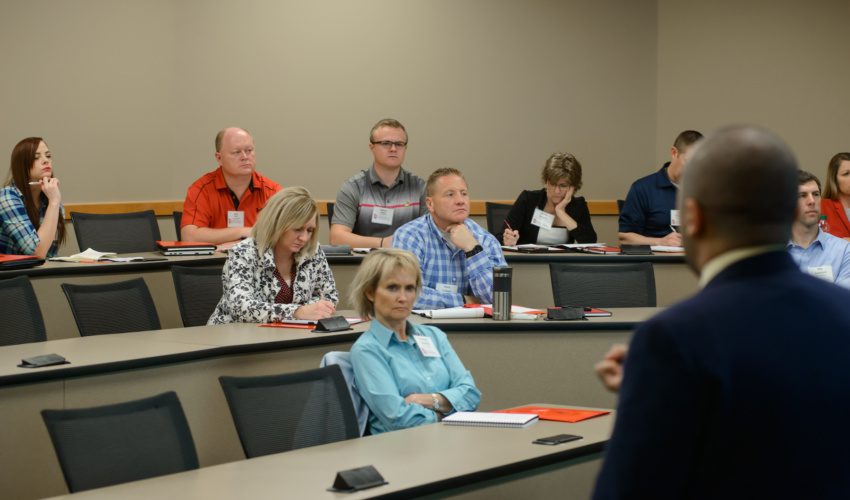
Once the leadership team has gone through the program, it is expanded to everyone throughout the organization – and leaders are expected to be in those sessions, as well. Ashton explained.
“People need to know that their leaders believe in and are committed to practicing what is being preached.”
“This interactive session is also aimed to help employees identify hidden biases. It can bring an ‘ah-ha’ moment for some, but our Workplace CPR really gives relatable and easy concepts for actionable items.”
J&L Harley-Davidson’s experience
J&L Harley-Davidson has engaged Alternative HR to assist with a number of projects, including training their managers on Respect at Work.
“Alternative HR has been a trusted partner of ours since 2021. The consulting and training previously provided was top notch, and I knew that Alternative HR could deliver a high value training session,” president and co-owner Joe Entenman said.
“The training was great. My management team responded very well to the material. Everyone walked away with strategies to be a more effective manager. I could not have asked for a better result.”
The material on workplace behavior is presented in ways that encourages discussion and conversations.
“Since the training, there have been several one-off conversations, connecting the training to prior interactions, with greater clarity on how to handle similar situations in the future,” Entenman added.
When inappropriate behavior occurs
So, does this Respect at Work training stop bad behavior from happening?
“We do a lot of training in the workplace,” Oakland said. “And we also conduct far too many investigations into workplace complaints of inappropriate or illegal behavior. What we do know is that employers who train their leaders, and who give their people ways to raise issues, concerns and even complain, have far fewer incidents of illegal and inappropriate behavior.”
Rhonda Toft says she has conducted literally hundreds of workplace investigations throughout her career. Toft worked in employee relations for a multi-national company for nearly thirty years before joining Alternative HR as an HR consultant.

“Any time there are allegations of illegal or inappropriate activity – harassment, discrimination, theft, etc. – and any time a “red flag” comes up around age, race, disability, or gender as a reason for why the complainant feels they are being mistreated, those are reasons to conduct an impartial investigation,” Toft said.
When there is a complaint in the workplace, employers have an obligation to investigate, Toft explained.
“Especially if the situation involves a complaint against leadership, it is always best to call in a third party to avoid any perception of favoritism/nepotism. Another situation would be if an employer does not have anyone internally with the level of experience to conduct an investigation.”
Even though she’s conducted many investigations over the years, Toft says: “We much prefer to prevent problems through training than to investigate complaints after the fact. It’s far less expensive for the employer, in terms of money, time, morale and retention.”
When Outside Investigations are Appropriate
RJ Rylance is an attorney with Morgan Theeler, a law firm based in Mitchell. He has previously used Alternative HR to investigate a workplace complaint that one of his clients received, and says there are several reasons an employer might consider using a third-party to conduct a workplace investigation.
“Smaller organizations may not have an in-house HR representative familiar with the investigation process. Even in organizations with an in-house HR representative, certain complaints or issues may be simply too large or complex for that person to handle,” he said.
“Lastly, a complaint may involve one or more members of an executive team, which might make it uncomfortable or difficult for an in-house investigator to conduct the investigation in an unbiased and confidential manner.”
In his case, Alternative HR” provided an experienced investigator with prompt service, frequent communication, and attention to detail,” Rylance added. “Clients can focus on the day-to-day operations of the business while knowing they will get a fair and thorough investigation.”
For more information about Alternative HR’s Respect at Work Initiative, or about the firm’s workplace investigation services, contact info@alternativehr.com, or call 1.888.335.8198.