New advanced degrees help fill gap in South Dakota’s bioeconomy
May 27, 2026
This piece is sponsored by South Dakota Biotech..
A thriving bio-based economy demands a concentration of talented scientists — but it goes beyond that too.
“When it comes to supporting biotech companies — whether it’s a pharmaceutical company or medical device company — you do need the scientists, who are well trained in South Dakota’s universities — but you also need leaders who understand the business side and those who understand the regulatory side to help bring products to market,” said Aaron Harmon, director of graduate biotechnology and regulatory science programs at Mount Marty University.
Mount Marty University has been taking significant steps toward closing that bioscience gap in the state.
In 2023, the university began offering a Master of Science in biotechnology management, a program unique in its focus on leadership and communication across the science and business of the pharmaceutical industry. It can be completed in as little as one year or extended based on a student’s preference.
In August 2025, Mount Marty added a two-year Master of Science in regulatory science, designed to respond to a critical workforce need by facilitating the exploration and preparation for a range of regulatory career opportunities across the breadth of the Food and Drug Administration’s scope of oversight.
Both programs are taught entirely online, allowing flexibility for working professionals.
“We know a lot of our students are currently employed, and we have students across the country in all four time zones, so it gives them the most flexibility to advance their career and continue their education as they manage work, family and education,” said Harmon, who also serves as associate professor of biotechnology.
The commitment to biotech at Mount Marty is shared by its leadership. President Mark Brown is a former biotechnology professor who developed the biotechnology management program.
“There’s a need for these programs as there are very few in the Midwest that educate in this space,” Harmon said. “There’s a void on the map. Mount Marty saw that our regional universities are teaching students how to do research and engineering work but not how to combine it with business.”
That’s a key differentiator, said Joni Ekstrum, executive director of South Dakota Biotech, the state affiliate of the international BIO organization.
“The programs at Mount Marty absolutely are addressing a need not just in our state but in our industry,” she said. “It’s encouraging that a program that’s drawing nationwide attention is being delivered right in our backyard.”
Going into the fall, over 100 students will have been enrolled in the biotech management program in the past three years, while the regulatory science program is on track to graduate its first cohort of master’s students in the spring of 2027.
“While they come from across the country, we have found many students end up working in South Dakota,” Harmon said. “Our bigger goal is to build the program to impact the region, especially when it comes to studying how regulations shape rural health and the challenges faced by rural health care.”
Two significant grants have helped support scholarships as Mount Marty’s graduate programs have launched.
“Some of our students have been able to get their master’s completely paid for,” Harmon said. “We still have funds remaining, so if students reach out now, there’s still an opportunity for us to significantly help with funding their degrees.”
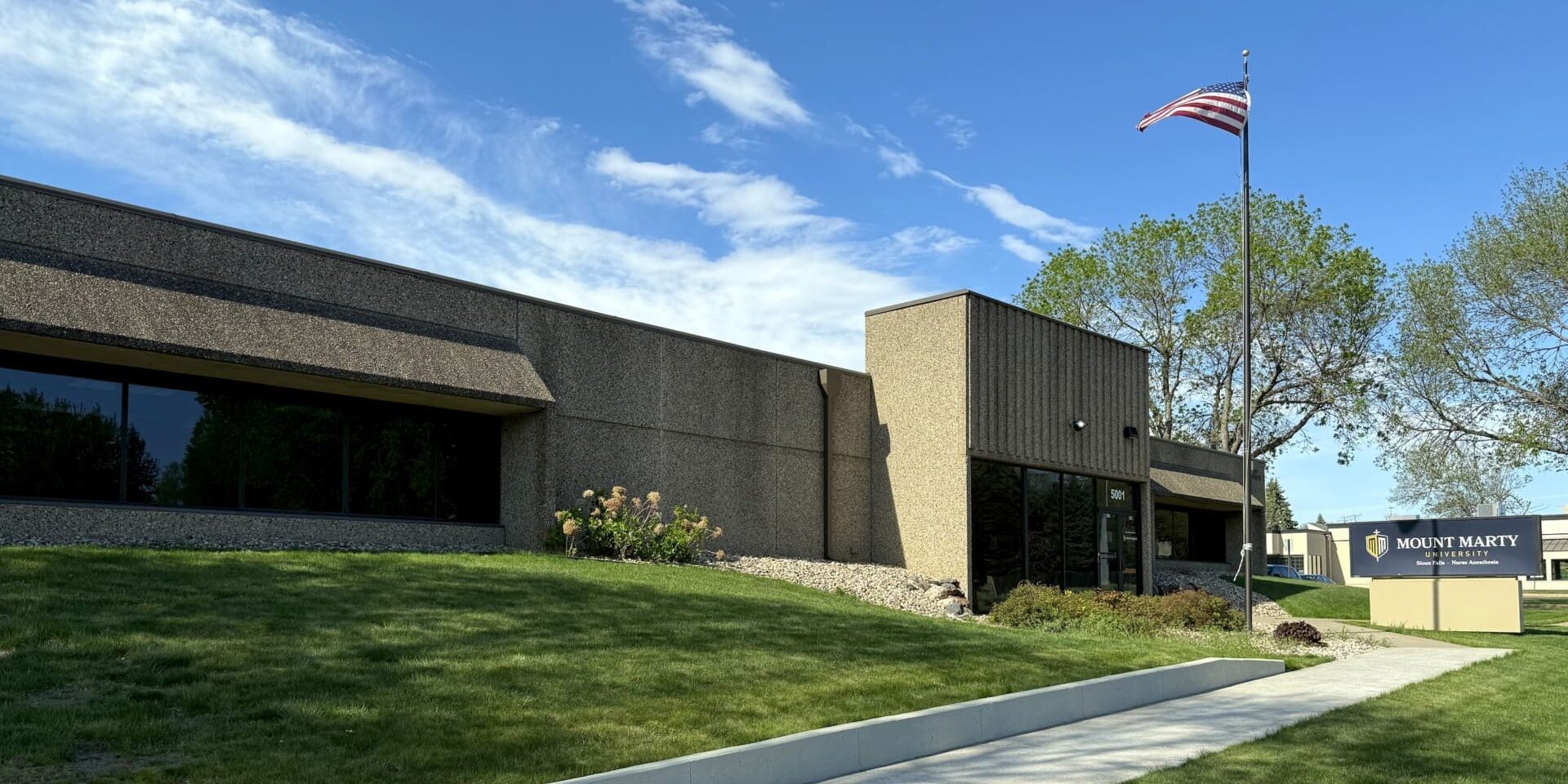
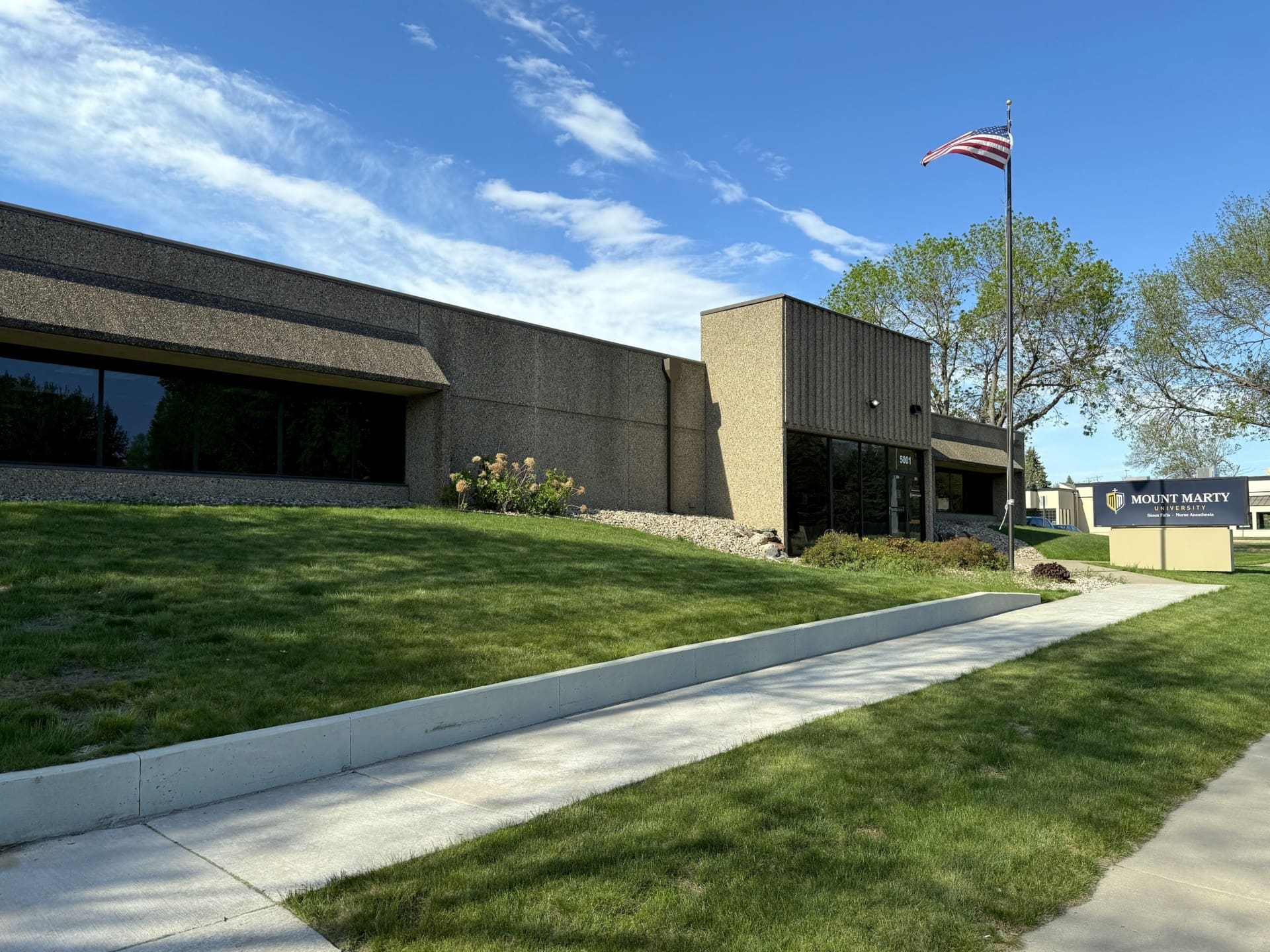
The Mount Marty graduate programs are based in Sioux Falls at 5001 W. 41st St. in a building that primarily houses the university’s Doctor of Nurse Anesthesia Practice program.
“That’s a very competitive program that also draws nationwide interest,” Harmon said. “We have a really nice simulator lab where they can simulate an operating room and work on advanced robotics.”
While the graduate biotech programs don’t need a physical classroom space, the building does allow for one, he added.
“If there were demand locally, including if a large company came in, we have the resources to do in-person training,” Harmon said.
“We have a number of our faculty and adjunct who are local as well. One of our adjuncts who taught for us last semester and will be teaching our new course on product life cycle management has over 20 years of medical device industry experience in regulatory affairs, and she now lives in Pierre. Our medical device class will be taught by the co-inventor of the public defibrillator who spent 40 years in the industry and now lives in Brookings.”
But the largely online nature of the program also allows for expertise nationwide.
“Our pharma class will be caught by a regulatory strategist who has worked with numerous large companies and will be based in Boston,” Harmon continued. “We have another professor in Michigan with extensive industry experience, so really we can recruit people from anywhere in the world to teach.”
A seminar series featuring guest speakers also has drawn participation worldwide, with presenters from as far away as South Africa and Italy.
“We’ve had everyone from the regulatory manager for Christian Dior, to someone in the Twin Cities who specializes in regulatory science for lab-grown meats, to the former diagnostics chief at the FDA,” Harmon said.
“It’s a space we’re all passionate about, and you can see it extend to the students. I had one tell me how they can now watch news about our industry and understand what’s happening behind the scenes — how commerce is affected by laws and regulations and how legislation and executive orders ultimately trickle down to health care and patients.”
While the programs were envisioned for working professionals, undergraduates also are going straight into the advanced degrees, he said.
“It’s good for people who want structured learning from experienced professionals so they can move into roles or grow their abilities,” Harmon said.
“They’re people who are interested in being effective leaders or positioning themselves as standout candidates for jobs. They come in with a business insight that sets them apart from candidates who only have science or engineering backgrounds.”
Long term, the university hopes to build more of a presence in research.
“Within our master of regulatory science, we’ve built in space for research,” Harmon said. “Our first year has been about putting the infrastructure for the program in place, but the next direction is to be looking at research and take steps to really look like a center for regulatory science excellence in policy and rural health.”
To learn more
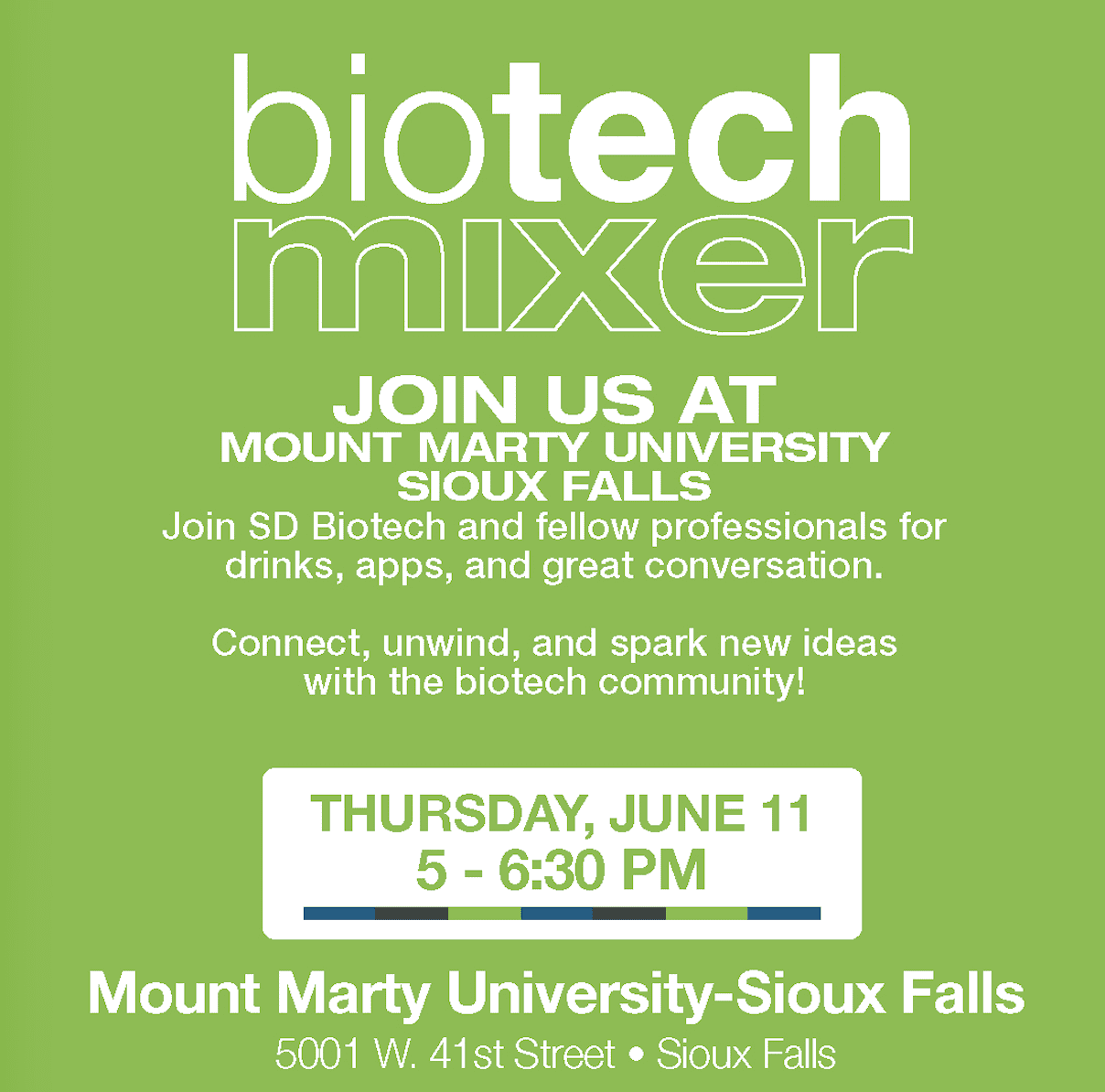
Learn more about Mount Marty’s graduate programs while catching up with other members of South Dakota’s biotech community at a mixer organized by South Dakota Biotech from 5 to 6:30 p.m. June 11 at the Sioux Falls campus.