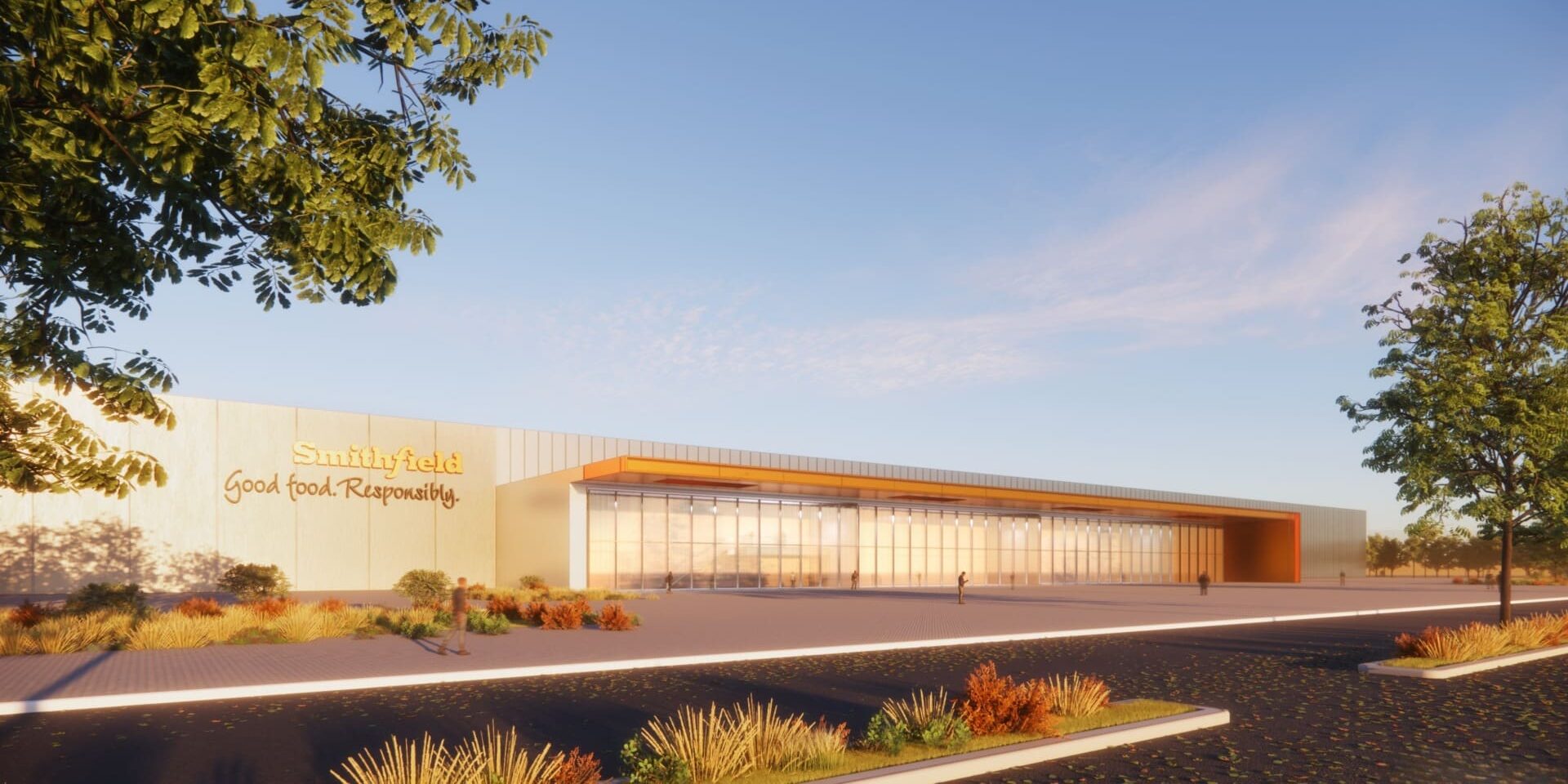
Sioux Falls City Council approves tax increment financing plan, conditional use permit for Smithfield Foods
March 17, 2026
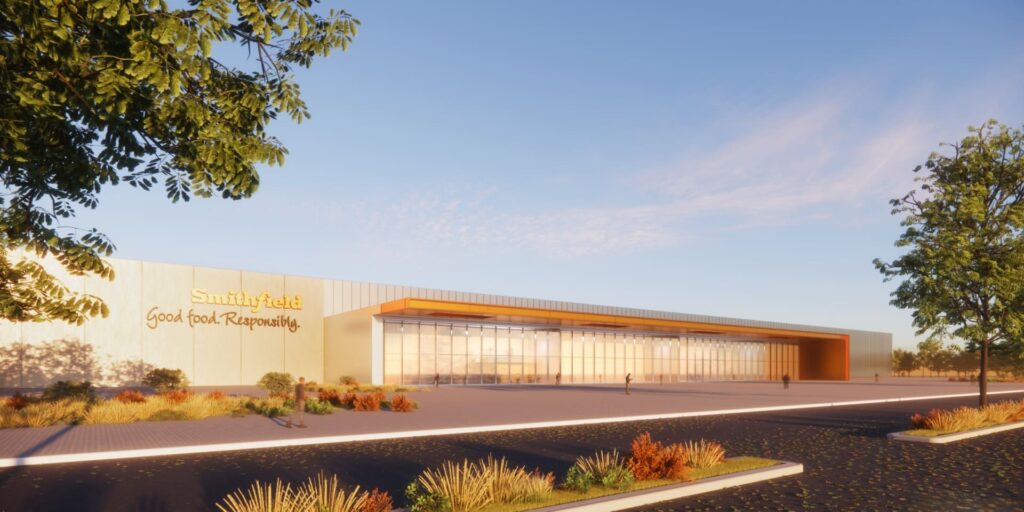
Following about three hours of testimony, the Sioux Falls City Council has approved two items related to the proposed $1.3 billion Smithfield Foods plant.
The project at Foundation Park is requesting tax increment financing, primarily to offset construction of a wastewater treatment plant to support the new location. Because Smithfield will treat and discharge its own wastewater, it won’t use the city’s water reclamation plant.
The city also was required to consider a conditional use permit because the 211-acre project is located less than 1,000 feet from some homes.
“It has been identified as heavy industrial in this area for about 10 years,” senior planner Jason Bieber said, adding that “significant landscaping is required” to buffer the property.
That includes a berm of about six or seven trees for every 100 feet as well as frontage trees — one tree for every 50 feet along multiple streets that serve the development, as well as one tree for every 18 parking spaces.
City engineer Andy Berg said traffic impacts have continually been studied as the development park has added more businesses.
There already are some road improvements underway, but others are coming including on County Road 130, he said.
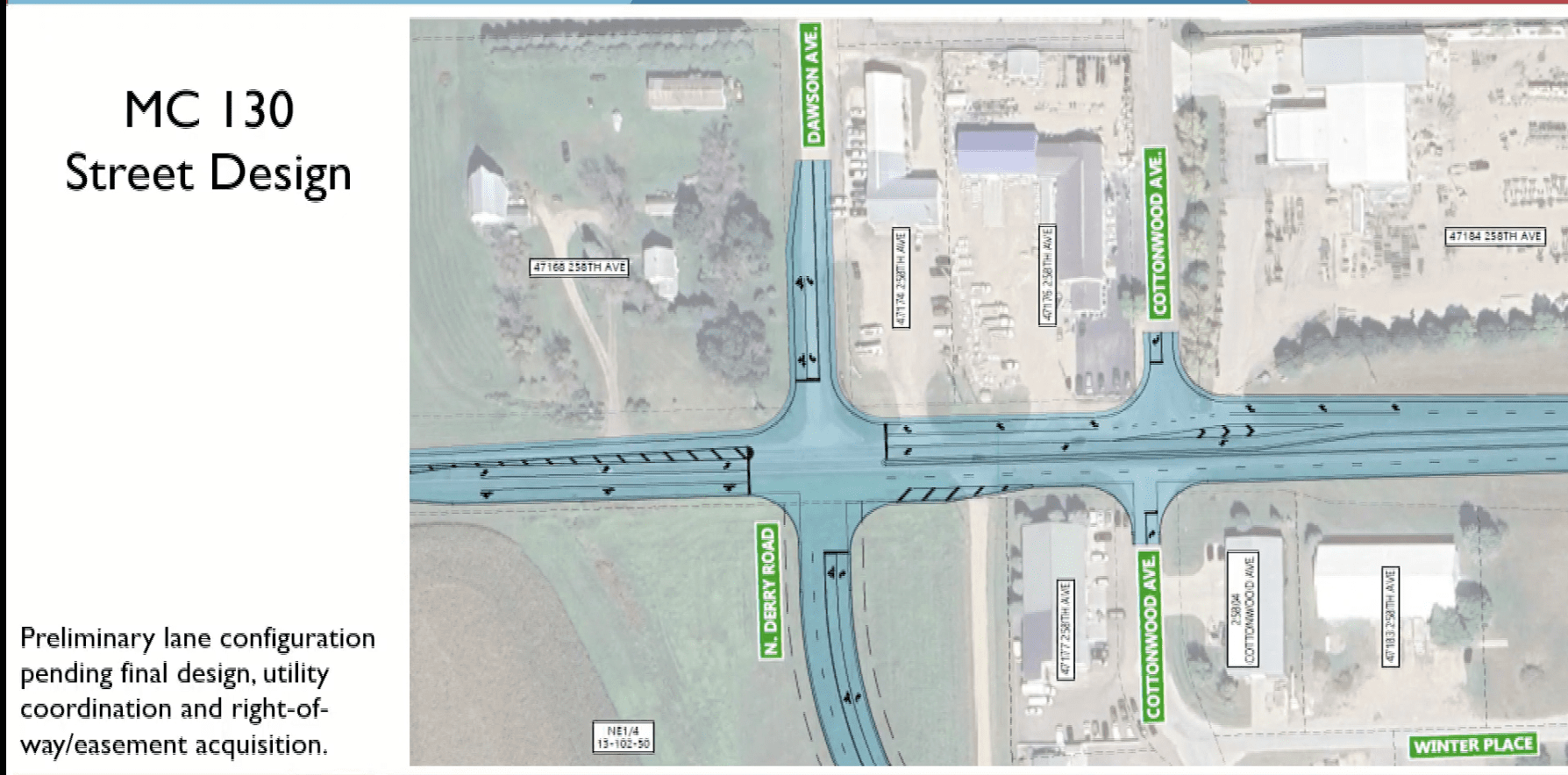
“We’re separating out the turning movements from the through traffic to make it safer,” he said, adding that truck traffic will be spread out throughout the day and not concentrated at certain times.
“We don’t go out and build these roads to this level ahead. We wait for those announcements so we know where we need to go. We adjust budgets accordingly.”
The funding will be there to build the road in 2028 before the plant opening, he said.
Smithfield project engineer Mark Wilhelm addressed several issues raised with the location, including odor.
“A plant built a piece at a time over a century is and always will be a string of compromises,” he said, comparing it to attempting to renovate an old house.
The goal is to minimize odor creation, cover and control processes and clean the air, Wilhelm said.
“Keep it moving, keep it cold, and keep it clean,” he said.
The current 117-year-old location is eight stories and “not airtight and not air-balanced,” he said. The new one will be one or two stories, airtight and air-balanced “to significantly control the creation” of odor, he continued.
In the existing plant, loading is done outside. With the new one, it will be done inside.
“Using the right technology to clean the air will allow us to again utilize the existing technology we have, add … new technologies where appropriate to do significantly better because of the holistic view,” Wilhelm said.
There’s also an opportunity to optimize traffic, he said.
“The park is in a great place relative to the highway,” Wilhelm said, adding that it’s a “significant improvement” over the route trucks take to get to the current site.
Truck flow will be distributed across 24 hours, and employees have nine different start times, “which also helps to balance that flow,” he said.
Wastewater treatment will be done through a one-owner system until it’s discharged in the river. The approach will be similar to the treatment plant built a few years ago downtown.
“That is the right technology and is proven,” Wilhelm said. “We’ll use that technology in the new design and take advantage of the greenfield opportunity to optimize,” he said.
There is a significant multiplier effect on local employers that support Smithfield, said Chris Houwman, president and CEO of Malloy, an industrial service and distribution company based in Sioux Falls.
“We fix rotating equipment,” he explained. “We’ve been around for over 80 years, and Smithfield is so unique in our customer base because they use virtually every division, every segment, every service that we provide.”
Nancy Simon, a resident near the proposed plant, asked for her home to be purchased as several others near the future plant were. Her home is less than 900 feet from the proposed plant and would be an estimated 425 feet away if a future expansion came to fruition.
“Does anyone deserve to live 425 feet from a hog processing plant?” she said. “We’re asking for the same offer our neighbors across the road were given.”
The move will create ‘”financial ruin that we won’t be able to recover from,” she said. “It’s for the ‘greater good.’ Would you accept that if you were me?”
Properties west of Marion Road and north of County Road 130 are not serviceable, which is why they weren’t purchased, said Bob Mundt, president and CEO of the Sioux Falls Development Foundation, which owns the land Smithfield is purchasing.
“Foundation Park … is the right location for heavy industry,” he said. “The businesses that have chosen to invest in Foundation Park are diversifying the Sioux Falls economy. … Smithfield will do the same.”
The project “will forever alter the main thoroughfare into the city of Crooks,” said Mike Harstad a member of the Crooks City Council, asking for more trees to “lessen the visual impact” as well as to advance a traffic study.
“How a project of this magnitude could proceed without definitive information on that traffic study is beyond me,” he said. “Something must be done to ensure adequate traffic control is there the day this plant becomes operational.”
A building permit won’t be issued until the traffic study is done, Berg said.
“We would be looking at the 2027-28 time frame” for a capital project to do road improvements, he added.
The council also amended the conditional use permit to require public notice of the traffic study before issuing the building permit.
“It’s a matter of making something available publicly that’s already required to be done before that building permit is issued,” council member Rich Merkouris said.
Smithfield also is open to expanding to a 10-foot berm along the north side of the site, Wilhelm said, along with looking at “what can we do to salvage as many of the mature-growth trees on that property,” he said. “Our effort is going to be to maintain as many of those as possible along with that 10-foot berm.”
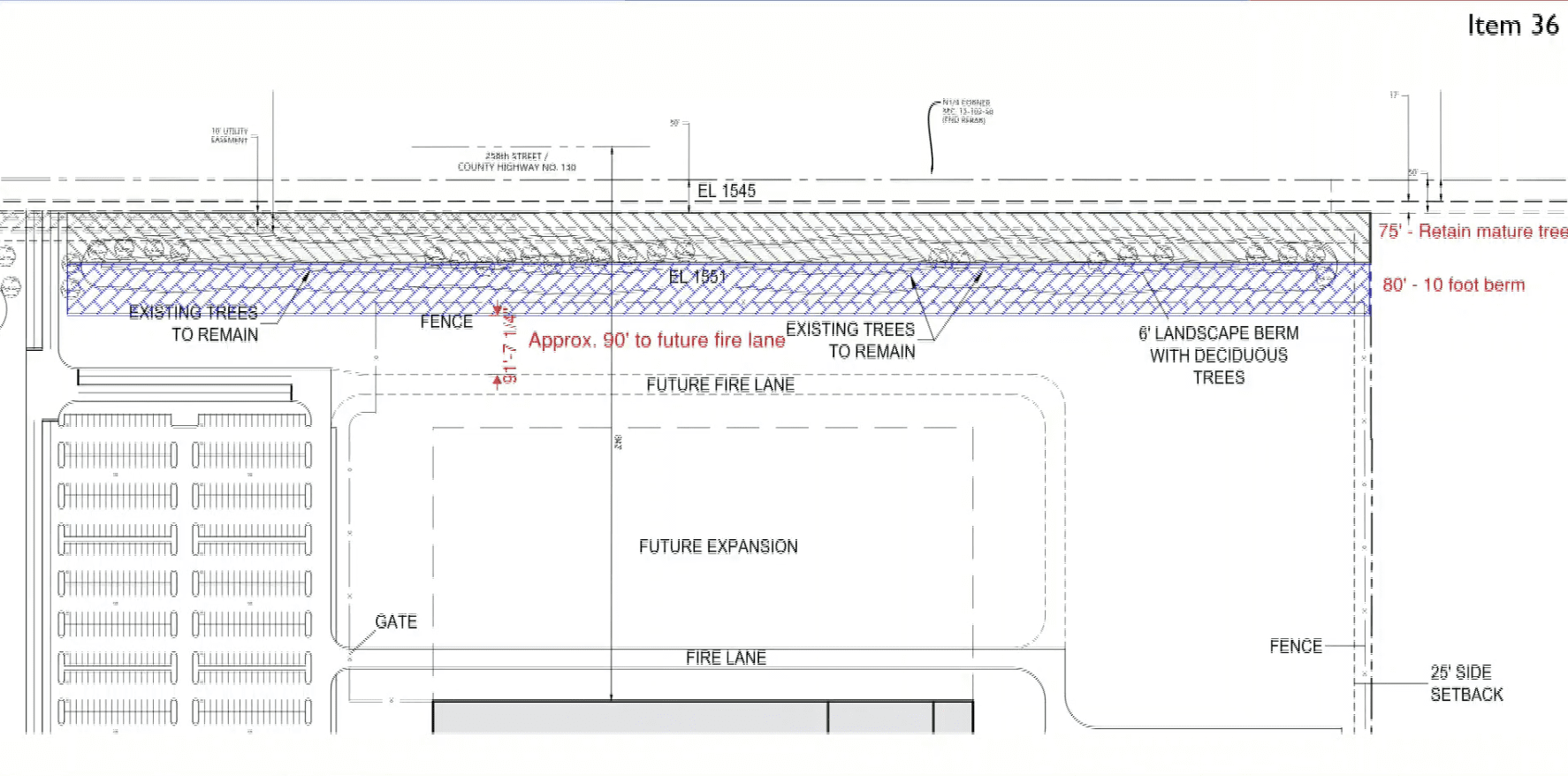
The council approved an amendment to the conditional use permit with that stipulation.
Councilors largely voiced support for the project.
Council member Curt Soehl said he has toured a more modern pork processing plant, which settled his concerns about odor.
“I’m not worried at all about that,” Soehl said, adding that he still sympathizes with those living nearby. “Times change and things change, and I know it’s going to break a lot of hearts that this thing is going to go up there.”
In voting, council member Dave Barranco said he kept in mind “the greatest good for the greatest number” as a consideration. “The overall impact of a relocation is better for the natural environment because we’re going to involve brand-new technology, it’s going to be custom-built, and we’re also going to making an incredibly important investment in … the downtown site.”
There are 17,000 people living within a mile of the current Smithfield site, council member Vernon Brown said.
“They had no indication that Smithfield was going to leave. The property values are not declining,” he said. “We have one of the state’s highest-visited tourism attractions just across the street, and it continues to grow. We can coexist with this.”
The tax increment financing district spans the north portion of Foundation Park, which had not previously utilized a TIF.
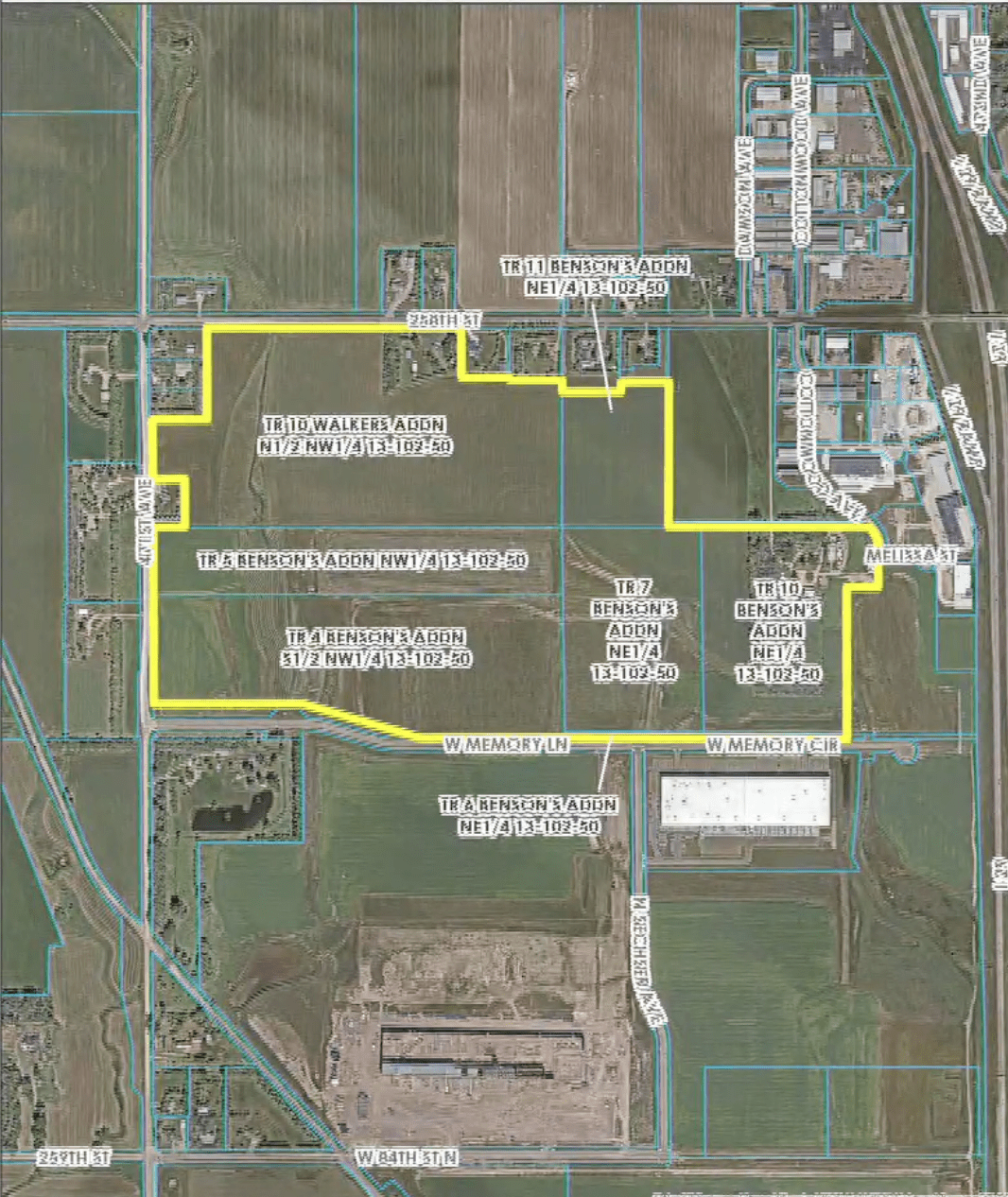
The area currently is valued at $1.95 million, which is is expected to grow to $240 million. That will create $4.5 million in incremental annual property tax revenue.
The new revenue is used to support the qualifying costs in the TIF.
“While the (TIFs) I supported were wonderful and have changed the landscape of our community and increased our property tax base … I only wish I would have that the opportunity to support this particular TIF,” said Jessie Schmidt, a former planning commissioner. “We have the opportunity to provide for transformational development. This is the project of our lifetime.”
From an employee perspective, “Smithfield has been a path to dignity for my family,” said Vince Danh, speaking in support of the TIF.
“It’s about whether we’re building for tomorrow or just hoping things work out. … Sioux Falls gave my family an opportunity to succeed, and I want that same opportunity for all families.”
Julie Leisinger of Crooks spoke in opposition, saying she thought her community would need to pay for improvements that will be needed to local roads.
“People who are the people that live paycheck to paycheck are going to have to cover the costs of all those additional roads out there because of this plant and us not getting a dime more out of any taxes. I don’t get how this is fair.”
Councilors voted 7-1 in favor of the TIF.
“It’s a competitive game. TIFs are the one tool we have to compete,” Brown said.
“You simply can’t be pro-people without being pro-economic development,” Merkouris added. “We believe that business creates the economic opportunity to create the life experiences for their children and their grandchildren.”
Smithfield is expected to purchase the land from the Sioux Falls Development Foundation around midyear. Construction is scheduled to take about two years, with the plant opening in late 2028 at the soonest.