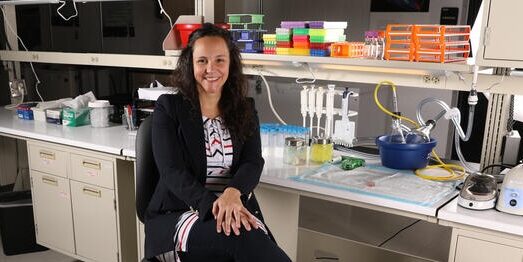
Women-led cancer research at Sanford earns ACS funding
May 29, 2024
This paid piece is sponsored by Sanford Health.
Pilar de la Puente, Ph.D., and her lab of researchers at Sanford Research recently received a $792,000 grant from the American Cancer Society. In addition, de la Puente was named an American Cancer Society ResearcHERS Scholar, a distinguished honor from the ACS recognizing trailblazing women researchers.
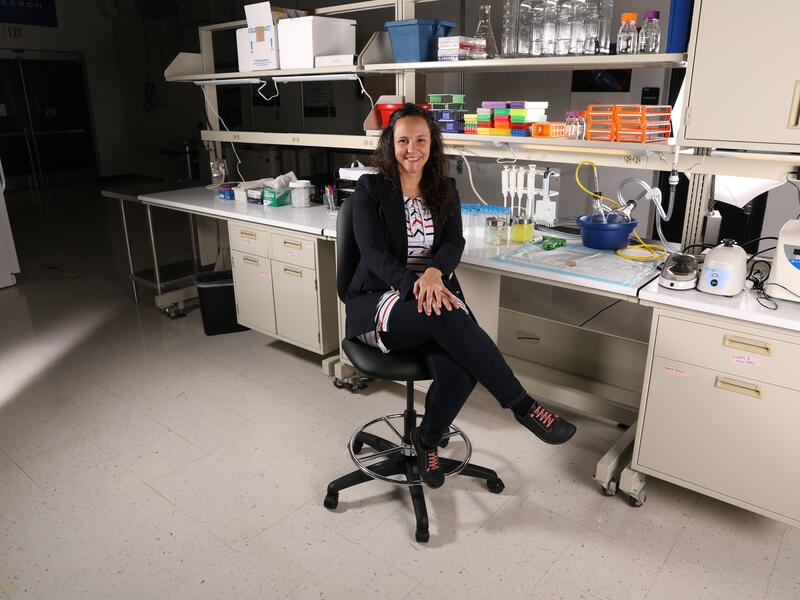
The focus of the lab’s four-year American Cancer Society ResearcHERS Scholar Grant is to study a novel set of biomarkers and their role in progression and drug resistance in ovarian cancer.
“We are thrilled to be awarded the first American Cancer Society Research Scholar Grant in South Dakota,” said de la Puente, an associate scientist at Sanford Research. “We will be spending these next four years working on a novel biomarker panel for early detection in ovarian cancer and markers associated with chemotherapy resistance.”
The American Cancer Society ResearcHERS program is committed to elevating the work of women researchers. “Women bring diverse and unique perspectives to cancer research, making invaluable contributions and discoveries,” ACS said. “However, women are continuously underrepresented in research leadership. We want to change that.”
Research could help cancer patients everywhere
Researchers were chosen based on their innovation and potential for impact.
“The American Cancer Society has invested more than $5 billion in cancer research,” said Andy Link, the organization’s associate director for cancer centers in the Dakotas, Iowa and Nebraska. “This money goes to incredibly talented organizations and researchers who are doing cutting-edge medical research that will help patients across the country and potentially across the world.”
De la Puente’s lab focuses on the role of tumor microenvironment in cancer progression, drug resistance and cancer immunology. Her lab also is developing personalized 3D models of the tumor microenvironment to more accurately mimic cell-cell and cell-matrix interactions. Through these culture models, they hope to gain a deeper understanding of the tumor microenvironment’s role and the accessory cells during cancer progression, drug resistance and cancer immunology for each patient.
De la Puente received her doctorate at University of Salamanca in Spain in the field of biomedical engineering and biological sciences.