Why patients might be wide awake for today’s hand surgeries
Oct. 8, 2025
This piece is sponsored by Avera Health.
For numerous occupations, hands are indispensable in performing your job, not to mention doing the hobbies you enjoy and caring for your loved ones. So when using your hands causes tingling or pain, you need answers fast.
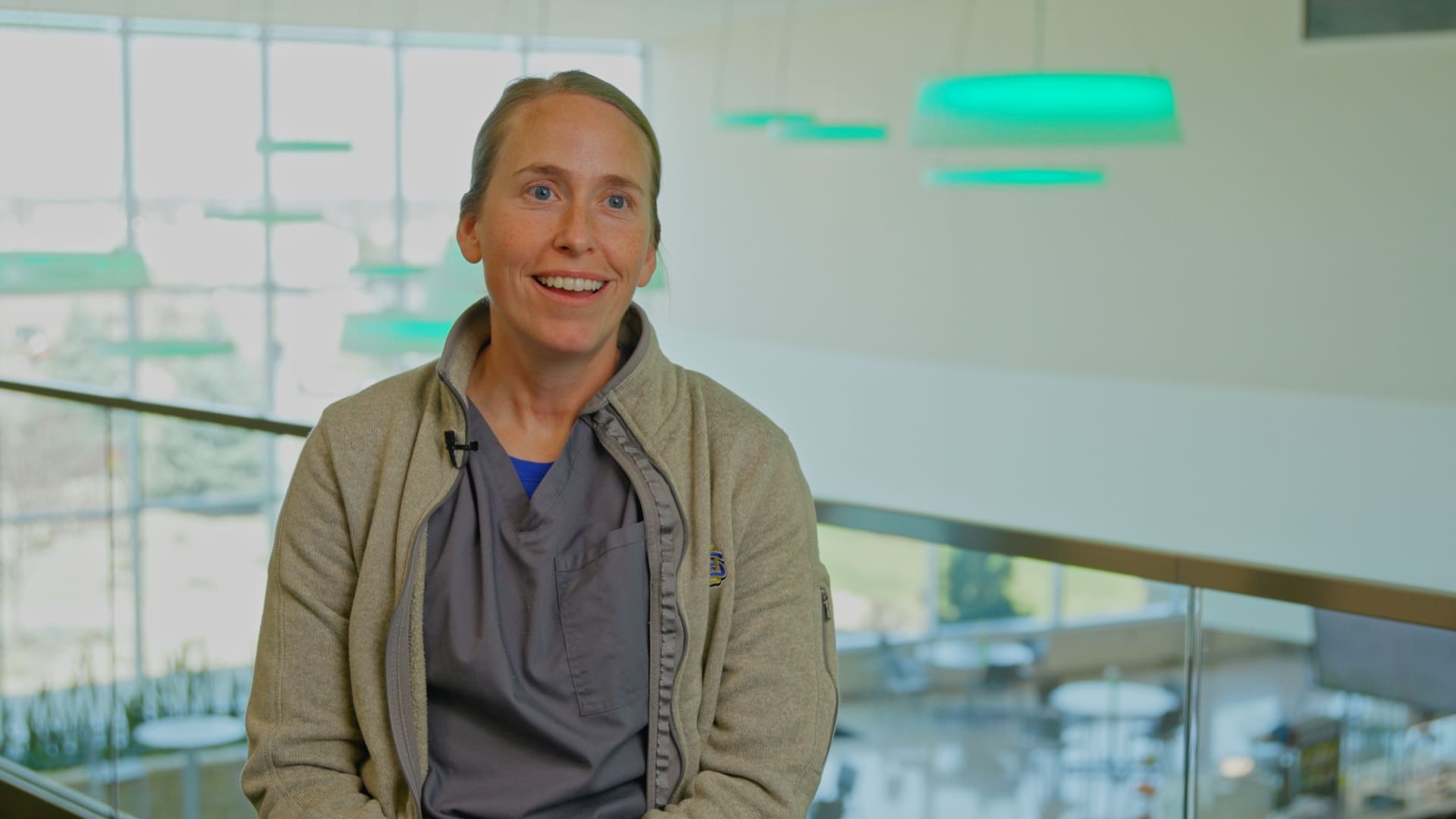
Dr. Kelly McKnight specializes in diagnosing and treating disorders and conditions of the hand, wrist and elbow, including an emerging surgical technique known as WALANT – wide awake local anesthesia no tourniquet. Patients are able to visit with their surgeon during the procedure, gaining insight into their condition, the anatomy and what to expect for rehabilitation.
“Wide-awake hand surgery is changing the practice of hand surgery as a whole,” said McKnight, a hand surgeon who joined Avera Orthopedics in 2024.
Carpal tunnel syndrome is the most common hand condition McKnight sees. It happens when the median nerve, which runs through the carpal tunnel – a narrow passageway through the bones in the wrist – becomes compressed. It causes numbness, tingling and pain in the fingers, hand and wrist.
“We used to think that it was directly associated with overuse, like typing or keyboarding, but studies have shown that’s not really true. It’s more a condition that if you’re going to get it, you can’t really prevent it,” McKnight said.
Good ergonomics are important — for example, sitting up straight and typing with your hands at a 90-degree angle from your body. But it’s not the end-all for preventing carpal tunnel syndrome, she added.
Other common hand conditions include:
- Trigger finger, when a finger or thumb becomes stiff and difficult to bend, so it feels locked in place, possibly related to inflammation of the associated tendons.
- Dupuytren’s contracture, a condition that causes permanent bending of the fingers, usually the ring and little fingers.
- Chronic tendinitis, inflammation of the tendons that attach muscle to bone.
When possible, treatment for hand conditions starts with nonsurgical options such as bracing and/or steroid injections to reduce inflammation.
“Patients know their bodies best, so I rely on that for driving the treatment decision. It depends on what’s bothering them the most and the severity of symptoms,” McKnight said.
When hand surgery is needed to improve functionality and quality of life, it might be possible for you to be wide awake during the procedure.
“It’s gained popularity for a lot of reasons. Patients are able to communicate with their surgeon, they’re able to ‘test drive’ surgical repairs, like is that tendon going to pull apart,” McKnight said.
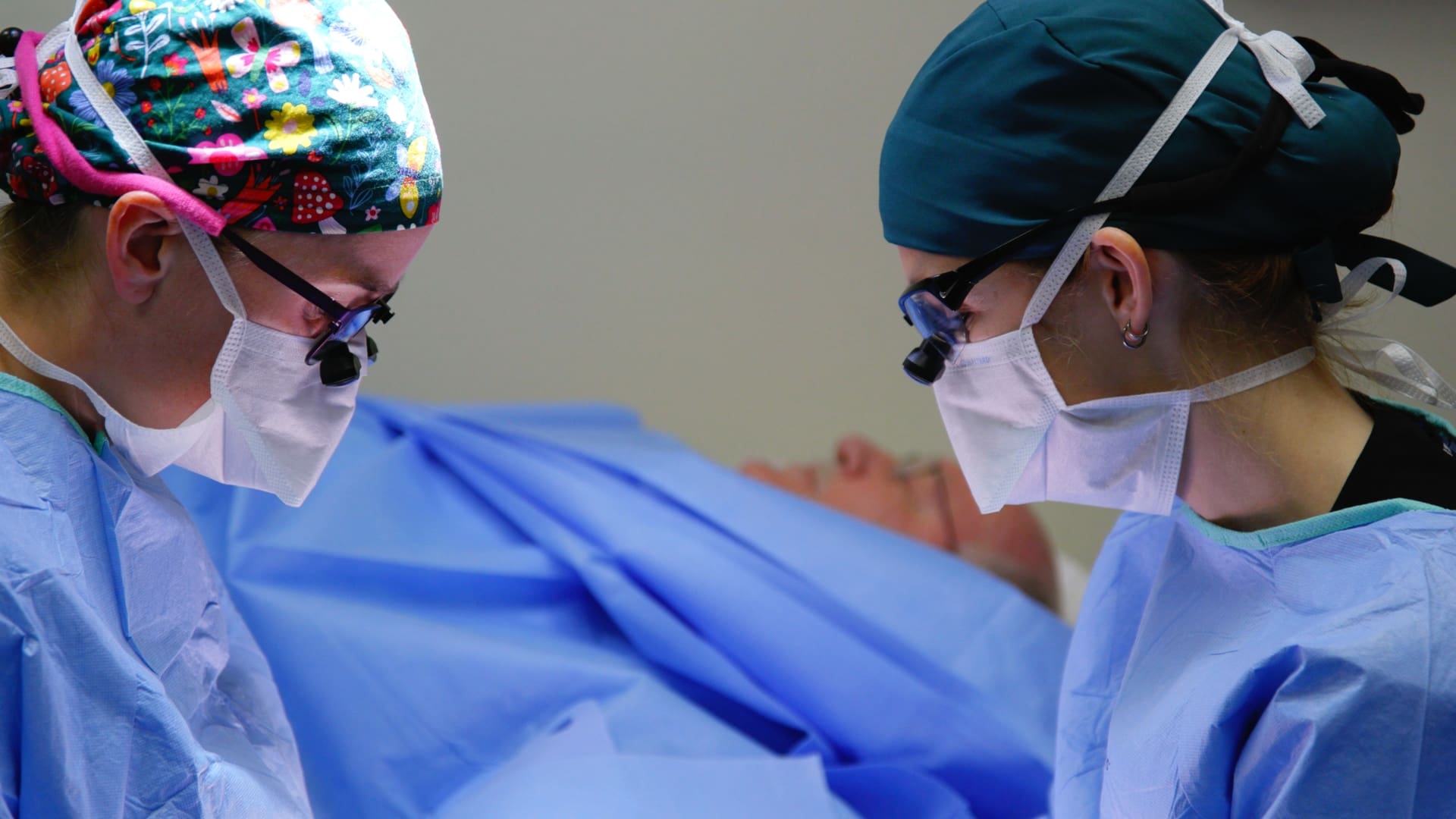
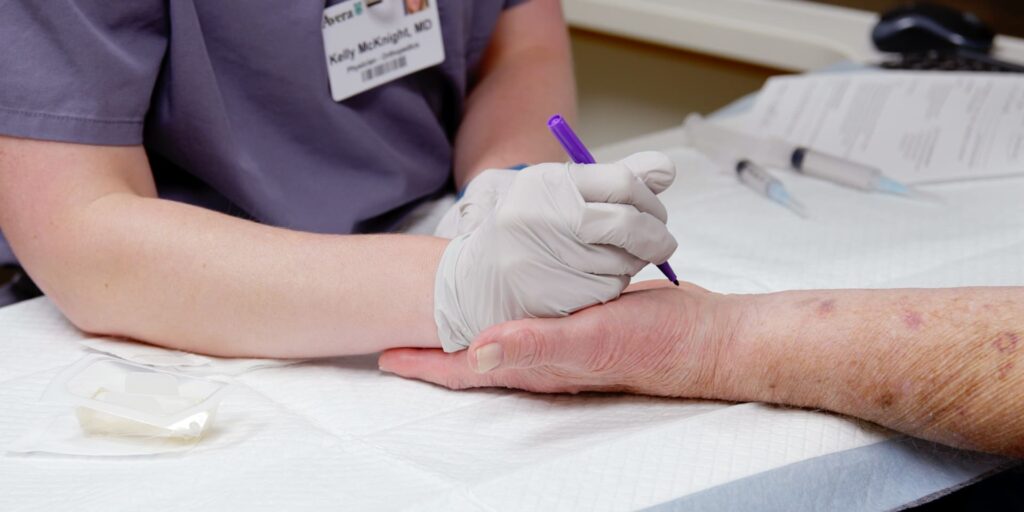
Patients are under only local anesthesia with a numbing medication known as lidocaine, so there are no restrictions on eating, drinking or taking medications. Patients don’t have to deal with post-anesthesia side effects like nausea, dizziness, drowsiness, headache or confusion.
Full anesthesia hand procedures often involve the use of a tourniquet to reduce blood flow to help the surgeon to see better. In “WALANT,” the “NT” is “no tourniquet.” Use of the drug epinephrine minimizes bleeding in place of the tourniquet, and this can reduce postoperative pain.
“I get to talk to the patient during the procedure about what I’m seeing. This gives the patient good perspective and an appreciation for what we’re doing to help them. If patients want to see inside their wrist or hand, they can take a look, while some would rather not,” McKnight said.
This good communication before, during and after the procedure aids in a faster recovery. With deeper understanding of the disease or process their body is going through, patients understand their need to follow recommended rehab exercises in order to recover well.
McKnight may perform WALANT procedures in a surgical suite at the Avera Specialty Hospital, but often they can be done in a procedure room in the clinic. “This lessens the burden on the surgery schedule and is often preferable to patients.”
There is usually not a long recovery period after hand surgery. “I try to get patients moving right away; I want them to be typing and using their hands,” McKnight said. Heavy grip and squeeze motions, like lifting a gallon of milk, might not be possible for a couple of weeks. “But most people can begin using their hands right away.”
Learn more about orthopedics at Avera and specialized care for the hand, wrist and elbow.