Sanford research leader recognized for impact on cell biology field
Jan. 28, 2025
This paid piece is sponsored by South Dakota Biotech.
The methods developed by a research leader at Sanford Health have gone on to be used in the work of scientists globally.
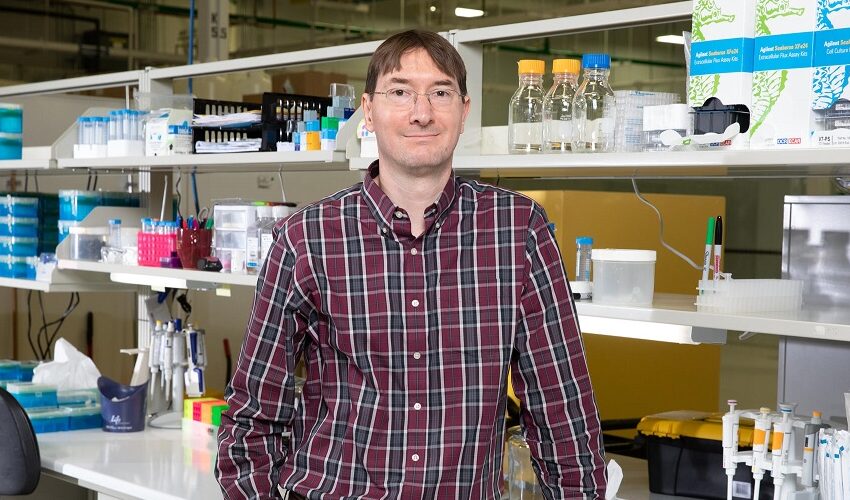
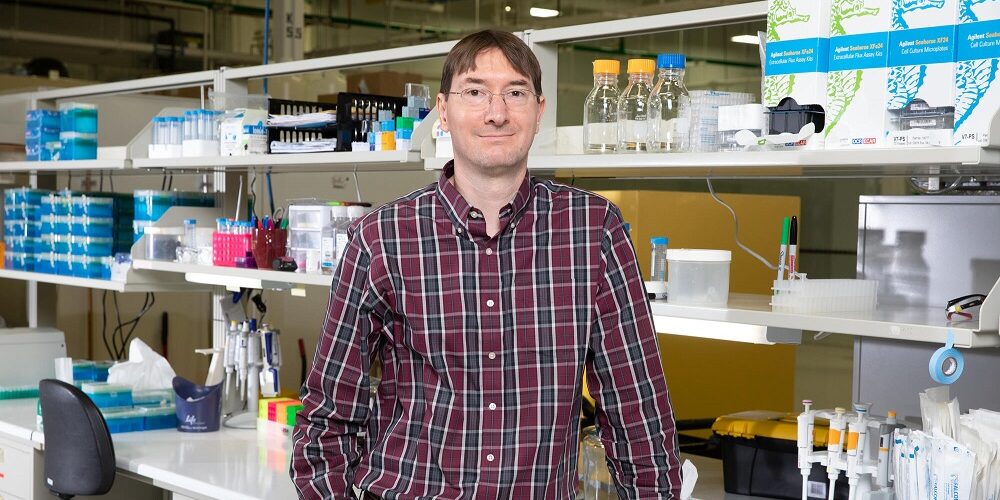
That and other contributions to the field led Kyle Roux to be recognized recently as a Lifetime Fellow of the American Society for Cell Biology.
Nominated by his peers to a cohort of 17 fellows, Roux was honored for his work developing BioID, an established method used by the scientific community to screen for protein proximity and interactions in living cells.
“This is a significant honor within the biotech field, and we’re excited to congratulate Kyle on such well-deserved recognition,” said Joni Ekstrum, executive director of South Dakota Biotech. “He’s an example of the caliber of researcher who is finding success in our state, and we’re excited to see how he furthers his work here.”

Roux serves as vice president of biomedical research at Sanford Research, leading a 20-lab team.
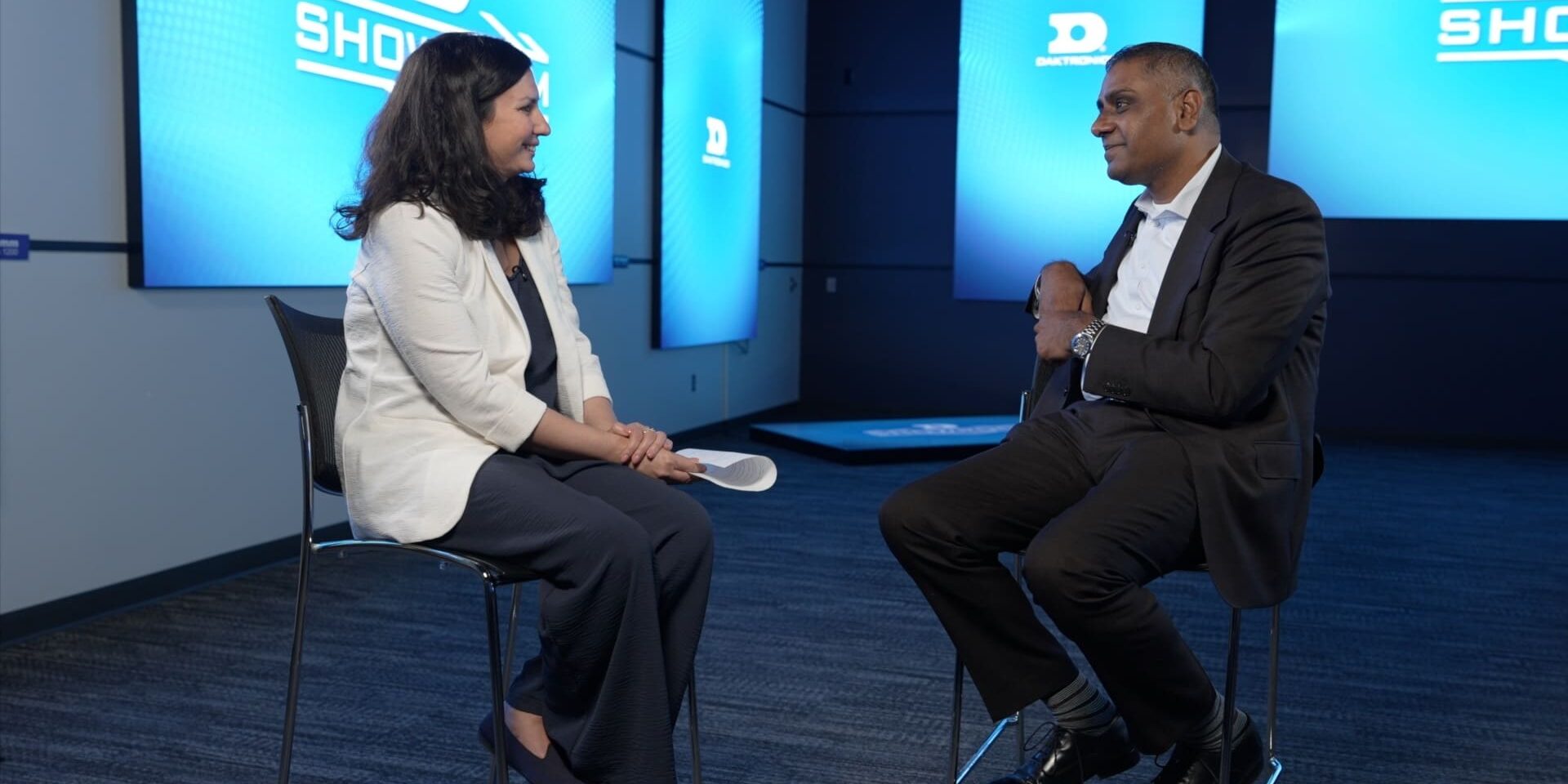
We sat down with him to learn more about his groundbreaking work.
What initially brought you to Sanford Research?
I arrived in 2011 and was among the early recruits for the Children’s Health Research Center. At the time, I was a junior faculty member at the University of Florida in their cell biology department and was exploring the job market. Sanford Research was relatively new at the time, but I took a leap and joined the group because it seemed like a great team and a collaborative environment, and it’s turned out to be a good choice.
How would you describe your primary research?
I’m a cell biologist, and I primarily study a structure inside all our cells called the nuclear envelope. This is the structure that surrounds the nucleus, where our DNA is kept, and it turns out it’s an important structure in the cell. Mutations in the nuclear envelope can mean you end up with a wide variety of rare diseases, including multiple types of muscular dystrophy, cardiomyopathy, lipodystrophy, dystonia, neuropathy, skeletal defects and progeria, which is premature aging. More common diseases, most notably cancer, also are associated with defects in the nuclear envelope. One of the areas we’re working on now is a phenomenon called nuclear rupture, where the nuclear envelope actually opens up, like cracking an egg, which isn’t good, but it turns out the cell has a sophisticated mechanism to repair those ruptures, so we’re working to characterize that.
How did this work lead you to develop BioID?
Studying the nuclear envelope is difficult. We’re mostly studying proteins and figuring out how they work normally in the cell and how they’re not working when they mutate. Proteins rarely work alone; they work in partnership with other proteins to accomplish a higher function. In a nutshell, BioID is an enzyme that works like putting a can of spray paint on proteins that allows you to generate a history of their associations so we can better study what’s happened in a living cell. Existing methods were not ideal for studying that, and BioID at first was a pretty radical method in comparison, so that’s how I started my research program, and I had a lot of success with it for a number of years.
How has this method advanced within the scientific community?
It’s become a workhorse for scientists around the world, and because of that, new techniques related to it have spun off. For many years, I supported other people doing that work and still do through a core I run to provide BioID services to other investigators here at Sanford and other places around the world. I know it’s being used around the world for all sorts of things I never imagined it would be used for. During the pandemic, we were able to use it on the SARS‑CoV‑2 protein to contribute to a database of protein interactions that were occurring with the viral proteins.
What does the recognition as a fellow by the American Society for Cell Biology mean for you?
It’s an honor to be nominated for it because that came from my peers. I’ve been a member of the Society for 20 years – it’s my scientific home, so it’s a community I’m heavily embedded in and engaged with. To be named a fellow is recognition of the accomplishments I’ve been fortunate to be able to have that have contributed to the scientific community.
What’s kept you at Sanford Research, and what would you say to others considering working in South Dakota?
My colleagues and the culture we’ve developed, along with support from the institution, is what’s really kept me here. We’re actively recruiting investigators, and I think we’ve been wildly successful with it. When I first came out, I had to look up and see where Sioux Falls was, but we’ve recruited from Harvard, we’ve got people coming in from Stanford and Duke and even the University of Dundee, so we’re attracting people from top-notch institutions from around the world, and I don’t see that changing. We’ve been successful by providing cutting-edge resources that allow people to establish and maintain impactful research programs and are doing so within an integrated health care system. I think the future is even brighter.
To connect with the growing biotech industry in South Dakota, visit sdbio.org.