New Sanford Virtual Center blends innovation, education with space for remote care
Nov. 18, 2024
There’s little about the new Sanford Virtual Care Center that resembles a traditional health care building.

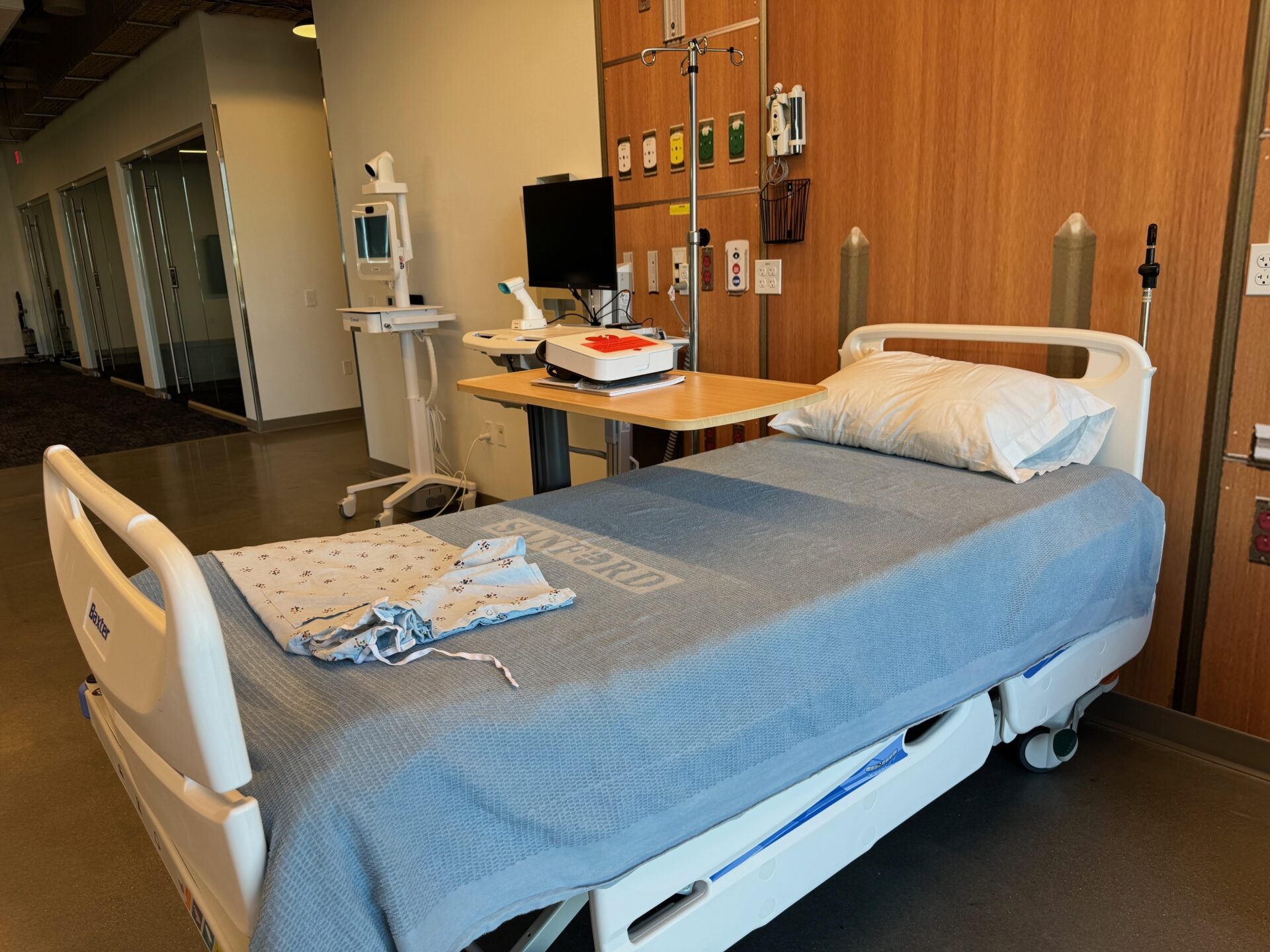
There are no patient exam rooms or hospital beds, minus a couple set up for training.
There are no laboratories or spaces for procedures.
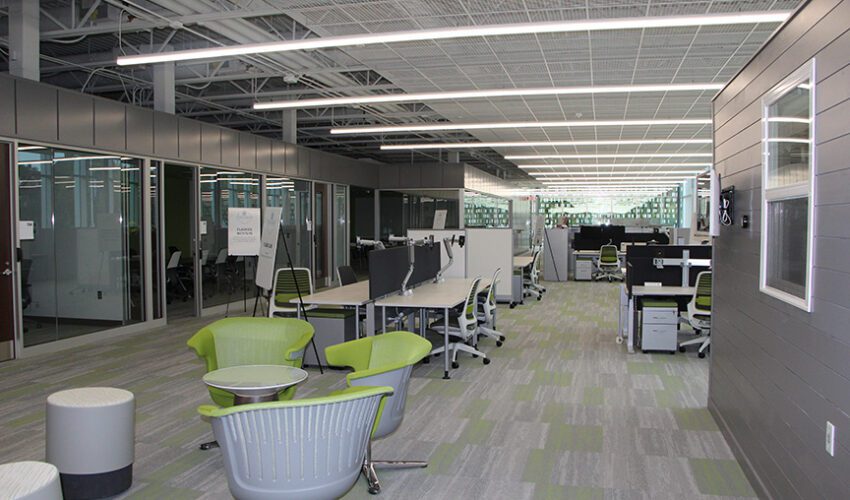
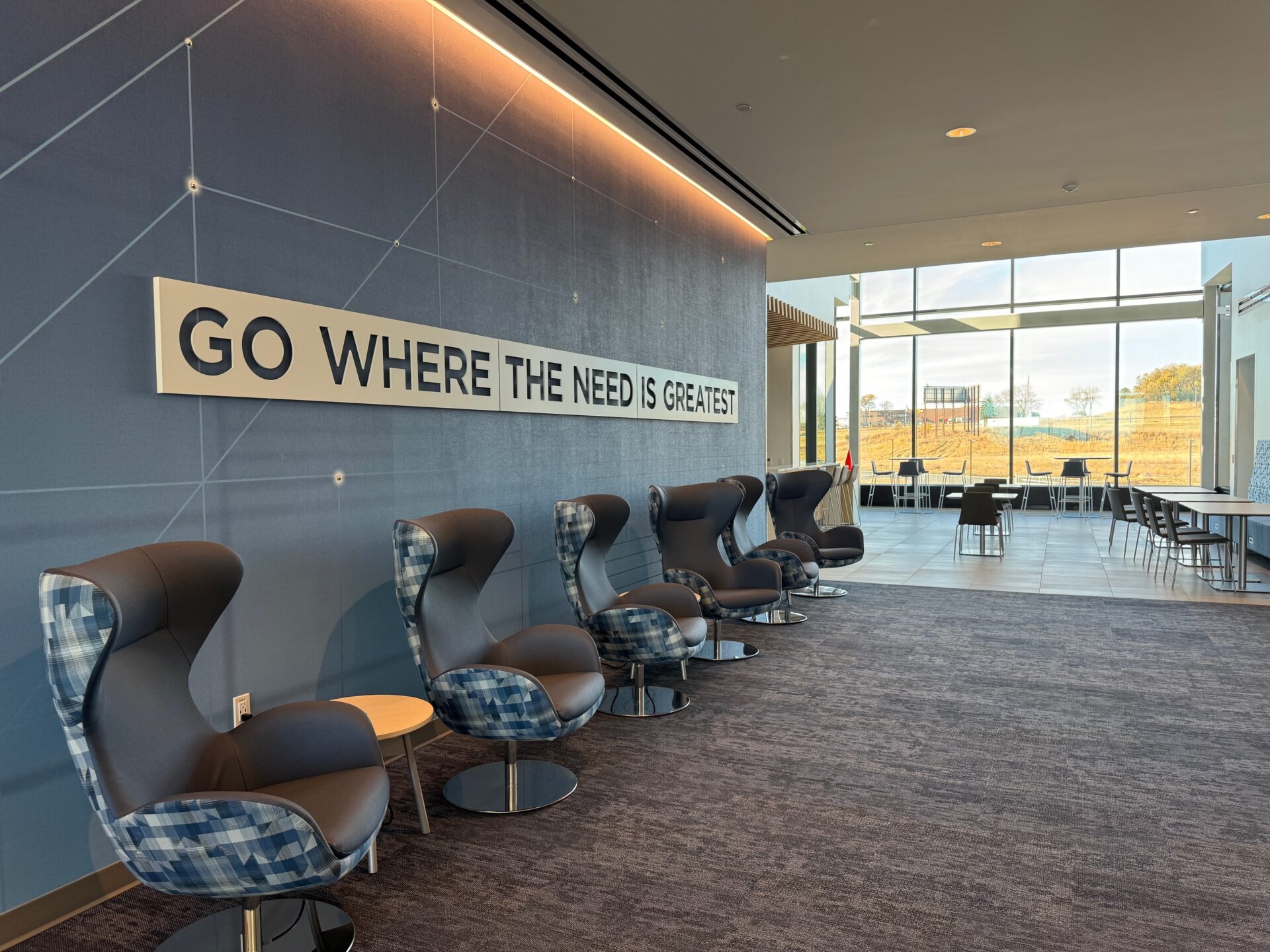
Instead, the building adjacent to the Sanford Sports Complex at 3001 W. Opportunity Drive looks and feels more like the high-tech workplace it’s envisioned to be — with designated spaces for learning, training, collaborating and innovating.

“Here is where all the teams come together and collaborate on strategy, on support for virtual care services delivered today and into the future,” said Susan Berry, vice president of operations for the Virtual Care Center.
“We are training our next-generation workforce, utilizing some of the newest technology.”
The valuation on the building permit for the 60,000-square-foot, two-story building was for just under $30 million, part of a $350 million gift from Denny Sanford to support a broader virtual care initiative within Sanford Health.
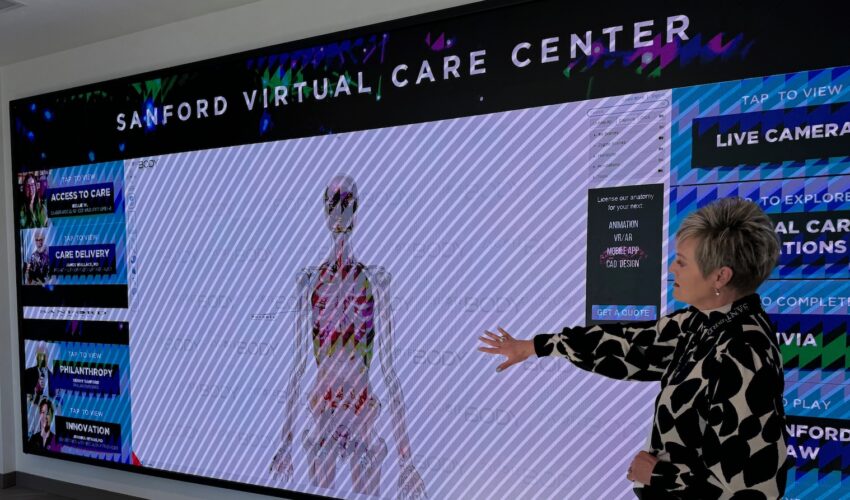
Inside, a large interactive wall — think of it as a digital dashboard — serves as a focal point in the entry, highlighting Sanford Health sites from throughout its geography and doubling as a teaching tool around areas such as human anatomy.

The idea is that the Virtual Care Center will have a public-facing element to some extent. Students will be invited for camp visits here, outside collaborators will come in to work with the Sanford team, and members of the public might participate in testing some of the innovations expected to be developed here.
“We have a ‘think it, make it, do it’ space to enable the entire cycle of innovation … to think about what’s next or what is possible,” said Katie Pohlson, vice president of innovation and commercialization for Sanford Health.
There’s even a maker lab that will offer 3D printing and “has all the tools you need to modify existing things and think about a better way to do it,” Pohlson said.
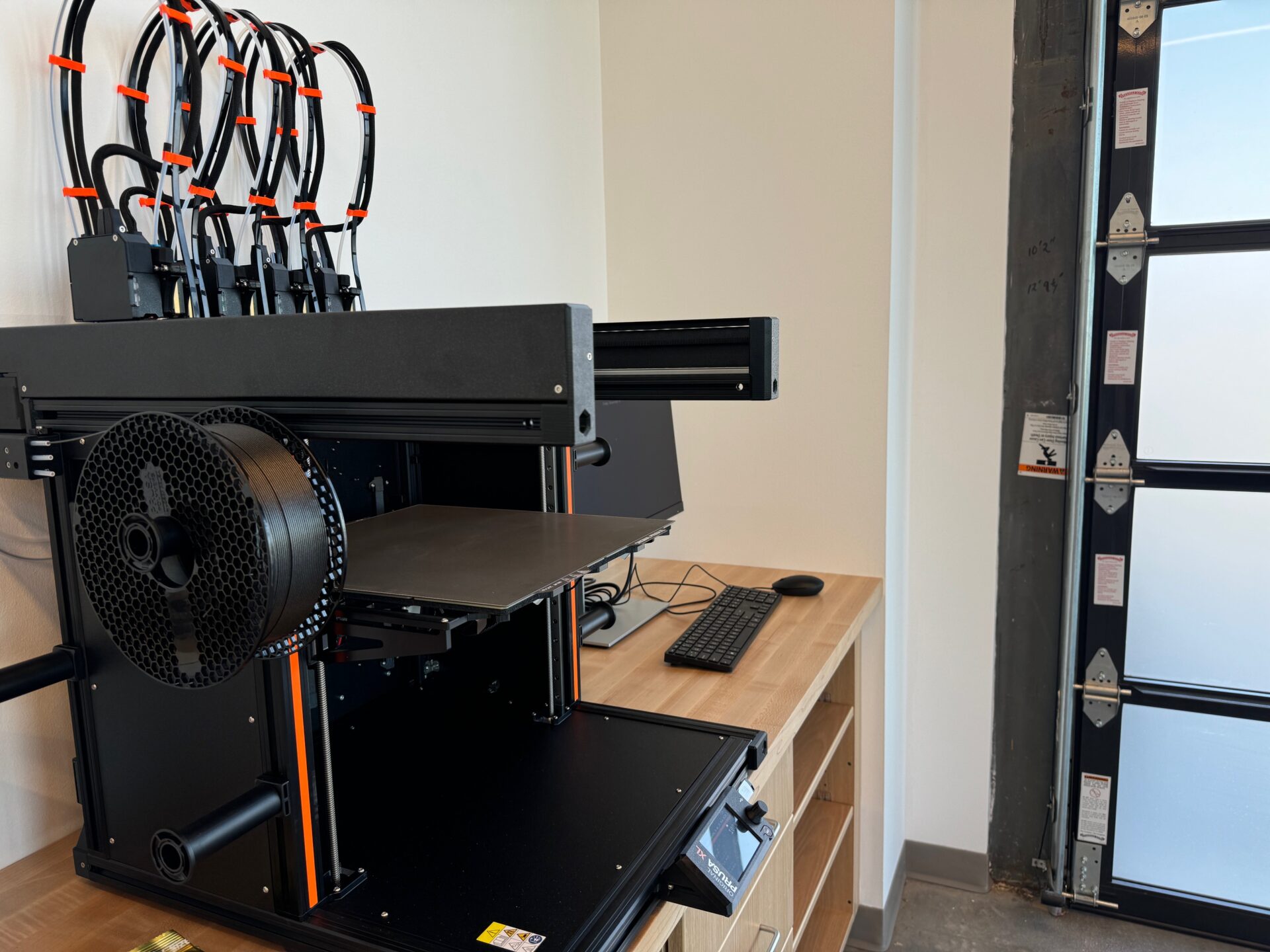
“The maker lab really is product innovation — where we can make modifications to existing devices, and that feeds into process change, too, of how we think about care redesign.”
The center’s adjacency to the new DSU Applied Research building that’s focused on cybersecurity research complements those efforts.
“As we look into mobile devices and cybersecurity, as you’re taking devices into new spaces, those collaborations are going to be really important,” Pohlson said.
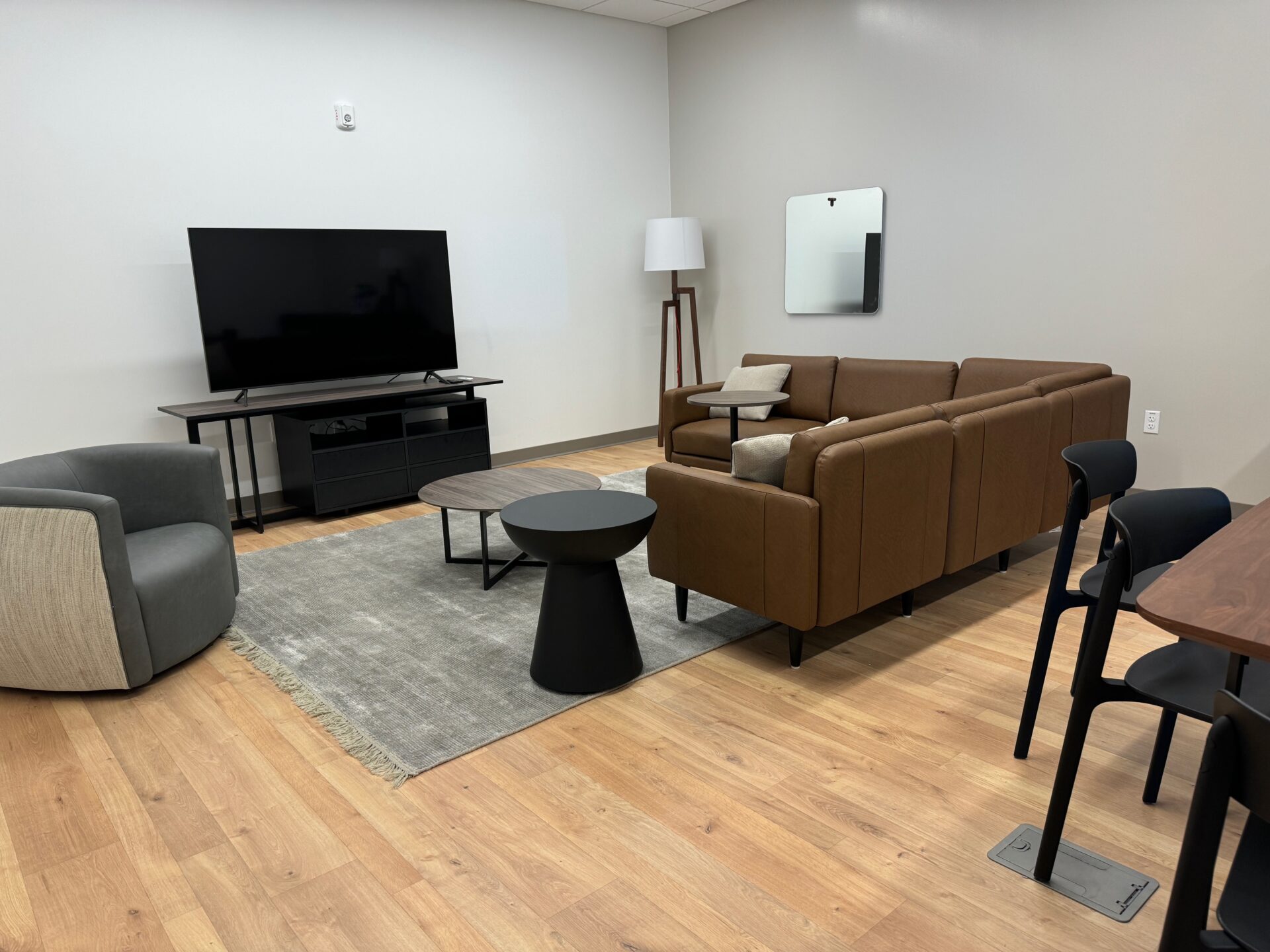
A “patient living room” within the building is designed to create a setting for testing in “more of a home environment,” she added.
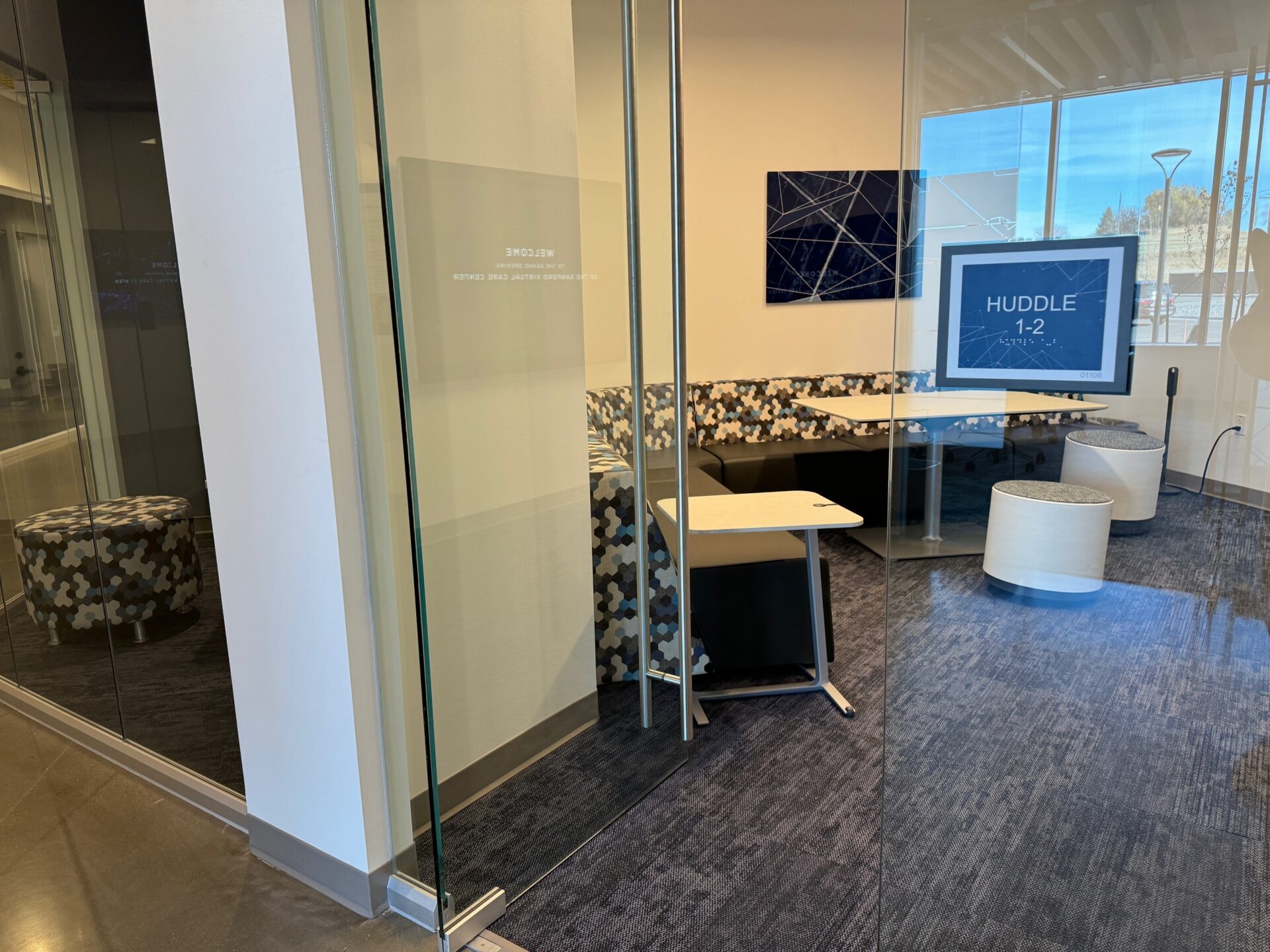
There are multiple collaborative and accelerator spaces that will be able to host potential innovation partners and help incubate startups.
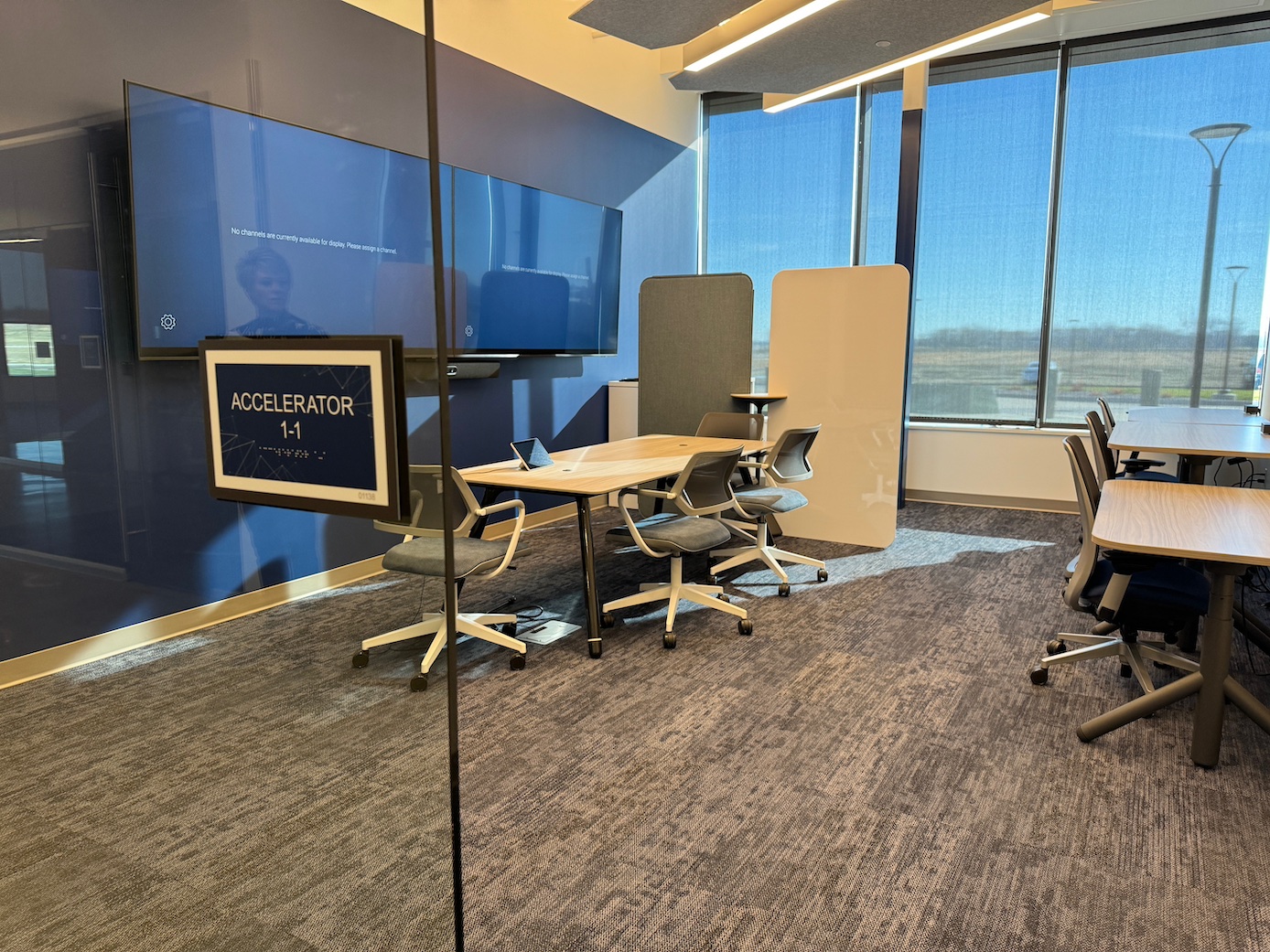
“It might be new AI developers understanding how best to integrate that into our health system but also co-develop where there’s maybe an existing solution and we can make modifications specific to our rural populations,” Pohlson said.
“We’re starting to hear from a lot of our providers with ideas they want to test out, and it’s so fun to have a space to explore that.”
Sanford’s growing rural geography is driving the need to enhance virtual care but so is a combination of technology itself, workforce demographics and an increase in patients’ needs and desire to receive care close to home or even in the home.
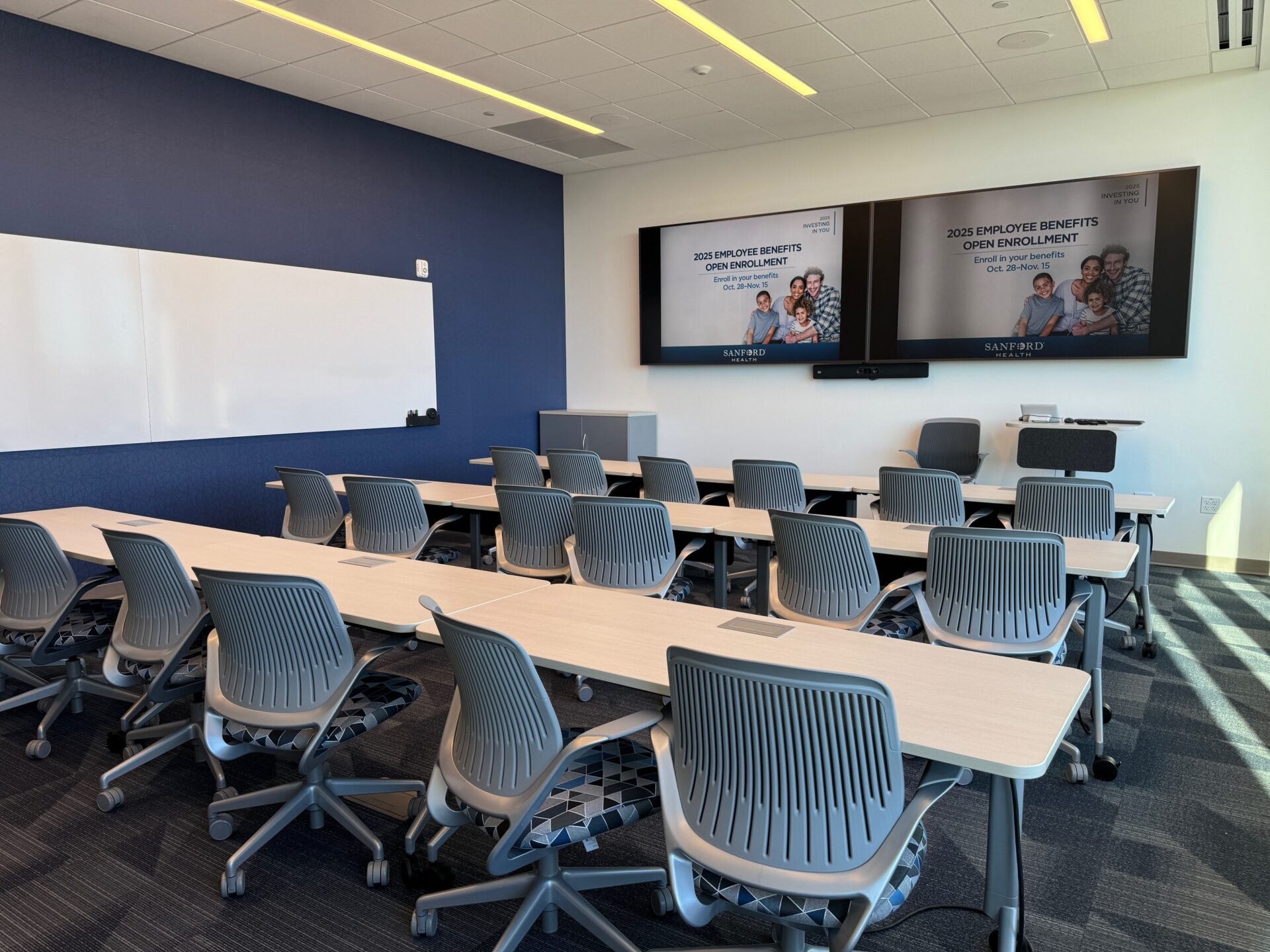
Within the Virtual Care Center, an education institute has been built with multiple classrooms and areas to train on virtual and augmented reality. The idea is to help upskill existing health care workers for the unique demands of virtual care while also exposing students to it.

“We will be teaching them about virtual care delivery and ‘webside’ manner, which will enable more clinicians to deliver virtual care as part of their practice, increasing access to services in our rural communities,” Berry said.
“It is a bit of a different way of training through the more immersive experience.”
Sanford also has moved its clinical call center to the building from a different office building, which takes incoming calls from across the system and helps refer patients to the best care option.
“They facilitate referrals, they take calls from clinics after hours, and they’re a multifaceted team that does a lot,” Berry said.
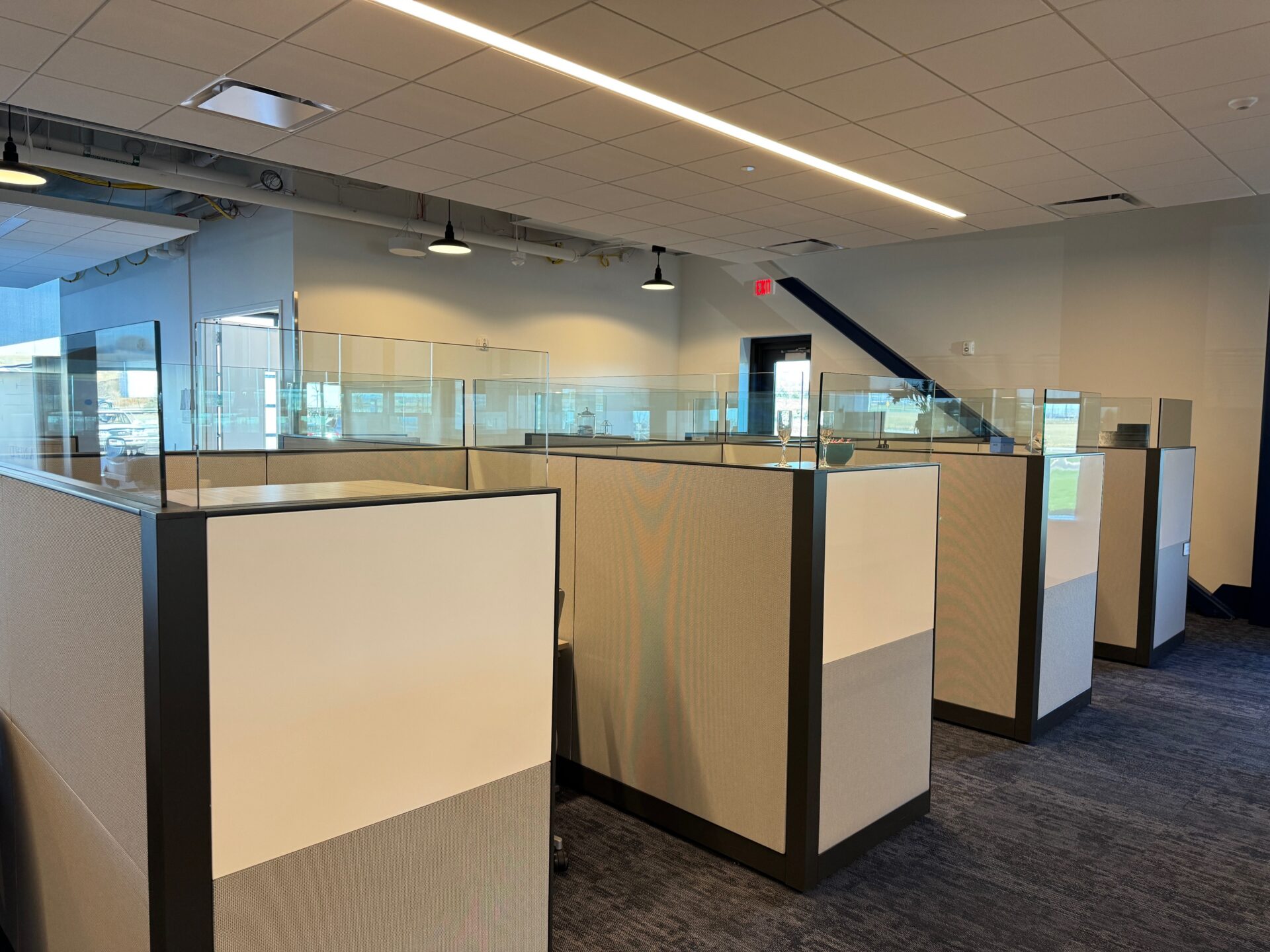
The Virtual Care Center also will be home to Sanford’s direct-to-consumer acute care — the virtual visits requested through Sanford’s MyChart — and it’s likely a virtual nursing service also will be located in the building. It’s being tested in Sioux Falls and Fargo before rolling out to smaller communities but involves a nurse overseeing patents virtually to monitor and assist the bedside nurse with things such as documentation and mentoring.
Other virtual services are provided across Sanford’s footprint and will continue to be, Berry said. An emergency room physician might assist virtually from the campus of Sanford USD Medical Center, for example.
“We are definitely seeing the trend with the younger providers coming in — they want the flexibility to be able to work where they want, whether that’s from the medical center, from here or from home,” Berry said. “We have some physicians who are part of the aging population and maybe the delivery of virtual care from their home could extend how long we keep them.”
Virtual emergency services already include trauma, stroke, burns and behavioral health.
“All our critical access hospitals have access with the touch of a button to an emergency-trained nurse and whatever specialist they need to assist them in evaluation, stability and a treatment plan,” Berry said.
The Virtual Care Center also include a technical operations center, with an IT support team focused on monitoring and maintaining the network needed to deliver services.
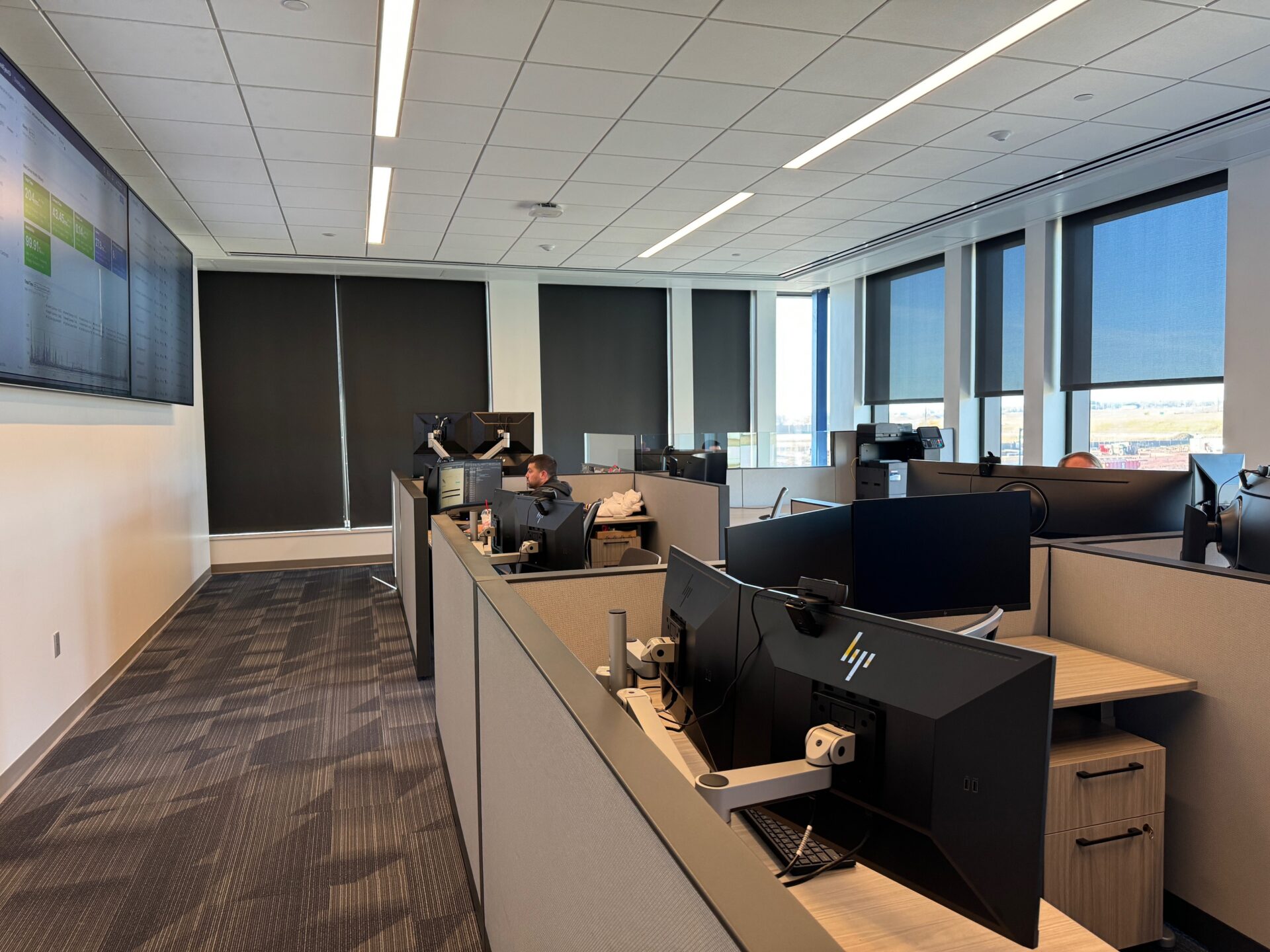
If carts used for emergency services are offline, for example, the team can see it and respond or even reboot remotely.
A ribbon-cutting is scheduled for 4:30 p.m. Tuesday.
“We’re just super-excited to be able to find and develop solutions for rural health care delivery — what’s next and imagining what’s possible,” Berry said.