Jodi’s Journal: 20 years later, Big Boom symbolizes path needed for progress statewide
Dec. 7, 2025
Forget the moment that created a viral video in an era that hadn’t even seen the phrase yet.
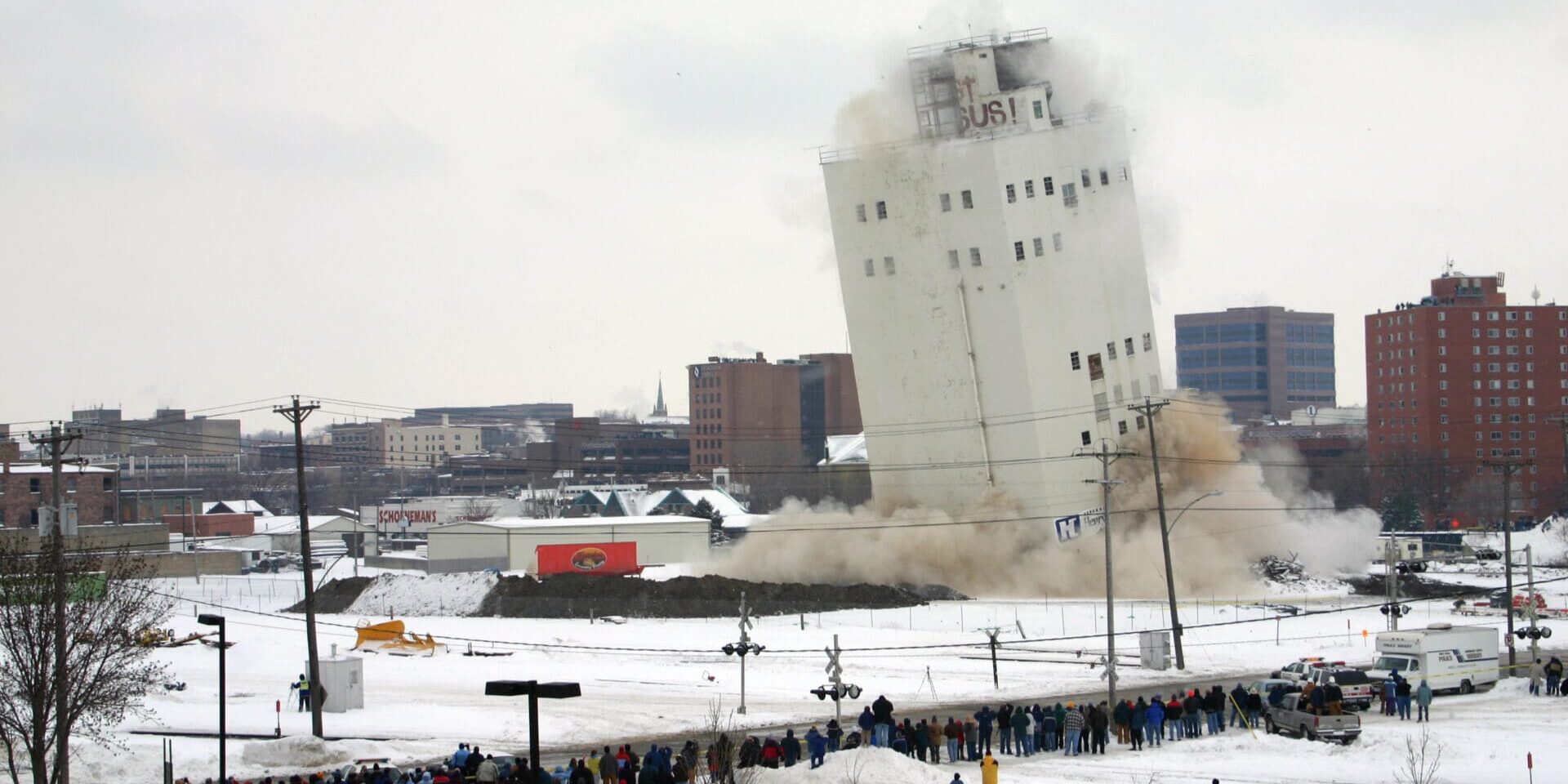
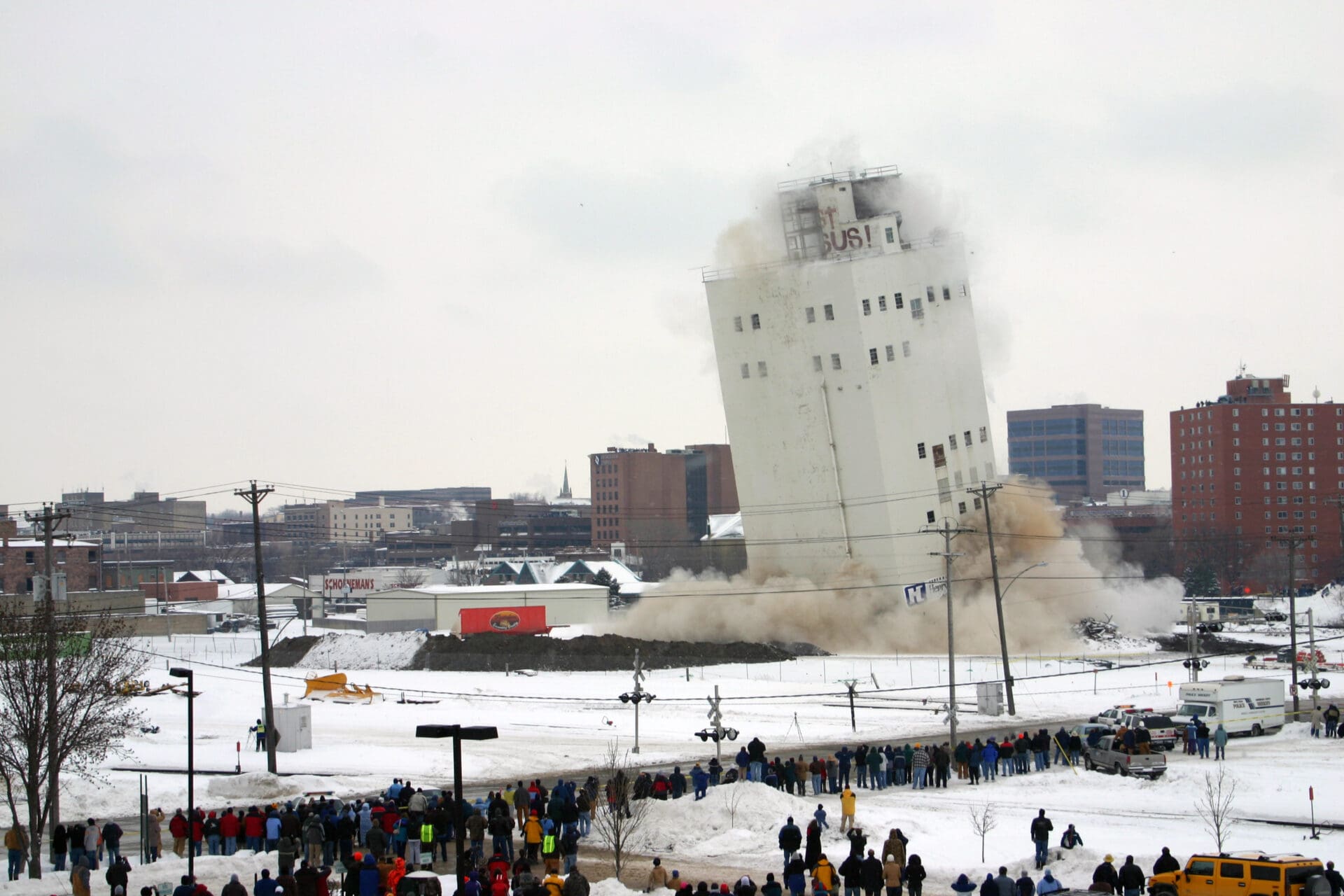
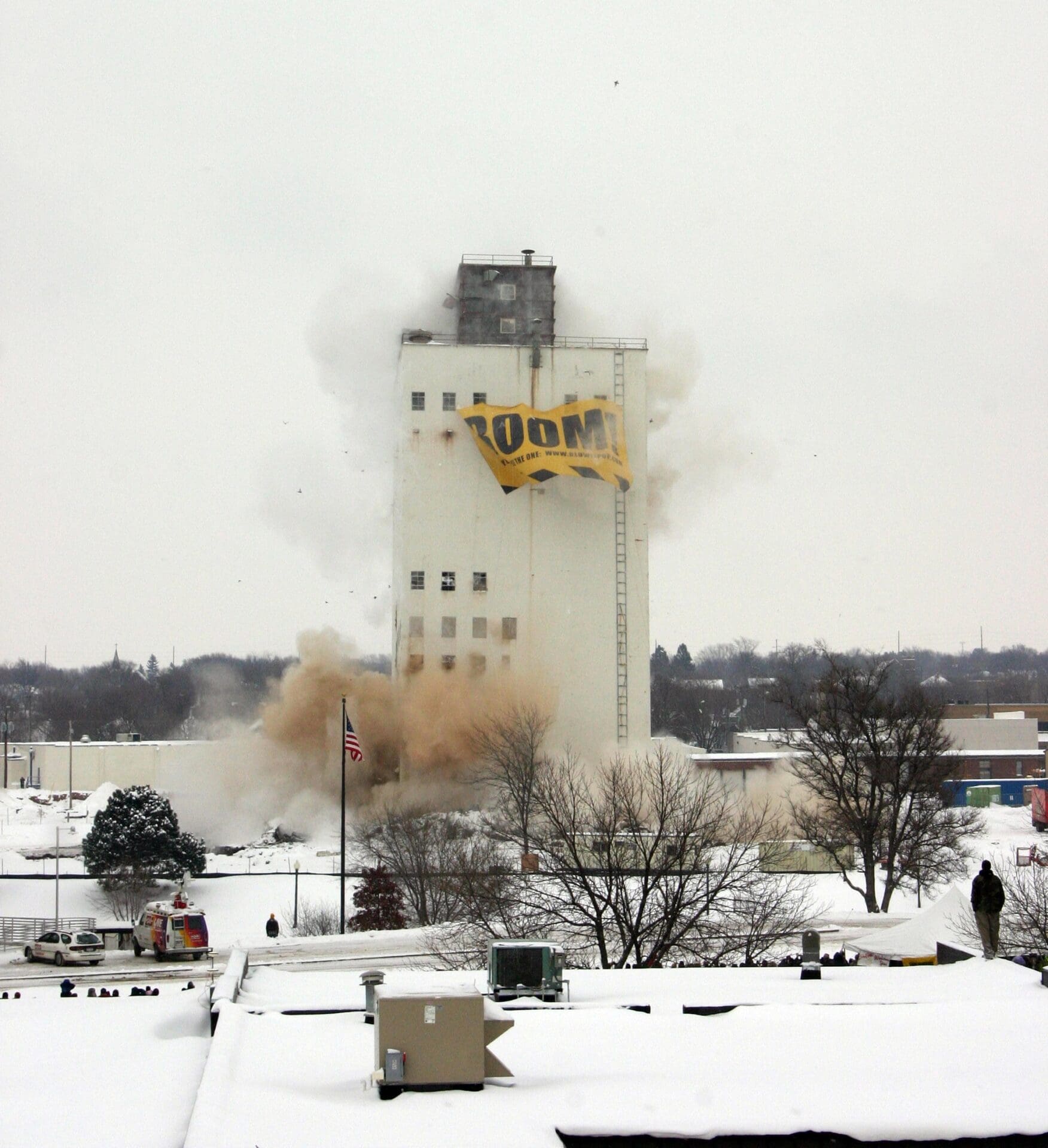
What most people I talked with ahead of last week’s 20th anniversary of “The Big Boom” demolition at the former Zip Feed Mill site remember first is exactly what I do: the cold.
How cold was it Dec. 3, 2005?
The record I found said a high of 14 degrees, and I remember feeling every bit of it layered up to anchor live coverage of the day for KELO-TV.
There was snow on the ground from an early-season snowfall, making the whole scene rather like what we experienced last week.
Of course, what has changed since then is the real story.
“The old Zip was full of pigeons and rats. This was not a pretty area. This was a real industrial site,” said Jeff Scherschligt, founder of Pendar Properties, which took on the task of redeveloping the property.
When the city did its first downtown development plan in 1987, three key sites were identified for redevelopment: Schoeneman’s Lumber, Sioux Steel and the Zip Feed Mill, said Mike Cooper, past director of planning and building services.
“He (Scherschligt) had the vision to take the initiative,” Cooper said.
I agree, but Scherschligt is and always has been quick to call the plan for the area the community’s vision, casting himself as the one to help execute it.
Regardless, what has taken place on the land didn’t just revitalize an underutilized property. It changed the way Sioux Falls thought about and addressed the Big Sioux River.
Cherapa Place was the first development to fully embrace its riverfront setting, compelling the city to finally invest in its long-discussed riverfront improvements and paving the way for subsequent projects at the Lumber Exchange and Sioux Steel.
Last week, we announced that Dec. 12 will be the opening day for Pomegranate Market, bringing a long-awaited new grocer downtown — one more ingredient in creating the thriving ecosystem necessary to attract and retain residents, businesses and visitors.
“I have an old picture of Eighth Street from the early 1900s, and I look at it today and think this is just unbelievable,” former Mayor Dave Munson said. “What happened down there, and everyone who came together, that was truly the government working with the private sector.”
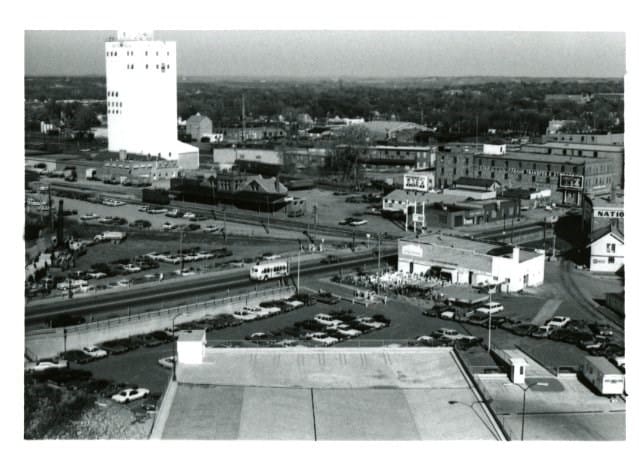
Courtesy of Siouxland Heritage Museums
Twenty years later, Mayor Paul TenHaken agrees.
“Prior to serving in this role, I had a lack of appreciation for the importance of public-private partnerships in developing strong, lasting community assets,” he told me.
“In order to be successful, you need to have willing partners in City Hall and in the development community who don’t care who gets the credit but who want to partner for the overall good of the city.”
Sioux Falls has succeeded for decades because of that mentality, not just in the city’s downtown but in every direction — whether it’s coming together to create Foundation Park in the northwest to support industrial development or investing in road and utility improvements to enhance infrastructure.
The same mentality needs to be embraced at the state level.
Last week, Gov. Larry Rhoden acknowledged South Dakota’s essentially flat revenue by proposing a state budget with no increase in funding next year for schools, Medicaid providers and state employees.
At the same time, an annual Migration Patterns Study from Atlas Van Lines revealed that South Dakota is among the top 10 states where more people moved out than moved in from Nov. 1, 2024, to Oct. 31, 2025. There are similar reports from other companies where the state tends to rank higher, but they won’t be available for at least another month.
After years of ranking at or near the top of CNBC’S Best States for Business list, our most recent ranking this year was 35th.
The point is this: Public-private partnerships, like the one that birthed Cherapa Place, are the path to creating a place where businesses want to invest and residents subsequently want to put down roots. There are limited tools that allow for those relationships in cities across South Dakota and at a state level. Those that do exist should have appropriate guardrails but absolutely should continue to be an option in an increasingly competitive economic development landscape.
Cherapa Place would not exist, certainly at the scale it does, without tax increment financing, for example, nor would any number of other transformational downtown developments.
Foundation Park’s tenants would not be here in many cases but for certain economic incentives made available through the city or state.
As a new legislative session looms, South Dakota ought to be contemplating what strategic investments need to be made for the state and for communities to become more competitive in attracting businesses, residents and visitors. If the state or the city were a business, any worthy leader would put at least as much — hopefully more — energy into figuring out how to grow revenue versus cut expenses.
South Dakota also appears in little danger of becoming a leader in taxation. Quite the opposite — according to this recent analysis by WalletHub, which ranked the state No. 46 nationwide for tax burden.
Critics argue even our limited economic incentives benefit only big business.
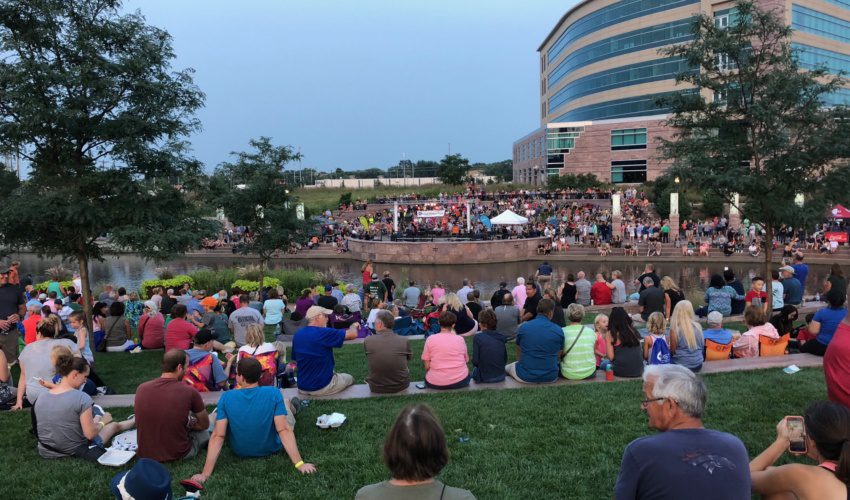
And that makes it even more timely to point out what happened Saturday, inside the underground parking garage at Cherapa Place, where for more than a decade Pendar Properties has allowed us to host the 605 Made Holiday Market. Despite the snow, thousands of people shopped and supported work from more than 50 area makers — some of the smallest business owners in our community.
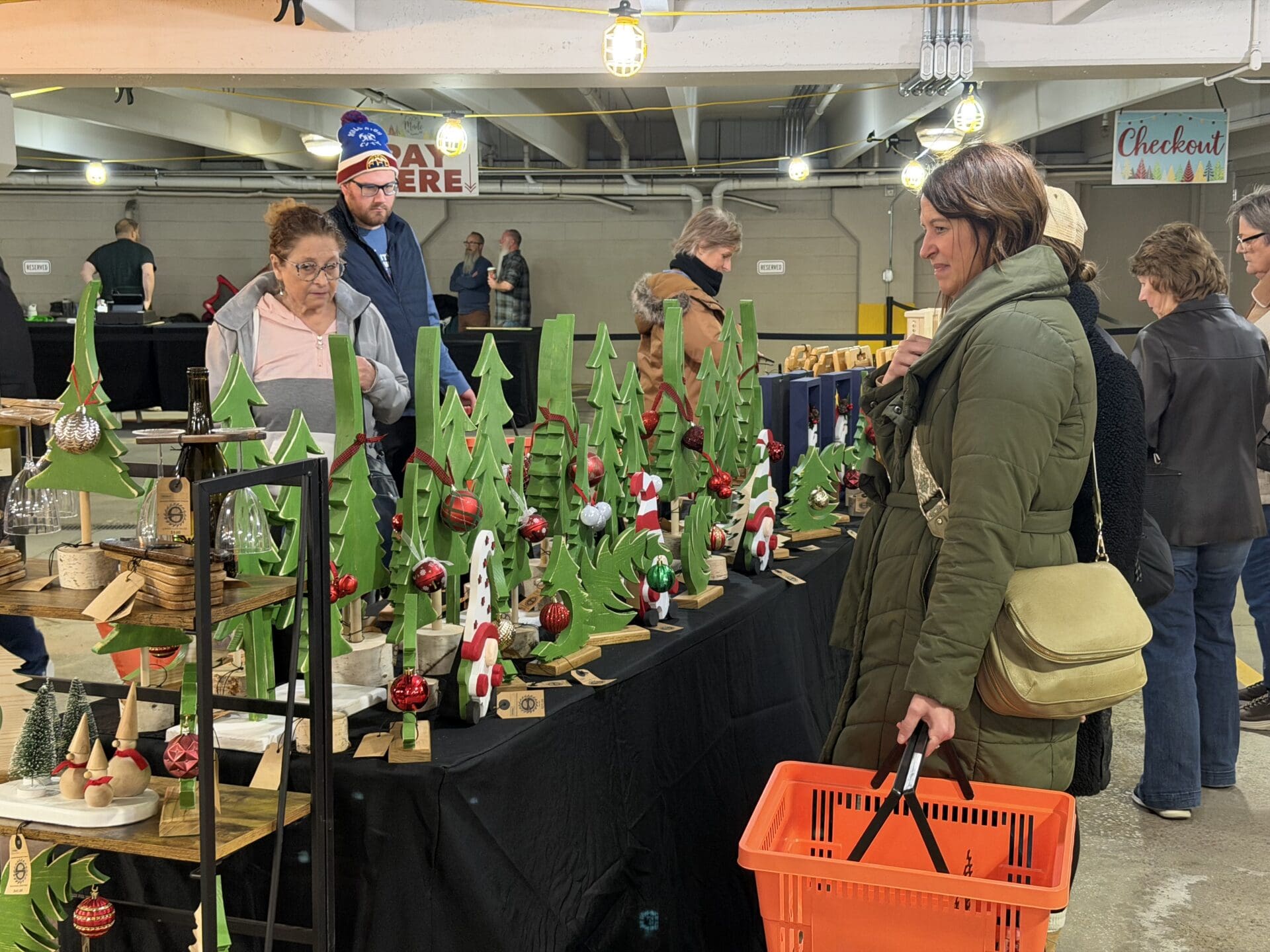
The event draws people in large part because it is held in a one-of-a-kind location in a vibrant downtown. That’s possible only because of the collective investment made here.
Look at what it was:
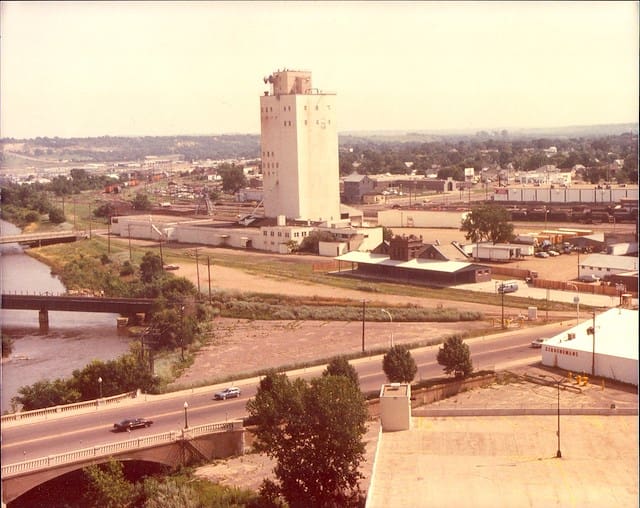
And look at what it is:
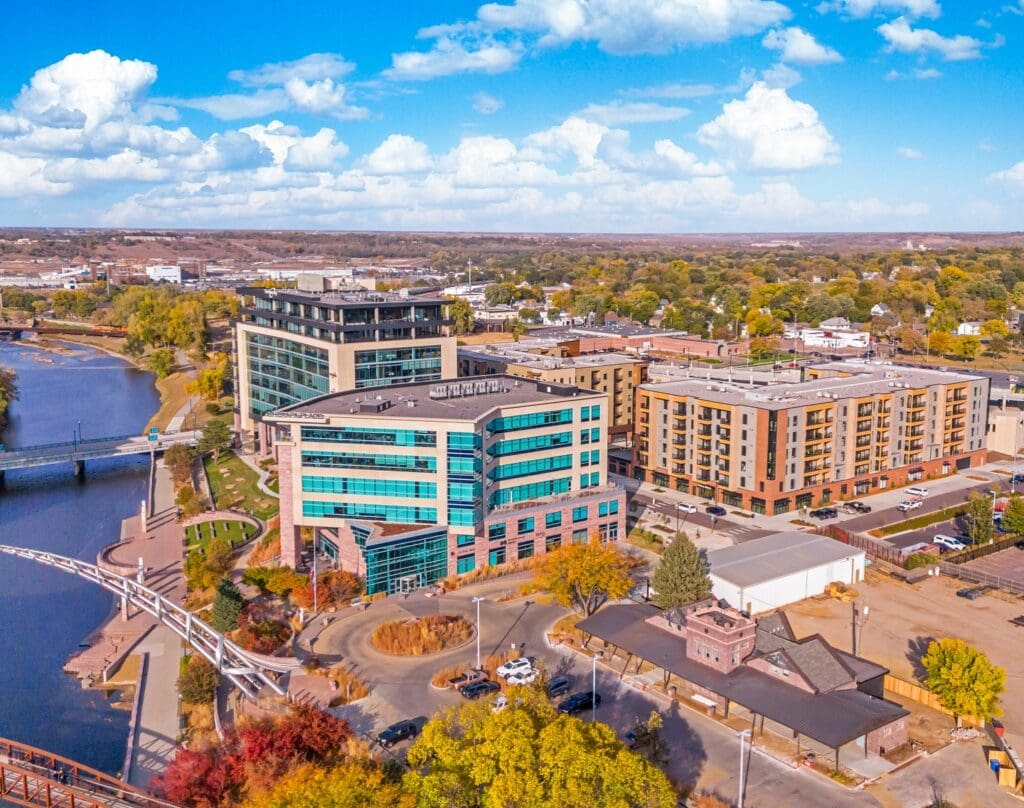
“We’ve been dedicated to use this land to the highest and best use for the future of downtown Sioux Falls,” Scherschligt said. “Sioux Falls was such a dynamic community but needed to go to the next level. What we did was work very hard to carry out the community’s vision.”
It is not easy. There are unknowns and increased costs with downtown redevelopment, and “the struggle is, I always say, Sioux Falls has Minneapolis construction costs and Sioux Falls rents, and to weigh and balance those two factors is very difficult in this market,” Scherschligt said. “You have to be very disciplined to reduce your soft costs and land costs in order to build a quality structure with architectural features.”
That drives the need for public-private partnerships even more.
We needed The Big Boom. We needed it to show the community its leaders were committed to building for the future — and to give us all an amusing collective memory.
We could use another one, in my opinion. But first, we have to ensure that the table is set for the same kind of subsequent success.
‘Big Boom’ marks 20 years as downtown development enters final stage