From Sioux Falls to NASA, engineer brings unique specialization to aerospace career
March 26, 2025
This paid piece is sponsored by South Dakota Biotech.
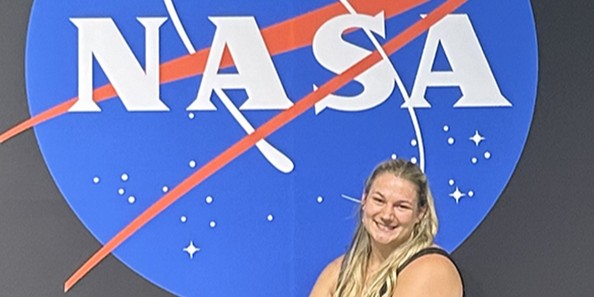
Less than six years after graduating from Washington High School, Jenna Sayler is leading a team at NASA.
The journey from Sioux Falls to Marshall Space Flight Center in Huntsville, Alabama, winds west through South Dakota Mines, where Sayler became the first graduate in the school’s new ceramic engineering minor.
Her unique education combined with multiple NASA internships during college set her up to secure a role in the nonmetallic materials and space environmental effect group — a team that has not hired a new college graduate in three decades.
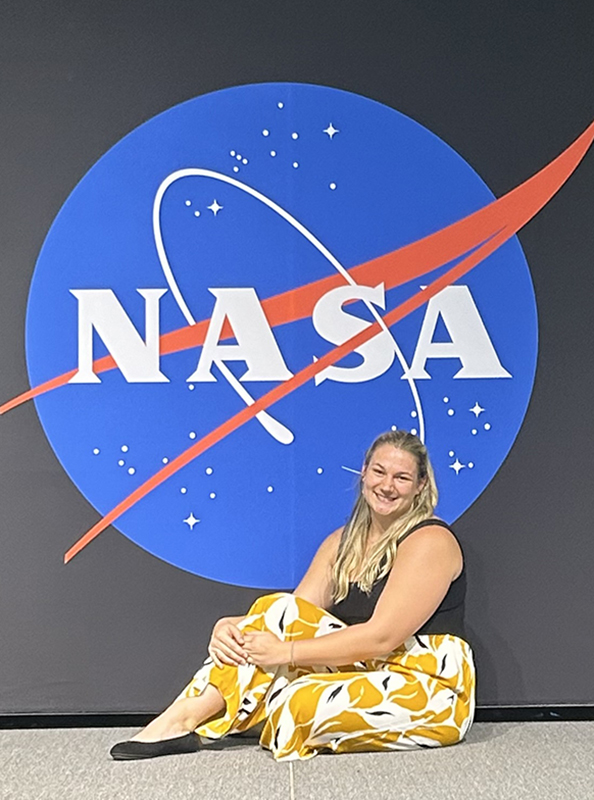
“If I’m going to be honest, I didn’t know exactly what direction my career would take” Sayler said. “But I knew I wanted to do something hands-on and that I wanted to develop and create, and as I progressed through my classes, I learned what I liked and what I didn’t want to do.”
The Sioux Falls native chose South Dakota Mines for its small size, heavy interaction with professors and its rigorous approach to learning. She followed in the footsteps of her mother, aunt and sister who all attended South Dakota Mines.
“The women in our family are STEM people,” she said.
While Sayler began thinking of chemical engineering, she was sold on the school’s metallurgical engineering program and then added her ceramics minor.
“That background helps me every single day at work,” she said. “The metallurgy background is huge in the aerospace industry, and the ceramics is the cherry on top with the knowledge I have.”
Sayler’s role puts her at the forefront of space exploration, spearheading research in additive ceramics, supporting liquid engine technology and leading plasma torch innovation – all critical components in NASA’s mission to push the boundaries of what’s possible in space.
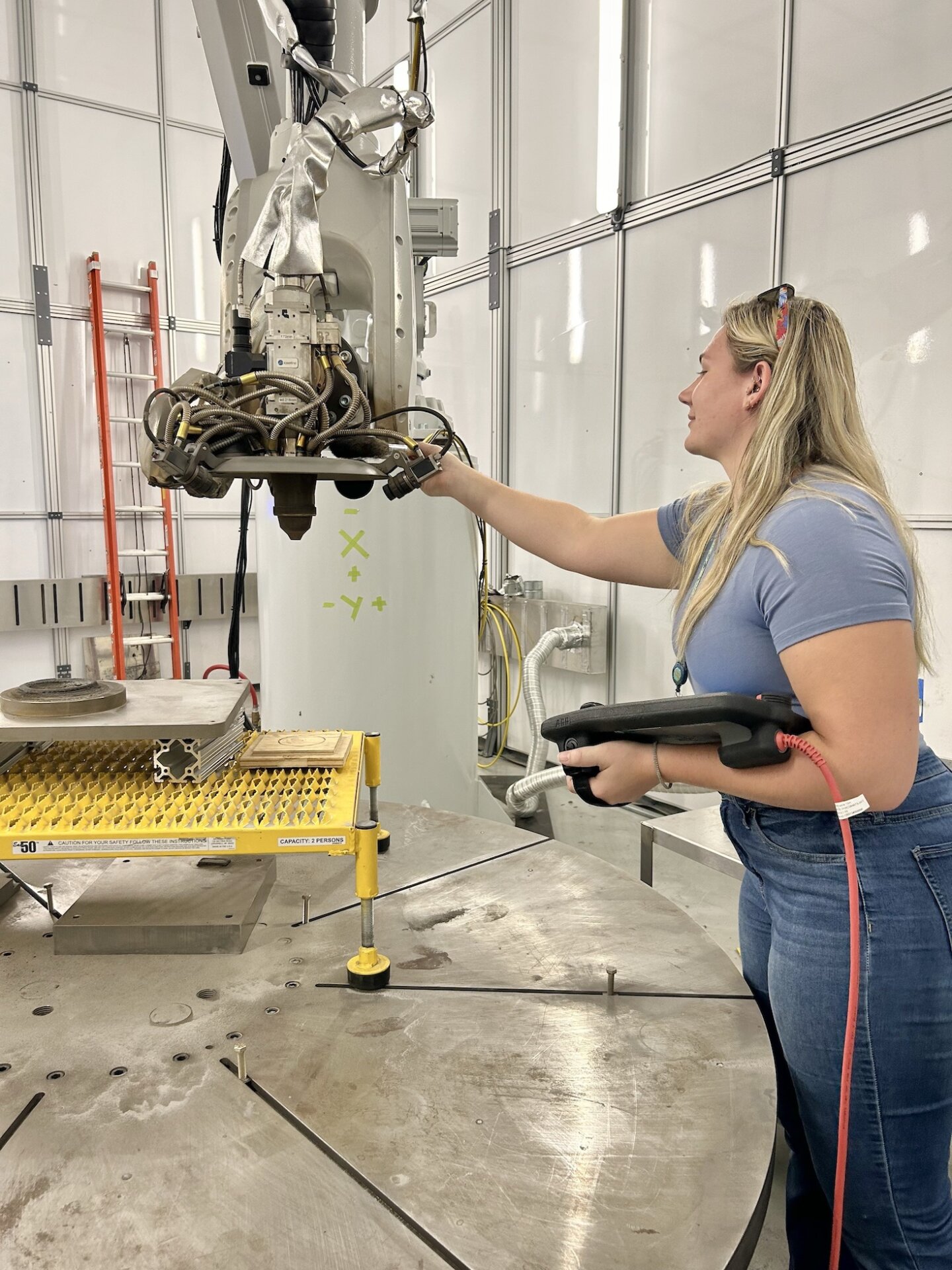
Sayler graduated in May 2024 and has been working full time for NASA since January, following internships that began after her junior year.
“Jenna’s achievements are amazing and the sort of experience we love to celebrate,” said Joni Ekstrum, president and CEO of South Dakota Biotech. “From her early education in Sioux Falls to her outstanding specialization at South Dakota Mines, she’s the sort of graduate who can inspire others to see what’s possible in our state. The program at South Dakota Mines is going to lead to even more of these opportunities for students.”
Sayler said she “fit into the puzzle” of what NASA was looking for. “They are just really getting into ceramics heavily right now, and because their knowledgeable ceramicist of 20 years recently retired, I was able to step into that role using my recent experience from my ceramics minor.”
She is part of the ceramics and ablatives team within the EM41 branch – the nonmetallic materials and space environmental effect group responsible for supporting, directing and conducting nonmetallic material research and space environmental effects testing across the entire life cycle of space exploration hardware. She also works with the advanced manufacturing branch, getting more acquainted with the Marshall Space Flight Center’s various printing machines and robotics.
Additionally, Sayler oversees additive ceramics, supports liquid engine operations and leads the plasma torch team — continuing many of the projects from her internship while embracing new responsibilities.
Since starting full time earlier this year, Sayler has taken the lead on operating NASA’s new ceramic printing machine and the material testing and ceramic material characterizations needed to create more sustainable parts/components for high-temperature applications.
“An example of these high-thermal parts are tungsten throat rings that get really degraded from how hot our test motors burn. Our motors burn so hot that they actually burn through the tungsten,” Sayler said. The team is learning and exploring how to develop parts on the ceramic printing machine and how to verify their reusability.
“Our goal right now is to print some parts to test and evaluate in high-thermal conditions and see how well they hold up. If we can get certification on our printing capabilities in the next three years, that would be amazing,” she said.
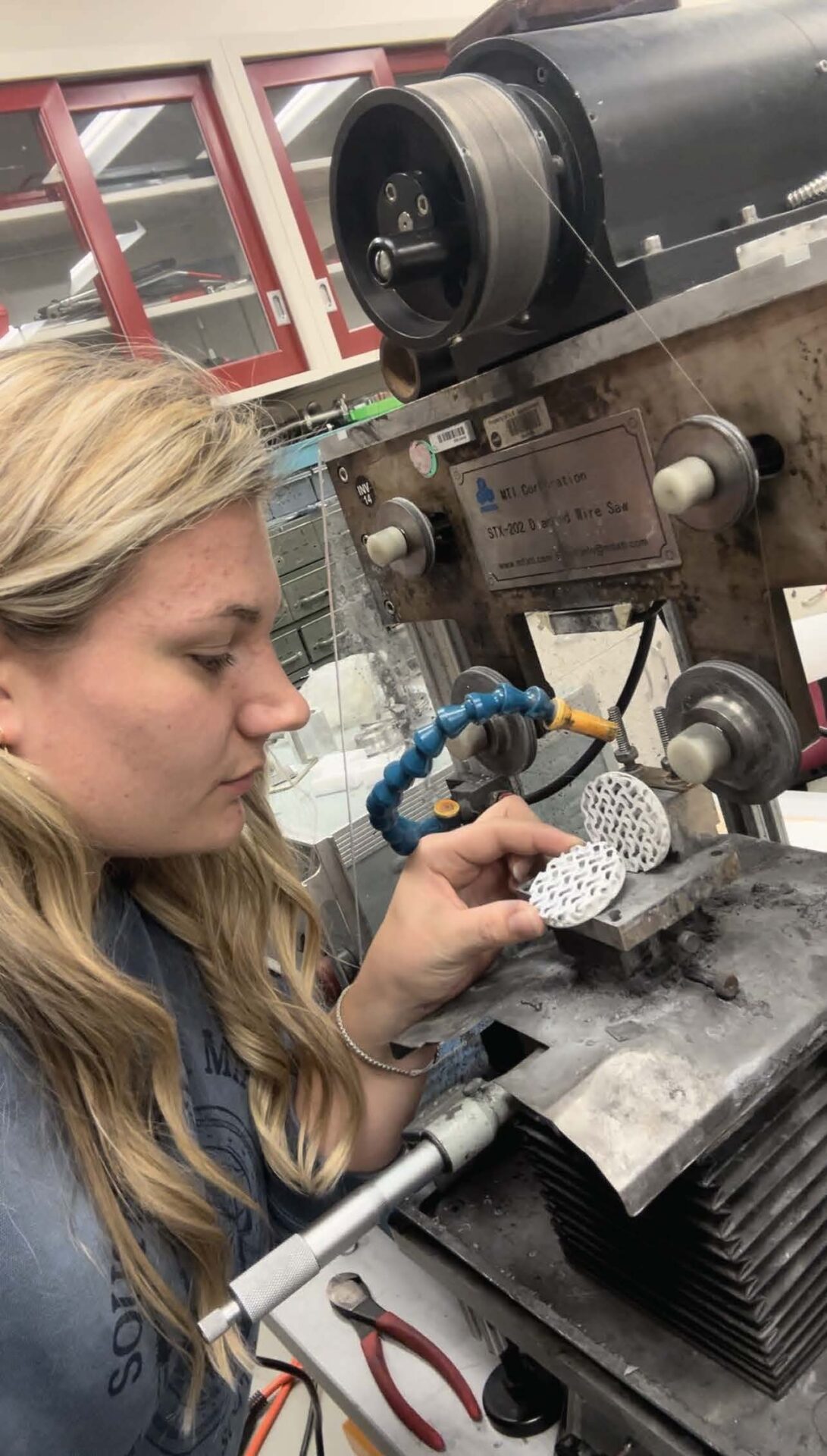
Sayler’s team is working on various prints that will be sent out to different NASA teams for testing. While she won’t be conducting the tests, Sayler worked on learning how to test ceramics during her undergraduate work at Mines.
“A lot of this ceramic work was what I was doing with Dr. Donovan,” Sayler said of Katrina Donovan, senior lecturer in the department of materials and metallurgical engineering. “I’ve actually performed all these mechanical tests myself, so I have a really good understanding of why we are performing these various tests and how to read the data we receive from them. Although I don’t have to physically do the testing as we have many different expert teams for every test, I can understand what the data is telling me thanks to my MET program at Mines.”
The program is open to all disciplines on campus and includes courses in geology, inorganic chemistry and metallurgical engineering.
Ceramic engineering is an older STEM discipline within the field and yet not many U.S. universities offer a bachelor’s degree in it. South Dakota Mines is uniquely positioned to deliver ceramic materials content “while leveraging material that is in our own backyard between the Black Hills and the Badlands,” Donovan said.
Students also expressed interest in ceramic materials from coating applications to pottery, antennas and ceramic censors. The minor was supported by the materials and metallurgical engineering department and a National Science Foundation Improving Undergraduate STEM Education grant. As a result, two student-user facilities were developed: The Glass Shop, a glassblowing studio, and The Pottery with pottery wheels, 3D clay printers and kilns.
“The response to the spaces from the students has been very positive. The minor has also been positive,” Donovan said. “Jenna is our very first student to have completed the minor, but we have more students in the pipeline.”
For Sayler, the opportunity to make an impact at NASA is huge, Donovan said.
“I am excited for this next role and chapter for her,” she said. “Jenna was always a very servant-minded student. She often helped at or led STEM outreach events for K-12 students. In the lab, she was a very creative student, and I think her creativity will serve her well in the future.”
Other companies also have come to career fairs focused on ceramic engineering, and many area mining companies also expressed support of the program, Donovan said. Students have engaged with professional societies such as The American Ceramic Society, “which opens a number of doors as well,” she continued.
“Additionally, having a minor would increase a student’s opportunity to be selected for programs like the National Science Foundation’s Research Experience for Undergraduates. On South Dakota Mines’ campus, we host an REU program that is focused on the Black Hills and the ceramic engineering possible in our backyard.”
For Sayler, the doors that have been opened have led to opportunities that likely are just beginning.
“It’s one thing to learn about these materials, but to get hands-on testing and development work with high-grade ceramics is just amazing experience,” she said.
To learn more about the ceramics program at South Dakota Mines, click here.
To learn more about biotech developments and get connected to the industry in South Dakota, email joni@sdbio.org or click here.