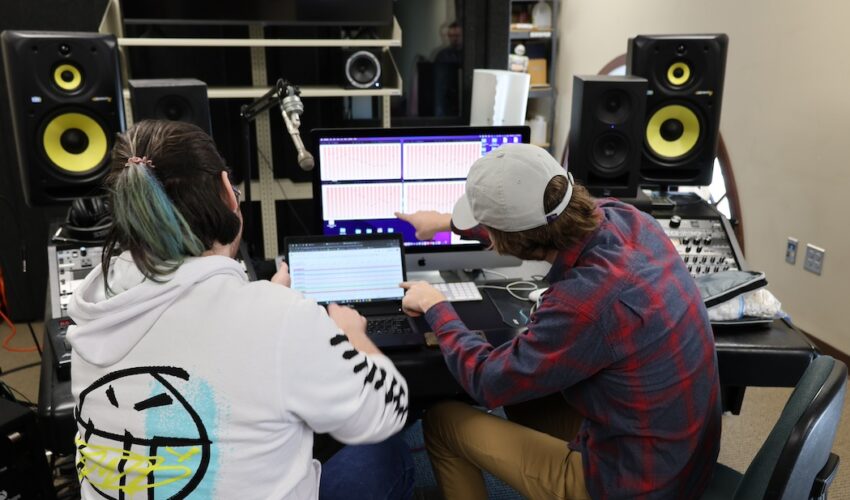
DSU students study how adaptive earbuds could benefit hearing, learning
Jan. 6, 2025
This paid piece is sponsored by Dakota State University.
Earbuds have been one of the most popular tech Christmas gifts for the past few years, and by 2030, the market is expected to grow to over $563 billion, according to a market report from Grand View Research.
These tech devices are great for listening to music and podcasts, but Dakota State University students are exploring another use: adaptive technology to improve hearing.
Professor Justin Blessinger started this project after a friend shared her feelings of isolation and loneliness when her hearing aids were out for repair. That got Blessinger thinking about whether everyday earbuds could be used as temporary, substitute hearing aids.
With funding provided by the DSU Foundation through the Krueger Living Trust, he started researching the idea with the Madison Cyber Labs research group.

Students in DSU’s AdapT Lab are researching 19 types of earbuds for potential use as substitute hearing aids.
In addition to teaching English, Blessinger is director of the DSU AdapT Lab, which looks at ways technology can remove barriers and allow people to fully participate in work or play. Previous projects include a partnership with LifeScape to create electric cars for children with disabilities. The lab also earned DSU’s first patent for a device that helps people in powered wheelchairs and mobility scooters easily recharge phones and other devices. This technology is now available through open-source channels.
The first phase of the earbud project included basic research on 19 pairs of buds from several manufacturers and different price points, including one that is actually sold as a hearing assistant.
Student researchers recruited people to try the earbuds and first tested the devices unaided, then using a pass-through mode. This allows room sounds or background noise to pass through the device. Student researcher Nolan Rohl said some of the earbuds were very good at picking up sounds. “You could put them in and hear conversations in the next classroom.”
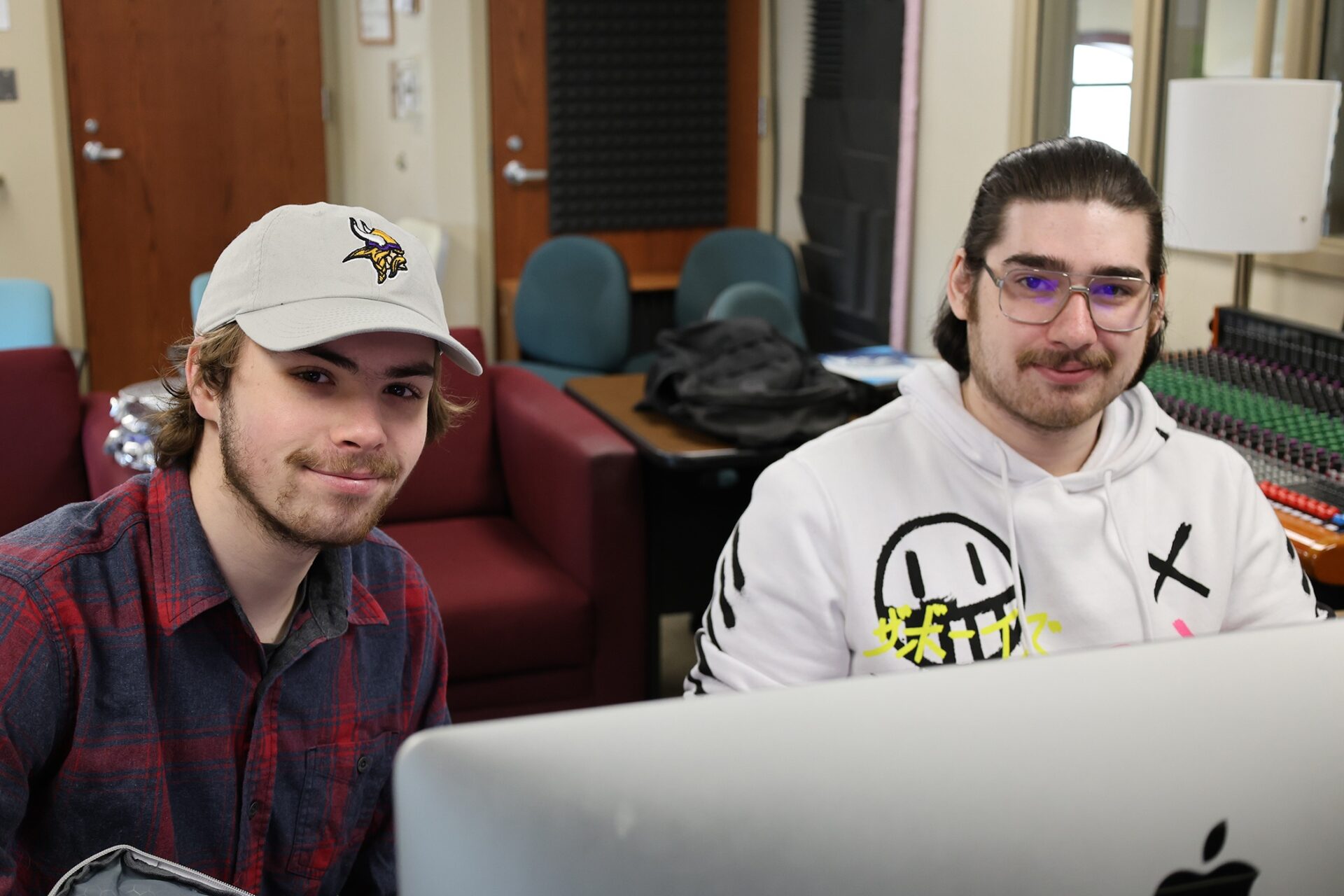
Nolan Rohl and Noah Anderson are DSU students researching adaptive technology to use earbuds as temporary, substitute hearing aids.
Finally, they amplified specific tones with a phone-based app. Testing single pitches is not a perfect representation of the ambient world, Blessinger said. “It’s very synthetic and artificial, but it’s a starting point.”
Test subjects ranged in age from 14 to 80, including fellow students, faculty and staff, and a few other individuals. Student researcher Noah Anderson said he enjoyed working with the test subjects. “It’s good to know how to talk with people, especially in today’s age.”
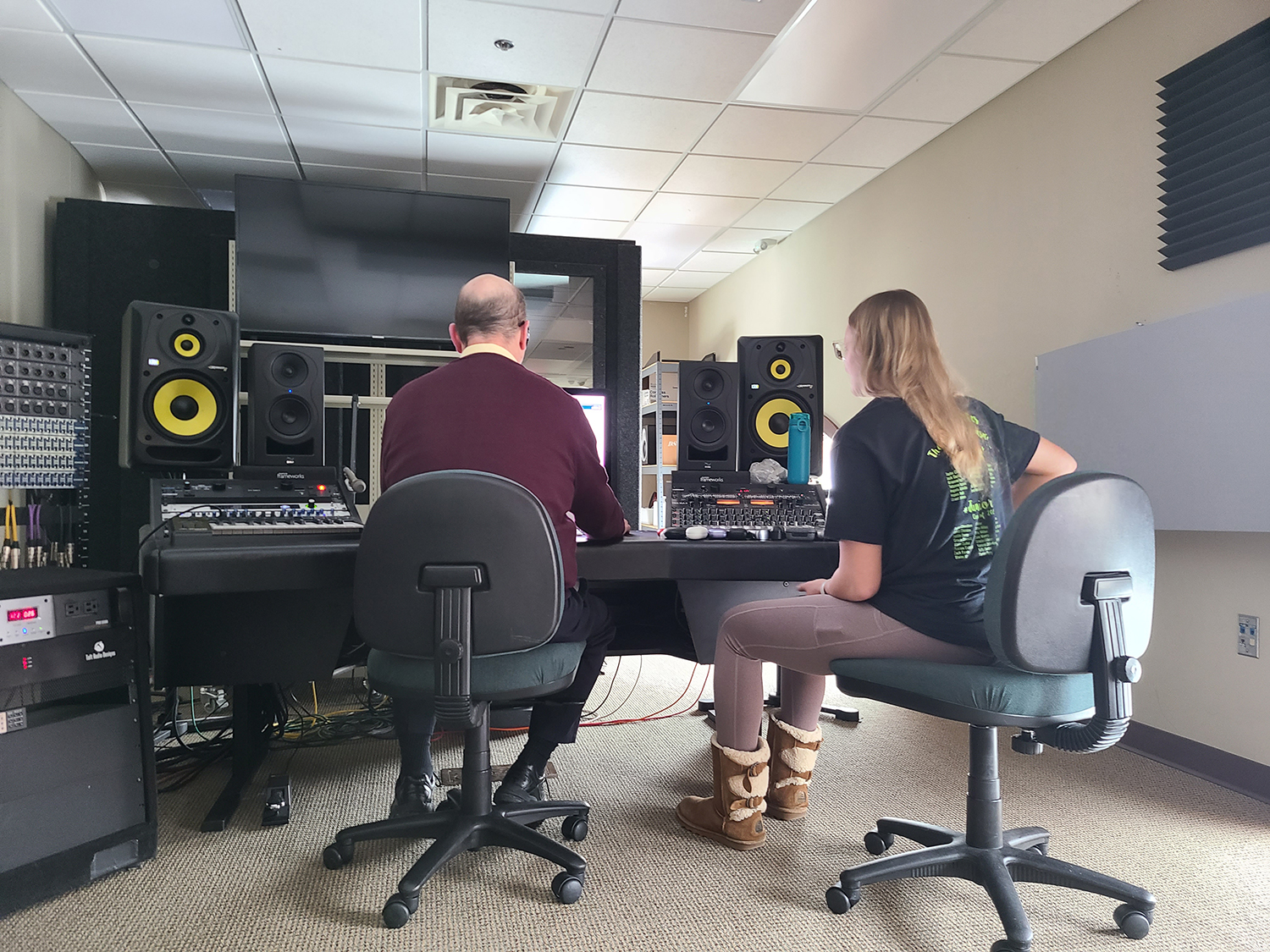
DSU recent graduate Angela Guthmiller (right) with a test subject for DSU’s earbud research project.
The students now are completing research and beginning to work with the data collected. They look to publish their results and offer recommendations for individuals who need to make temporary or emergency use of earbuds.
There is also an advantage for young people who have hearing loss. Earbuds are so ubiquitous for that age group that using the devices to help hear might alleviate a stigma, so they could feel more like their peers. “They’d be like stealth hearing aids,” Rohl commented.
Blessinger emphasizes that these devices are not a substitute for true hearing aids and that the researchers’ role is not to give medical advice or provide a diagnosis for individuals.
“We’re just trying to get this information to people who need it, those in need of a temporary solution or with budget concerns.”
Whatever the situation, Blessinger said, “We’d love to be able to share this information with the public and let them make their own decisions.”
Besides benefiting the public, the research is helping students learn important lessons as well.
By participating in the research process, they learn firsthand about the importance of data collection and storage, including backing up data with screenshots. They also see the importance of good detail in record keeping. Time management is another lesson learned, Rohl said.
They also realize the need to consider the “big picture” with hearing aid use.
“We need to keep in mind the scenario that people will be in when they need them,” such as sitting at a desk in an office or working out at the gym, said Anderson, a senior audio major.
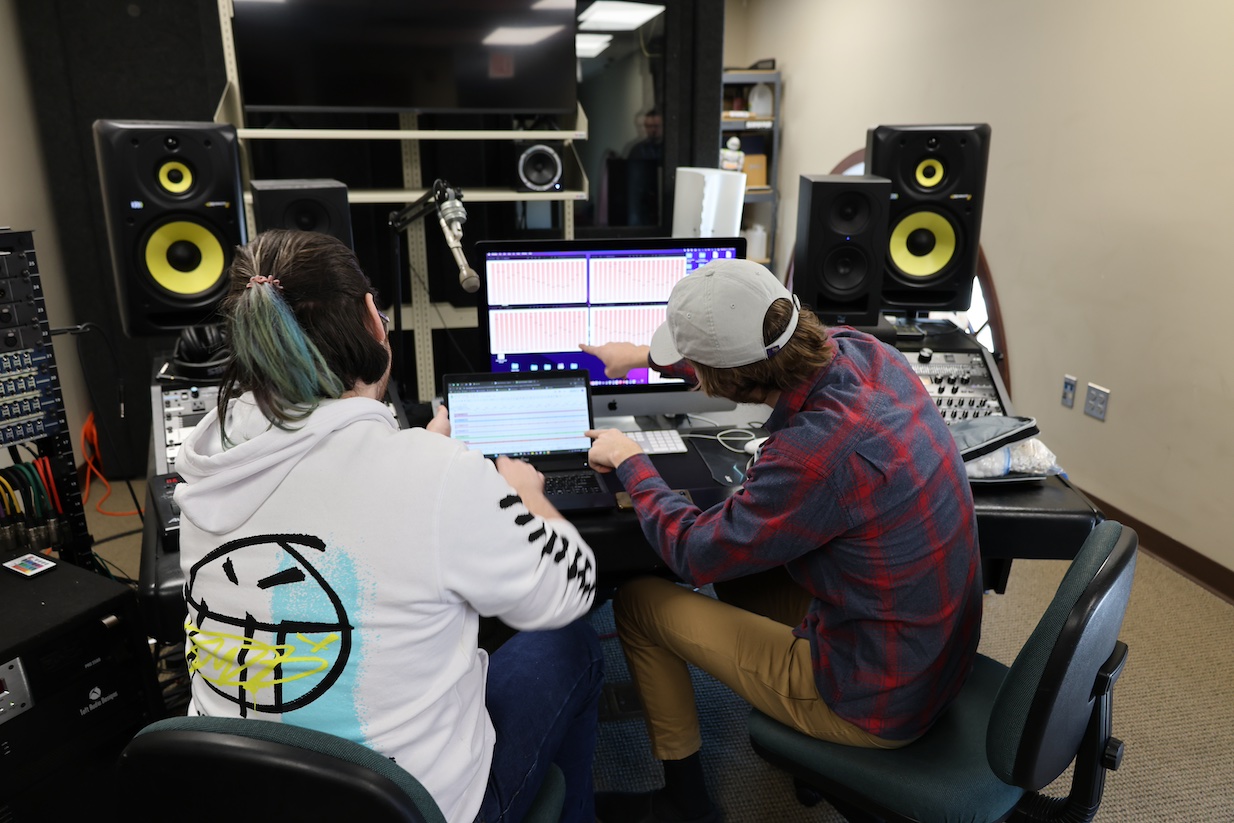
Noah Anderson and Nolan Rohl work with data from a DSU project to adapt technology and use earbuds as temporary, substitute hearing aids.
They also are discovering that research usually brings out additional questions and new ideas, like testing over-the-ear headphones, which could solve issues with ambient sound or in fitness situations, Anderson added.
Some of those questions and ideas will be addressed in a second phase of the project research, Blessinger said. They will design new experiments to test real-world conversations and see if the performance bears out. “Testing pitches is only part of the hearing story, so investigating other settings will be an interesting next step.”
Another possibility is having the students create their own amplification application, with contributions from students like Rohl, a senior computer science major. “The capacity for app development at DSU is a real asset,” Blessinger said.
Anderson considers the entire experience a huge benefit to his education.
“As an audio student, I’m lucky to have had this position open to me. It’s awesome and fun, but at the end of the day, the pursuit of information is the best goal.”