Beyond design: What you might not know about how architects bring buildings to life
April 15, 2026
This piece is sponsored by TSP.
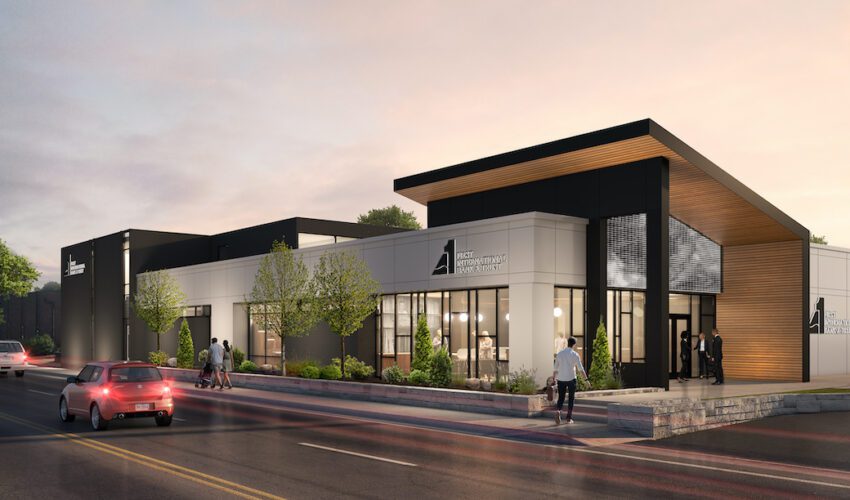
When most people think of architects, they envision sketches, renderings and striking building designs.
In reality, the work often is less about designing buildings and more about solving complex problems.
Every project starts with a vision. A business owner needs a new office. A developer plans a mixed-use space. Community members set out to build something new.
Turning that vision into a functioning building, however, requires navigating a web of challenges most people never see.
That’s where architects come in.
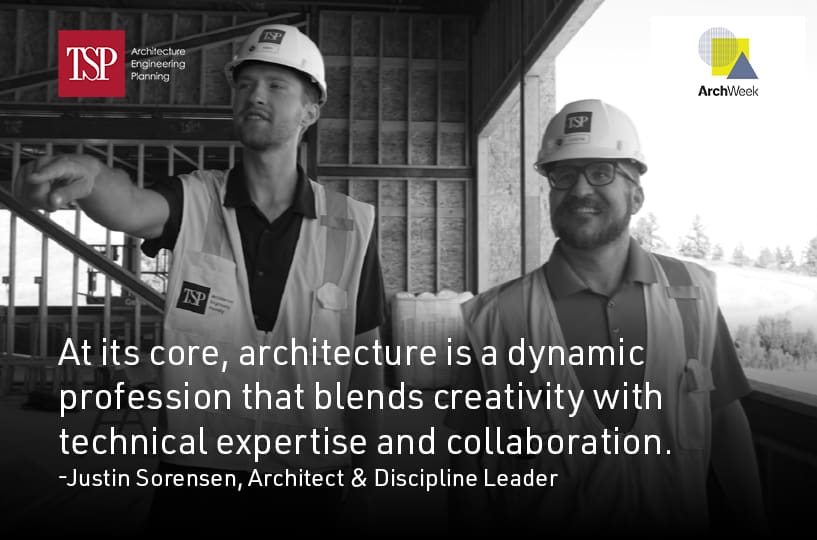
“At its core, architecture is a dynamic profession that blends creativity with technical expertise and collaboration,” said Justin Sorensen, an architect and discipline leader at TSP.
“Architects take a client’s wants, needs and goals, and work alongside a team of engineers and consultants to produce a solution, one that not only looks good but actually works in the real world.”
From the outset, every project must comply with building codes, zoning requirements and local ordinances.
These items ensure safety and functionality, but they also shape what’s possible on a given site, often influencing the final design as much as the original vision.
Architects work closely with structural, mechanical, electrical and civil engineers, as well as specialty consultants, to bring a project together.
A duct can’t run where a beam needs to go. Lighting must align with structure if ceilings are exposed. Site conditions affect everything from drainage to accessibility.
“The architect of today has evolved to be more like a maestro or conductor of a symphony — in charge of coordinating all the various players to ensure everything is combined into a strong, functional and beautiful whole for which the architect has the larger vision,” said Chase Kramer, an architect who also holds the role of director of design at TSP.
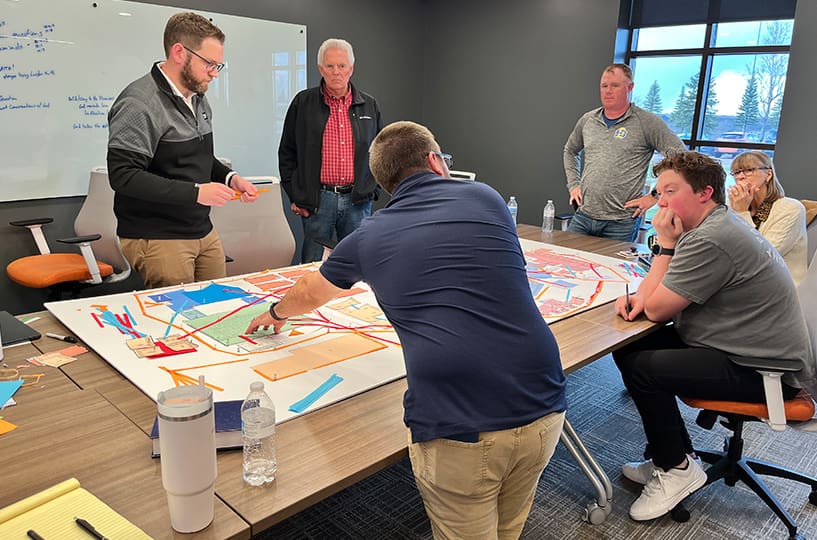
It’s a highly technical process that requires a deep understanding of design, systems, codes and coordination.
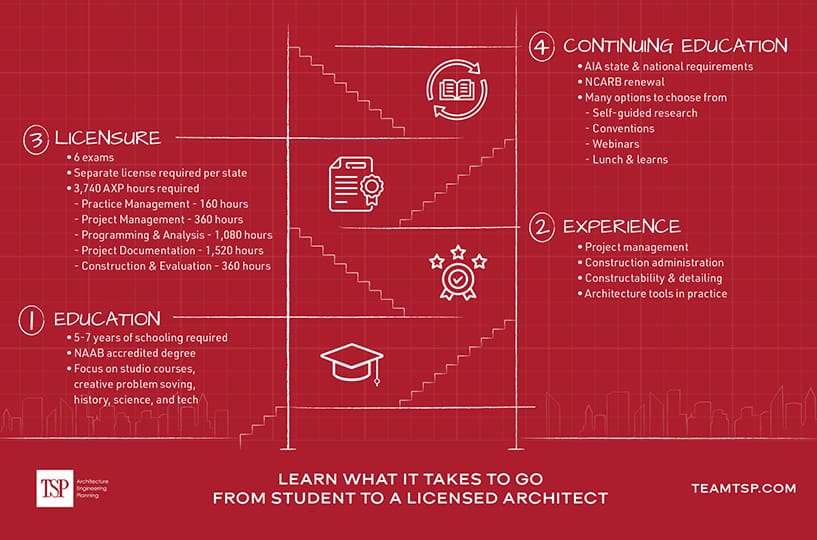
As you might expect, this level of responsibility is backed by extensive academic training, hands-on experience and continued professional licensure.
Students interested in pursuing a career in architecture can expect a workload similar to what’s described in the infographic below.
Early decisions carry more weight than many clients might expect. As a project progresses, each layer builds on the previous one.
Changing direction later isn’t a small adjustment. Instead, it can ripple through a project, impacting cost, schedule and coordination across the entire team.
“A successful building design is like a full jar filled with rocks, pebbles and sand,” Kramer said.
“You need to put them all in at the right time to ensure they all fit. If you put in the sand first (details like windowsill flashing or foundation insulation), you won’t be able to fit in the rocks later (big decisions like program or construction type).”
When budgets tighten, building systems are sometimes viewed as a place to cut. But mechanical, electrical and plumbing systems typically represent a modest part of upfront costs while playing a major role in long-term performance and occupant comfort.
They also directly affect energy efficiency and operational costs.
“Clear communication is crucial,” said Rex Hambrock, an architect and discipline leader at TSP.
“The most successful projects happen when clients are transparent about priorities and budget, and willing to ask questions early, especially when something isn’t familiar. Small misunderstandings early can turn into costly changes later.”
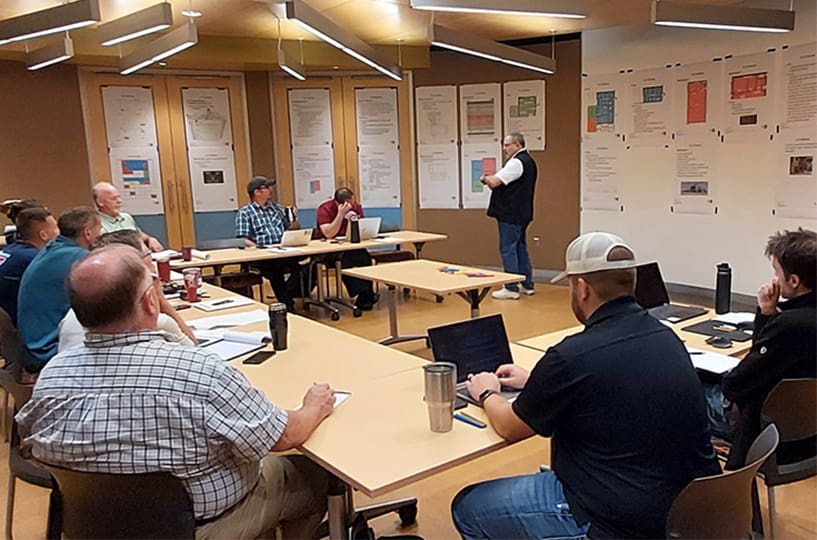
And the architects’ work doesn’t stop once construction begins.
They answer questions, resolve conflicts and help to ensure that the building matches the design. Even after a project is completed, architects may continue working with owners to evaluate performance and address long-term needs.
This behind-the-scenes work is where significant value is created. A well-coordinated project can reduce costly change orders, prevent delays and ultimately deliver a building that performs as intended from day one.
More than just aesthetics, it’s about efficiency, functionality and long-term success.
So during Architecture Week — April 12-18 — it’s worth taking a closer look at what architects really do.
Yes, they design.
But just as importantly, they anticipate challenges, coordinate and solve problems, and these are sometimes the issues clients don’t yet know to ask about.
At TSP, that mindset is central to the way the team works with clients, serving not just as designers but as trusted advisers.
And in the end, that commitment helps turn an idea into a space that doesn’t just look good, but one that performs on day one and for years to come.