USD’s Interprofessional Healthcare Education Center: Where healthcare teamwork begins
June 16, 2026
This piece is sponsored by the University of South Dakota.
From the moment undergraduate students arrive at the University of South Dakota campus, they start adjusting to a new level of independence and responsibility; they learn how to manage their time, make decisions on their own and prepare for the careers they want to pursue.
For students entering healthcare majors in the USD School of Health Sciences, some of the first practical skills they develop include learning their roles in how to work effectively with others in clinical and team-based settings.
Healthcare today is built on collaboration, and healthcare education has steadily moved away from siloed instruction models in favor of interdisciplinary learning experiences that prepare students to work together as part of healthcare teams.
At USD, that collaborative learning happens through the Interprofessional Healthcare Education Center, a central hub that brings together students and faculty from across the university’s health sciences programs, the USD Sanford School of Medicine and partner institutions. Guided by a steering committee representing those entities, IHEC helps students understand how teamwork directly impacts patient care.
“Teamwork does not happen automatically,” said Kari Potter, director of USD’s Interprofessional Healthcare Education Center. “We are intentional about the opportunities our students partake in to ensure they understand working as a healthcare team and bring that experience into the workforce.”
Interprofessional education, commonly called IPE, teaches students from different healthcare disciplines to learn with, from and about one another. Through workshops, simulation exercises, seminars, role-playing activities and mentorship opportunities, students learn to communicate effectively, understand one another’s professional roles and contribute their own expertise as part of a collaborative healthcare team.
For healthcare professionals already working in the field, those collaborative skills are essential. Dr. Nate Miller, clinical vice president for Avera Health’s hospitalist service line, sees that impact every day while working with interdisciplinary healthcare teams. Miller said hospital teams regularly include a mix of physicians, nurses, occupational therapists, physical therapists, social workers, case managers, physician assistants and behavioral health counselors working together to coordinate patient care and help patients transition successfully back home.
“Medicine is a team sport, and we need to come together for the betterment of the patient,” Miller said. “We don’t succeed if we don’t work together. You can sense a patient’s level of comfort when they know we are all working with one another. Patient experiences matter.”
The concept itself is not new. Collaborative healthcare education dates back at least six decades and gained momentum in the 1980s before becoming more formalized in the United States in 2009, when six national health professions associations formed the Interprofessional Education Collaborative. The organization established four core competencies for collaborative healthcare practice: values and ethics, roles and responsibilities, communication, and teamwork.
Developing those skills requires a thoughtful and intentional approach. Early in both undergraduate and graduate programs, students are introduced to TeamSTEPPS training, a nationally recognized program designed to strengthen communication, teamwork and patient safety.
USD has certified TeamSTEPPS master trainers who have completed certification through the Agency for Healthcare Research and Quality or the American Hospital Association and help facilitate ongoing training opportunities.
“Patient safety and comfort could be compromised if there are crossed communication wires,” Potter explained. “Collaborative practice can improve health outcomes while decreasing lengths of stay, clinical errors and staff turnover.”
TeamSTEPPS focuses on four key areas: communication, leadership, situation monitoring and mutual support. Students practice skills such as structured handoffs, check-backs to confirm information, team huddles and CUS statements — “I am Concerned, Uncomfortable, this is a Safety issue” — that provide a framework for speaking up when something seems wrong.
“USD’s IHEC teaches skills that, when appropriately used in the workplace, have been shown to systematically reduce medical error and contribute to improved patient safety because their healthcare team is working more effectively,” Potter said.
Students say those experiences help bridge the gap between the classroom and real-world healthcare environments.
“Collaboration and effective communication are key in the medical field,” said Sadie Dillon, a medical laboratory science student who will graduate next spring. “The role-play scenarios are a great representation of the wide variety of professions involved in treating a single patient. You learn much more insight into the scope of practice of other fields.”
During simulation exercises, students work through patient cases together, learning how each discipline contributes to diagnosis, treatment and patient support. Dillon said the experience strengthened both her understanding of other professions and confidence in her own role.
“It instilled a sense of pride and confidence in me, knowing that my work in the lab is vital to patient care,” she said.
Those lessons extend well beyond the classroom. Each year, hundreds of students participate in a large workshop focused on disaster response training. In partnership with the South Dakota Area Health Education Center, students from health sciences programs across USD, the USD Sanford School of Medicine and South Dakota State University’s pharmacy program gain hands-on experience preparing for emergency situations. The event also has expanded to additional locations in Mitchell, Rapid City and Aberdeen.
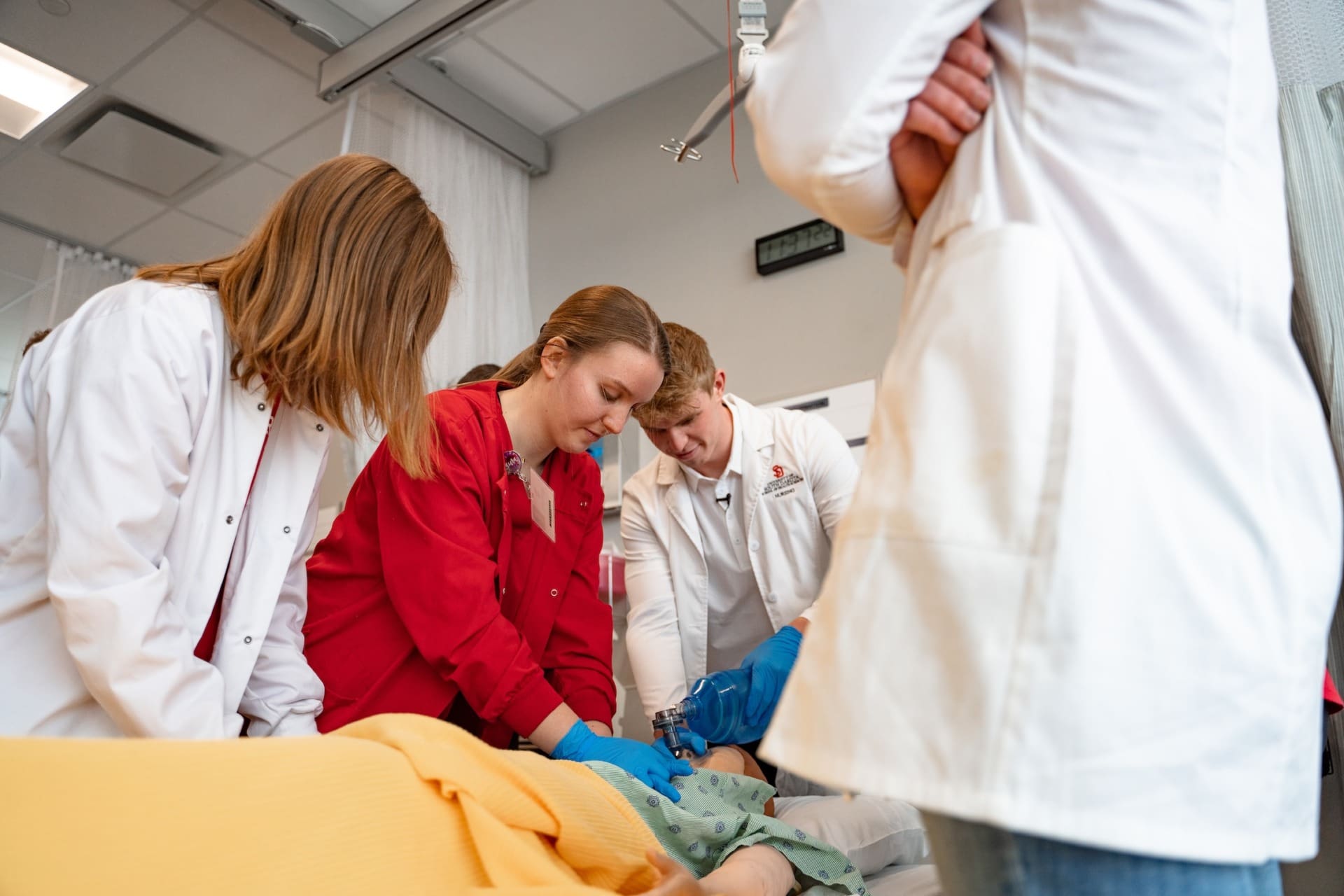
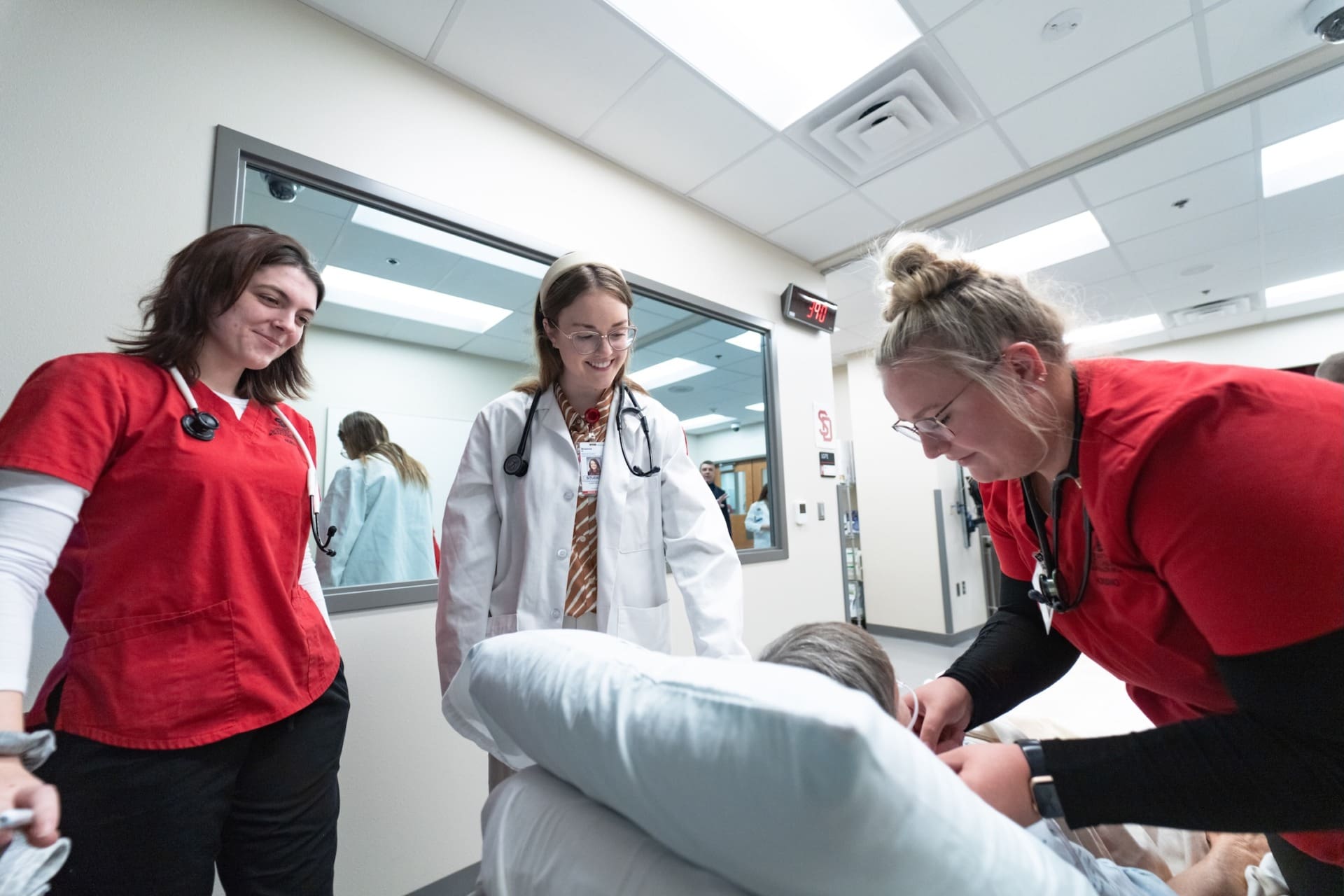
Students also take part in patient simulation exercises that use trained patient actors to recreate real-world healthcare scenarios. Working in interdisciplinary teams, students collaborate to assess and treat simulated patients while practicing communication and teamwork skills. Following each scenario, teams participate in debriefing sessions to discuss what went well and identify areas for improvement.
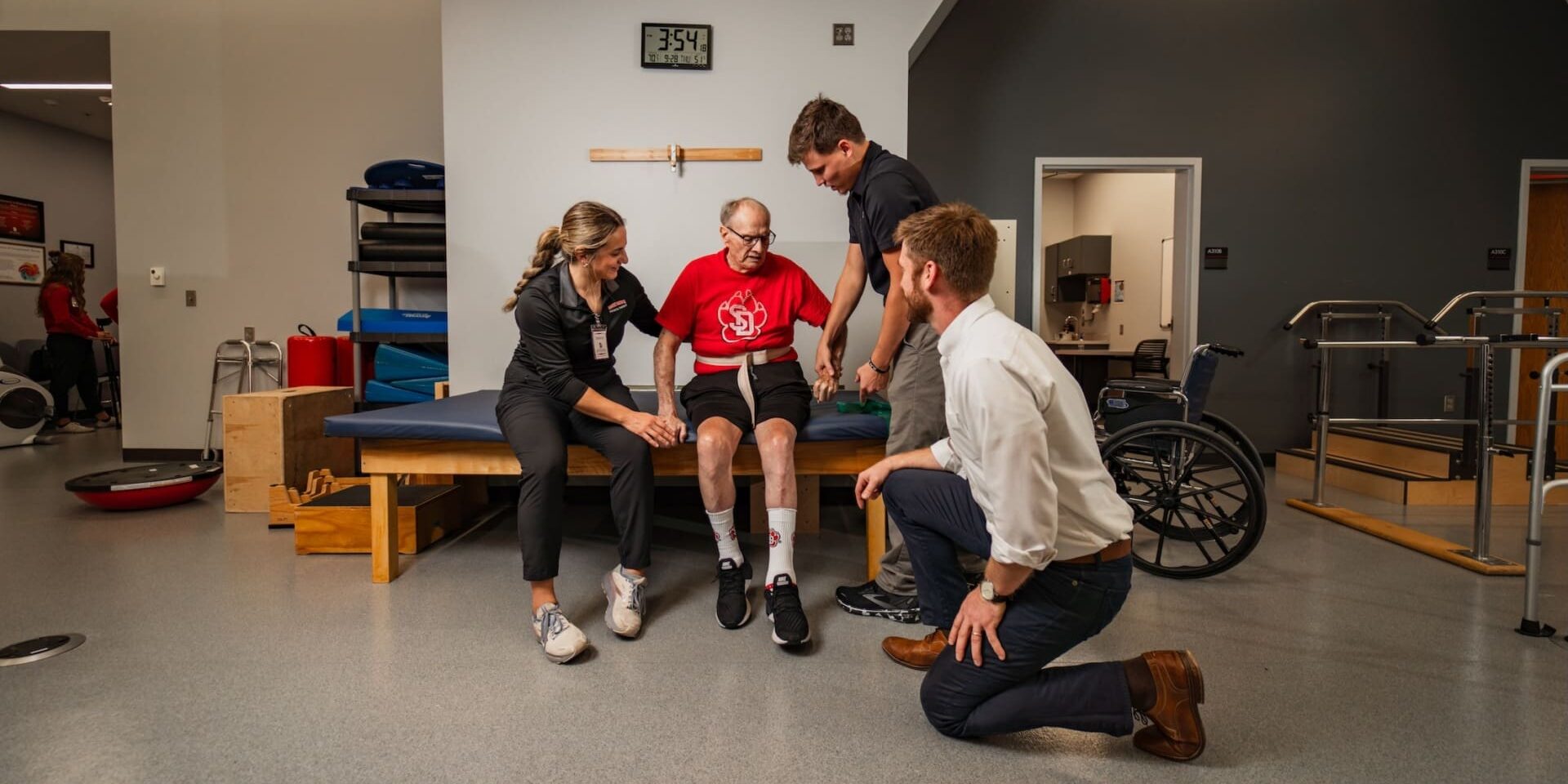
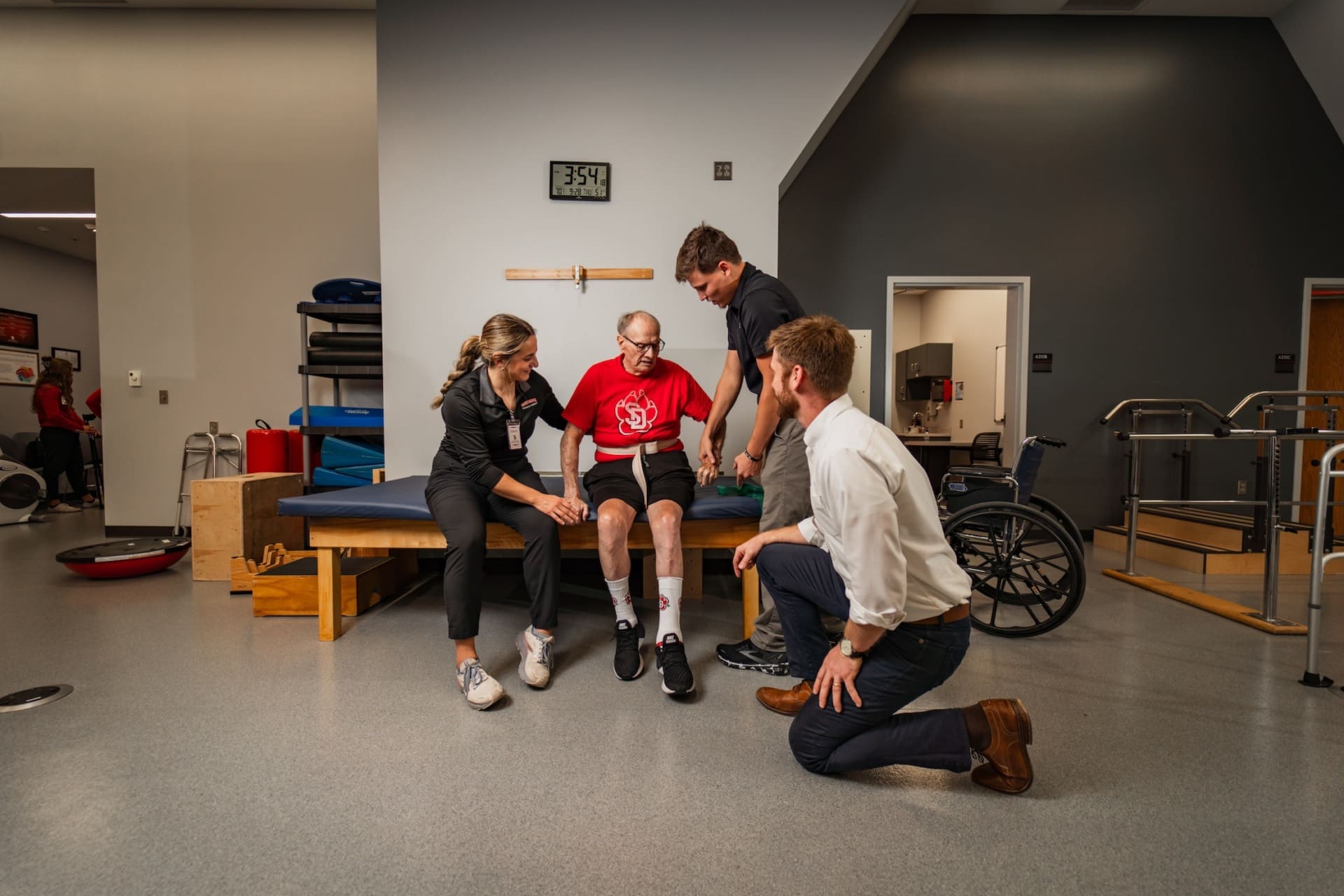
Additional interdisciplinary events connect students directly with healthcare providers and patients. Earlier this year, Sanford Health Vermillion sourcing specialist Derek Hatzenbuhler helped organize an event that brought together occupational therapy, physical therapy and speech-language pathology students to evaluate and develop treatment plans for Sanford patients requiring multiple therapies.
“The more students collaborate with different disciplines during their educational journey, the more prepared they’ll be to collaborate across disciplines when they’re established clinicians,” Hatzenbuhler said. “Interdisciplinary events give students the chance to learn about how their roles compare and contrast with others, so they more fully understand the unique role they play in the health field.”
Students also participate in various community outreach events, where they work alongside students from other disciplines to provide screenings, education and health resources to community members. These events not only serve hundreds of residents but also help students practice communication and teamwork skills in real-world settings.
For students like Dillon, those experiences reinforce a lesson that reaches beyond any one profession.
“As health professions students, it is important to recognize that each department provides just as much value as our own,” Dillon said. “Treating a patient is not just the work of a single department or person — it is the collective effort of everyone.”
In the USD School of Health Sciences, that understanding starts early. What begins as a student’s first steps onto campus becomes something much larger — better outcomes for patients through safer, stronger and more compassionate care.