
Why the best brands use visuals to tell their story
Oct. 15, 2025
This piece is sponsored by Lemonly.
If your business is struggling to cut through the noise online, you’re not alone. As the amount of content in the world continues to grow, audiences’ attention spans continue to shrink.
These factors create a challenge for modern marketers: How can your business stand out online in the split second before an audience chooses whether or not to scroll away?
One surefire strategy is to give them something compelling to look at. The top tactics marketers use to drive engagement all feature visual content, from short-form video to static graphics and everything in between. Images, videos and data visualizations are highly effective tools for catching your audience’s eyes.

Of course, an eye-catching visual is only half the battle. Once you have your audience’s attention, you have to follow through with a compelling message. If they’re confused or bored, they’ll disengage quickly.
Visuals help brands get noticed. More and more, visuals are table stakes for brands that publish content — simply having visuals isn’t as much of a differentiator as it was years ago. Today, what matters isn’t that a company uses visual content — what matters is how it uses visuals to tell a compelling story.
Lemonly, the Sioux Falls-based infographic design agency, specializes in visual storytelling across a wide variety of formats. The Lemonly team crafts compelling narratives and delightful visuals that help clients attract and keep customers’ attention — and turn that attention into action, whether it’s generating leads, seeking out more content or building trust with new customers.
“Our infographic-inspired approach to creating content puts visual storytelling at the forefront,” said Amy Moore, co-founder and executive creative director. “We keep the tenets of good infographic design in mind no matter what type of content we’re creating. That focus on concision and thoughtful design ensures our visual stories are as clear and compelling as possible.”

What is visual storytelling?
Visual storytelling is the art of using visuals to communicate information — in other words to tell a story. Let’s break down each part of the term:
- Visuals can be photos, graphics, illustrations, icons, diagrams, charts and graphs, animation, video, you name it — any design that conveys meaning or enhances the message in some way.
- Storytelling means sharing a structured message with an audience with the goal of explaining or entertaining.
Visual storytelling, then, is about using design to convey or clarify that message. It combines the power of storytelling with the clarity and impact of visual communication.
How brands can use storytelling
Now you might not be thinking of your brand’s content as a “story.” What does storytelling have to do with, say, selling B2B software, providing training to health care staff or recruiting students for a university?
Storytelling isn’t just for movies, novels or entertaining friends around the campfire. It’s a way of crafting your message for maximum engagement and understanding. To bring a storytelling lens to your content, start by thinking: How can I communicate this information in a way that’s interesting and easy to understand?
Consider a few examples of what storytelling might look like in branded content:
- A company overview infographic discussing the company’s history, mission, vision and values.
- An explainer video introducing new users to the basics of a business software platform.
- A data-driven report sharing insights about the impact of water pollution on river otters.
- An animated short film showing a character or brand avatar on a journey.
All of these are examples of visual storytelling. They feature a structured message meant to explain or entertain, combined with design that makes the story more engaging, clear or emotionally resonant. Similarly, a timeline, how-it-works diagram or before-and-after comparison are all more examples of visual storytelling. They lead the viewer from one idea to the next with purpose and have clear goals for what they want to communicate.

Framing your brand’s marketing messages as storytelling helps add structure, pathos and clarity that make information easier to understand, remember and act on. Next, incorporate visuals to add interest, context and tone that text alone can’t convey. Now you’ve got a winning recipe for content that resonates.
Visualizing your brand’s story
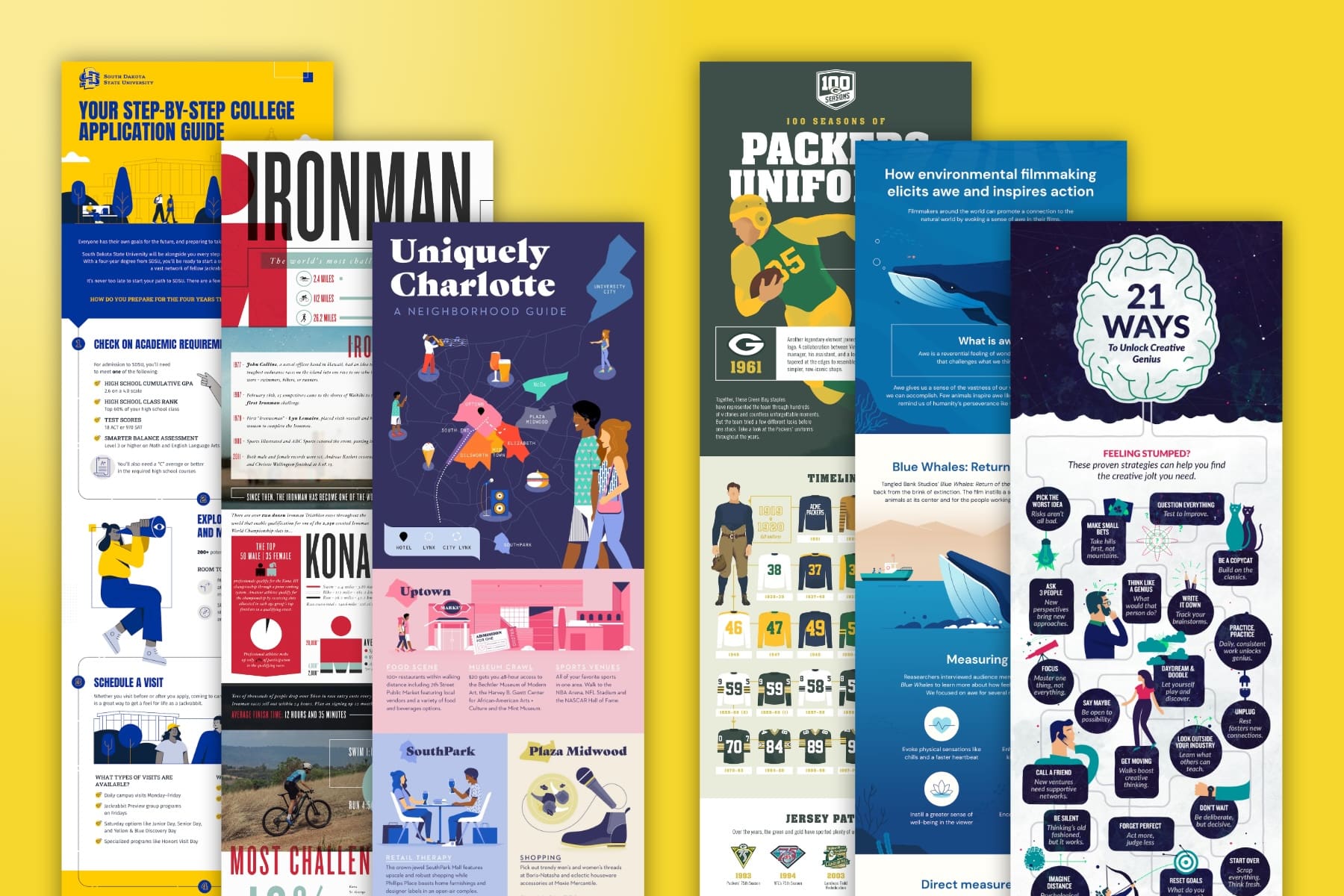
Like the examples above show, visual storytelling can take many forms, including different types of content and different types of stories. The right fit depends on your goals and the story you want to tell. Lemonly’s specialty is crafting clever content all along the spectrum.
Types of visual content can come in just about any shape or size:
- Infographics
- Animated explainer videos
- Microcontent — social media graphics
- Reports and e-books
- Microsites, quizzes and interactive web experiences
- Presentations
Common story types often fall into categories like these:
- Timeline
- Problem-solution-action
- Process/how-to
- Flowchart
- Comparison
- Innovation
- Announcement
- Data visualization
- Report summary
- Explainer
- Demo/tutorial
When executed well, the combination of visuals and story delivers content ready to educate, persuade or entertain. The best can do all three at once. But visuals aren’t just about making things look nice. When paired with narrative, they become tools for comprehension.
Why visual storytelling matters
Visuals can help brands stand out, but more importantly, they help messages stick. A stock photo might catch the eye, but it rarely creates meaning. Intentional visual storytelling does both: It attracts attention and deepens understanding.
“The most effective visuals look effortless, but getting to that point requires strategy and design working in harmony,” Moore said. “It’s not about decorating your message. It’s about designing it to resonate.”
When visuals are paired with a story, they do more than explain — they connect. They simplify complexity, add emotional resonance and guide your audience from curiosity to clarity. To help gauge whether your visuals are meaningful or merely decorative, ask yourself if the visuals convey meaning without text. Visuals that carry meaning on their own are key to visual storytelling. They also can reduce the amount of copy you need, making your content more concise and consumable.

Done well, visual storytelling also builds trust. Clear, thoughtful design signals professionalism and care, making your message easier to believe and remember. Trust also leads to loyalty, and loyalty means long-term customers and brand advocates.
Of course, great visuals require an investment of time and talent. For some, that investment can feel like a tough call, especially since the benefits of visual content — things like brand awareness, affinity and education — aren’t always readily measurable. But while their impact can be tough to gauge, their absence is obvious: confused audiences, missed messages and lost interest. So instead of focusing only on ROI, ask: What’s the cost of confusion?
The cost of confusion
Businesses whose content lacks clarity or personality risk losing their audience because of confusion, lack of information or plain boredom. Visual storytelling combats confusion to help brands avoid costly challenges like these.
- Lack of attention
Content that doesn’t grab attention is a nonstarter. Without a base level of attention and understanding, you won’t have a chance to share your message.
How visual storytelling can help: When your audience’s first impression includes story-driven content, they’re more likely to stay engaged. Visual storytelling helps establish relevance, showing your audience that you understand their needs and have a meaningful message to share. It’s also a powerful way to get more eyes on your content — adding visuals can amplify existing campaigns and support other marketing efforts.
- Lost leads
Misunderstanding can stop the sales process in its tracks. Without clear content to direct the customer journey, a prospect is more likely to get burned out, or worse, you could confuse them right out of the sales funnel. If the next step isn’t obvious — what to read, where to go or what to do next — leads are left confused and frustrated. At that point, wading through disorganized content won’t feel worth their time, and they may stop considering your business as an option.
How visual storytelling can help: Visual storytelling breaks down complex offerings into intuitive, easy-to-follow content. Whether you’re explaining your product, comparing services or guiding a user through next steps, visual storytelling helps your audience understand the value your business offers.
- Unmet expectations
Your audience needs to understand what you do and what you don’t do. Confusing content can lead audiences to form the wrong expectations about your products or services. Their disappointment can in turn lead to lost loyalty and a lack of trust.
How visual storytelling can help: A well-structured story helps set expectations from the start. Use visual storytelling to illustrate workflows, demonstrate outcomes and present case studies. Elements like annotated visuals, step-by-step diagrams or narrative-driven videos help your audience visualize your offering and understand what to expect.
Make your message stick with visual storytelling
In today’s crowded digital landscape, attention is fleeting, and confusion is costly. Brands only get a moment to make an impression, and content that’s unclear or hard to follow is easy to forget.
That’s why visual storytelling isn’t just a nice-to-have; it’s a must. When visuals and storytelling work together, they do more than decorate your message — they define it.
Ready to tell your brand’s story with visuals? Lemonly is here to help — check out our work and get in touch to see how clever storytelling and delightful design can make a difference for your business.