Virtual services make health care more accessible, convenient
June 27, 2024
This paid piece is sponsored by Avera Health.
At Avera, virtual care encompasses many things, from seeing your doctor on your cellphone, to extending specialty care across the miles, to virtual nursing, to telemedicine.
“Avera was a pioneer in virtual health in our rural footprint, and our commitment is just as strong today,” said Kris Becker, director of virtual health at Avera. “We continue to seek out innovative solutions for the convenience of our patient and to extend the capacity of doctors and caregivers.”
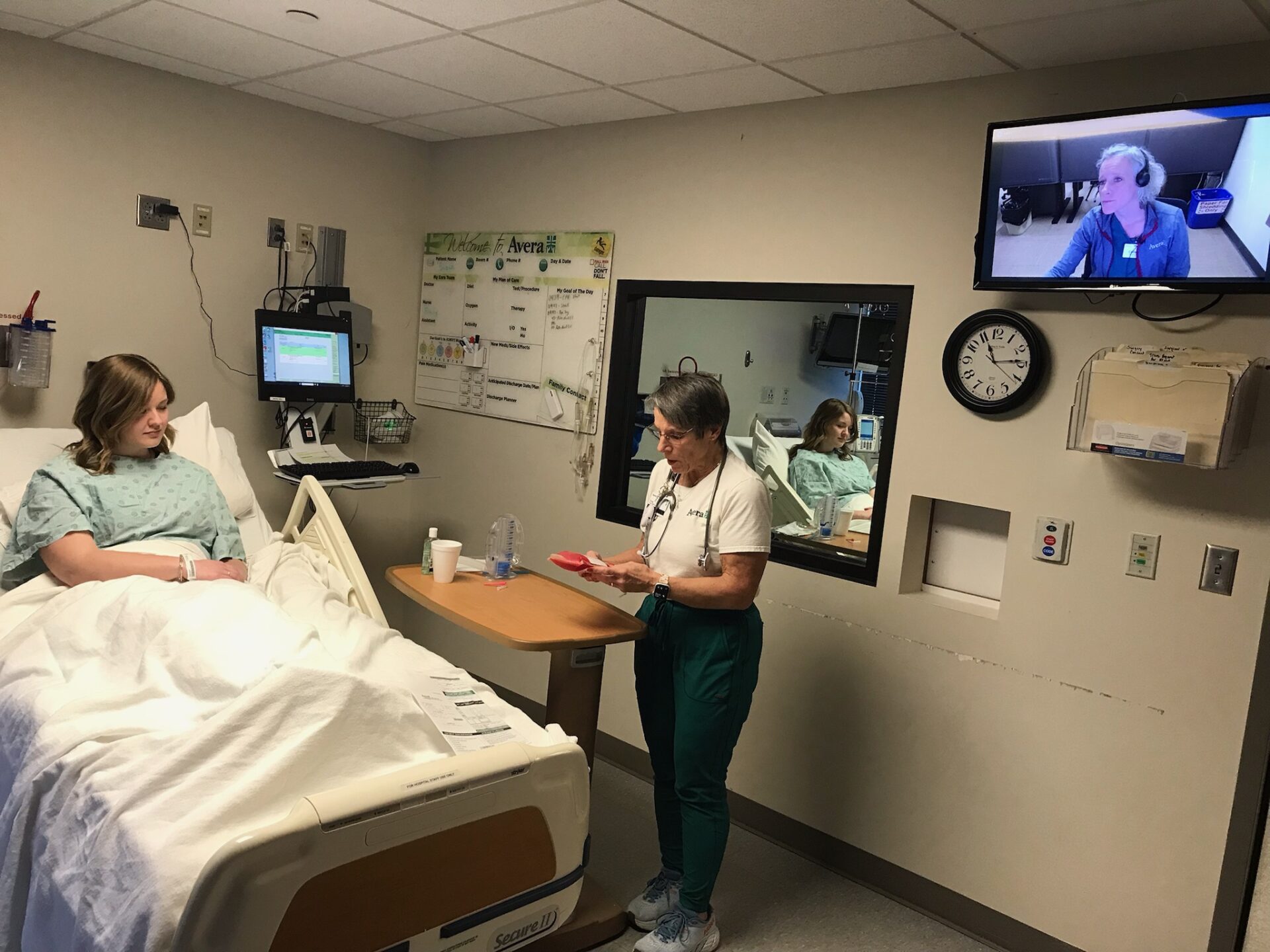
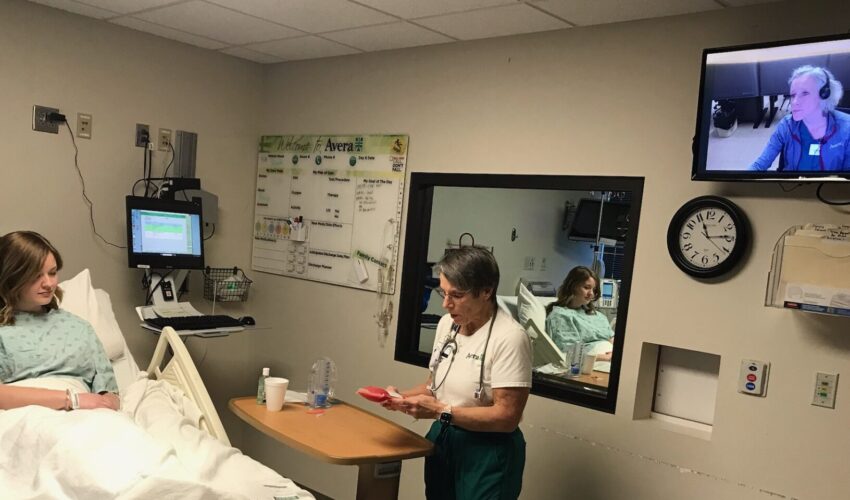
Emily Ihlen, a registered nurse, provides bedside nursing care while Colleen O’Connor, a registered nurse on screen, augments bedside care through virtual nursing.
“Virtual care is a solution to various challenges in health care, including workforce and the rising cost of building new facilities, while maintaining high quality and patient safety,” said Dr. Ronald Place, regional president and CEO of Avera McKennan Hospital & University Health Center.
Virtual solutions for health care challenges
Virtual solutions are being launched throughout the health system. A virtual nursing program completes some nursing functions virtually, like documentation and medication verification. This allows nurses more time to spend at the bedside with their patients.
“We feel like this can really open up possibilities at both urban and rural locations,” Becker said. “We could have multiple caregivers round with patients virtually such as a pharmacist, case manager or admission staff. It’s a key way to extend our staff at a time of critical workforce shortages.”
Other virtual solutions include:
- A virtual sitting program to monitor patients who are at risk for falling instead of needing nurses to spend one-on-one time with patients around the clock.
- Home monitoring programs for patients with certain conditions such as congestive heart failure.
- Remote monitoring for expecting moms dealing with issues such as high blood pressure or gestational diabetes through the Rural Maternity and Obstetrics Management Strategies, or RMOMS, grant-funded program.
- Hospital@Home, which allows selected patients to receive hospital care at home. While nurses and advanced practice providers visit homes in person, the hospitalist physician rounds virtually.
Virtual clinic visits
When virtual visits became absolutely necessary during the pandemic, Avera was already in this space and began using existing platforms to expand virtual clinic visits.
Since the pandemic’s end, most patient/provider visits take place in person. Yet Avera continues to offer virtual visits and expects demand to grow in the future. “It’s interesting that 40 percent of our behavioral health visits are done virtually,” Becker said.
After an initial exam and diagnosis, many follow-up visits are simply conversations between the provider and patient. “When these can happen virtually, it’s a win for the patient in terms of comfort and convenience,” Place said.
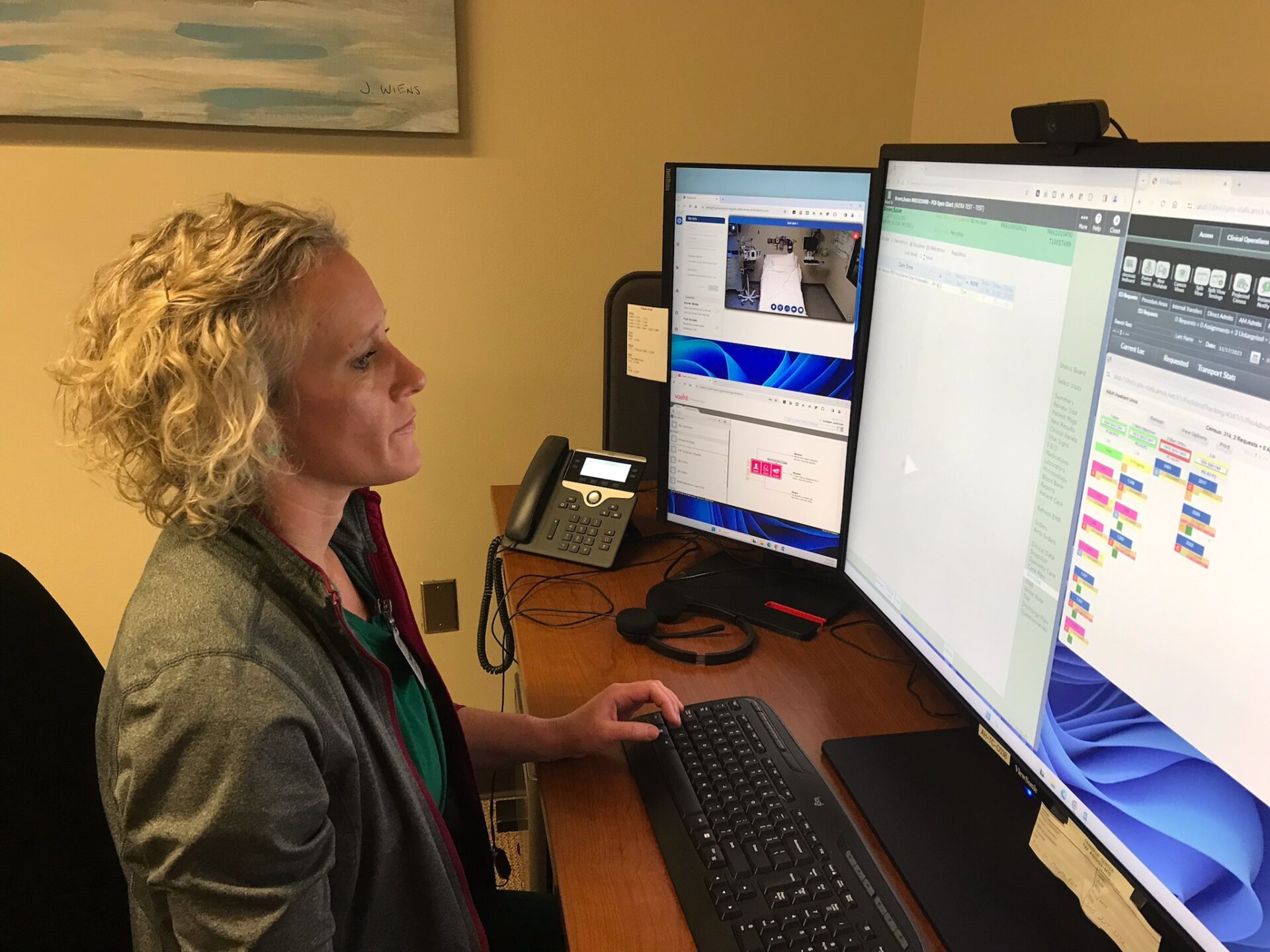
Colleen O’Connor, a registered nurse, offers virtual nursing services at Avera McKennan Hospital & University Health Center.
Most commonly, virtual clinic visits happen through the AveraChart electronic medical record platform. Patients can use the portal from their phone or computer and see their primary care provider from home.
Patients make appointments for virtual visits by calling their clinic, just as they would for an in-person visit. Specialty visits can happen for areas such as cancer, which offers flexibility for patients even with complex cancer care.
“Patient visits can’t happen over a platform like FaceTime or Zoom; it must be a platform that’s completely secure and compliant with patient privacy regulations,” Becker said.
When patients are referred for specialty consults, they may take place at the local clinic and hospital. Instead of seeing the specialist in person, the patient sees them over interactive video. A local provider or nurse is in the room as well.
Telemedicine
Avera uses telemedicine services throughout its hospitals and long-term care centers. These services give local teams an extra set of eyes and ears, as well as consultation, in a number of areas such as emergency and ICU.
“These virtual services support care teams and are especially vital to rural locations. Rural teams feel supported with a wealth of experience and expertise when they are presented with a complex or life-threatening case,” Becker said.
“Avera was built for rural health care, yet rural health care has its challenges from a distance and weather perspective. So as we plan for the future, Avera is thinking virtual first to overcome those challenges,” Place said.
Learn more about Avera’s commitment to rural health care.