Student uses real data to solve real-world problem
Aug. 13, 2025
This piece is sponsored by Dakota State University.
Nontraditional Dakota State University student Andrew Smith used his previous employer’s data on a semester-long predictive analytics project.
Smith, who is majoring in artificial intelligence in operations, previously worked as an engineer with Dakotaland Manufacturing but found himself drawn to solving complex problems and streamlining data, which inspired him to return to college.
He started taking classes part-time online, later switching to full-time, in-person courses.

“The project was all about building either a prediction model or a classification model, demonstrating what you’ve learned out of all the models we’ve learned in this class,” Smith explained.
“I knew from the very beginning that I wanted to do some sort of model based around my company’s information, specifically because that’s something they’ve been asking for.”
When Smith presented the idea to his former boss, Tyler Krejchi welcomed the opportunity to provide data for a predictive analytics project.
“I was excited to hear of the possibility of using real-world data in a classroom setting,” said Krejchi, engineering manager at Dakotaland. “Too many times, there is canned data used that doesn’t present students with roadblocks they will have to navigate when they get into the workforce.”
Smith’s specific project involved developing a model that could predict and classify when a job potentially would lose money based on the types and amounts of machines associated with the project. The process analyzed various data such as specific failure rates for machines.
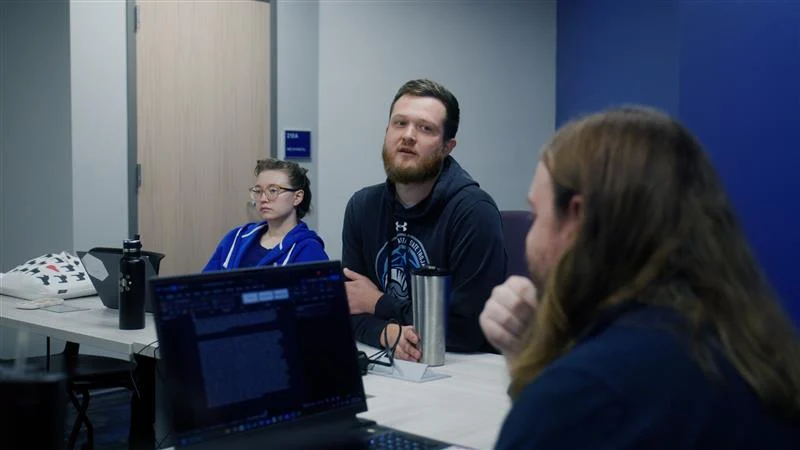
“I showed it to my company when it was about 90 percent finished, and they were very, very happy with it,” he said. “My models ended up showing roughly a 70 percent accuracy in classifying projects.”
“I was very impressed with the amount of information it provides and the level of accuracy when comparing the model to what we have seen historically,” Krejchi said. “I would like to say I was surprised, but with Andrew’s vast knowledge and dedication, I knew it would be at the top level like other projects I have seen him accomplish over the years.”
Over the summer, Smith is working to introduce more complex data, adding variables so the models can make more accurate predictions.
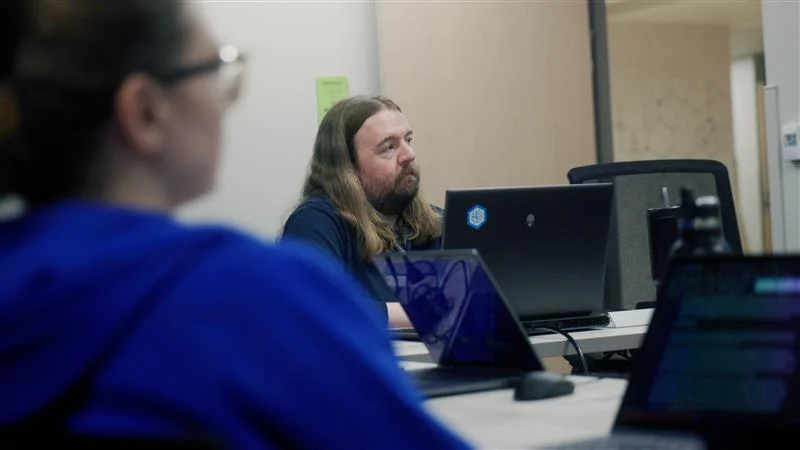
“I’m looking forward to how much it’ll impact the business because I know it will in a very positive way,” Smith said. “That’s been my whole job at Dakotaland Manufacturing, utilizing more with less.”
Krejchi agrees.
“The impact of this model can help us focus more efforts on the areas of higher risk,” he said. “We don’t have the resources to be in all areas of the business, but with a model like this, we can spend our time on the areas that make the most impact.”