Meet the couple who learned how one degree can impact all disciplines
Feb. 7, 2023
This paid piece is sponsored by Dakota State University.
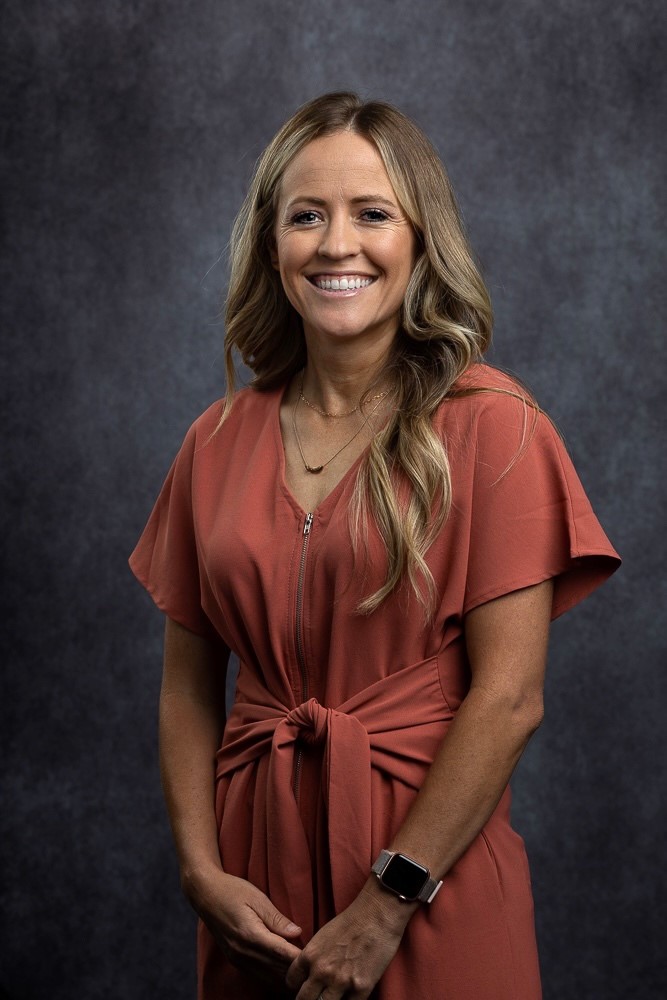
When Kalee Crandall’s husband was earning his doctoral degree in information systems, his wife realized the education could benefit her career too.

She’s also now a doctoral student in information systems at Dakota State University. As the couple would talk about what he was studying, she started to see how useful IS could be for everyone, including school counselors.
Crandall has a master’s degree in school counseling and teaches in the Utah Valley University school counseling master’s program. As her interest in IS grew, she took an undergraduate class at a local university.
“After taking that class, I knew this was something I wanted to go into,” she said. “It’s exciting to learn these new things and see how they can really make a difference.”
One way she hopes to make a difference is through research. Crandall received a Graduate Research Initiative, or GRI, grant this academic year to work on a project titled “Influencing Student’s Career Choices: Parent’s Perceptions of Information Systems.”
“GRIs provide experiences for students to develop their research potential, discover new knowledge in the discipline and improve their problem-solving and critical-thinking skills,” said Dr. Cherie Noteboom, Crandall’s adviser and mentoring faculty member for the GRI program.
Research also can result in conference papers or journal articles that help others in the field. “A lot of quality research comes out of GRIs,” Noteboom said.
Crandall’s project “is a great example of how IS infiltrates every field. It demonstrates the importance of IS, showing that IS is not a stand-alone discipline. It’s integrated through every different type of work process in every area,” Noteboom pointed out.
In this way, “everyone benefits from the integration of technology into their workflow, into their processes,” she said.
School counselors can benefit from IS, Crandall said, because “research shows that a lot of school counselors struggle using data and technology to make decisions,” yet IS has very practical value, particularly after the past few years.
The pandemic created an increased need for mental health support for students in recent years to the point that “the focus on those mental health supports in the schools has become more critical than ever before,” Crandall added.
Some federal funding has been made available to hire more school counselors, and by using IS data, these professionals can demonstrate how important it is to continue funding those positions.
“We’re talking about making a difference in the lives of students, so counselors will have to consider learning IS skills to keep their positions and continue to have this influence,” Crandall said. “This will help counselors continue to provide access to students who really need that mental health support.”
She said, “Every single person I talk to says it is so helpful to have this knowledge in information systems and bring it into school counseling.”
Crandall acknowledges her Ph.D. in IS would be useful if she continues in school counseling after graduation, “but the more classes I take, the more excited I get about IS,” so she will have options once she completes her degree.
“That’s the great thing about education, it opens up opportunities, so whatever happens will be good,” she said.

“With Kalee’s commitment to our youth, to their education, to the continuing evolution and support through her counseling role and being able to leverage IS, Kalee will be able to move forward in either counseling or an IS path, or any other discipline she’d want to explore,” Noteboom said.
“Our doctoral students are very talented and gifted students who can contribute in many ways,” she added.
Crandall and other graduate and undergraduate researchers will present their findings at a research poster session held during the annual DSU Research Symposium in March.