In servicing motorcycles, War-Torn Cycles offers support to those who served
Sept. 25, 2025
By Steve Young, for SiouxFalls.Business
When the text message arrived, Chris Fischer had the barrel of a pistol in his mouth.
The demons of Iraq and Afghanistan had won. The memories ─ of children dead by his gunfire in a village, of a helicopter belly-rolling on the ground before his eyes and killing its crew, of an improvised explosive device exploding around him ─ had finally claimed his soul.
Or, so he thought. Seconds away from pulling the trigger, Fischer glanced down as his cellphone lit up. In that instant of madness, he figured, what’s one more text message?
The answer, it turned out, would save his life.
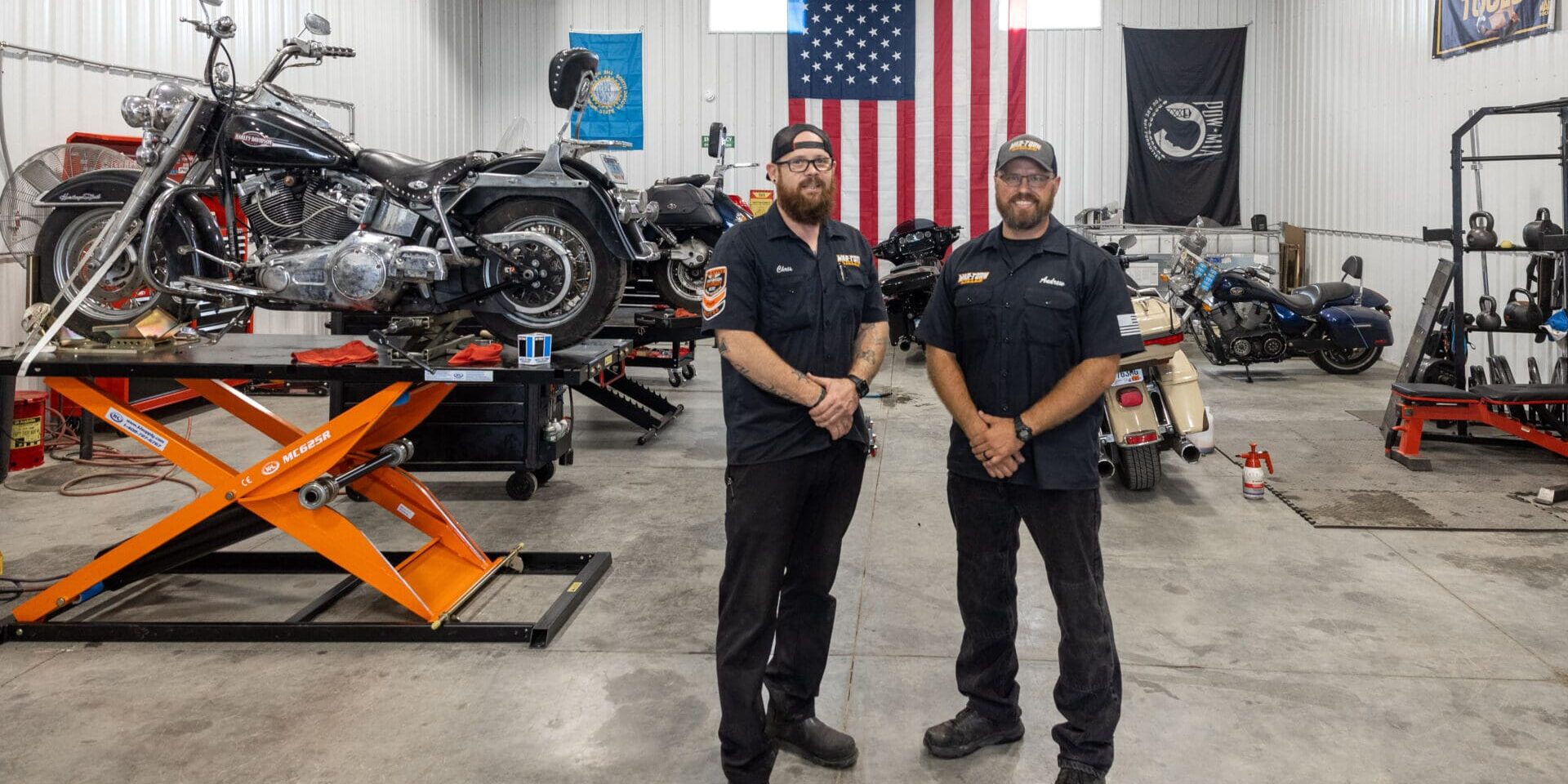
A decade later, Fischer is sitting in a motorcycle shop across Highway 38 south of the Buffalo Ridge Cowboy Town near Hartford, talking alongside the man ─ his friend Andrew Hahn ─ who sent that text message 10 years earlier. The demons haven’t entirely gone away, but Fischer’s nightmares are giving way to a dream ─ a vision he and Hahn share of using personalized motorcycle repair and service as a pathway to help veterans who struggle as he has struggled.
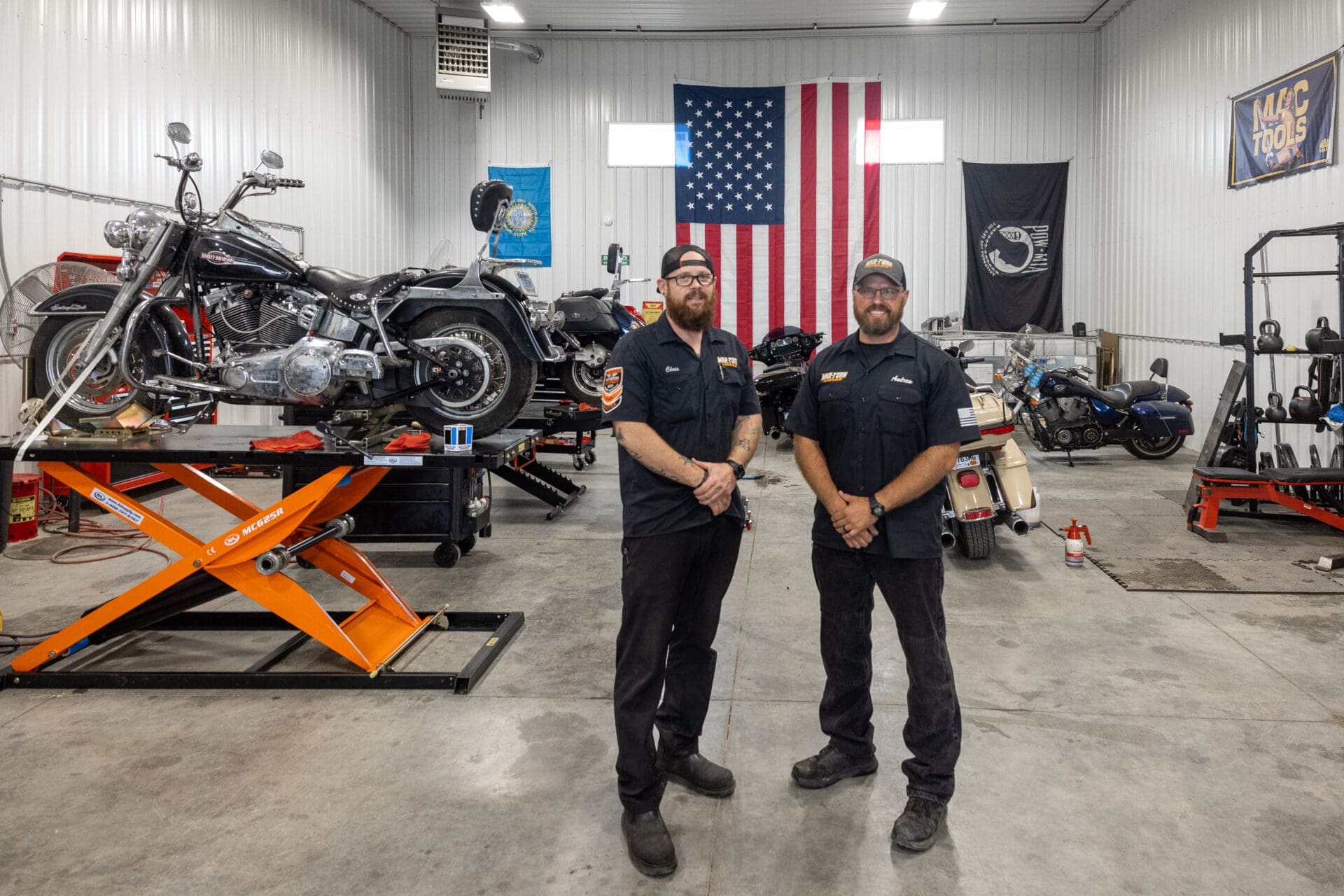
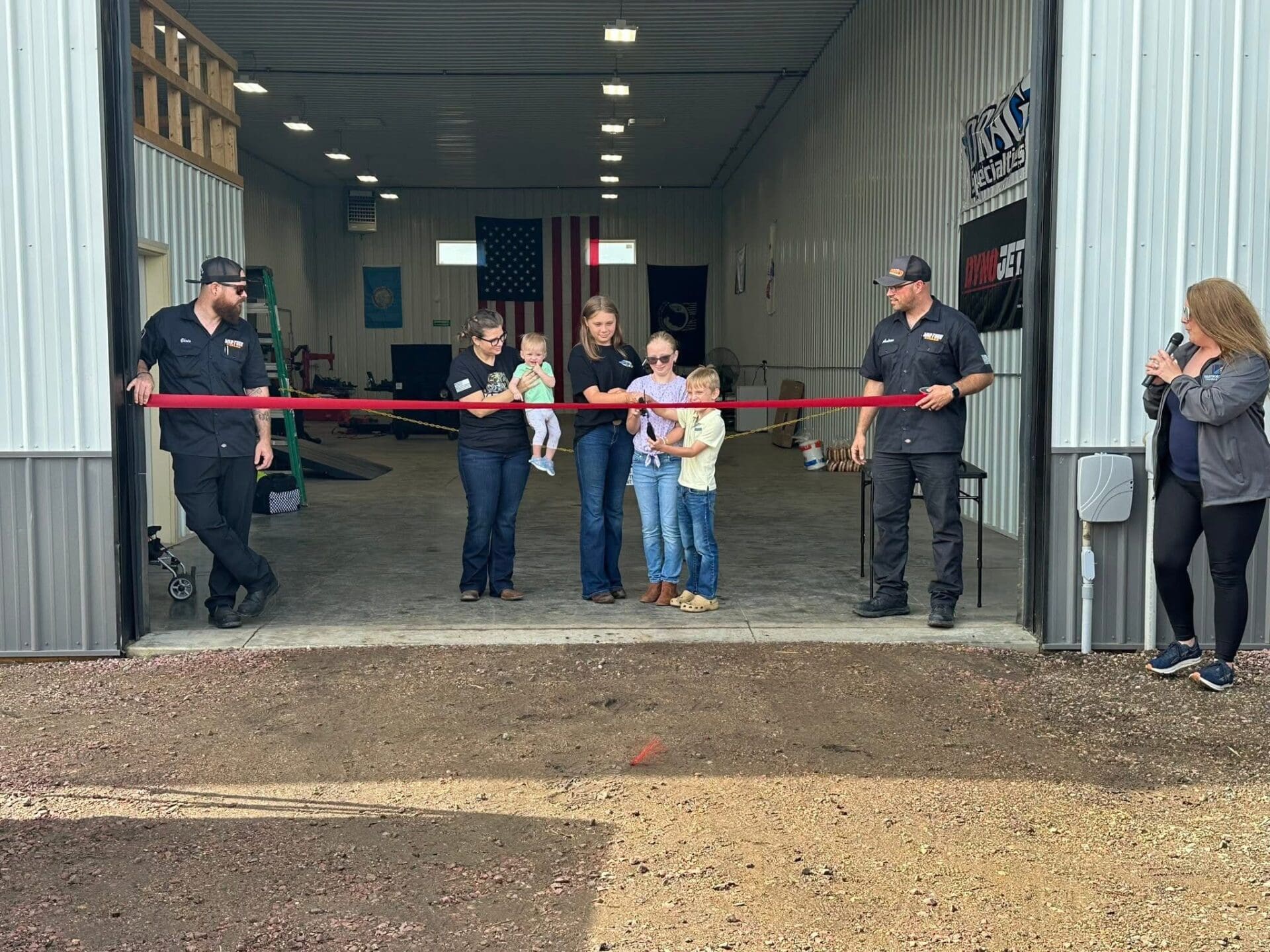
This past June, they signed the lease on the shop that has become War-Torn Cycles. Three weeks later, customers started coming through the door.
The name of their enterprise captures the essence of their mission: servicing motorcycles and, more importantly, offering support to tortured souls.
“What we’re trying to do is basically use motorcycles as a medium to get everyone, yes ─ but veterans in particular ─ through the door, to make a personal connection, to have that camaraderie,” Fischer, 37, said. “And not just in the shop, but we want to do things out in the community too. That way, when we suspect that there’s an issue going on with someone, it’s like: ‘Hey man, you seem kind of off. You good?’ ”
Good would not have described Fischer’s life 10 years ago. Tours in Iraq and Afghanistan had left a gung-ho teenager bent on becoming a soldier and saving the world instead both physically and mentally scarred. Suck it up, he said the military culture told him when he returned home from war. Don’t talk about it. Everybody’s in the sauce.
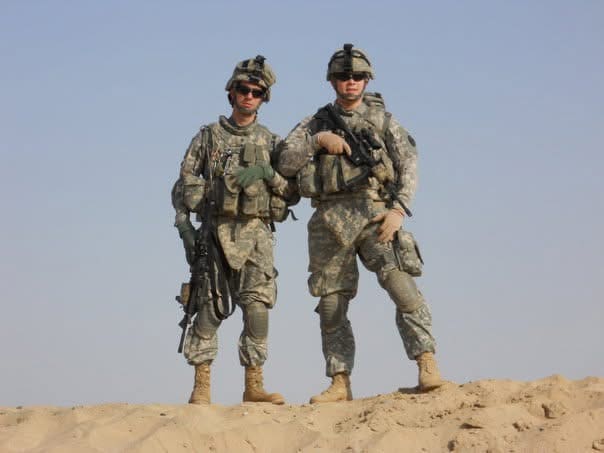
The Army’s answer for the troubled soldier was to reclassify him from infantry to military police. That was in roughly 2013, recalls Fischer, who ended up assigned to the 268th Military Police Company in Ripley, Tennessee. Hahn, it turned out, was in the same unit.
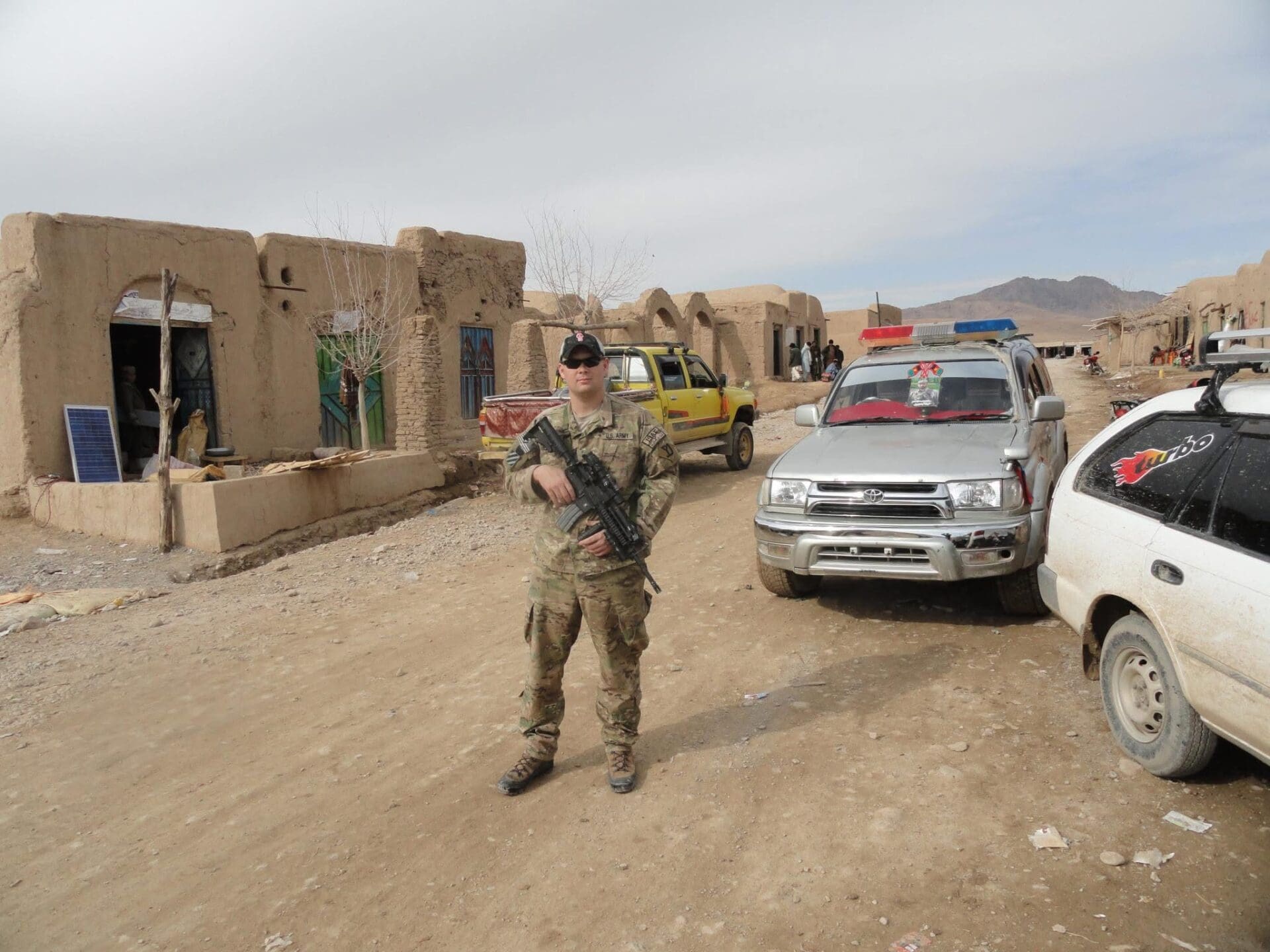
An expert marksman, Hahn had left his roots in rural South Dakota behind after graduating from West Central High School in Hartford in 2005 and headed for the University of Memphis in Tennessee with a scholarship to participate on the school’s co-ed rifle team. While there, he met and married a girl, Jenna, from south Alabama who was also on the team.
At the time, Hahn, 38, thought life’s plan for him was to return to South Dakota. “But life being what it is,” he said, “we stayed there, and I joined the Tennessee National Guard.”
The couple was living near Memphis, in Bartlett, Tennessee, where Hahn supplemented his National Guard work with a job on the Memphis Police Department. Between the low pay and dangers of policing, the grind of seven years in law enforcement exacted a toll on him as well. So did the deaths of four close friends from the military and law enforcement who took their lives despite being well aware of programs like Military OneSource, the VA suicide hotline and other resources meant to help them.
“The resources exist. They absolutely do,” insists Hahn, who took suicide prevention training when he was with the police department. “And these four individuals, very close friends of mine, knew all about them, were part of all these groups and could tell all the same tales.
“But when they got themselves down in that pit, nobody was there quick enough to catch them, to get to them in time. One of them, we had on a cellphone tracker, and we missed him by 20 minutes. That one really hurt.”
The lesson of those losses for him was simple ─ to care enough to reach out when the signs suggest trouble. And so it was that after one particular weekend drill, Hahn went home thinking something was up with Fischer. Something that left Hahn feeling uncomfortable enough to shoot off a text message when he got home that read, simply, “Hey, how you doing?”
It saved Fischer’s life.
They talked for eight hours that day. Soon after, Fischer moved into Hahn’s house, sleeping on the couch in the living room or on an air mattress in Hahn’s office, as the two worked to get the help Fischer needed. Months passed. Then a year. “And then it was 2017, and we were just kind of exploring, like, ‘Hey, what do you want to do with your life?’ ” Hahn recalls.
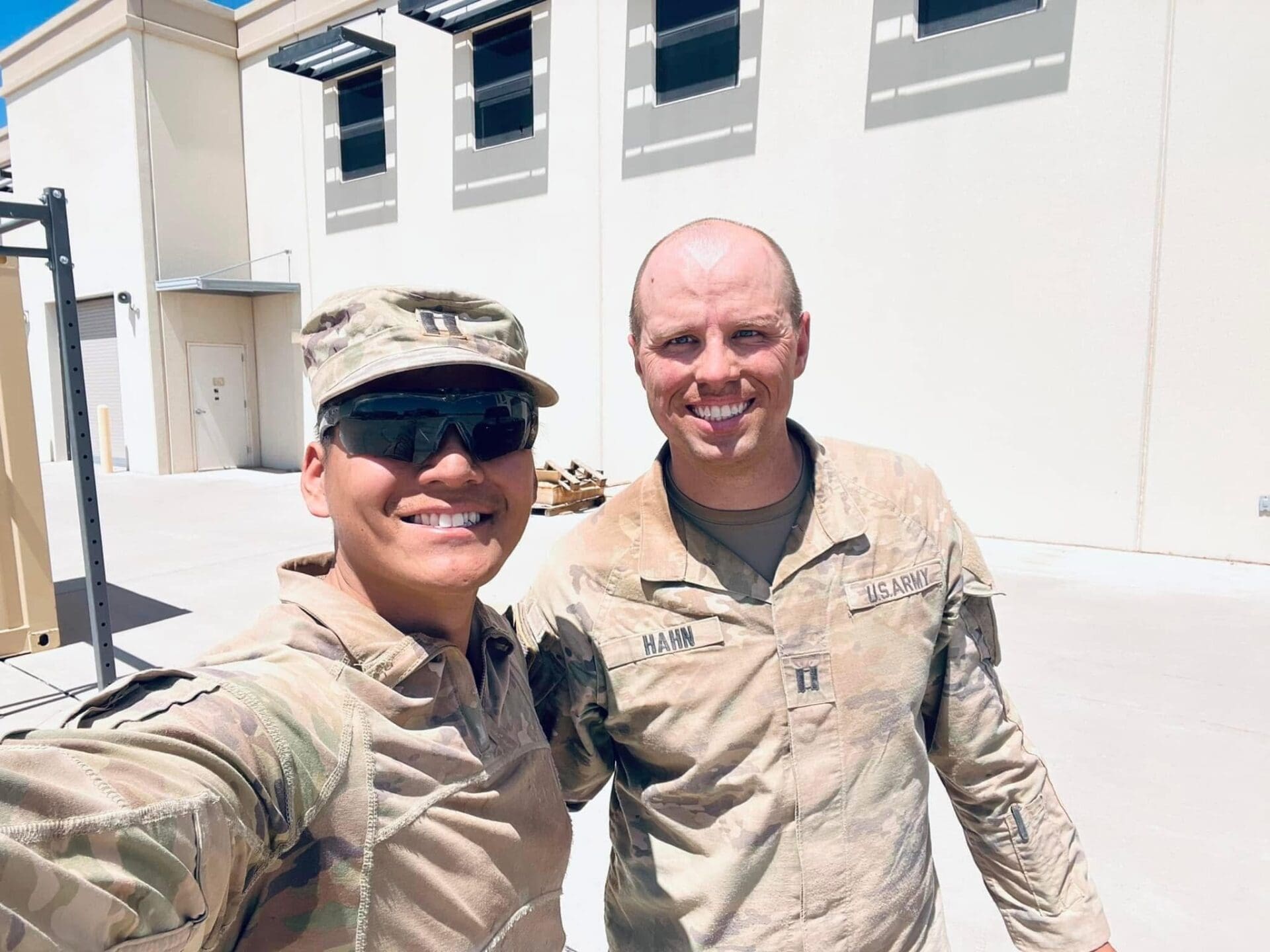
He was tinkering on his motorcycle one day when Fischer showed an interest in the work. “This is pretty cool,” Fischer said as they labored on the bike. To which Hahn responded: “It is cool. You know, you could go to school for this.”
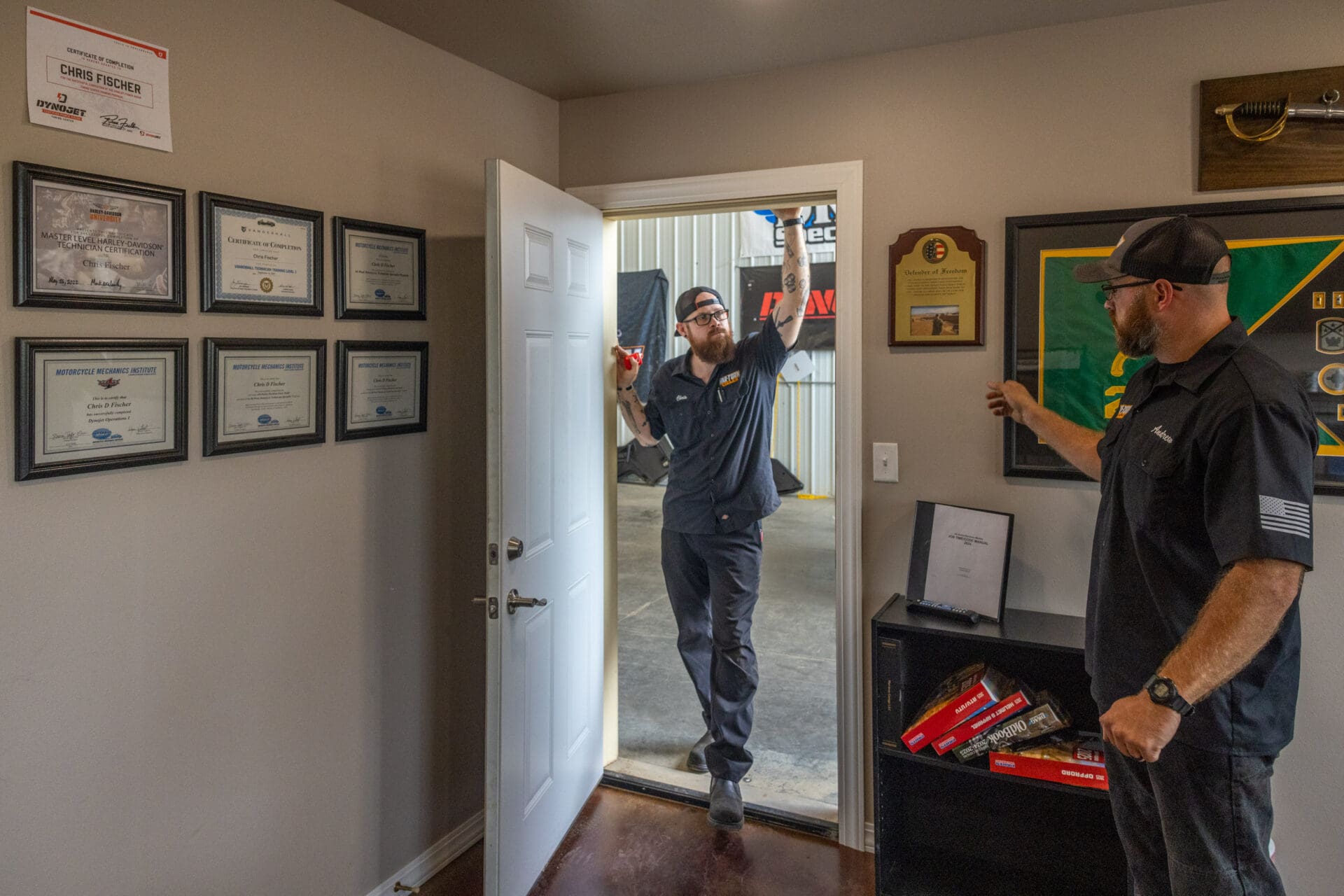
And that’s exactly what he did, enrolling in a Motorcycle Mechanics Institute in Florida.
Hahn, who was looking at his company command with the 268th coming to an end, signed a form waiving Fischer’s weekend drill obligations as long as he was attending the mechanic school and sending reports back. That education, from June 2017 to September 2018, turned Fischer into a certified motorcycle mechanic.
It did not, however, chase away all the demons that continued to haunt him. He was skilled now as a mechanic and was in fact being seen by professionals in the VA system. But Fischer still struggled, missing work or flashing a crass and harsh side to his National Guard duties.
An incident on a deployment to Cuba in 2021 ultimately led Fischer to a diagnosis of post-traumatic stress disorder and the end of his time with the National Guard in 2022.
Hahn, meanwhile, had transitioned from the Guard to the active-duty Army in 2017. While he enjoyed the paycheck as a major, he wasn’t so keen on the moves, especially with a wife and three young children. And then in June 2023, his sister died of cancer back in South Dakota, “which hit me hard,” he said. “It really got me asking, ‘What am I doing?’ ”
Was he going to spend 11 more years in the military to get in his full 20 years, moving from assignment to assignment and base to base? Or was he going to give his children some roots, in a place like the one he loved from his childhood days, and do something else with his life?
He, his wife and Fischer talked a lot about it. Both men decided they would move to South Dakota, bring their families with them and work together. That’s how War-Torn Cycles came to be.
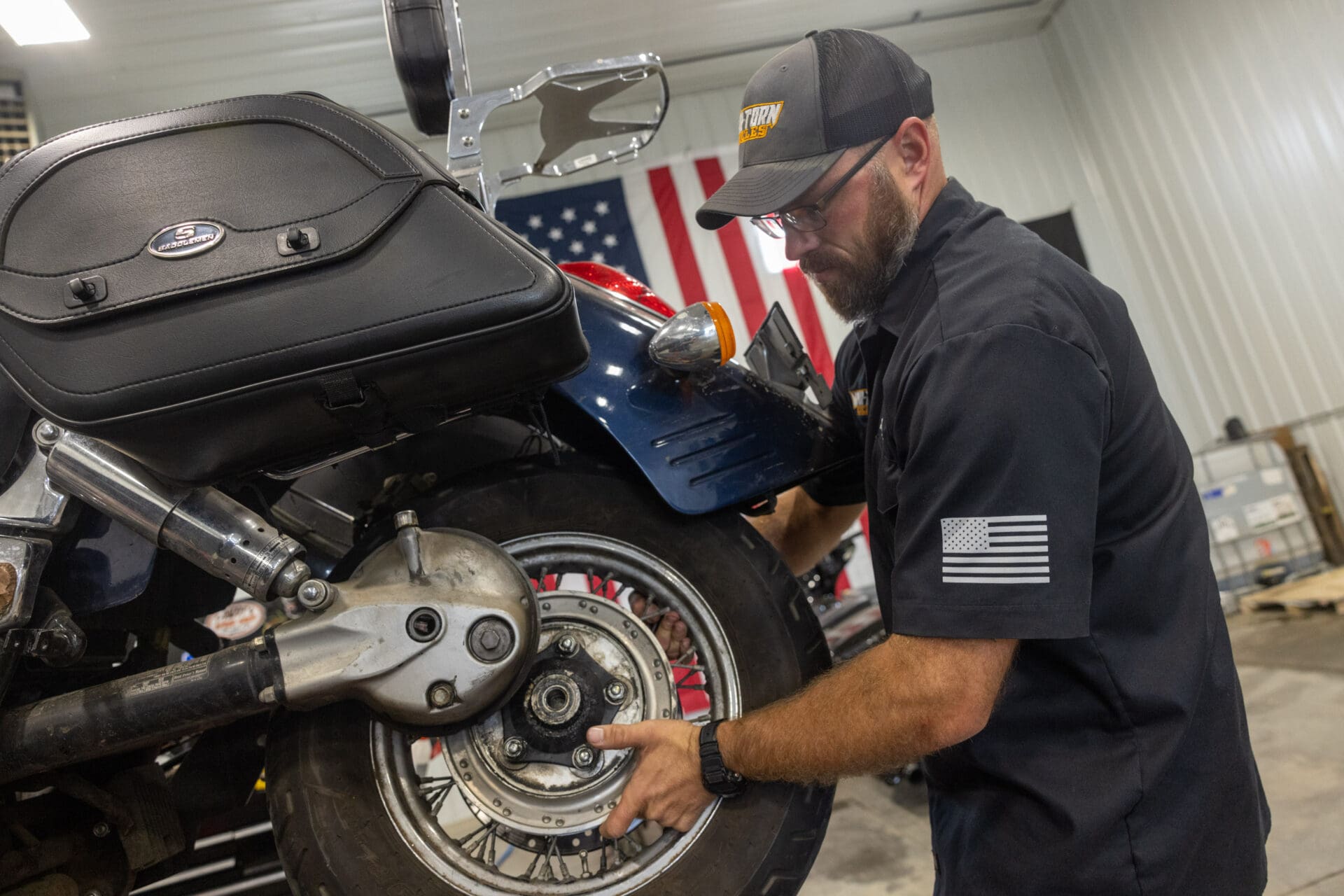
While recognizing the competition they face from dealers and motorcycle shops in the area, Hahn and Fischer are betting their business success on a philosophy of personal connections. That means customers will interact directly with the technician servicing their motorcycle at War-Torn, the pair said, and not with some person at a front desk.
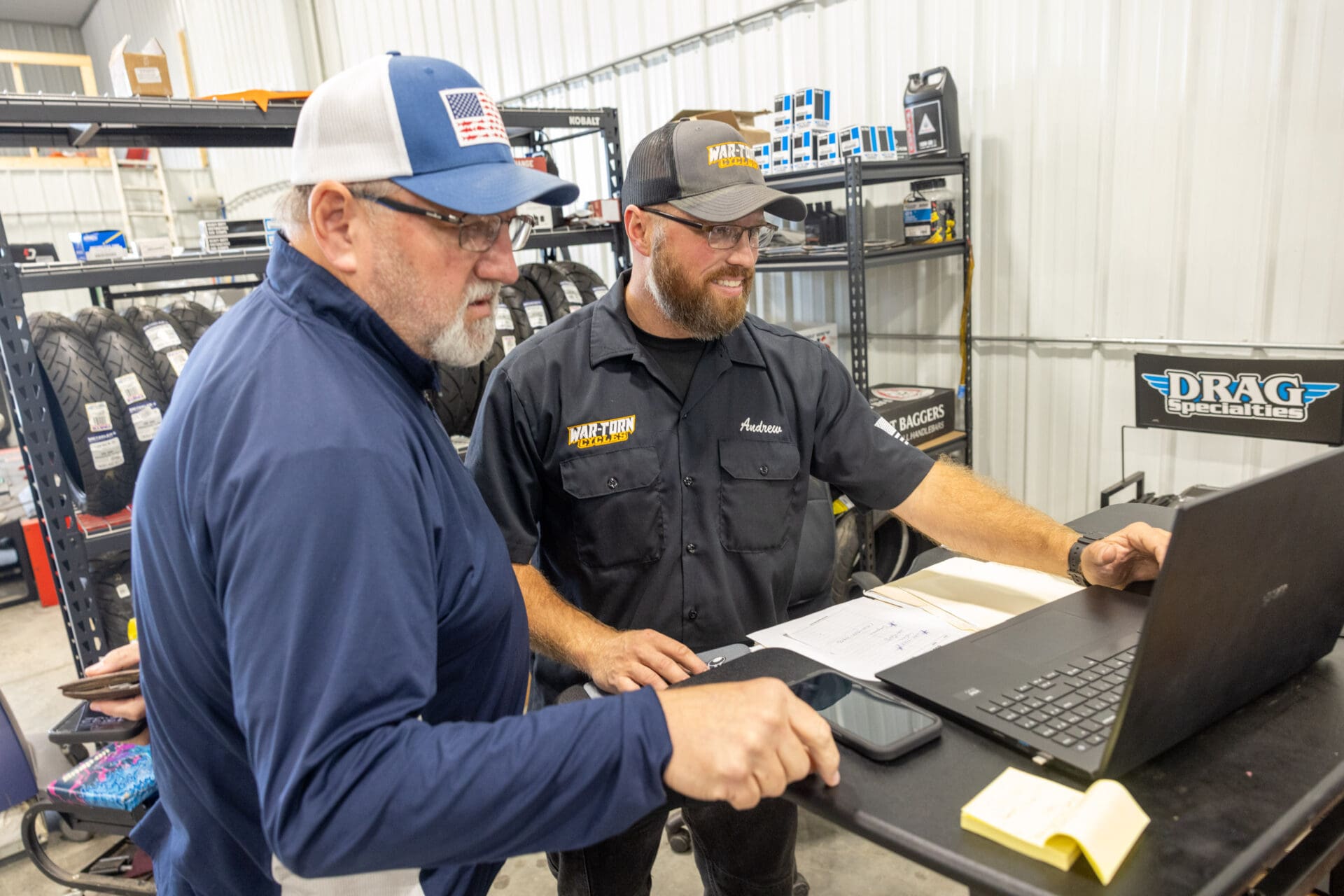
“I will save every customer that we have to our phone so we can build an interpersonal tie,” Hahn said. “When you call us, you either get Chris, me or my wife. You can talk to the master tech. You can talk the business management guy. You can talk to the ones that make the decisions and actually have a partner for the care of your bike.”
Hahn said they want to establish a reputation as a high-performing professional shop. To do so, War-Torn is working to become a Dynojet Center. Dynojet is a diagnostic and performance-tuning machine that will enable Fischer to accurately assess engine output, troubleshoot issues and optimize performance modifications.
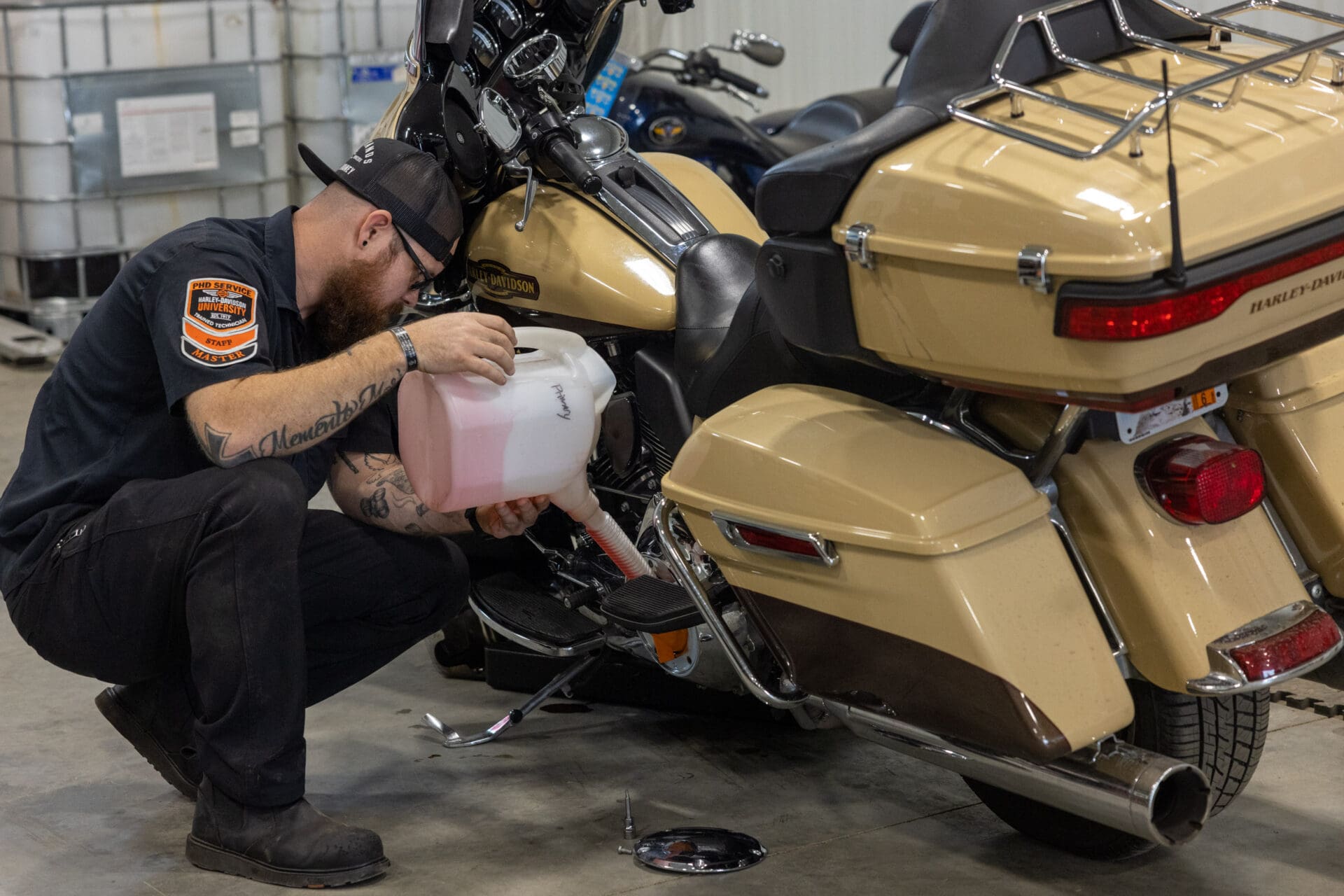
Fischer also is attending a specialized Harley-Davidson tuning training this fall so the shop can upgrade to a certified Harley-Davidson Tuning Center. And, while they don’t intend on signing any dealership contracts to sell new motorcycles, they are pursuing dealer licensing capabilities to buy used bikes, say, at auction, then fix them and resell them.
By this time next year, if all goes according to plan, they would like to have a mobile shop at the Sturgis Motorcycle Rally as well.
“I want people to know that this is, first, a professionally run shop, not just a shade tree and a building,” Hahn said. “And then a year from now, I want that cultural connotation out there of who we are as a high-performing, professional shop that you can have one-on-one interpersonal experience with.”
But that’s just part of the dream. Their ultimate goal is to make War-Torn Cycles a hub not only for the motorcycle community but for veteran and first-responder communities as well. They want to constantly be making connections to support people within those communities who may need a shoulder to lean on.
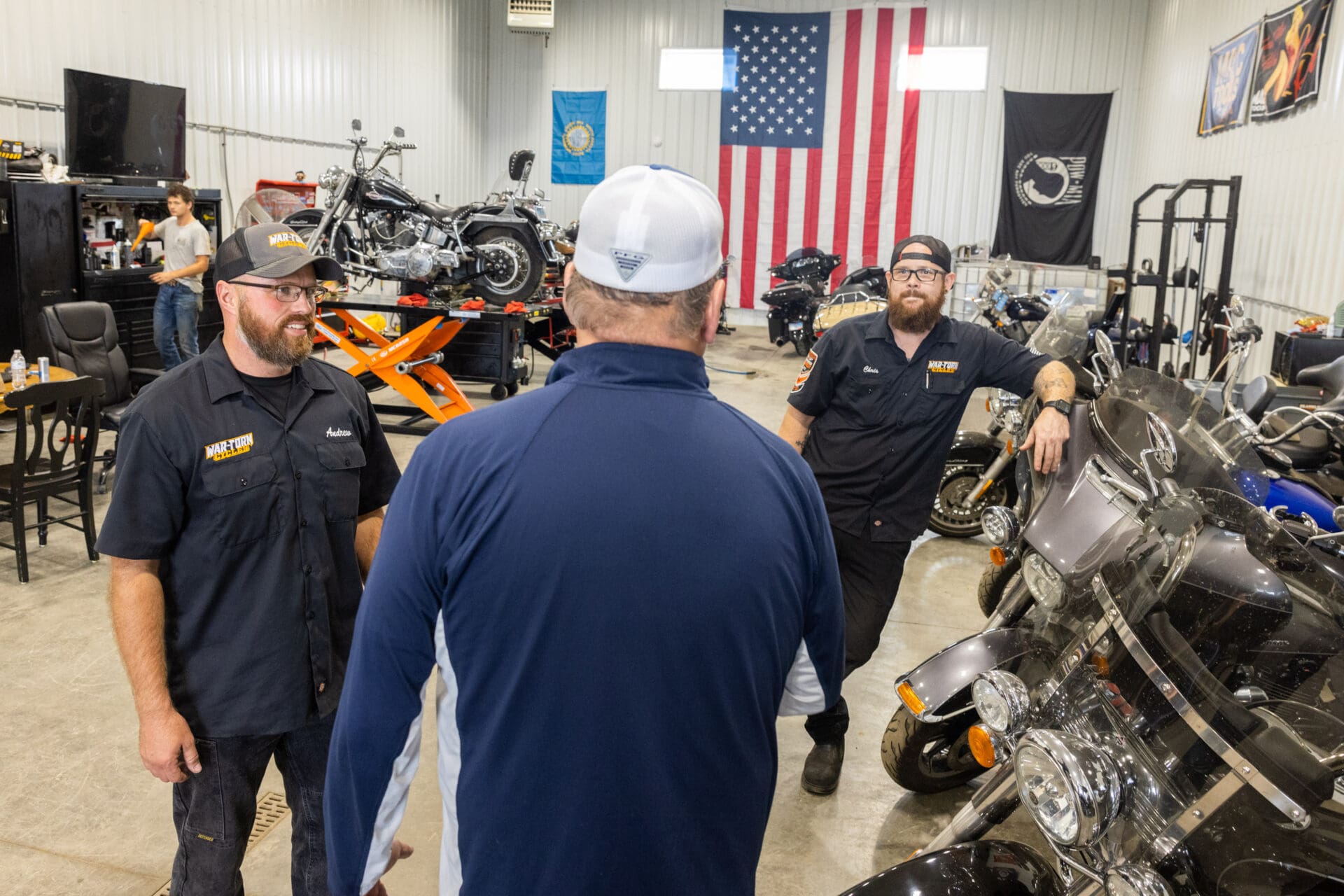
Hahn understands there are organizations in the Sioux Falls area that already provide some of that assistance. The American Legion, the Veterans of Foreign Wars, the Department of Veterans Affairs, the South Dakota Military Heritage Alliance ─ they are all “silos of excellence,” Hahn said. “But I would add that rarely are efforts like those, or like ours, wasted.”
He has been in contact with a national organization called Irreverent Warriors about setting up an outpost here in South Dakota. That group emphasizes camaraderie, informal gatherings, one-on-one time and community involvement to support veterans.
“When you go to formal sites, formal buildings, you tend to put on more of an appearance,” Hahn said. “It’s not typically an environment where people are actually willing to let themselves open up in a true capacity and let themselves be vulnerable.
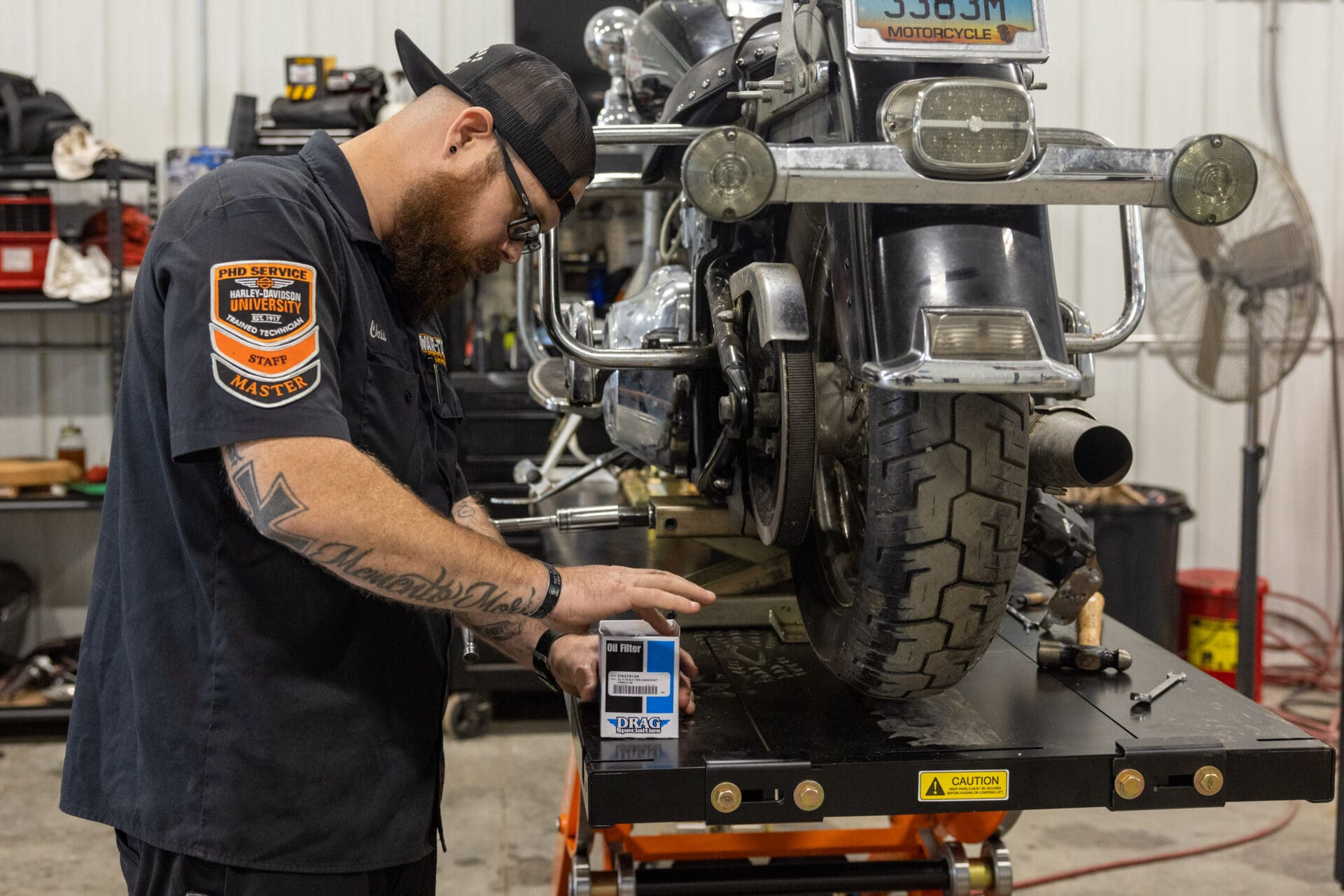
“The camaraderie environment that Irreverent Warriors develops, that we want to develop here in our shop and in the community, forces that interpersonal connective tissue bond. It’s that person-to-person connection piece that actually gets to the heart and core of getting between somebody and a final step.”
The two men insist that they will not be working in isolation. They already have had communications with folks at the VA Medical Center. The Alliance, they said, can be a great asset for them to connect with as well. And they are reaching out to other ventures serving veterans too.
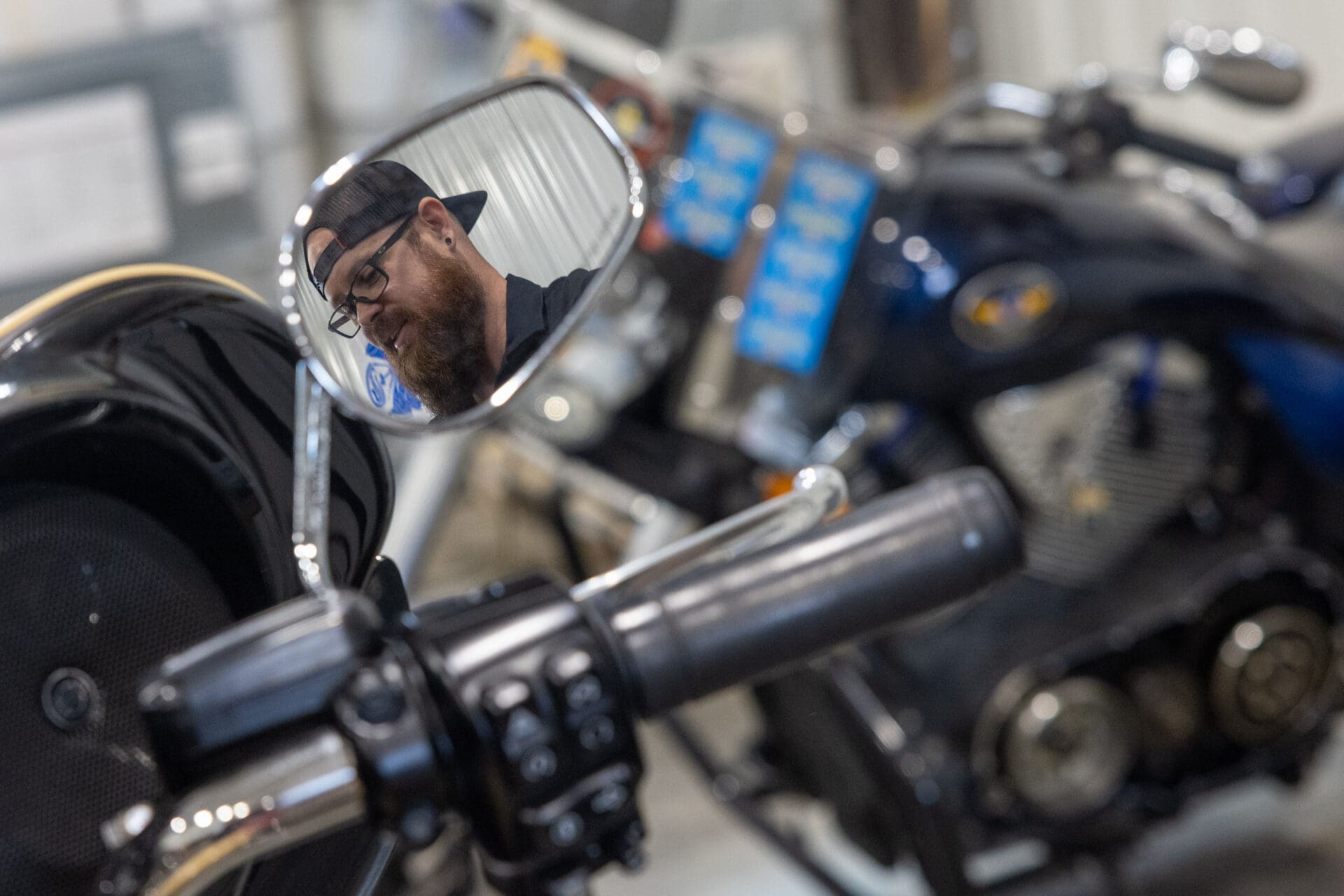
And to be clear, they admittedly are no experts in this area, Hahn said. But they can make connections through the shop. They can find experts in the community. Their business can sponsor and participate in veterans programs throughout the area.
“I’m no alcohol treatment counselor,” Hahn said. “But I know how to care and how to pay attention. I can care enough to walk you into a treatment center because you can’t get yourself there.”
Or care enough to send a text message to a troubled friend.
That kind of caring saved a life 10 years ago. Hahn and Fischer are absolutely convinced it can and will work again and again and again.
“This isn’t about making money and trying to get rich,” Fischer said. “We’re doing this because we want the relationships. We want to help someone. I mean, if I can intercede like he (Hahn) did with me, intercede with one person who doesn’t go down the route I did, then yeah, that’s why I’m here. That’s why I’m doing this. For me, that will always be a win.”