How the World War II era drove a business boom for Sioux Falls – and this hometown bank
Aug. 6, 2024
This paid piece is sponsored by The First National Bank in Sioux Falls.
On Dec. 7, 1941, the Japanese bombed Pearl Harbor.
One month later, on Jan. 13, 1942, William Wiswall (W.W.) Baker formally stepped to the helm of The First National Bank in Sioux Falls as the nation was thrust into war. For Americans, everything changed.
The war had already raged for years, but try as we might, the U.S. could not stay out of it. It reached into every home, pulling millions of men and women into theaters across the world.
Farewells were bid everywhere — including the greater community of Sioux Falls — and those left behind shouldered the responsibility of running the country and fueling the war effort.
Immediately, the Army Air Corps began construction on a military base in Sioux Falls to provide radio training for military airman.
One of only two radio training bases, Sioux Falls trained half of all military radio technicians.
In a single year, the city’s population nearly doubled as many of the soldiers and aviators brought spouses and children with them as well.
It’s hard to comprehend the changes that happened every day in this community.
The Long Boom
Many of the businesses in town had owners going off to war.
The lumber, steel and tire industries were shut down. Gasoline and groceries alike were rationed.
Business and community life were completely disrupted, and life as it existed before 1942 was redefined for everyone.
As the smoke dissipated and the dust settled, the GI’s returned home to a different country.
By late 1945, the Axis powers had fallen and the first waves of troops were being sent home.
They returned as changed people — and those who stayed at home had changed as well. No one was untouched by the war that defined the Greatest Generation.
But how do you return from a life within bullet range of an enemy? You build a better future.
Those returning to Sioux Falls had just spent a couple of years in foxholes, pup tents and cockpits.
They had visions for what they wanted to accomplish. And this was the era when the entrepreneurial spirit was stoked, its flames were fanned, and it took off like never before.
In the post-World War II economic boom — often called The Long Boom — the affluence of American society expanded faster than many could have imagined.
This was the new normal at First National Bank.
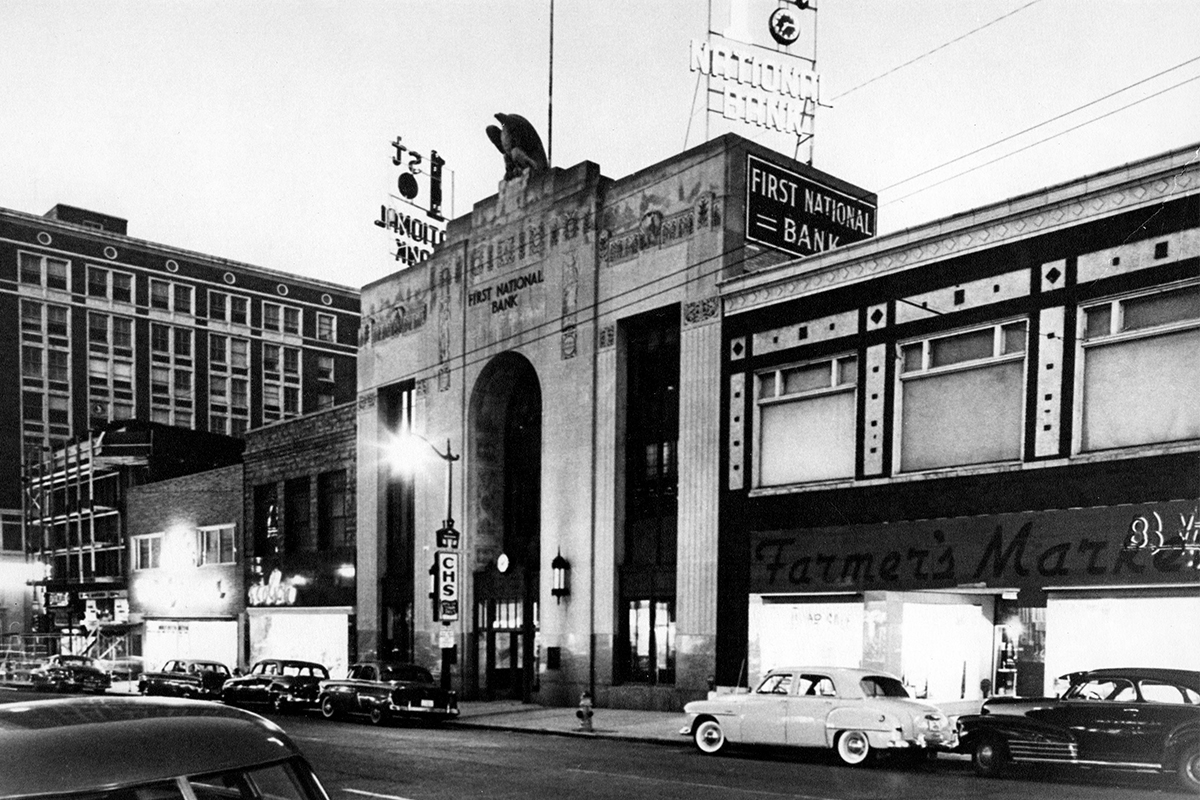
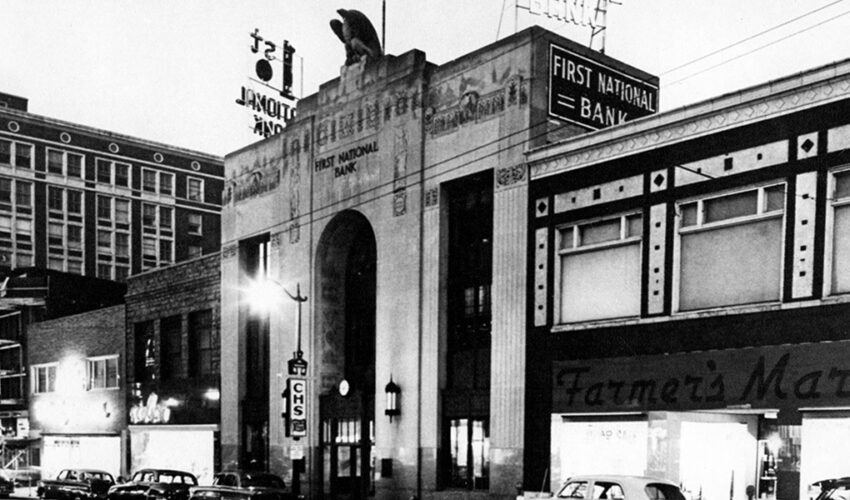
From 1929 to 1976, First National Bank was located at 112 S. Phillips Ave. — just a few doors down from where it stands today.
For months, bank president W.W. Baker fielded a line of courageous soldiers-turned-entrepreneurs with dreams of a prosperous future. They had left home as kids and returned as mature adults.
Now, they wanted to marry, start families and found businesses. They’d gotten a dose of inspiration and motivation to make a difference for themselves, their families and their communities.
Some went to school on the GI Bill. Some went to work on the meat-cutting lines. Still others built their own way. And those who came to build their own way came to the right place.
W.W. Baker’s ability to size up a person, a business plan and the attendant financial statements was legendary.
He was intimidating, peering over the bifocals slid halfway down his nose, eyes moving from paperwork to person.
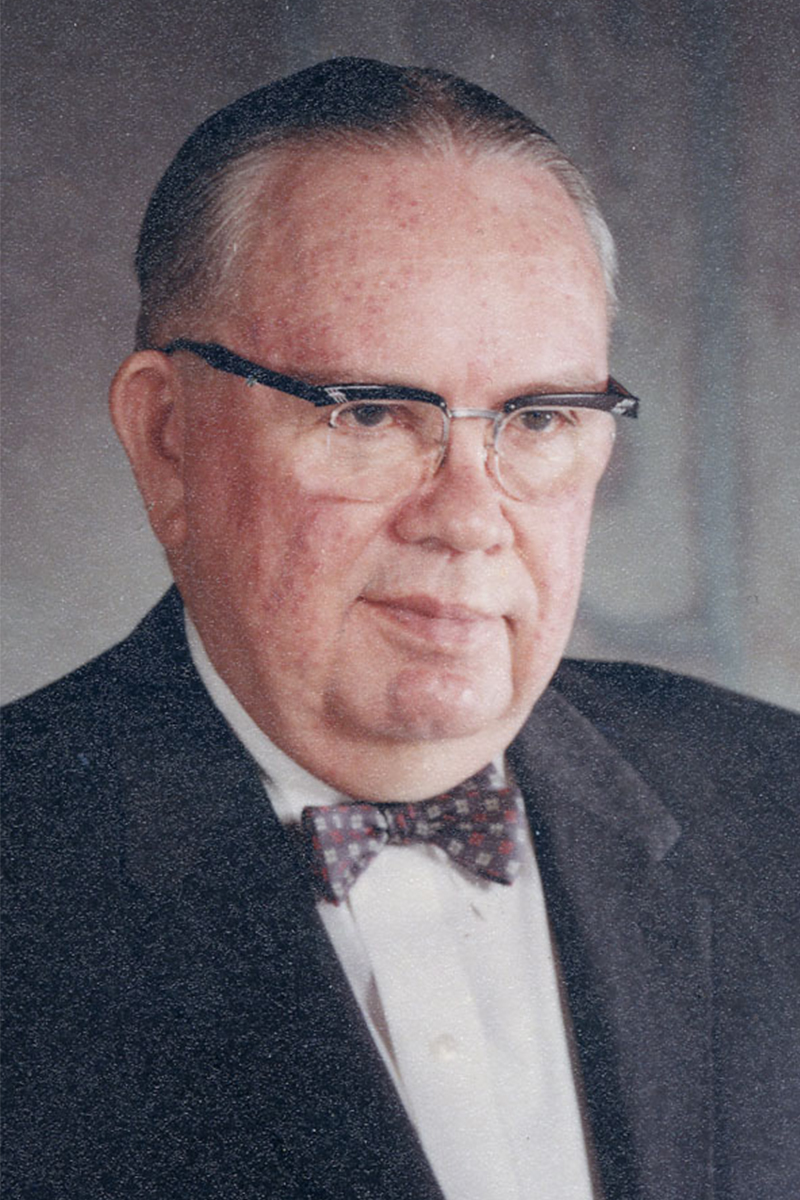
W.W. Baker was president of First National Bank from 1942 to 1971.
Even though his education at Yale University was in the liberal arts, he could navigate financial documents with ease. However, it was in these moments his head met his heart.
He made decisions by intuiting the answer to the question: “How sterling is their character?”
Sure, he wanted to know specifics around the business, like:
“Who’s going to buy these cars?”
“Who are your suppliers?”
“How will you successfully market this venture?”
Once satisfied, the deal was done with a single signature.
You didn’t sign a pile of documents back then. Instead, you signed one promissory note. W.W. Baker calculated each of the loans in his head and made calls on the spot.
Some of his deals were on the edge. In fact, legend goes that if he really believed in someone, he’d reach into his hip pocket and make personal loans to people where it would’ve been imprudent for the bank to do so.
Just like George Bailey in “It’s A Wonderful Life” giving his personal savings to keep the bank afloat, W.W. Baker kept worthy dreams alive by every means at his disposal.
He banked on ambition and intelligence, and cast a big shadow while doing so.
But if you wanted to get a same-day decision, he was the only game in town.
He had a soft spot in his heart for entrepreneurs — and especially those returning from the war. He would’ve wholeheartedly agreed with Tom Brokaw, who years later so famously wrote a book about “the Greatest Generation.”
The relationships we protect
Today, the legacy of leaders like W.W. Baker lives on through both First National Bank and Sioux Falls itself.
His financial savvy and penchant for risk-taking fueled the city we enjoy today. And for every leader catalyzing growth and striking strategic relationships, there have been a dozen more sustaining that growth and nurturing those relationships.
One of these unsung heroes was a business banking leader named Orrin Anderson.
Anderson came to First National after a few years working in business banking for a competing bank. From his first day as an assistant branch manager at the bank’s Western Mall branch, Anderson was schooled in “The First National Bank Way” by his boss, branch manager and later the bank’s president: Robert S. Baker.
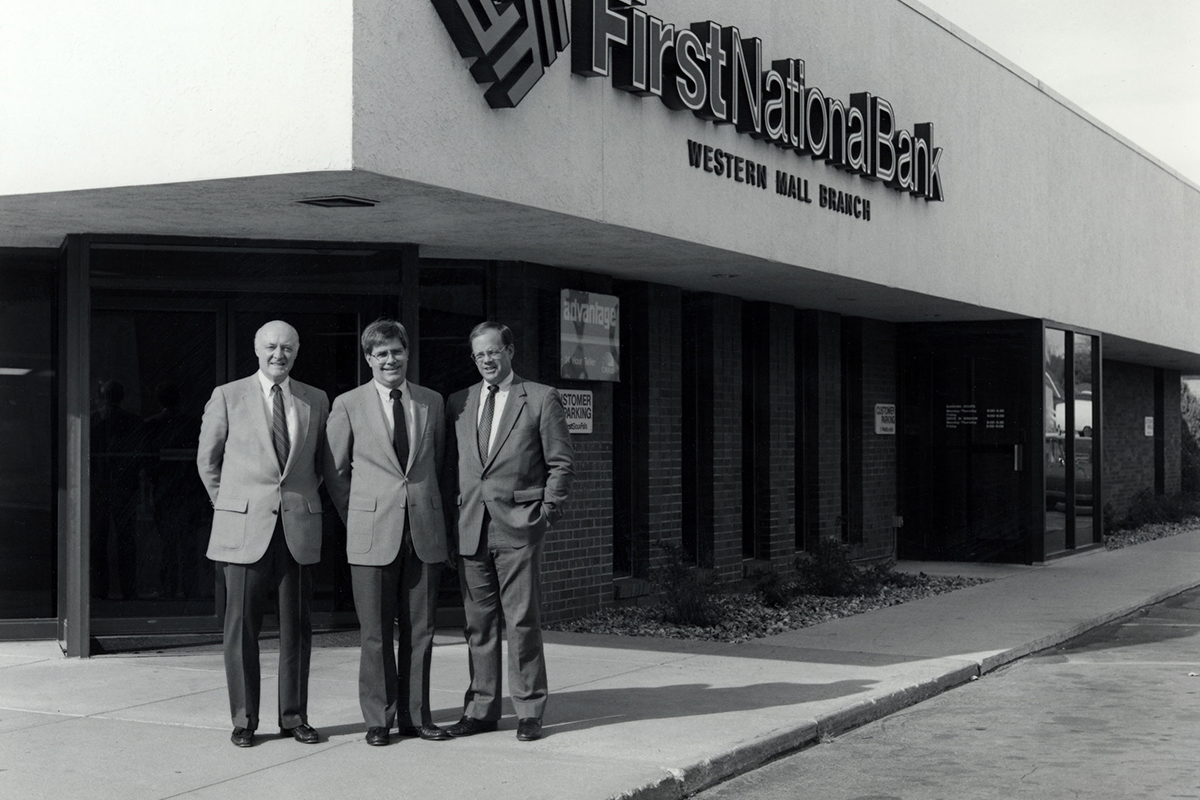
Curt Kuehn, Orrin Anderson and Robert S. Baker outside First National Bank’s Western Mall branch.
Anderson was a workhorse, becoming a trusted advisor to many businesses and individuals.
Part of his charm is that he believed everyone deserved his time; no matter your title, he gave you the same attention and treatment.
He had the largest customer portfolio by far, and his customers were untouchable.
In fact, the story goes that when a competitor called on customers and heard they were working with Anderson, they’d hang up the phone, knowing it didn’t even pay to try and lure them away.
Customer relationships with Anderson were the definition of sticky — the same went for his relationships within the bank as well.
Even though he was hard-nosed, he was an exceptional coach. On now-president and CEO Chris Ekstrum’s first day on the job just after Christmas, Anderson met him at the door with a shovel and a bag of salt.
He said, “Don’t take your coat or boots off.” Then, he handed over the shovel and salt.
While Ekstrum was an “officer,” Anderson was making it clear that at First National Bank, everyone is on the same end of the shovel.
Everyone carries their own weight and can expect to be treated the same. And that went for the bank’s customers as well.
Anderson modeled what it meant to treat his team like family.
At his branch, there was a successful business customer who was unkind to the tellers.
Anderson understood both the value of caring for his people and how much the organization supported that. So he spoke with the tellers and asked them to send the customer to his office the next time he came in.
When the day came, the tellers followed the plan.
In the privacy of his office, Anderson ended the banking relationship, telling the customer he simply was no longer a fit.
The relational significance cannot be overstated. From that moment, everyone knew Anderson and the bank had their backs.
To learn more about the surprising history of The First National Bank in Sioux Falls, check out the rest of this series.