From sci-fi inspiration to real-world impact, biotech company advances 3D printing frontier
May 7, 2026
This piece is sponsored by South Dakota Biotech.
What began with a sci-fi robot and a Kickstarter campaign has grown into a global advanced manufacturing company helping reshape industries from healthcare to aerospace.
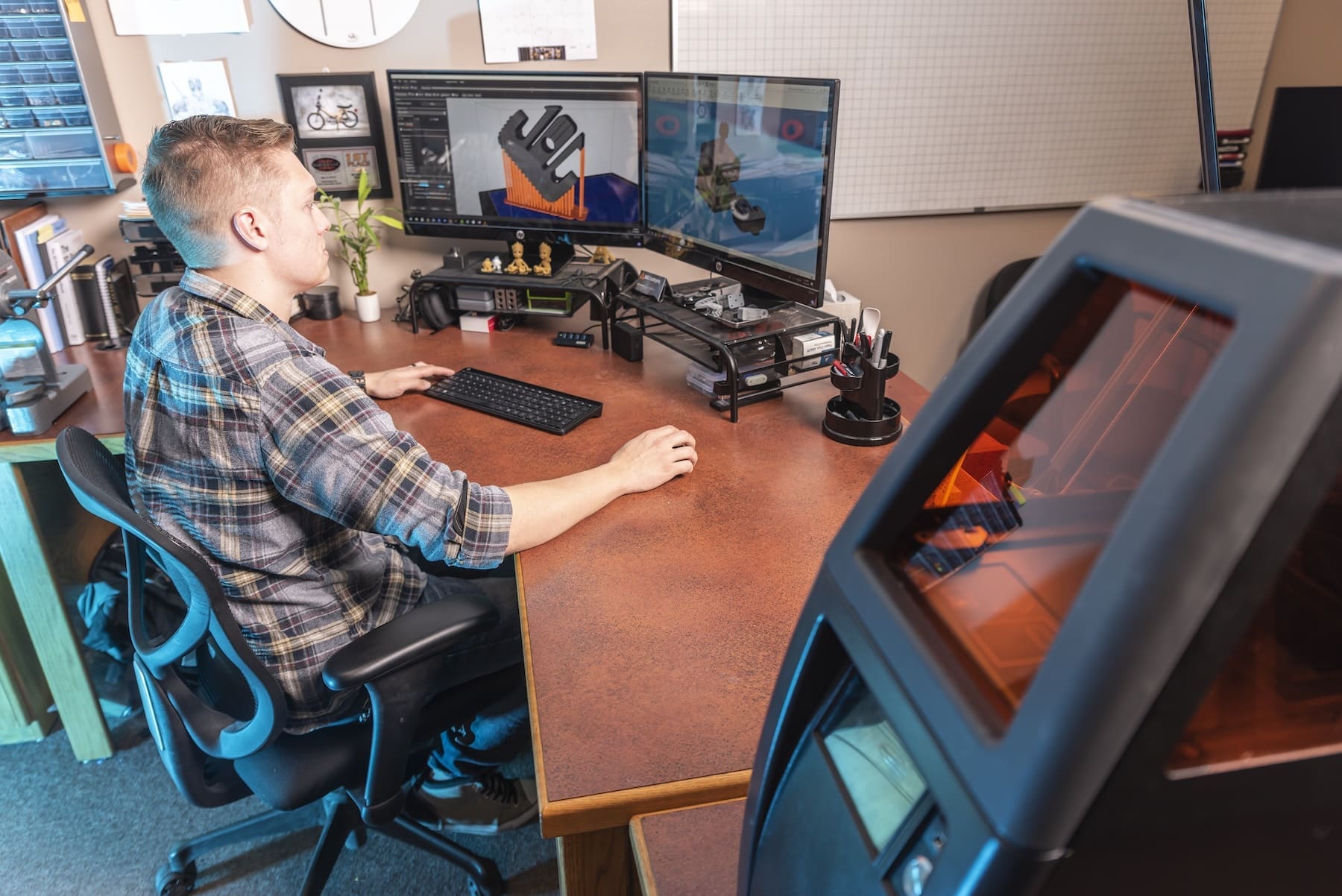
Rapid City-based B9Creations is part of a new generation of companies pushing the boundaries of 3D printing — not as a novelty but as a precision manufacturing tool solving complex, real-world problems.
“Our founder was a B-1 bomber pilot based at Ellsworth, and when he transitioned from the military, he loved South Dakota and the Black Hills and wanted to make this his forever home,” said Dani Mason, vice president of sales, marketing and customer solutions.
That founder, Michael Joyce, brought a background in both software and aviation. He initially was inspired by a different kind of machine: the robot from the 1960s television series “Lost in Space,” known as B9.
The company’s earliest work was done out of Joyce’s basement and included building replicas of the robot. But leadership quickly realized the market for life-size robots had limits.
“What prompted the next journey was looking for better ways to make things,” Mason said.
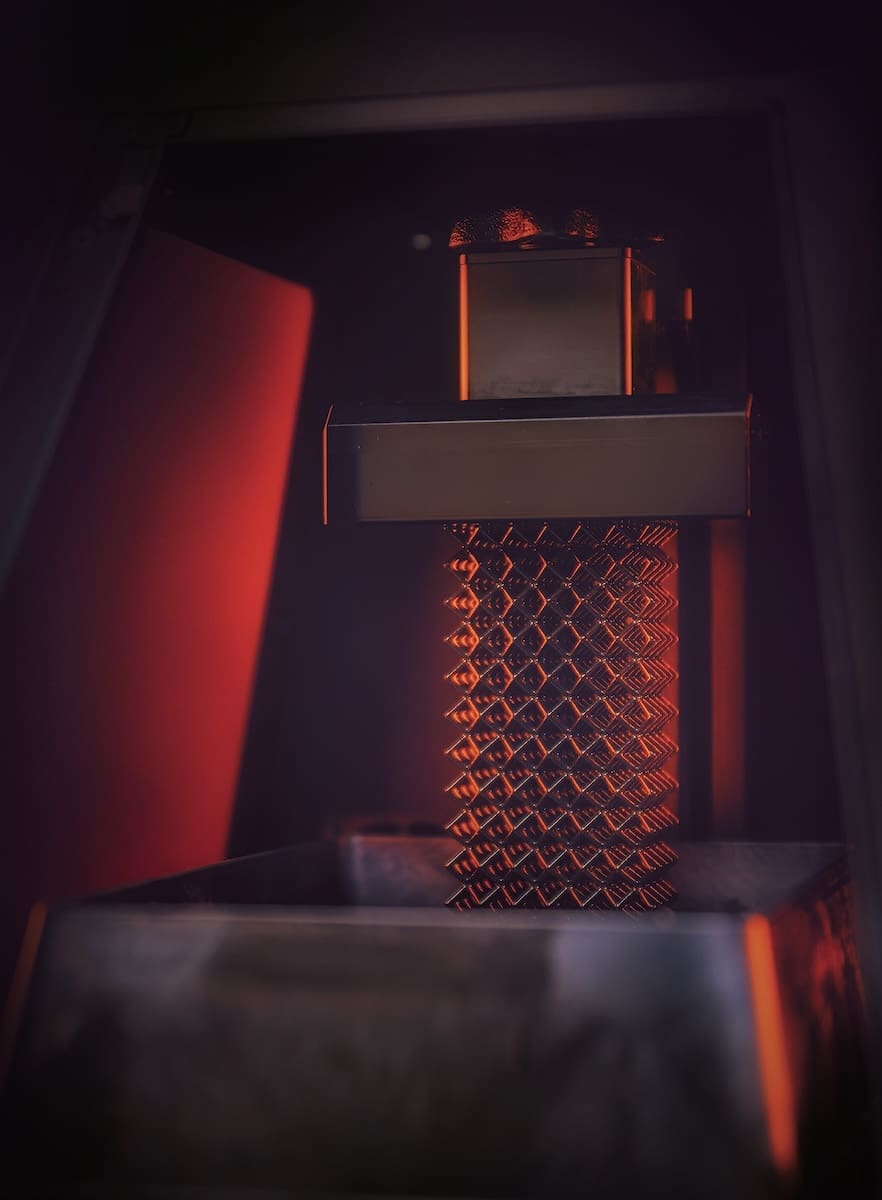
At the time, industrial 3D printing existed but came with price tags ranging from hundreds of thousands to millions of dollars — far out of reach for most businesses.
B9Creations saw an opportunity.
Launching through Kickstarter, the company completed two fundraising rounds and delivered on both.
“It was our very first generation of a 3D printer,” Mason said. “Fast-forward a little over a decade, and we’re in 70 countries serving high-precision industries, including medical devices, bioprinting and aerospace.”
Beyond machines to solutions
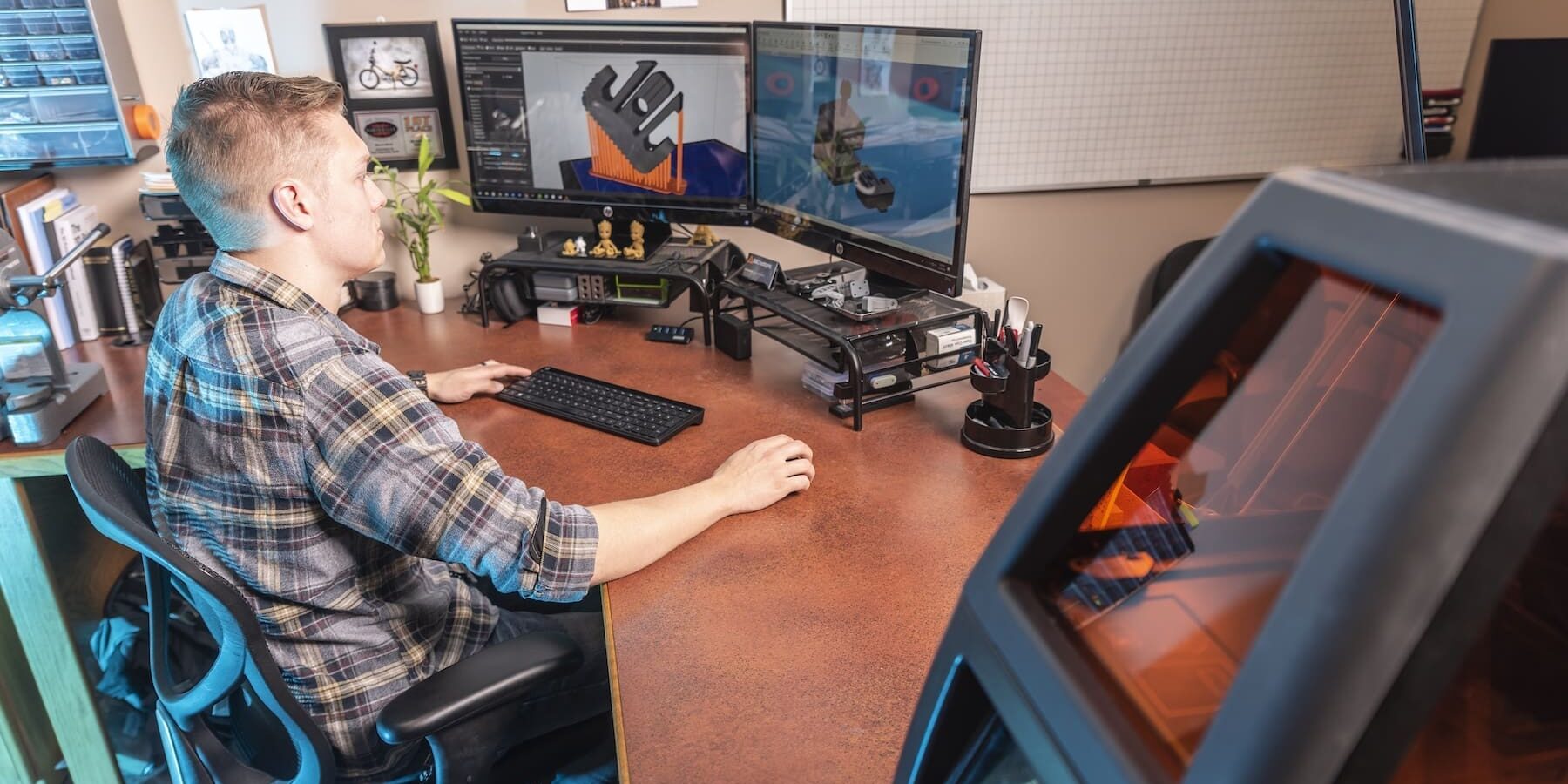
While B9Creations manufactures 3D printing hardware and software, a growing portion of its business focuses on helping customers solve production challenges.
“It usually starts with a supply chain issue or a need to bring a product to market,” Mason said. “We start with: What’s the best way to make these parts?”
More than 60 percent of B9Creations’ work involves customized solutions tailored to specific applications rather than off-the-shelf equipment.
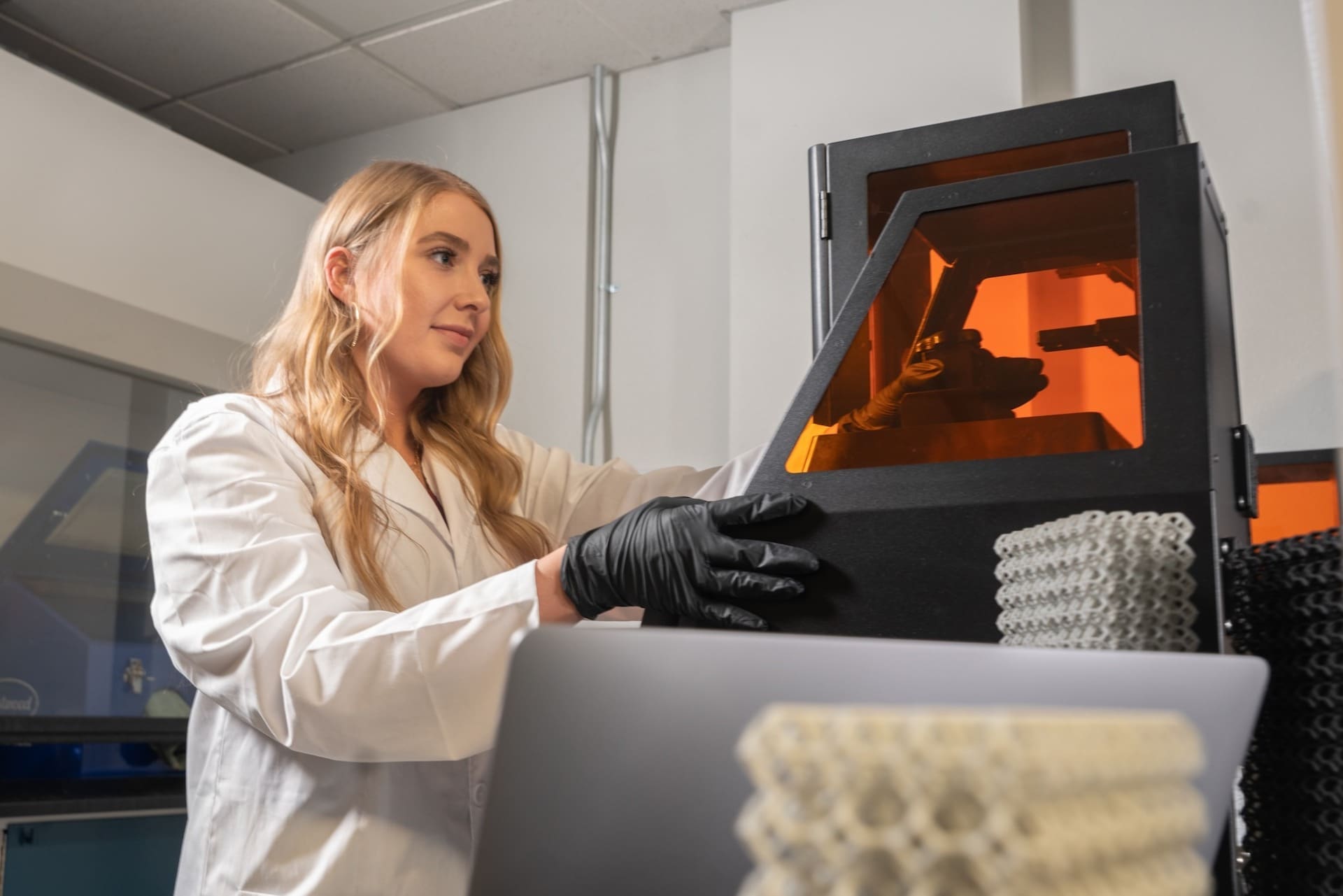
“For a long time, it was: Let me buy a printer, and figure out what to do,” Mason said. “Now it’s: What are you trying to accomplish? Let us help you get there.”
The company employs fewer than 50 people, primarily in Rapid City, with a satellite office in Dallas supporting finance, sales and product development.
Its leadership includes founder Michael Joyce, who serves as chief technology officer, CEO Shon Anderson and South Dakota-based ownership.
“B9Creations is such an impressive success story,” said Joni Ekstrum, executive director of South Dakota Biotech. “This is exactly the sort of company we want to see incubate in South Dakota, find the infrastructure and talent they need to expand here and then scale globally.”
Precision at microscopic scale
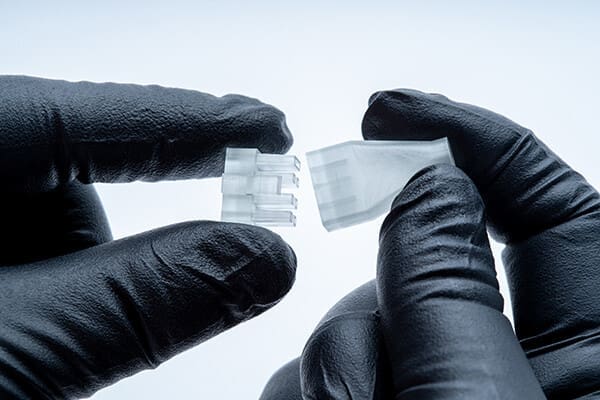
B9Creations focuses on high-precision manufacturing rather than large-scale printing.
“Our largest is about a foot high,” Mason said. “We’re not building houses. Where it needs to be super-precise — that’s our sweet spot.”
That precision can reach microscopic levels.
“A single strand of hair is about 100 microns,” she said. “Our finest printer is printing at 10 microns effective resolution.”
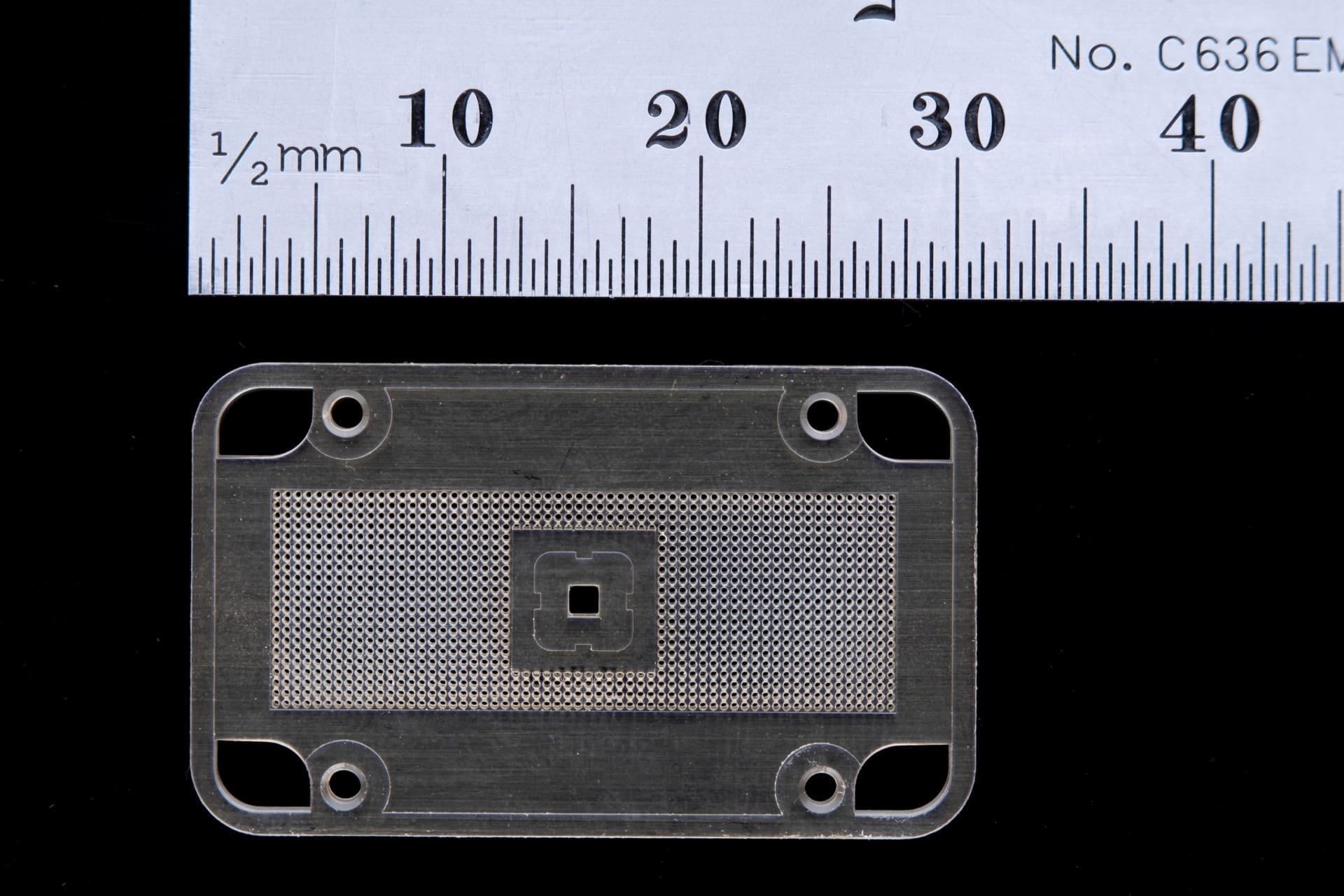
That capability opens the door to applications in microelectronics, medical devices and other industries where components must be extremely small and highly consistent.
For example, the technology can support development of neonatal pacemakers smaller than a pill — devices that must meet exacting performance standards in life-critical environments.
One of the company’s most promising growth areas is bioprinting, which involves creating structures that can interact with or even replicate human tissue.
Applications range from medical devices that dissolve in the body to advanced research models used to test drugs or study disease.
“There’s a big push away from animal testing, but we still need to understand how something will react in humans,” Mason said.
By printing biomaterials such as hydrogels, researchers can grow human cells in three-dimensional environments that more closely mimic the body rather than traditional lab methods.
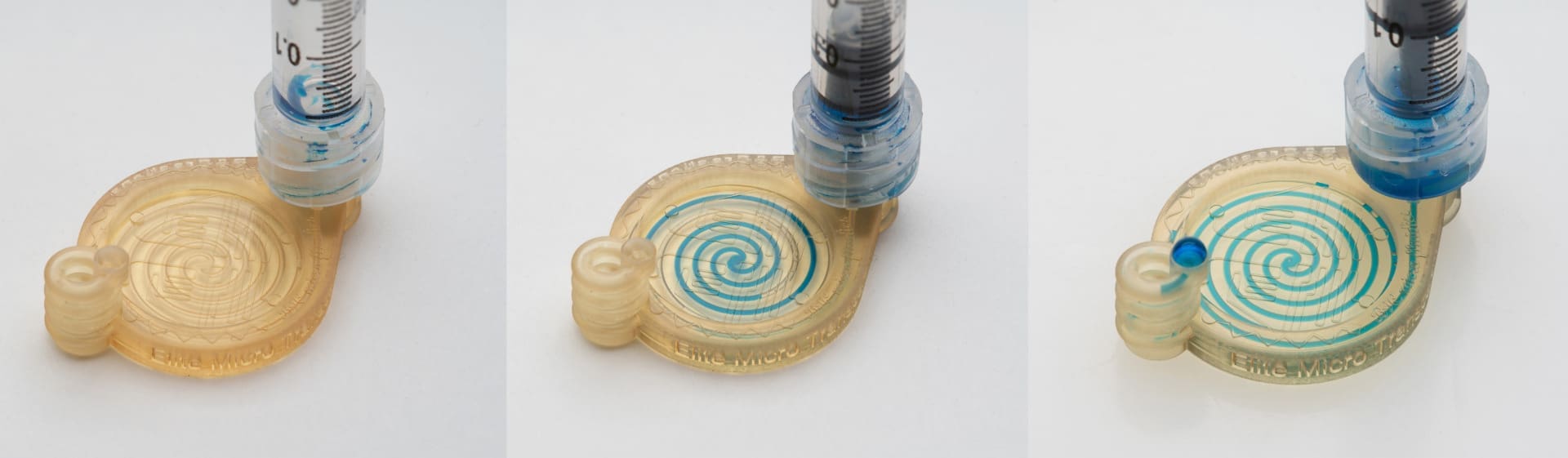
In one recent example, technology supported by B9Creations helped researchers better understand a patient’s recurring cancer.
“You can’t biopsy in perpetuity,” Mason said. “So they printed a lattice, took one biopsy and grew the cancer cells alongside organ cells to see how they interact.”
The result: a clearer understanding of why the cancer was returning — and a change in the patient’s treatment plan.
“It sounds like science fiction, but it was this year,” she said.
Other applications include “organ-on-a-chip” models and implants already moving through preclinical trials.
Broad and growing applications
A third major focus area is helping companies use 3D printing as a scalable production tool rather than just a research or prototyping method.
That means integrating additive manufacturing into existing workflows, including quality assurance systems and enterprise resource planning platforms.
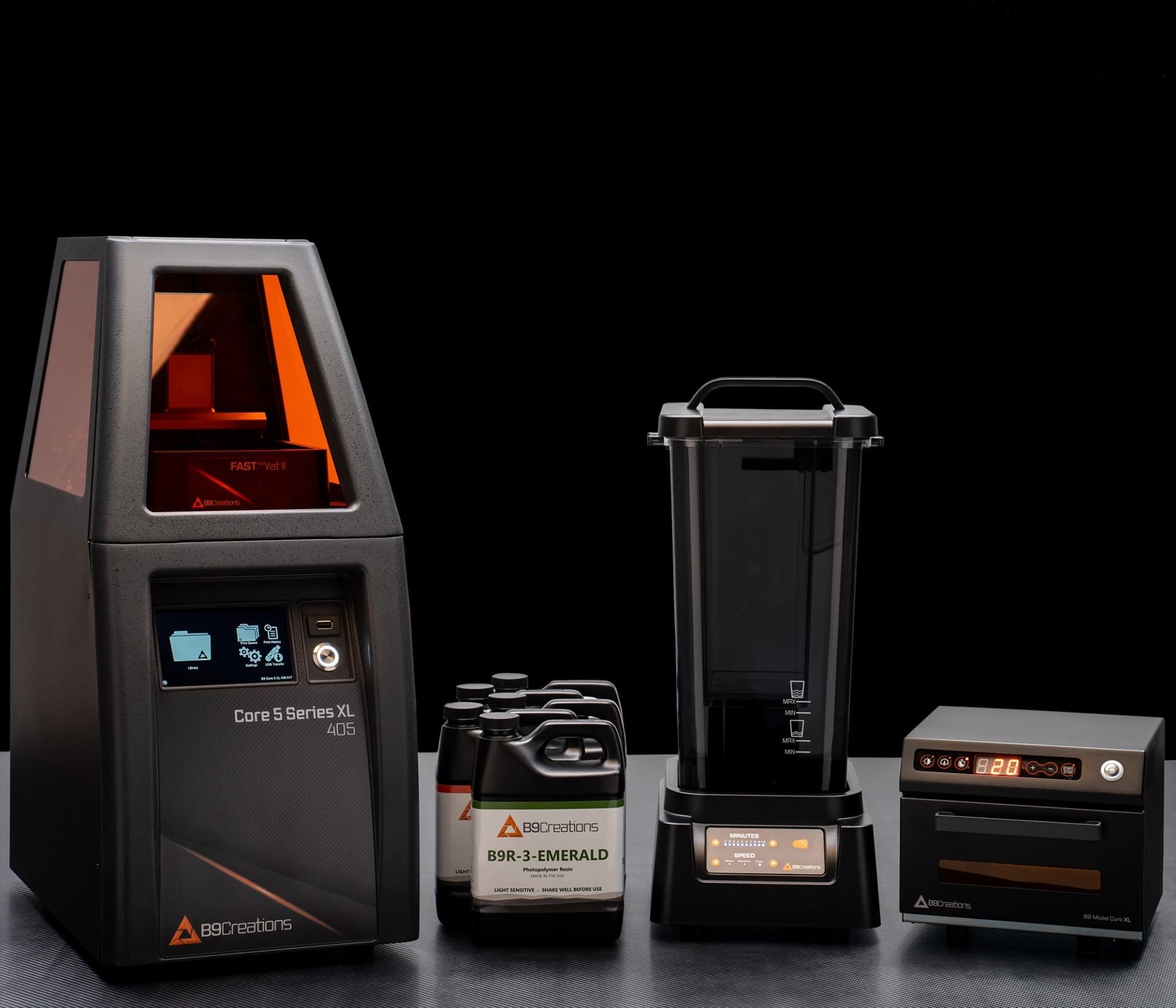
“It’s about making this part of the manufacturing process that’s existed for a century,” Mason said.
In aerospace, for example, customers are using B9Creations technology to produce critical engine components.
“We’re talking about hundreds of thousands of parts that have to perform the same across 100 printers,” she said.
The tolerance requirements are extraordinarily tight — down to fractions of a human hair — underscoring the level of consistency required for industrial adoption.
While healthcare and aerospace are major drivers, the company’s technology spans a wide range of industries.
Customers include defense and government organizations, research institutions, universities and even luxury brands.
Jewelry companies use the printers to create customized pieces, while dental practices rely on them for same-day aligners, dentures and other applications.
“It’s more places than people realize,” Mason said.
Even classified applications exist within defense, reflecting the strategic importance of advanced manufacturing capabilities.
“Biosecurity is national security too,” she added.
South Dakota advantage
Despite its global reach, B9Creations remains deeply connected to South Dakota.
Its proximity to South Dakota Mines has provided a steady pipeline of engineering and technical talent, with many employees starting as interns and growing into full-time roles.
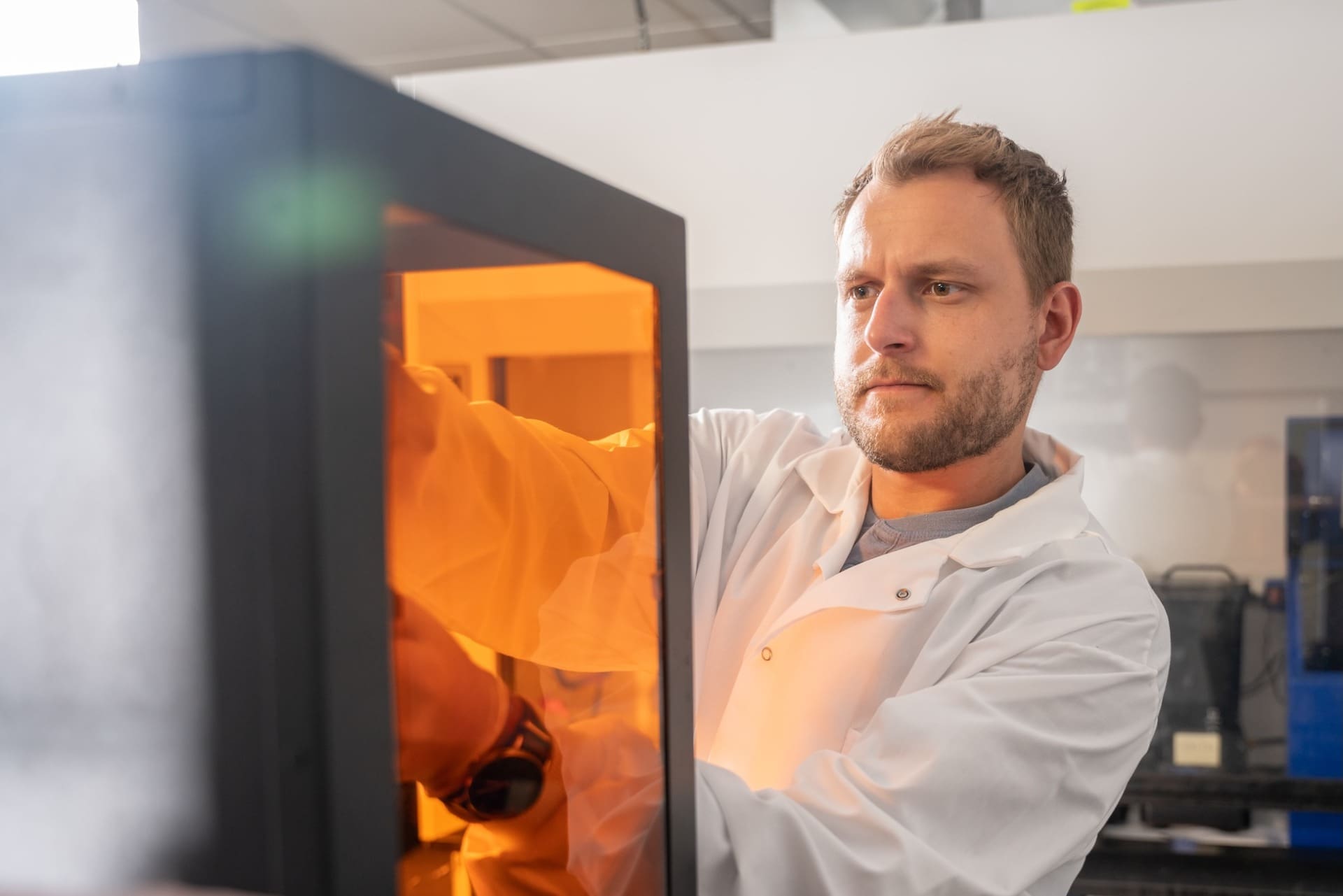
“The majority of everyone we’ve hired has been from South Dakota institutions,” Mason said.
That local talent base has helped the company scale while maintaining its roots in Rapid City.
As the company continues to expand, it also is working to strengthen South Dakota’s broader life sciences and advanced manufacturing ecosystem.
B9Creations is a member of South Dakota Biotech and has helped host events in western South Dakota to bring together industry leaders, researchers, educators and policymakers.
Last year, those efforts included convening organizations such as Medtronic, biomaterials companies, academic institutions and legislators.
“What we’re trying to do is show people the critical mass that may not be obvious,” Mason said.
The goal is to move beyond siloed efforts and foster greater collaboration between research and industry — connecting innovations developed in labs with real-world applications.
“We need both the innovative research and the industry,” she said. “How do we leverage our connections together versus working in silos?”
B9Creations is well positioned to be a leader in that effort, Ekstrum said.
“This is what it takes for biotech to thrive: companies like B9Creations stepping up to help build something bigger than itself,” Ekstrum said. “The innovation that is happening in western South Dakota is incredibly exciting. If we can help connect those doing the work and then build out to the broader statewide landscape, we’re going to see power in numbers and we’re going to see this industry multiply.”
To connect with South Dakota’s growing biotech industry, email joni@sdbio.org or visit sdbio.org.