Eye on the BioPrize: POET captures growing international markets for Midwest-made bioproducts
March 27, 2025
This paid piece is sponsored by POET.
In today’s interconnected global economy, international markets represent unique opportunities to grow product reach. By tapping into global demand, companies can foster innovation and unlock tremendous growth.
POET is doing just that by executing a multipronged strategy to capture increasing portions of international markets, and not just for fuel. While many know the company as the world’s largest value-added grain processor and producer of bioethanol, they may be surprised to learn about its robust suite of other plant-based bioproducts, including corn oil, beverage and personal care product ingredients, bioCO2 and high-protein animal feed ingredients.
These products represent the many ways that agriculture and bioprocessing touch our daily lives, from the purified alcohol in our cleaning products to the carbonation in our soft drinks to the feed that helps produce the meat on our tables — all derived from corn grown in the Sioux Empire and beyond. And now, POET is bringing those valuable, Midwest-made products to a growing base of customers all over the world.
Making waves
In 2024, POET shipped a record 39,400 containers of bioproducts, exporting to 25 countries, including increased volumes to growing markets like Japan, Bangladesh and Chile. Also of note, the company was the 17th-largest container exporter in the U.S. in 2023, up from 25th in 2022 and 36th in 2021. The 2024 numbers will be released later this spring, but this growth is happening despite the fact that overall the export market for distillers dried grains has been roughly flat since about 2017.
“Our facilities are logistically situated to be in this market,” said Andy Lindsay, director of trading for POET. “We have put a lot of emphasis on developing it out.”

So how has POET been able to capture larger parts of that market share? Isaac Crawford, POET vice president of trading and portfolio management, pointed to the company’s in-person market development work. “Our growth has really been spurred by the notion to connect with more customers and have more direct relationships with buyers all around the
world,” he said.
Another important factor was POET’s 2022 acquisition of a major transload facility in the Port of Savannah, Lindsay said. Before that was the company’s 2021 acquisition of six additional bioprocessing plants, which grew the company by 40 percent virtually overnight and added POET Corn Fermented Protein to its bioproduct portfolio. “Ultimately, we’ve been able to see a lot of growth with the investment we’ve had in that space,” he said.
CFP is a 50 percent protein product produced in the bioethanol process by screening out both the yeast and corn proteins in whole stillage. The resulting concentration of nutrients has excellent energy and digestibility values, delivering key nutrients that are ideal for a variety of species.
Relationship-building, logistics work hand in hand
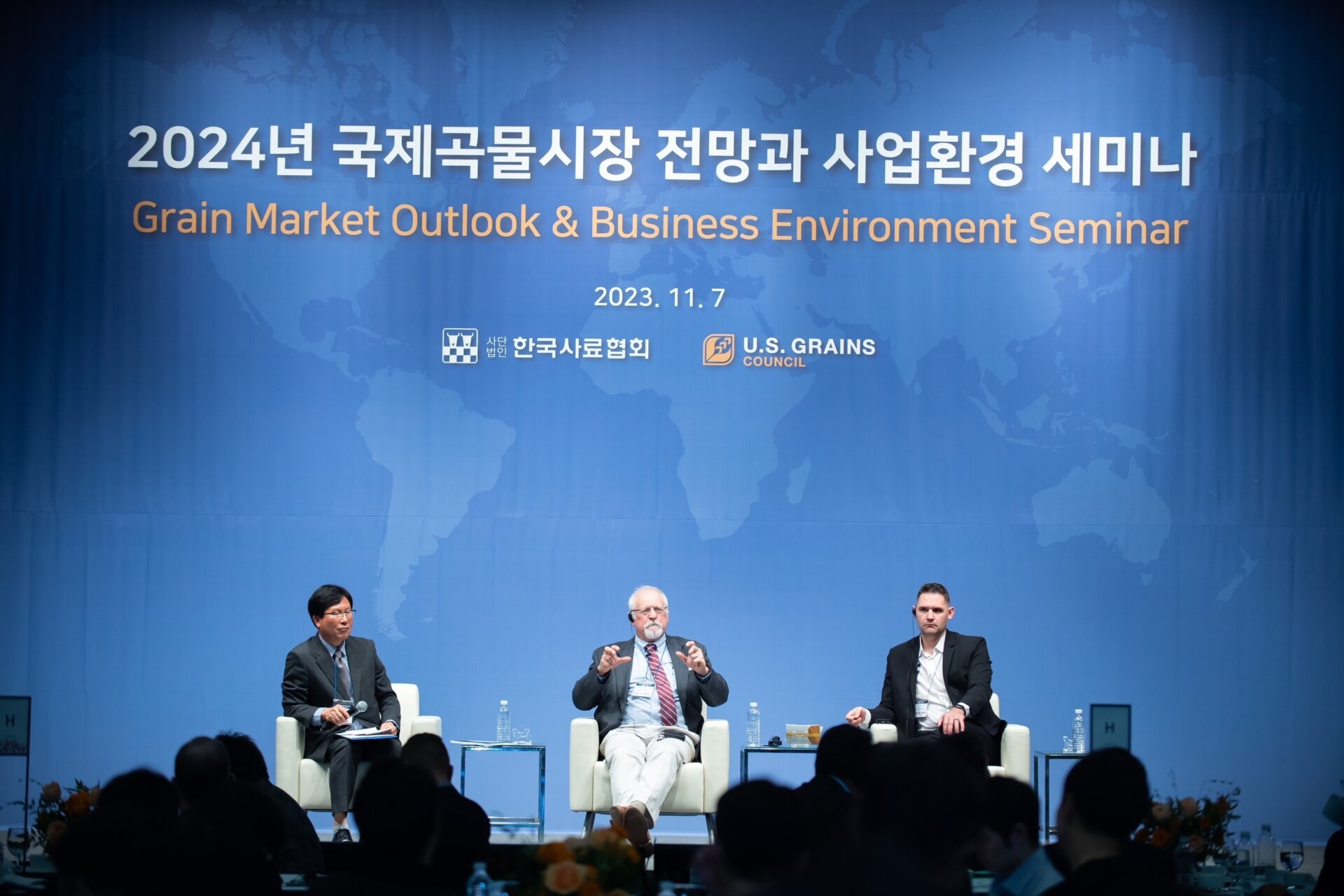
In 2024 alone, POET conducted in-person market development in 14 countries: India, Mexico, Bangladesh, South Korea, Vietnam, Thailand, Indonesia, Ecuador, Turkey, Norway, Canada, Spain, Denmark and Portugal.
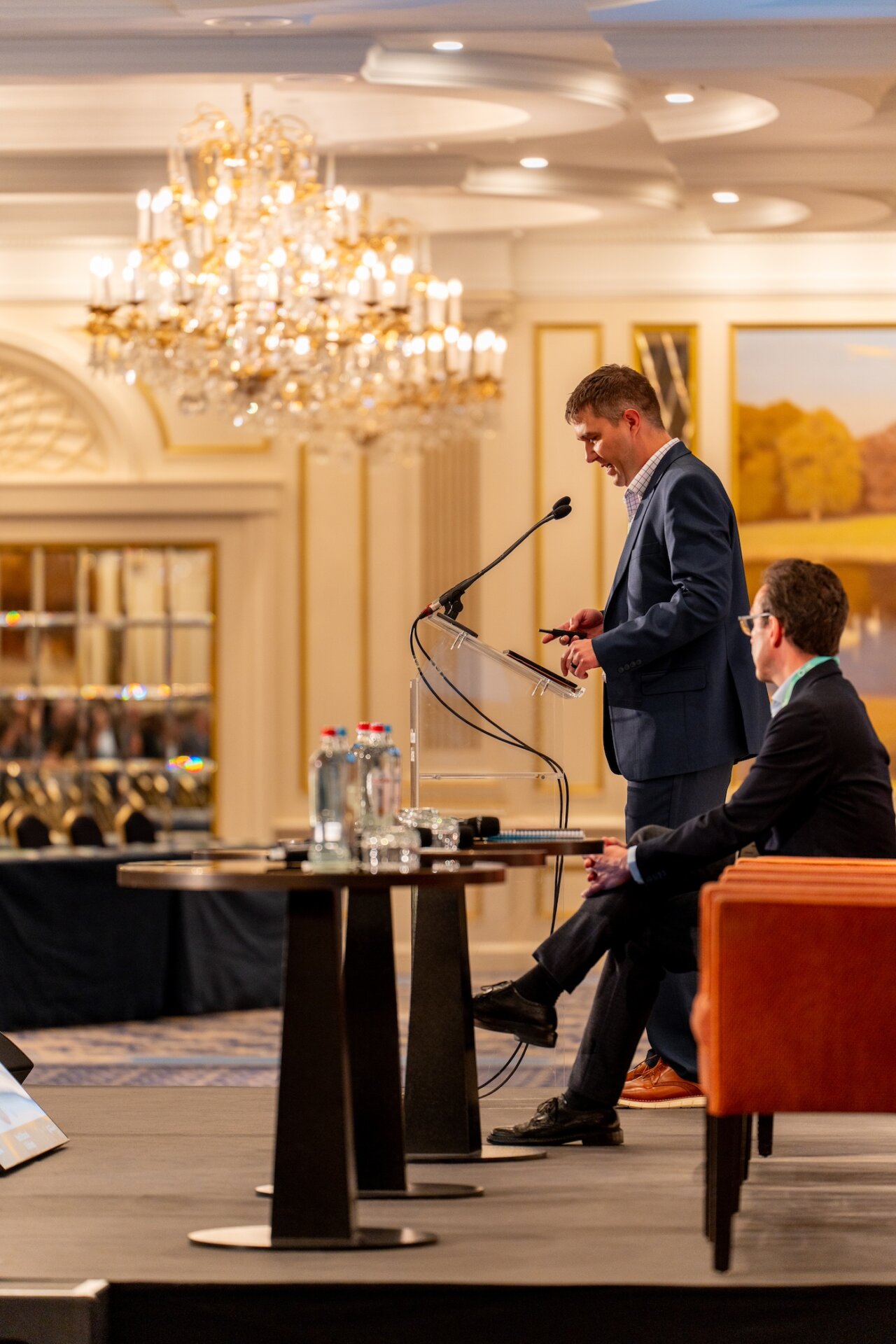
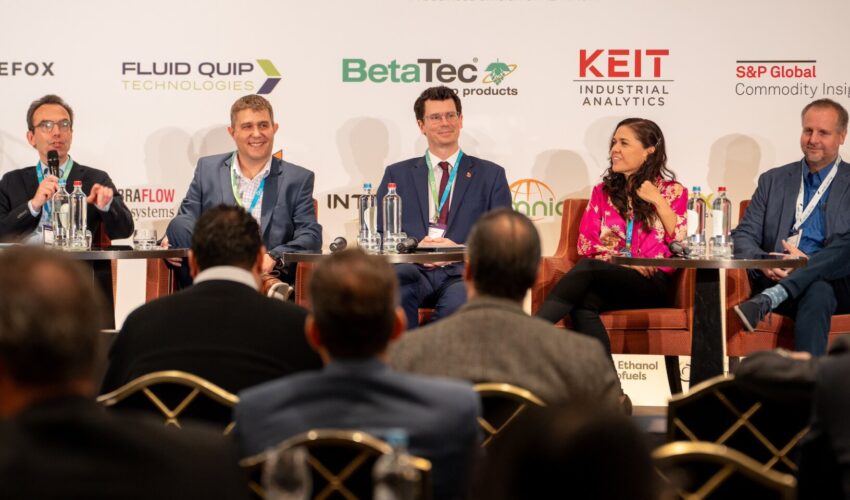
“We travel to these countries for various trade shows and customer meetings,” Lindsay said. “They allow us to showcase our expertise and bioproducts, creating opportunities for greater access to these international markets.”
Market development is only one piece of the puzzle, however. “Part of it is going out and visiting with customers and getting in front of people to develop relationships and trust,” Lindsay confirmed. “The other portion of it is actually being physically able to execute on those contracts and those sales.”
One example of that work is in Mexico, a strong importer of U.S. DDGS. POET opened up an office in-country in 2016, Crawford said. Today, POET de Mexico directly ships and distributes to multiple distribution facilities in the country. “The intent there was to find locations where there were customer bases that were aligned with our bioproducts to really create more local markets for POET production,” he said.
Lindsay highlighted POET’s transload facility in Savannah, Georgia, as key to helping the company develop and expand export markets. The facility is dedicated to transporting bioproducts produced at bioethanol plants, primarily POET plants. That means no cross-contamination issues for customers.
POET Terminal – Savannah is advantageous because of its prime location just a few miles from the Port of Savannah, access to two major railroads and a vast number of containers available for export. “Being able to manage the logistics from there is really beneficial,” he said. “It helps keep the supply chain moving without a lot of disruptions.”
Austin Broin, general manager of POET Terminal – Savannah, agreed with Lindsay. “Since POET acquired this facility, we’ve been able to significantly increase production at a steady rate while simultaneously making large investments into the site, our team members and, as a result, the city of Savannah.”
In 2024, POET Terminal – Savannah was able to transload over 18,900 containers, almost 50 percent of POET’s total shipments. Thanks to infrastructure improvements and diligent effort from team members, throughput has increased by over 20 percent year over year.
In comparison, competition for containers at inland locations like Columbus, Detroit or Chicago can be fierce among the many companies looking to export products. “It can be tough to get the number and volume of containers that you want,” Lindsay said. “But if you’re at a port facility like Savannah, they have anywhere from 30,000 to 70,000 containers at the port at any given time.”
In addition, some export markets such as Vietnam and Thailand require fumigation before export. Transload facilities in the Midwest get too cold for that at certain times of the year, while Savannah is warm enough year-round, he said.
Growing global demand for bioproducts
POET owns and operates 34 bioprocessing facilities, with total DDGS production at 7 million metric tons annually. Two of those plants, POET Bioprocessing – Shell Rock, Iowa, and POET Bioprocessing – Fairmont, Nebraska, produce DDGS as well as CFP.
“That is a product that really fits well into that export space,” Lindsay said.

In 2022, those two facilities received the Global Food Safety Initiative Food Safety Management System Certification, or FSSC 22000. This globally recognized certification gives customers in the pet food, aquaculture and other feed markets even more assurance that POET’s feed products have been produced and handled according to the highest food safety standards. The certification is something the company’s international customers look for, he said.
As the global demand for bioproducts continues to rise, POET remains at the forefront, proving that innovation and strategic investment can drive meaningful impact beyond borders. By leveraging its production and logistics capabilities, forging invaluable partnerships and adapting to diverse customer needs, POET is ensuring that high-quality, Midwest-made bioproducts reach customers in every corner of the world.