DSU doctoral students ‘chose their own adventure’
June 24, 2025
This piece is sponsored by Dakota State University.
Dave Schroeder was looking for several things when he was researching doctoral programs a few years ago — academic rigor, quality research opportunities and flexibility.
“Having a Ph.D. is certainly one of those big academic milestones in a person’s career,” he said. “A doctoral degree is a way to think about all these problems and how they are connected and how to address the challenges that come with it.”
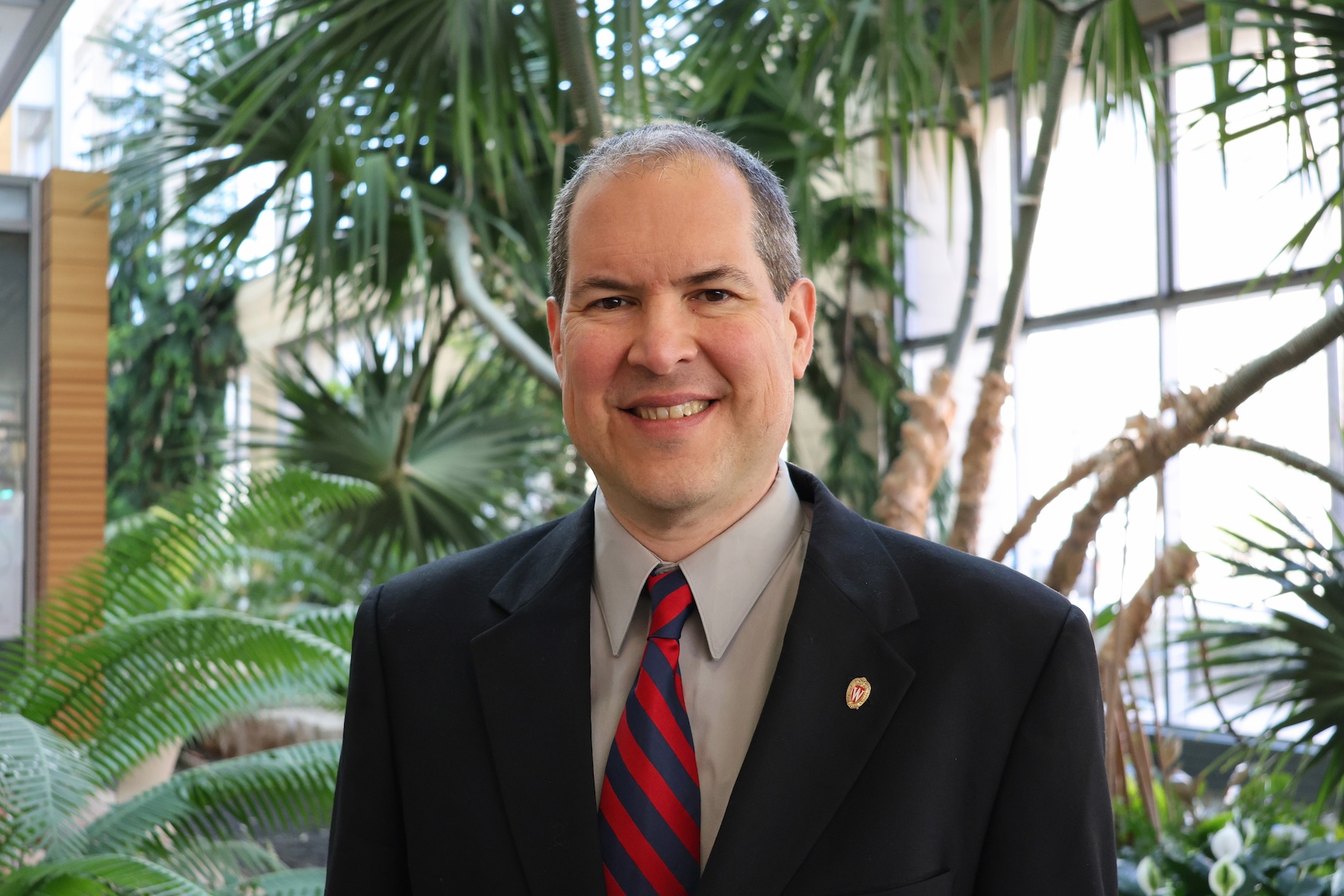
Schroeder, associate director of the Intelligence and Security Initiatives in the College of Letters & Science at the University of Wisconsin–Madison and director of research at the Wisconsin Security Research Consortium, said he enjoys engaging with different audiences and educating people on cybersecurity topics, especially current events with national security and emerging areas like artificial intelligence and quantum computing. These can be really important to industry, academia and government, and with the education and experience of a doctoral degree, he hopes to contribute to that problem set.
Schroeder already had master’s degrees and cyber experience from civilian and military jobs, all of which had been very rewarding, but he was looking to add a Ph.D. to his skill set.
He discovered Dakota State University’s cyber defense doctoral program on the National Security Agency website that lists Centers for Academic Excellence. “There are not that many Ph.D. programs out there” that are specific to cyber, he learned.
DSU has the “triple crown” of all three CAE designations and faculty with a strong research pedigree, which demonstrates the rigor of the program, along with the flexibility of an online program. That was very important to Schroeder, who wanted to continue to live and work in Madison, Wisconsin, so he joined the program three years ago.
He knew that “with online education, you really get out of it what you put into it,” but that means students can “choose your own adventure.” His adventure included unique features, including credit for his military training and a non-stereotypic dissertation topic.
“DSU gave me the tools to pursue what I wanted to get out of the program, and that means a lot to me. I can’t say enough good about the DSU program.”
DSU signed a memorandum of understanding with the Army Cyber Center of Excellence last fall, which allows soldiers to receive academic credit for military cybersecurity training they’ve received. This helps them more quickly earn degrees such as The Beacom College of Computer & Cyber Sciences’ cyber-intensive programs of artificial intelligence, cyber operations, cyber defense, computer science, and network security and administration, or the cyber-infused Cyber Leadership & Intelligence degree from the College of Arts & Sciences.
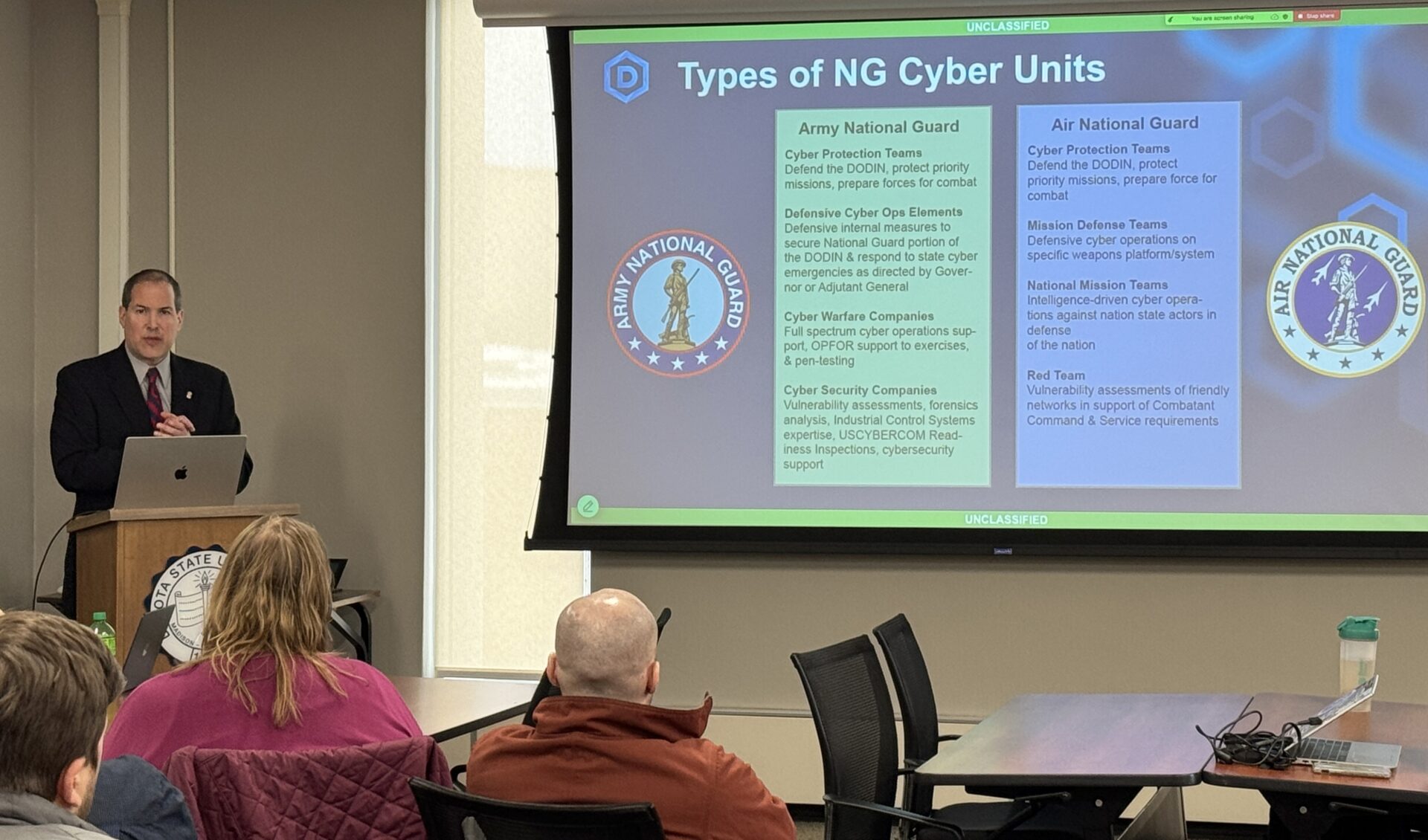
Schroeder’s lengthy military career began as a direct commission officer in the Navy Reserves as cryptologic officer. He later joined the Wisconsin Army National Guard’s 176th Cyber Protection Team, which gave him the flexibility to give back through military service while staying close to home. He was able to receive six credits for this military experience, shaving a semester off his course timeline.
Another benefit of the doctoral program is the residency component. Online students are invited to campus for Research Week every March where they can meet other members of their cohorts, sit in on workshops, present research proposals and defend their dissertations.
“Even just for one week a year, it’s been such a good experience to see my cohort classmates in person,” Schroeder said.
Whether online or in person, networking with fellow members of the cyber defense and cyber operations fields provides a chance to meet colleagues who work in all sorts of corporations, in the military or intelligence fields or in local, state or federal government, he said.
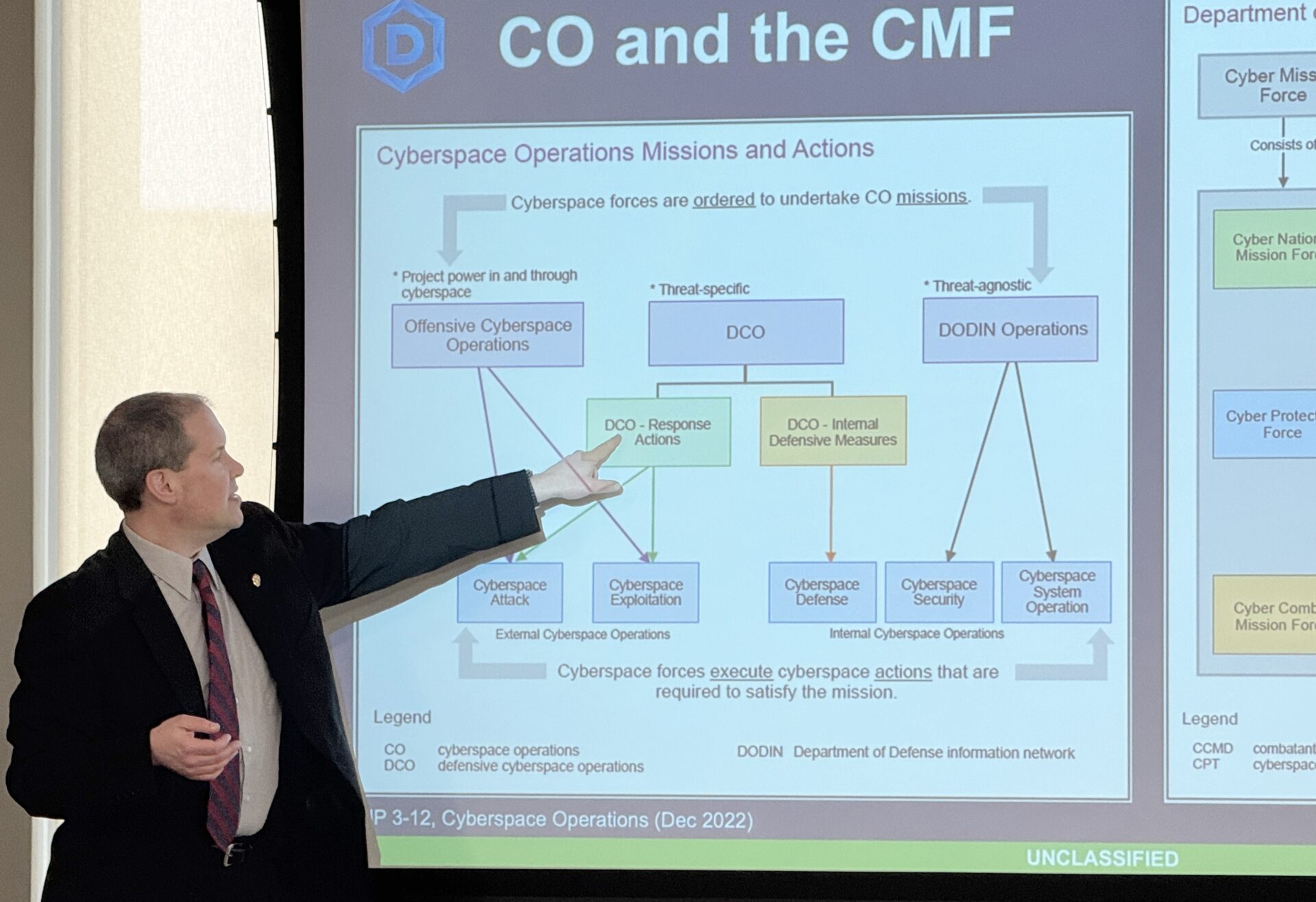
“That’s where the most value comes from for me, that ability to connect with and learn from each other.”
He is finishing the program with an adventure into a non-stereotypical dissertation topic. Instead of being highly technical, his project looks at a policy question, more of an organizational behavior and social science research project.
“It’s been an interesting journey for me to frame policy in a rigorous way through doctoral-level research.”
Titled “Utilization of National Guard Cyber Forces in Title 32 Status for National Cyber Missions,” Schroeder’s dissertation looks at ways to effectively use National Guard cyber personnel when they are under the authority of their state governor but are training for federal missions.
“There are lot of unknowns in that status with cyber, so I am looking for more defined answers to this to give unit commanders and National Guard leaders some clear answers,” he said.
“I want to light a bright path for policymakers.”