DSU brings graduate-level research opportunities to undergraduates
This paid piece is sponsored by Dakota State University.
Over the past several years, countless Dakota State University undergraduate students have attended professional national conferences to share their research work. They are always met with the same surprised query: “You’re only an undergraduate student?”
Dr. Andrew Sathoff, assistant professor of biology and undergraduate research coordinator, is building on a long tradition and culture of undergraduate research with his students.
“These experiences for students can be so impactful,” Sathoff said. “Students hear about scientific research and read it in class, but my research students are actually performing the research and presenting it to other experts in the field.”
He’s mentored several students through research projects, helping them find opportunities to share their research at national and international conferences as undergraduates. This has often made them the youngest attendees and presenters at poster sessions during the conferences.
The students often return for future research projects and rave about how their experiences benefited them outside of Dakota State. Many have gone on to enroll in graduate school. Sathoff appreciates that they’ve given amazing feedback regarding their experiences.
Alex Rachynska, a recent graduate from Ukraine, specifically chose Dakota State University for undergraduate research opportunities. Other schools that accepted her did not offer her these chances.
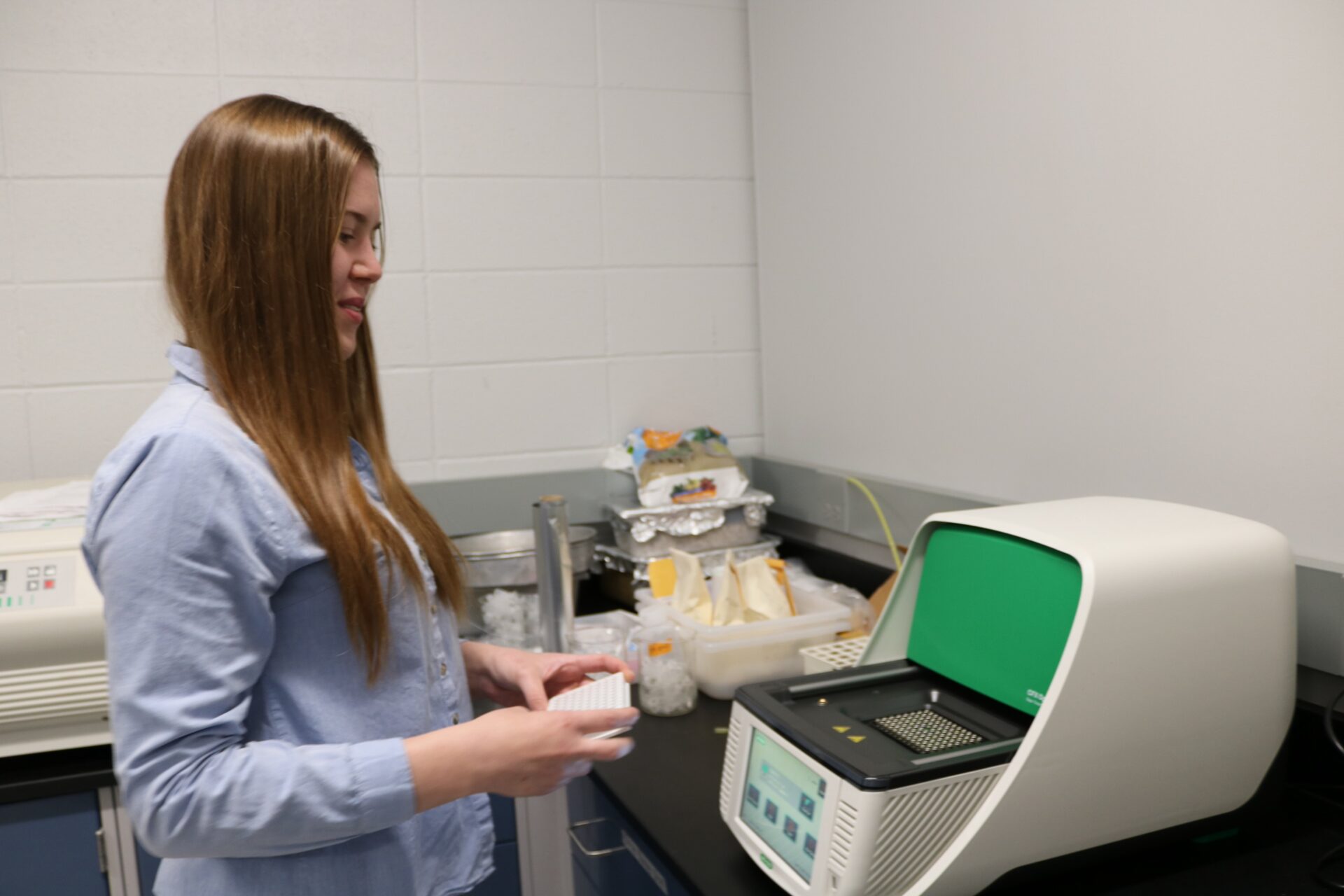
In addition to participating in research throughout her undergraduate career, she was also accepted into two competitive summer internships, one in Maine and one in Colorado.
Rachynska asked each why they chose her, and both times, she was told that her past experience and research made her an ideal candidate for the internship.
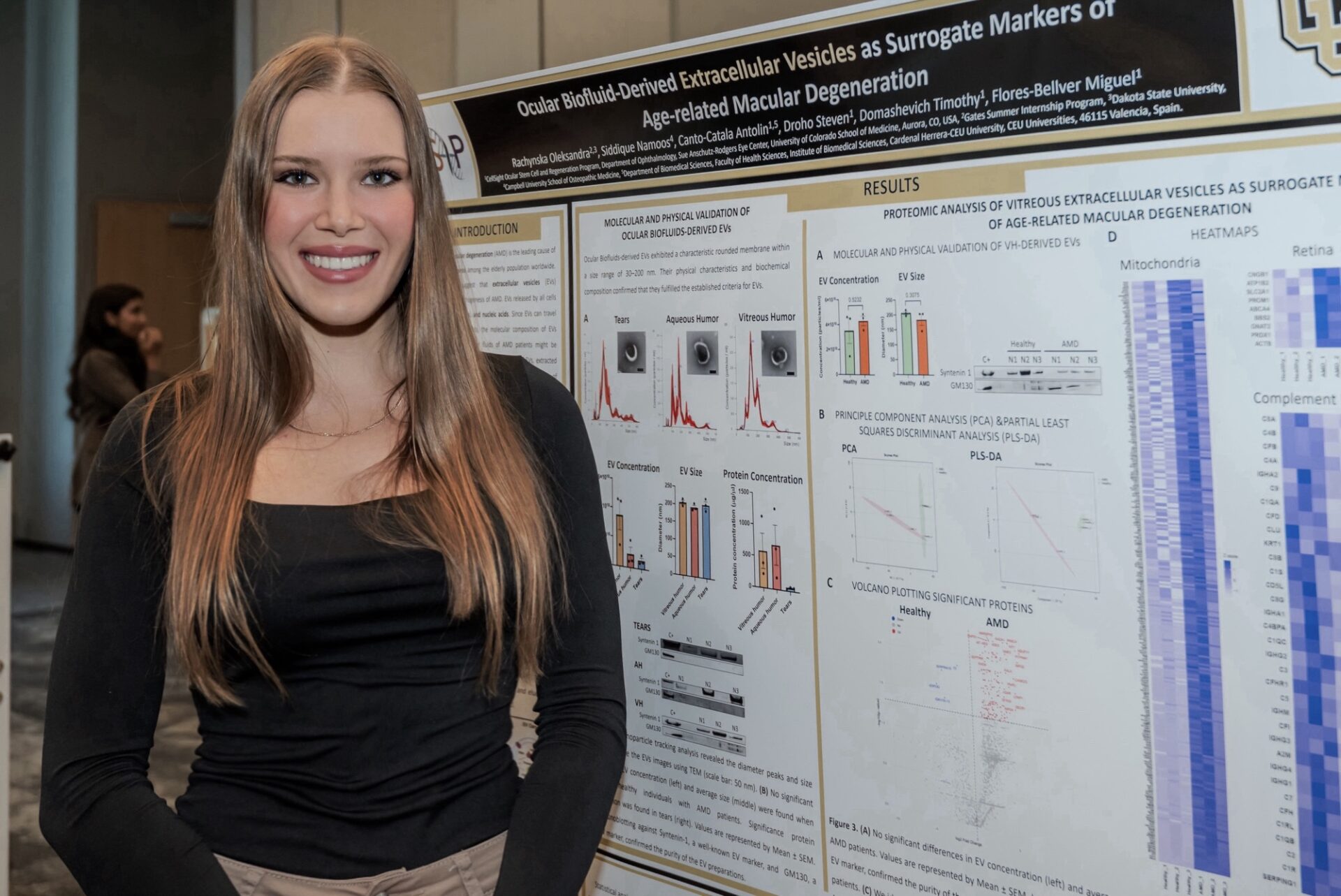
“The importance of research as an undergrad is crucial because it gives you an opportunity to go further and develop your skills,” she said. Rachynska is now a graduate student at South Dakota School of Mines in biomedical engineering.
Conner Tordsen, a current student at the University of Minnesota School of Dentistry, learned many skills and lessons related to lab work when he participated in undergraduate research.
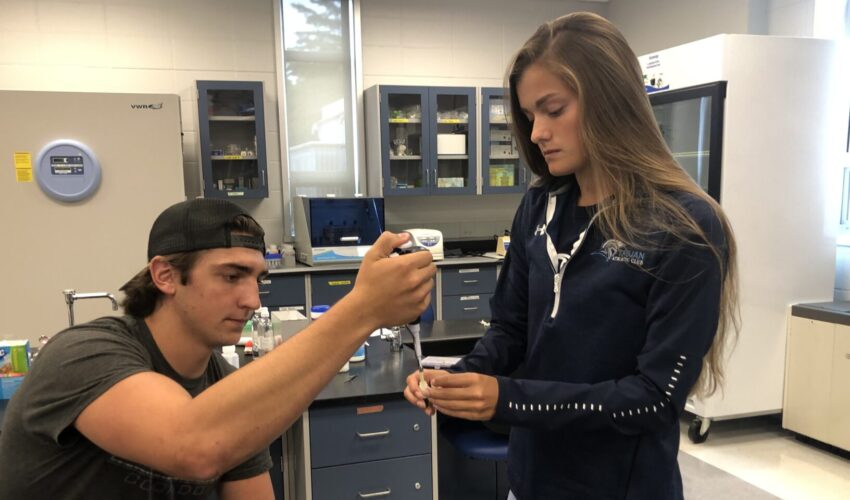
“I developed proficiency in lab skills such as fungal culturing, DNA extraction, PCR, gel electrophoresis, DNA sequencing, and microscopy,” Tordsen said. “Outside of lab skills, I became much more organized. We were tasked with keeping track of tons of results, data, and schedules.”
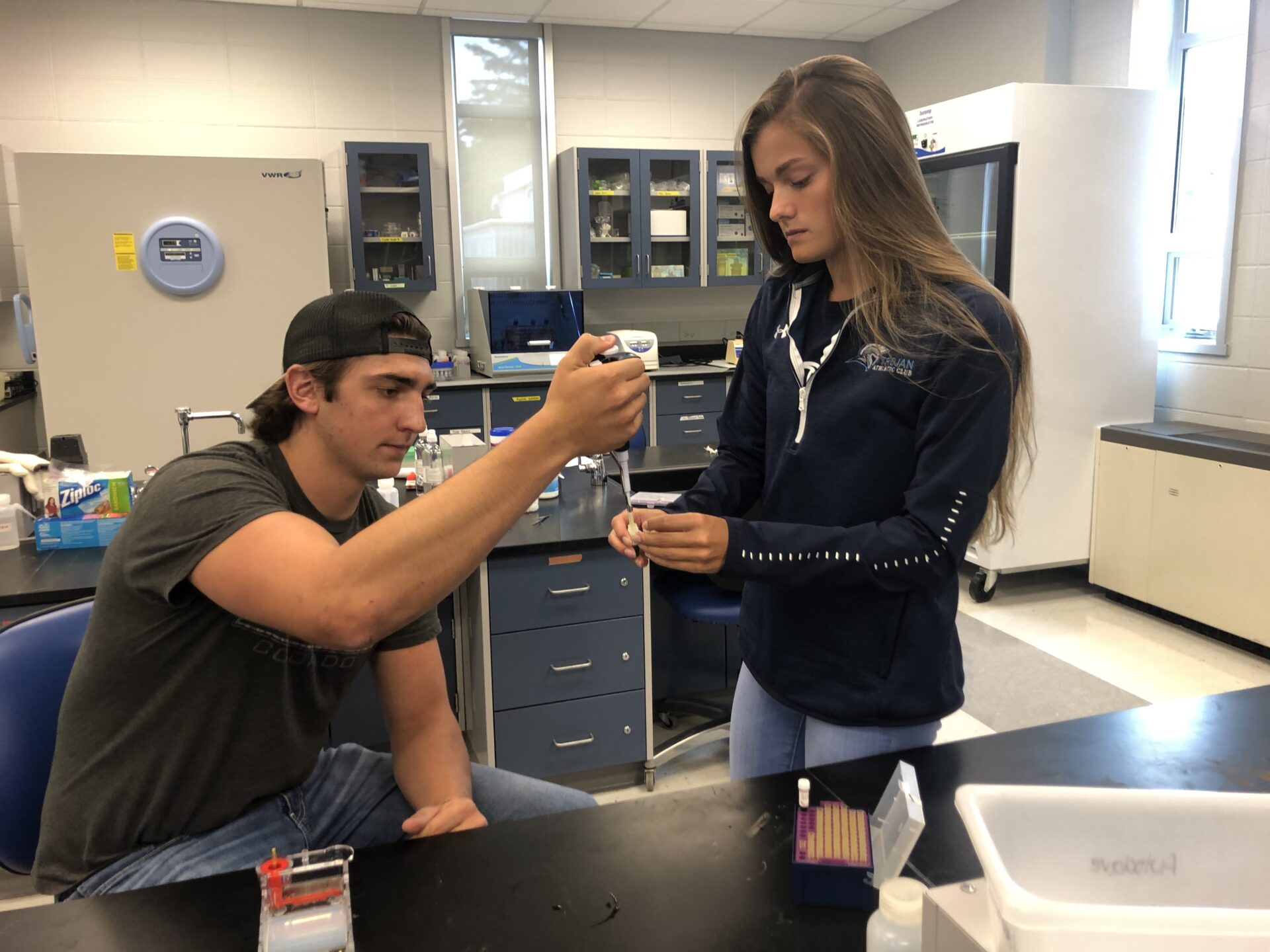
He also appreciated that participating in undergraduate research enabled him to use his knowledge and classroom experience in real-world applications, such as sharing results about alfalfa root rot with area producers.
Tordsen kept coming back for research each year, building on his results and expanding the questions.
“Each new set of results opened the door to new possible projects and routes we could take to continue our research,” he said. “It was also a huge bonus to have the freedom to do our research on our own. We were trusted with a lot of important tasks and were able to do them when we felt we had time.”
Elsie Aslesen, a current graduate student at the University of Northern Iowa (UNI), didn’t initially think her research experience would impact her future career, but found otherwise as she has continued her education.
“It’s evident to me that my research background at DSU has set me up for success in my graduate studies at the University of Northern Iowa in comparison to the majority of students in my classes who haven’t had the same opportunities,” Aslesen explained.
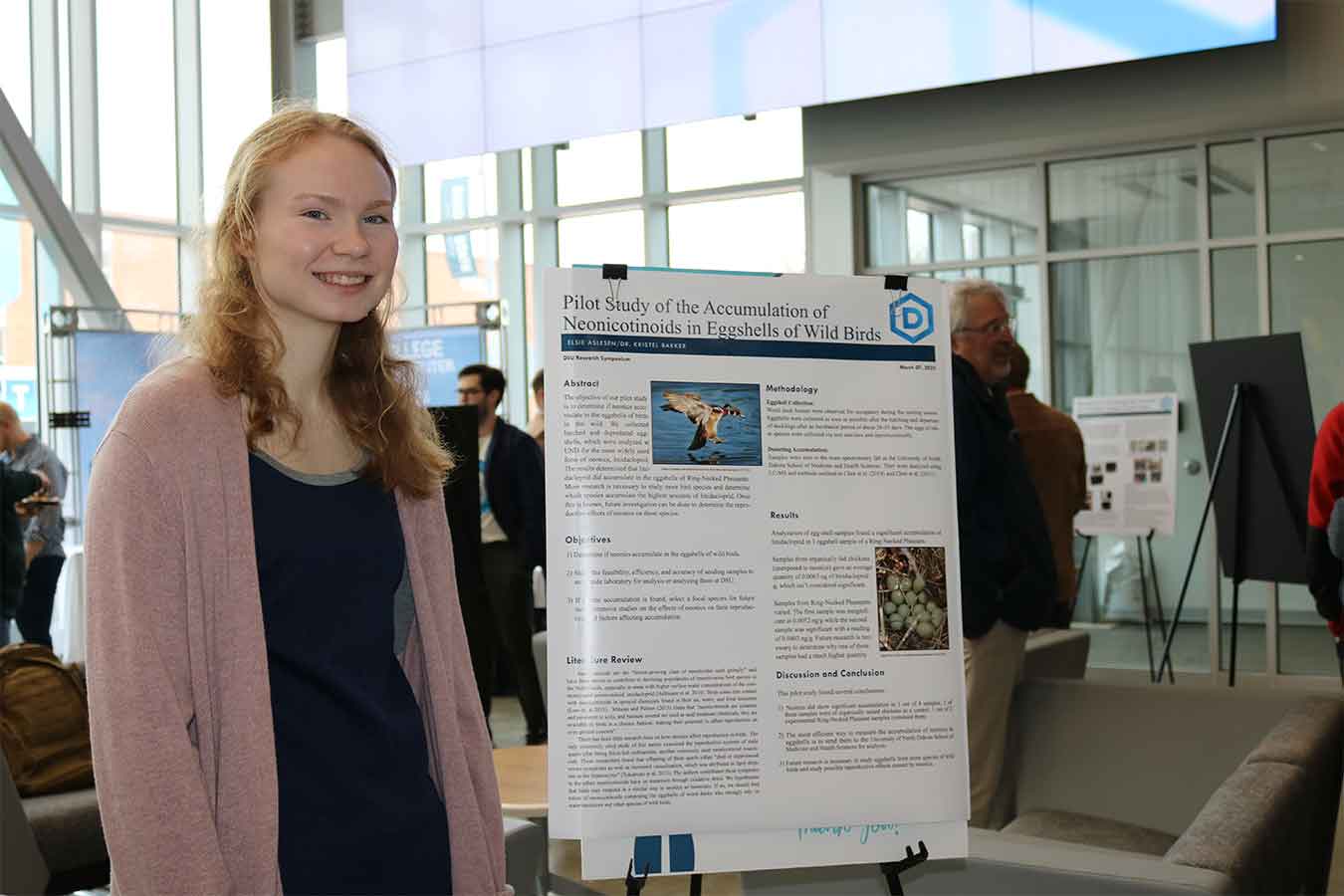
“I know how to find, read, and integrate information from academic journals to inform clinical practice and use the scientific method to ensure that treatments that I use are effective and that my clients are improving as a result.”
She also credits this background as part of the reason she was able to start a cognitive screening protocol to check people for signs of mild cognitive impairment and dementia with the help of faculty at UNI.
“I wouldn’t have been given this opportunity or even known how to begin this project if DSU hadn’t provided me with such a strong background in research,” she said.
Other undergraduate research opportunities are available to DSU students in computer and cyber sciences, business, and education.
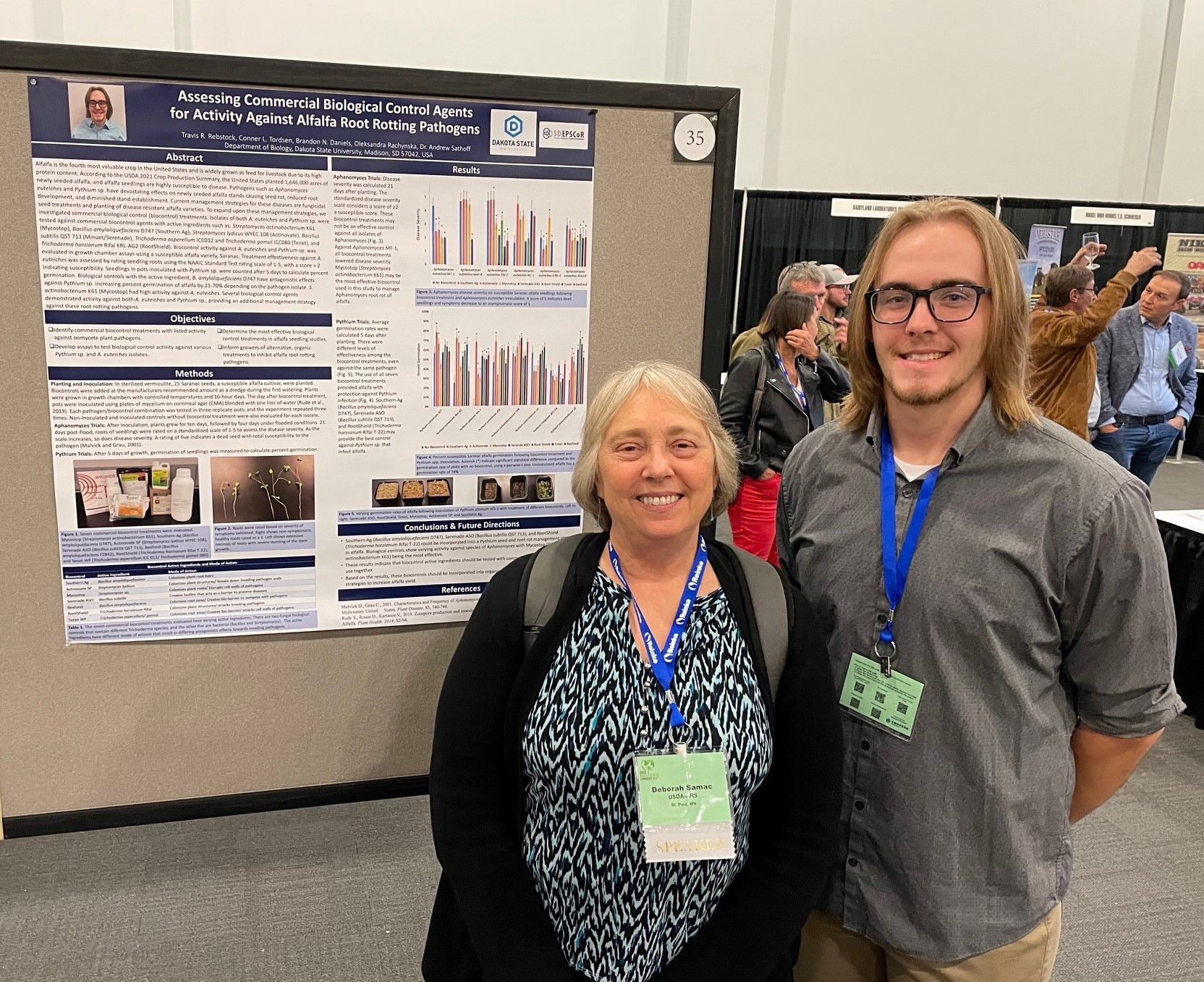
Much of the undergraduate research at DSU is supported through grant funding by South Dakota EPSCoR, which helps pay for expensive lab equipment, supplies, student travel to conferences, and support for faculty salaries.
Supporters of Dakota State can also donate funds for undergraduate research. Now through Sept. 12, visit Trojans Give Back and select undergraduate research as an area of support. For other ways to give visit Trojans Unite.