DSU AdapT Lab focuses on accessibility through technology
Nov. 25, 2025
This piece is sponsored by Dakota State University.
One might not expect an English professor also to be the director of a laboratory dedicated to studying adaptive technologies. But Dr. Justin Blessinger believes it makes sense from a humanities perspective.
“The humanities side of any university is interested in what makes life worth living, the beautiful things,” Blessinger said. “We’re interested in challenging existing attitudes and solutions. We want to be able to grapple with big questions like, ‘Are we treating each other with dignity, and can we do better?’”
Blessinger is an English professor and director of the AdapT Lab at Dakota State University. The Adaptive Technology Lab existed before the completion of DSU’s MadLabs® building in 2019 and has maintained a focus on pure knowledge and problem-solving.
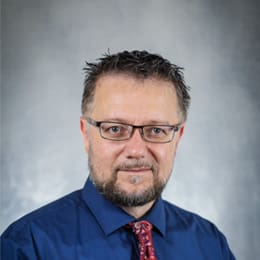
He has been dedicating time to solving accessibility issues for years, often inspired by current colleague Dr. Chris Olson and former colleague Keith Bundy.
“My colleagues, especially those who live with a disability of some sort, have been so generous with me in sharing stories of obstacles they’ve encountered,” he explained.
The idea for an early project involving a Bluetooth ecosystem came from an experience Blessinger had with Bundy, who is blind.
The two were walking to visit with their colleague Chris Olson, and when they arrived in the building, Blessinger read a sign near the entrance and told Bundy “Chris is on the second floor.” Bundy shared that he would have no ability to know that because the directory information is not required by law to be available in Braille.
Blessinger worked to develop a solution using Bluetooth beacons to provide visitors with directory information such as where offices, restrooms, vending machines and defibrillator systems are located in the building. He is appreciative of the support he received on the project, noting how President José-Marie Griffiths championed the continuation of research in adaptive technology.
“At that time, I was just a professor trying to wrangle some resources and solve a problem, but President Griffiths has that vision and clarity that demonstrates how transformative her tenure at DSU has been,” he said.
Other projects that Blessinger and the AdapT Lab have been involved with include an affordable beach wheelchair, adaptive video game controllers and using earbuds as short-term hearing aids.
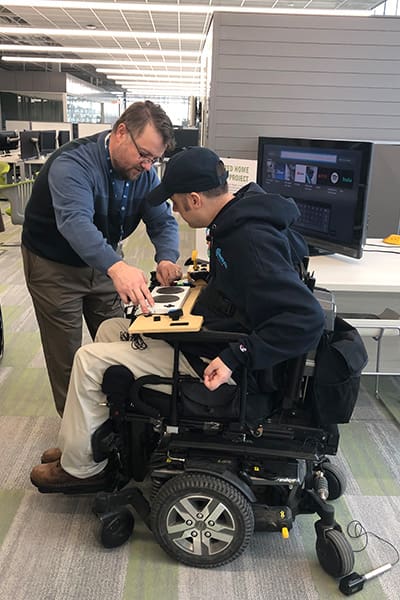
He received a provisional patent for a device called a power block that draws power from a powered wheelchair or mobility scooter to charge other devices such as cellphones, nebulizers and heated lunch boxes.
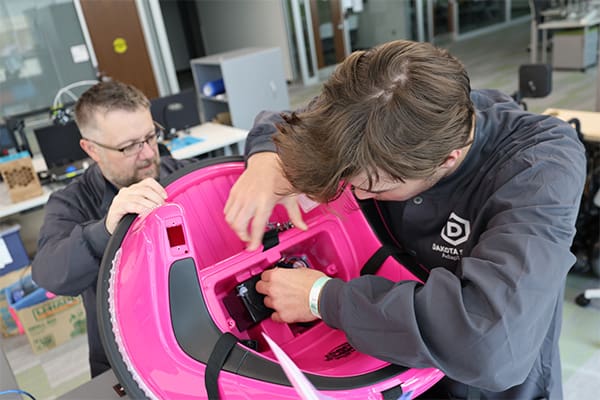
Additionally, AdapT Lab has worked for years with LifeScape and the Go Baby Go program that adapts ride-on electric cars to meet the mobility needs of children.
Recently, the AdapT Lab added another collaboration with LifeScape, signing a five-year partnership to develop lightweight, discreet, protective clothing that reduces injuries from biting, scratching or pinching that may occur because of maladaptive behaviors.
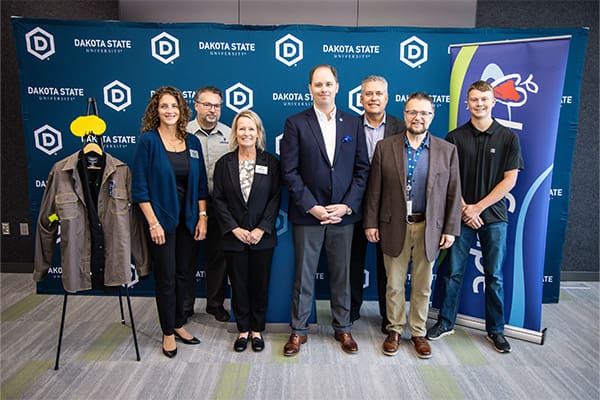
The idea came from LifeScape occupational therapist Arlen Klamm. The outcome of the DSU partnership is a prototype featuring a double-layer garment with a removable liner that includes 3D-printed plates to help prevent injuries to caregivers.
By collaborating with Dakota State, LifeScape quickly can test different iterations of the garments using DSU’s maker tools such as a laser cutter and large-format 3D printers.
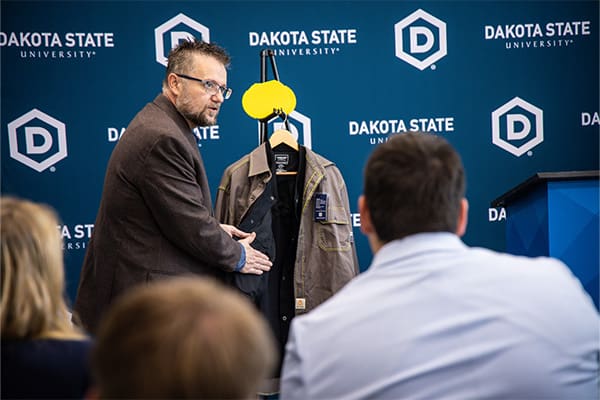
LifeScape employees are assessing 10 garment prototypes, with modifications and additional designs planned for 2026.
In addition to partnering with other businesses and organizations, Blessinger hires students as lab assistants to work throughout the year, giving them experience in research, problem-solving, using the lab’s maker tools and even coding for industrial tools such as a plasma cutter.
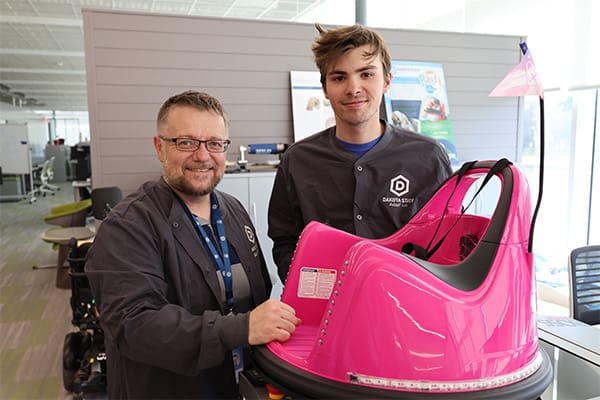
“The students I get to work with on these projects are exposed to the challenge of maintaining balance but also the huge opportunities here,” Blessinger said.
Beyond academic learning, students also are introduced to the realities of accessibility issues and the humanistic element of helping develop solutions.
The collaborative nature of AdapT Lab shows just how impactful human-centered creative problem-solving can be. The AdapT Lab and its ongoing work highlight Dakota State’s dedication to innovation and using technology to enrich lives.