After move from West Coast, entrepreneur grows global chess education business from Sioux Falls
May 29, 2025
By Steve Young, for SiouxFalls.Business
In chess, as is often the case in the many, varied games of life, sometimes you win. Sometimes you draw. Sometimes – and this is particularly important for children to know – you neither win nor draw, but experience what ultimately is the most valuable of outcomes.
You learn, Elliott Neff says.
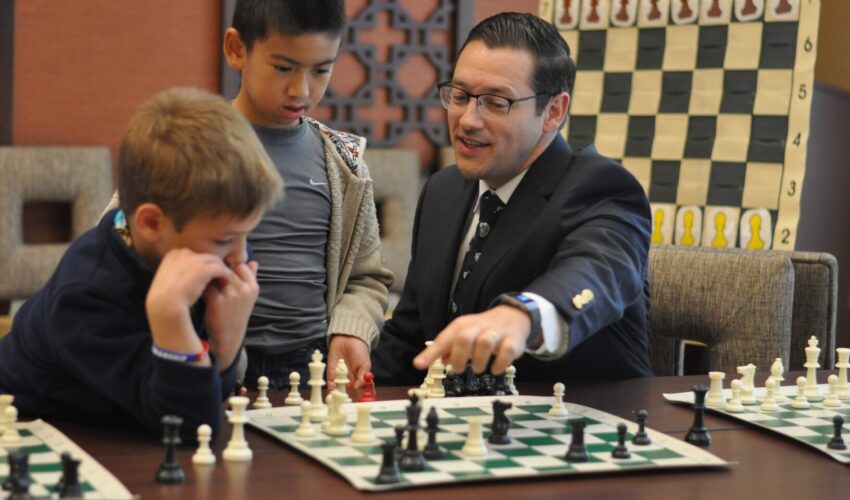
So fervently does this 47-year-old national chess master believe in lessons wrought by winning, drawing and losing that he has developed a chess education curriculum that is being used across the country and around the globe.
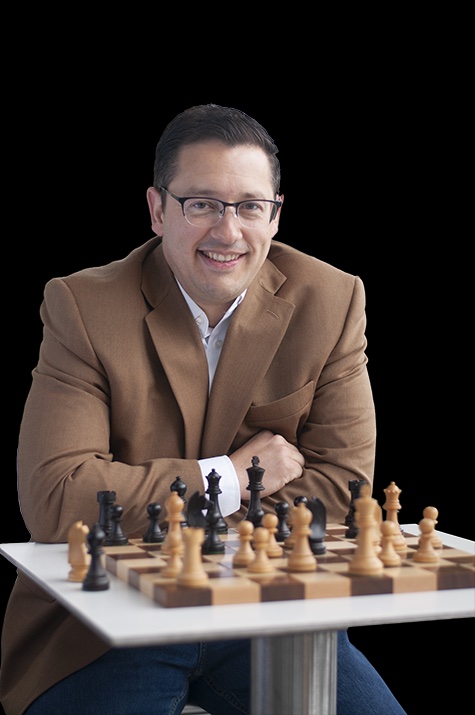
Based in Sioux Falls, Neff calls it Chess4Life and sells it as a fun, engaging way to learn the game while imparting important life skills to children such as focus, sportsmanship, respect, perseverance, patience and planning.
Chess4Life and its tools – online video instruction, curriculum-integrated chess education, physical centers, tournaments, camps, virtual and in-person support from the company’s 24 “coaching” staff members and more – have helped produce dozens of national and hundreds of state champions.
But Neff insists that the greater focus of his venture is on enriching children’s lives, and that most certainly includes the child who believes he or she could never succeed at such an intellectual endeavor as chess.
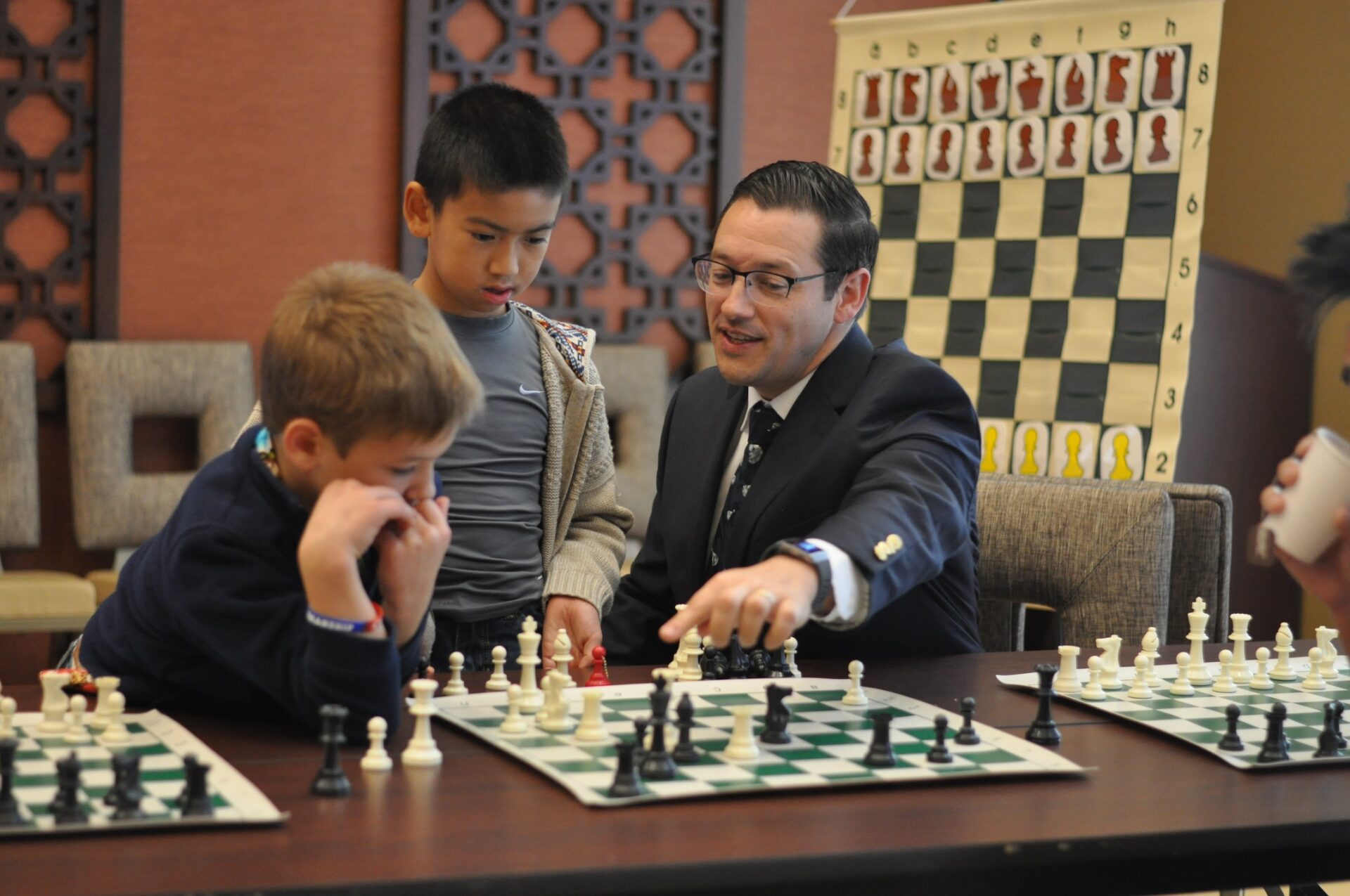
“Most other chess companies are about chess. I’m not. That’s why my website isn’t filled with all the champions that come through our organization,” Neff said. “I don’t want people to think that is our focus. I want it to be upon, what’s the outcome like? What life skills and learning skills is Chess4Life bringing to these kids? How is those going to enrich their lives and make them a better person, a better student?”
While the data to support those answers is scant at present, the anecdotal success of Chess4Life is abundant. In Broward County, Florida, for example, one of the nation’s largest school districts is employing Neff’s Chess4Life app to reach 85,000 students.
The Broward district has chess as an elective course in four middle schools there, Neff said. And at the elementary level, educators who have followed its integration into second grade classrooms are telling him that “it is directly affecting our third grade math testing. So there is a lot of talking at the board level, when we were approving contracts, that they want to keep chess and build on it because of the impact on their math scores.”
Class4Life has been integrated into the math curriculum in the Tiger Reserve program at Adventure Elementary in Harrisburg as well for the past four years, said Laurie Wenger, director of advanced programs at the school.

The teachers there don’t need to be chess experts, Wenger and Neff said. They just need a basic understanding of the game. Chess4Life’s short 5- to 6-minute videos do all the instructional work, imparting simple lessons once a week. All the students in grades two through five in Tiger Reserve then are given 15 minutes a day, four days a week to practice and to learn the life skills that come with proper chess play and etiquette.
Neff’s learning model works through a progression of beginners to more expert players. They start at what he calls the “pawn” level, the beginning level, and advance to rook level, then knights, bishops and so forth. At each step, students play against others identified as having similar skill levels.
They have a lot of fun along the way too. In one variation of chess, a player may have only a king; the other has all the pieces. The strategy is to capture that king in no more than 20 moves. After the game ends, the opponents switch sides. And through it all, win or lose, they learn patience. They learn forward-thinking. They learn the consequences of ill-advised moves.
Wenger likes the fact that they play face-to-face, that they learn about other players’ pacing and how they handle the outcomes.
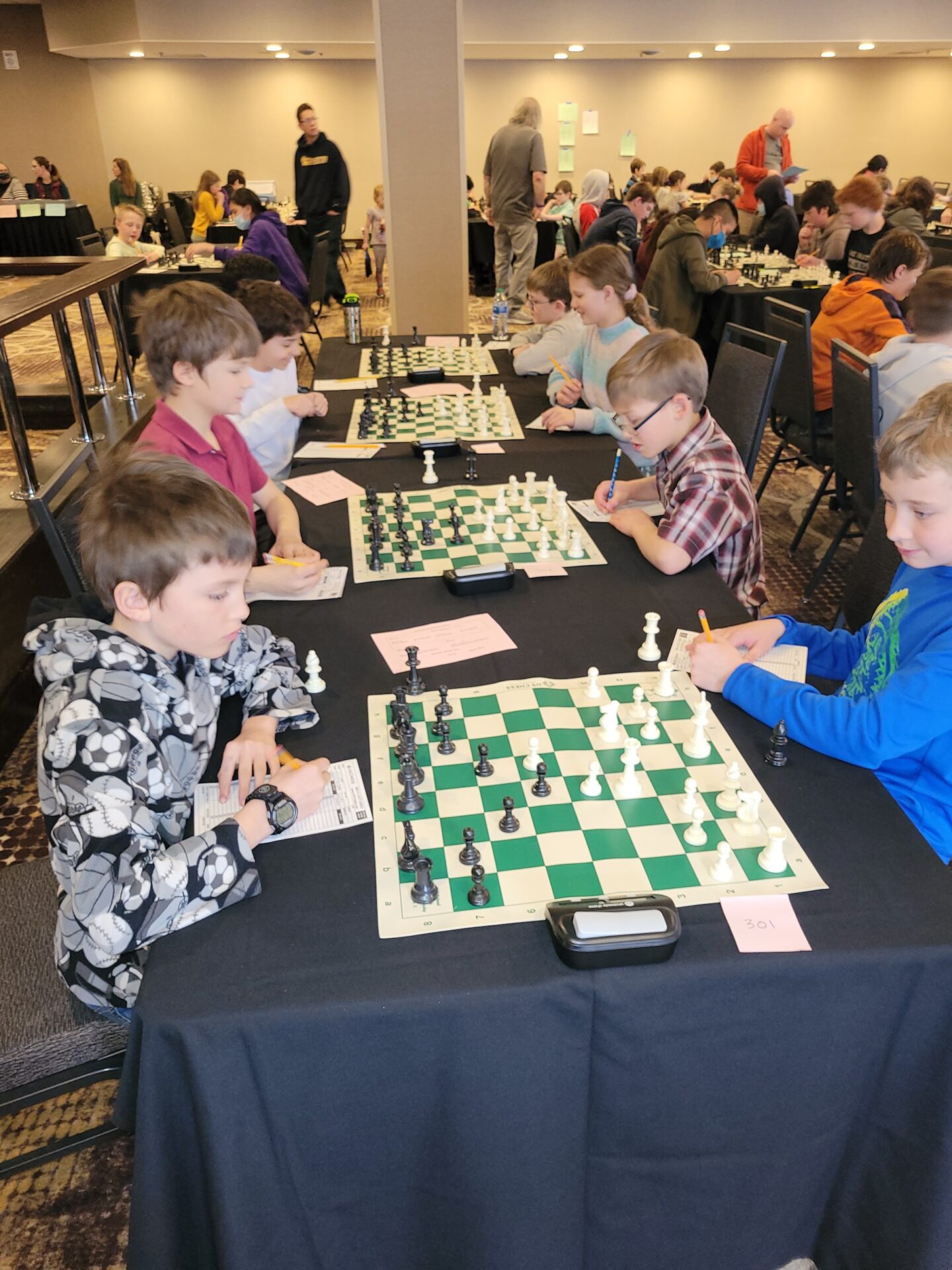
“I look at our second grade boys. They’re pretty impulsive,” she said, laughing. “Having patience at that age when someone else is taking time to analyze a move is really hard. It’s a challenge for them. But you see a change in them over time.”
Patience? Consequences of wrong moves? Thinking ahead? With a grant from the Sioux Falls Area Community Foundation, Neff said Chess4Life was introduced to the Juvenile Detention Center locally for a year to help teach those life skills. North Dakota has chess in every one of its correctional facilities, he said. Cook County Jail in Chicago has bought into it too.
“The data tracked out of Cook showed that the recidivism rate of those who do chess and complete the chess course drops from 73 percent to almost immeasurable zero,” Neff said. “I asked the chief jailer there, ‘Why do you support chess?’ And she said, ‘I like chess because we have fewer fights.’”
Chess can help build early math skills, Neff added. Each chess piece has a value attached to it based on its power of movement. A pawn is 1; a queen, 9. Rooks are worth 5 points; bishop and knights 3 each. The black chess pieces can represent negative numbers; the white, positive.
“So as we take this into second and third grade, we build pre-algebra mathematical expressions,” Neff said. “If you have captured a pawn and a queen, how many points do you have? Ten, yes. But how would you write that down?” We use letters for pieces. You could ask them, a ‘q’ plus a ‘p’ equals what” And the kids who play chess get it.”
Neff’s journey to the pinnacles of chess expertise began in Lynden, Washington, near Bellingham. His father, a chiropractor, began teaching his home-schooled son when the lad was about 4. Neff played his first tournament when he was 8, and even though he still didn’t know all the rules, “I enjoyed it” he recalls. “I was like, ‘I can do this. I want to do this. I want to win.’ ”
So he practiced incessantly. Read every chess book he could. Self-taught, he was a state champion in Washington and a national level chess master by the time he was in high school.
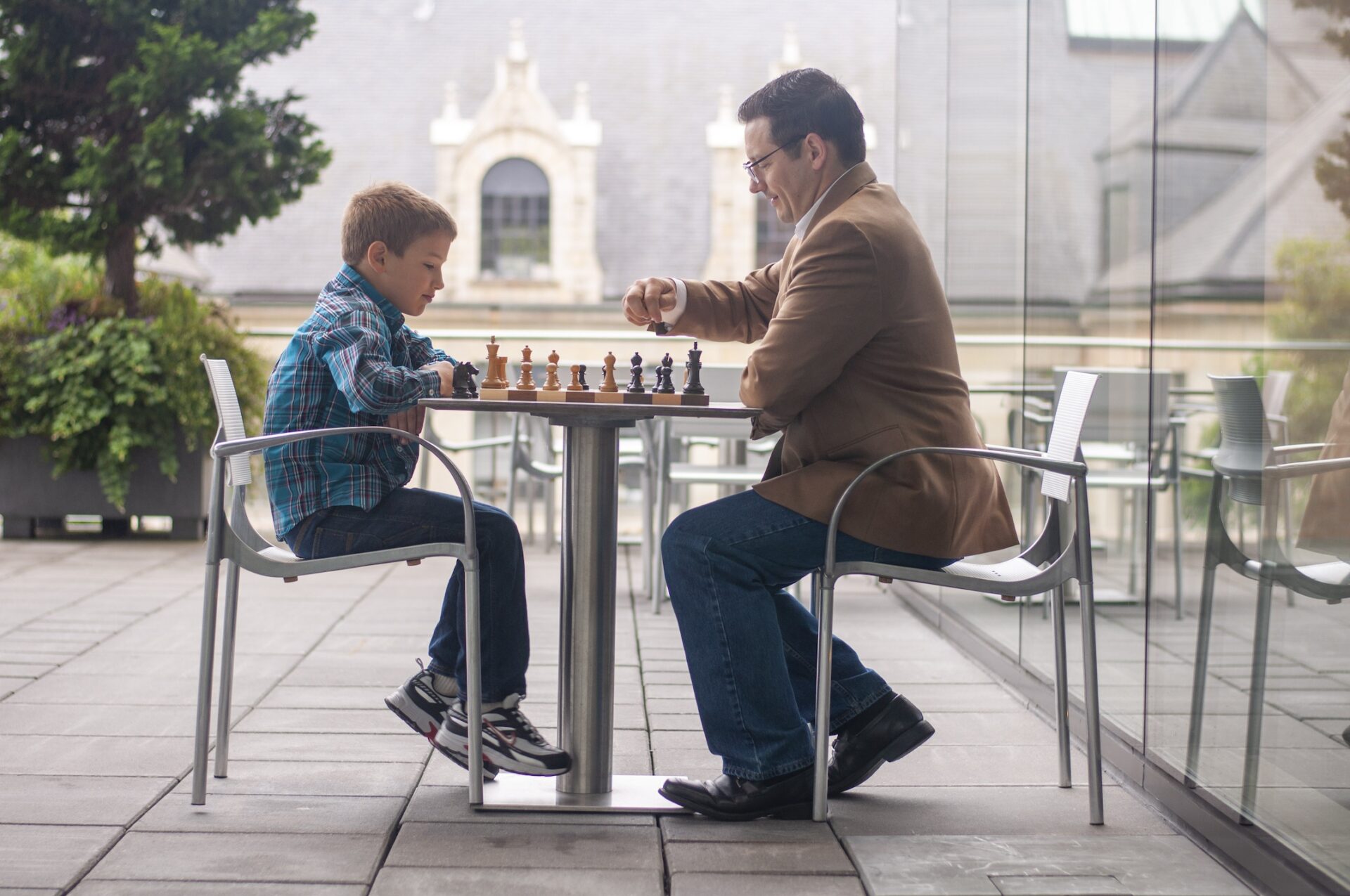
While he never ascended to the world champion level, he engaged his share of world-class players in competition, including five-time world champion Vishy Anand from in India in 2012. Anand was taking on 20 players at the same time. Neff was one of them. Their match, which lasted 3½ hours, ended in a draw.
“That to me” he said, “was my biggest win. And probably my favorite.”
He worked in construction for five years after high school and in sales and service for a cellular phone company for two more years. But Neff was bored. Growing up, he had taught chess to classmates and others. He and a brother had a side gig, too, that involved selling chess books and products by mail order. That chess connection always lingered, even as he moved listlessly through his construction and cellular phone days.
One day, as he was driving along a freeway in Washington, thinking about going back to college or into the seminary, he had what he calls a “light bulb” moment. These voices kept bouncing around in his head. The voices of students he had worked with through the years. Of parents thanking him for teaching their children how to focus, how to learn impulse control, how to make better choices.
“It suddenly hit me,” Neff said. “I was looking for something to make a difference in life, and it was like, ‘Wait. I’m already making a difference. I’m going to use chess as a means to transform kids’ lives.’”
Within two years, he had incorporated Chess4Life. His venture opened physical centers in Washington and created a fleet of nine buses to transport children to and from them. School clubs, chess tournaments – “we had everything,” he said.
But Neff was convinced they could do more. “The inflection point for me was a mindset shift about 10 years in” to Chess4Life, he said. “That shift was ‘OK, we’re making an impact. We’re doing a lot of things. But what would it take to impact a million kids?’ And the pursuit to the answer for that question changed our business.”
The answer was empowering educators with only basic chess knowledge to bring the benefits of the game into classrooms. The world already was doing it. Russia had integrated chess into its education system years ago, Neff said. Spain had made it mandatory for all its children. So Chess4Life set about developing an educational curriculum and with it a business model.
And just as they were making inroads, the COVID pandemic hit.
Neff recently had signed two 10-year leases on retail space, on top of two previous sites he already had. When the governor closed down Washington because of COVID and kept it closed, “it nearly put us out of business,” he said.
He had a growing family, a wife and now 10 children, “plus one in heaven.” Washington didn’t seem like it was going to accommodate his family, Neff said. About that time, “We heard on the news from (then-Gov.) Kristi Noem that South Dakota was open for business.
“We believe in personal freedom and responsibility, and make your own choices. We heard her (Noem) saying, ‘We’re not here to tell you what to do; you make your choices.’ That’s what this country is founded on.”
That’s how the Neffs landed in Sioux Falls in 2021.
That this national level chess master is in our midst today seems a blessing to the families whose lives he has touched. Becky McDowell’s 13-year-old son, John, is part of Chess4Life now, participating in Neff’s online program, tournaments and weekly games.
As Neff succeeds in creating more in-person opportunities in the area, McDowell sees it opening a door to more friendships for her son. But it’s already accomplishing much more than that. He’s better now at thinking things through, she said, at planning and other life skills.
“John loves games in general, but chess really seems to have activated his brain,” McDowell said. “He’s pretty intelligent and likes to think through strategy. I love how Elliott does life-skill things. If you don’t win, you learn. I think that humbleness and perseverance … I see it in John … is really good.”
With five competitive children “going a hundred miles an hour” in football, basketball, wrestling, baseball and more, Wyatt Haines said Chess4Life has brought a mental discipline to his family that embraces Neff’s mantra of win, draw or learn.

Haines’ 8-year-old has been playing chess for four years, three of those under Neff. The boy is competitive, going full-bore all the time but also understanding at a young age now that the calmer he stays in the field of sport, the better he does, his father said.
“That doesn’t mean he doesn’t work with a sense of urgency,” Haines said. “I’ve got to give Elliott the credit for that. The calmer you are, that doesn’t mean you’re going to win all the time. But you’re going to give yourself a better opportunity. Elliott taught him that. It’s something I never would have been able to teach one of my own.”’
As Adventure Elementary has done in Harrisburg, Haines and his wife have talked to administrators at West Central in Hartford about the Chess4Life curriculum. Adventure pays a fee as a school and then can use the curriculum in as many classrooms as they want, Wenger said.
After an initial pilot year, her school is just completing its third year with Chess4Life. Though they haven’t done a blind study to see the game’s impact on math scores, Wenger knows that in many ways, it’s making a difference.
Young children, once impulsive, now so often study the board much more carefully, more deliberately, more thoughtfully, she said.
“That idea that sometimes to do good work, you need to slow the train down a little bit and be more reflective, I see a lot more of that,” Wenger said. “For these kids to know ‘I should look twice before jumping at my first impulse,’ that’s a good life-skill carryover to more than just chess.”
Indeed, Neff said, chess can be life-changing. And to highlight that, he talks about a place in the slums of Uganda where his program has been used as part of a larger effort to help its youths prevail over the trials of poverty.
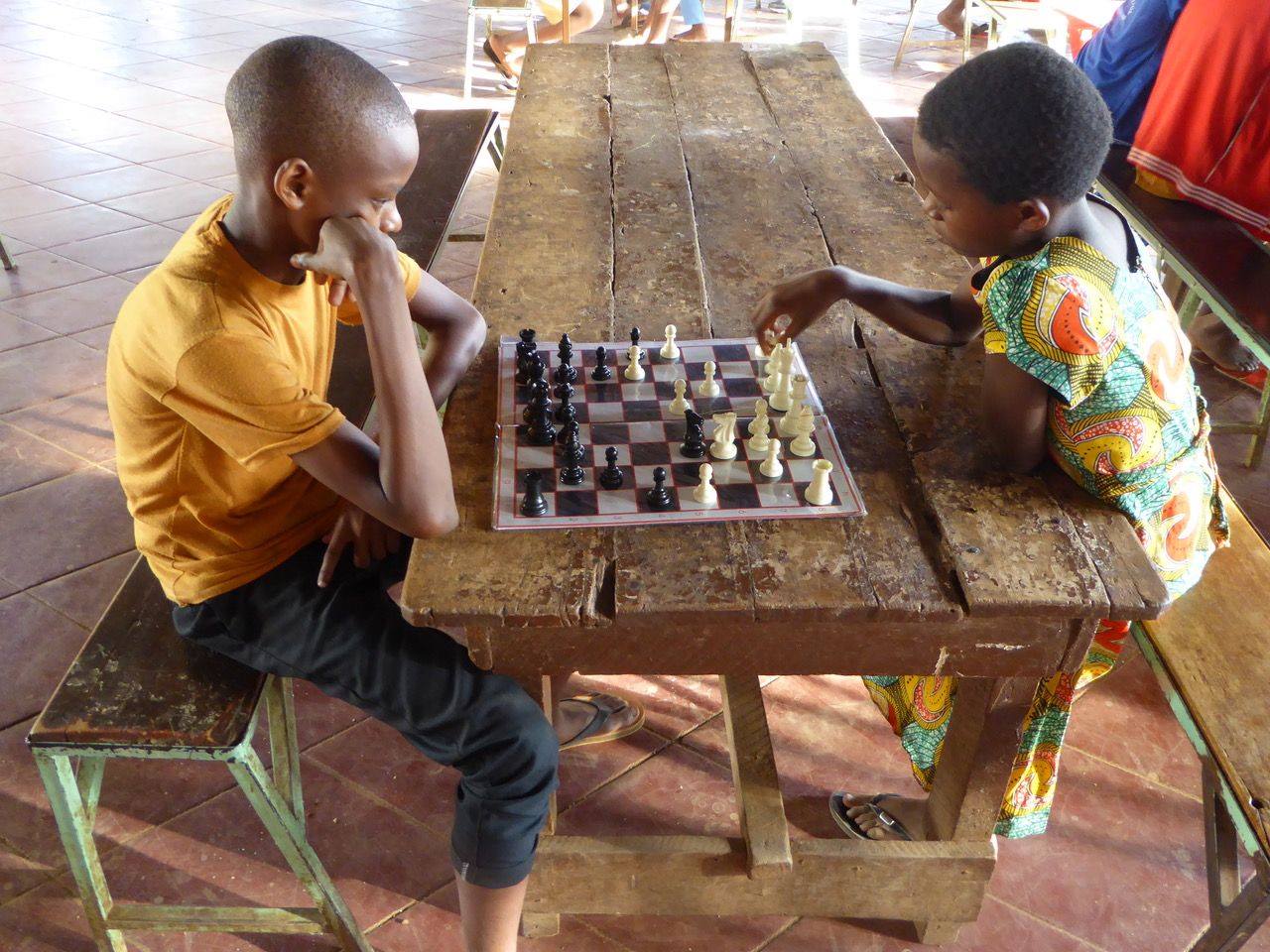
There was a book that came out in 2012 called “Queen of Katwe,” that detailed the story of 10-year-old Phiona Mutesi, who started going to a chess club in her Ugandan slum because there was food offered there. In time, she learned the game and became a Woman Candidate Master after her victories at the international Chess Olympiad.
Neff heard about her and traveled to Uganda, where he coached Mutesi for a time and offered access to his Chess4Life tools.
“The beauty of this is they’re working with 25,000 kids in the slums now, using chess as an outreach tool to positively impact these kids and lift them up,” Neff said. “When we started there 10 years ago, not a single kid from that slum had gone to college. Six months ago, over 43 kids had graduated college.”
Such success is just one more affirmation of the work he’s doing. And one more reason why his hopes and goals for Chess4Life just keep expanding each year.
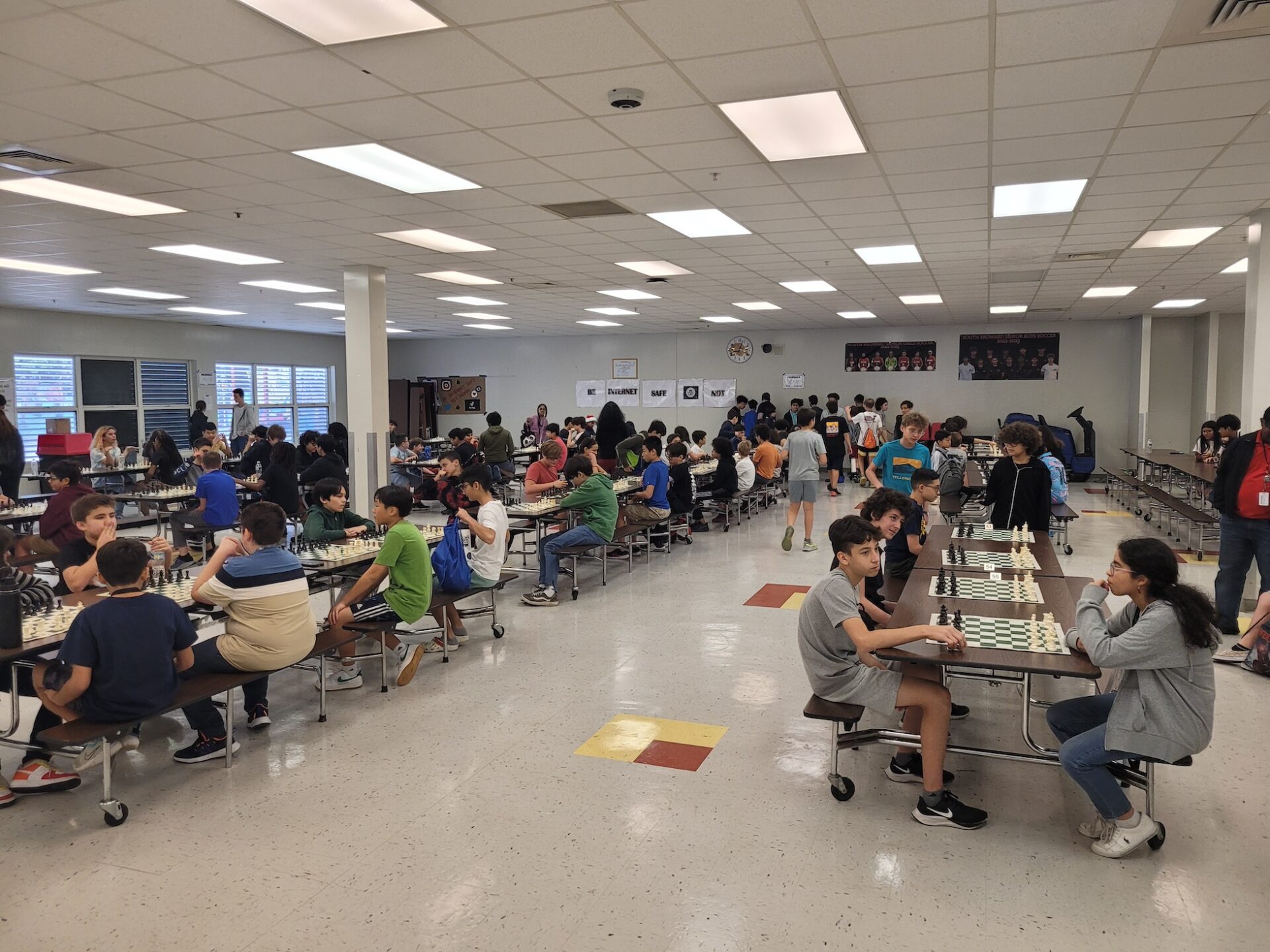
His objective, Neff said, is to be impacting a million kids each week, every week of the year. Someday, if chess can be as commonplace as any other physical education activity in schools or offered as an elective students can take, perhaps the dream will come true.
“This is what you need to know about chess … that after each game, the opponents shake hands and work together to problem-solve what went on during the match,” Neff said. “Imagine the carryover of that into every other aspect of their lives.”
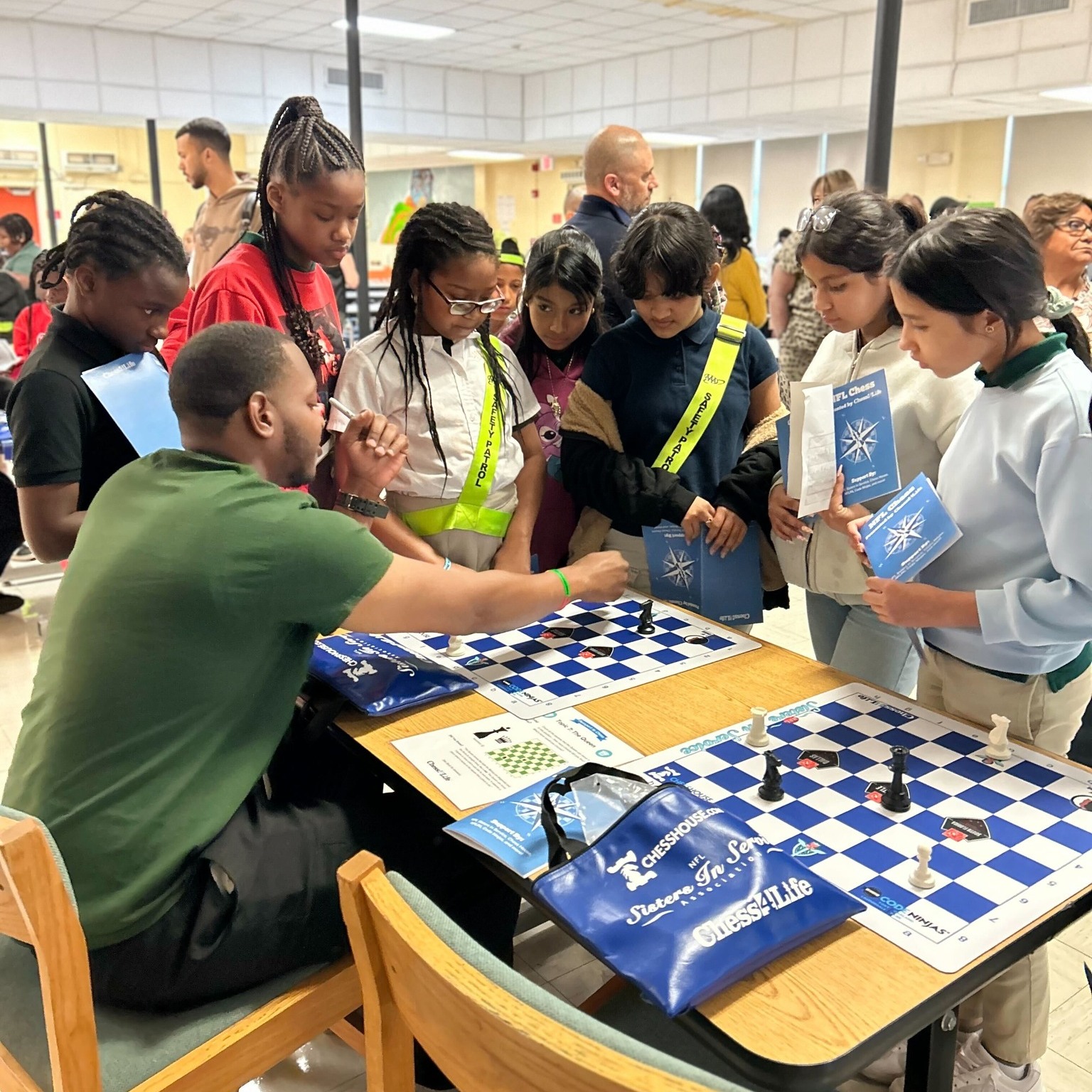
Imagine, for example, that carryover into a world interminably steeped in the competition of winning and losing. What difference might the planet see if the outcomes of interactions globally ended with a handshake and a conversation on how to do better the next time?
What difference, Elliott Neff says with a smile, indeed.