New S.F. One Stop building delivers modern workspace for stronger customer, employee experience
Aug. 26, 2025
This piece is sponsored by Interstate Office Products.
At almost 300,000 square feet and already home to 600 employees, the new Sioux Falls One Stop is the state of South Dakota’s largest office.
The four-story building at Dawley Farm Village on the city’s east side also sets a new record for office design and furnishings provider Interstate Office Products.
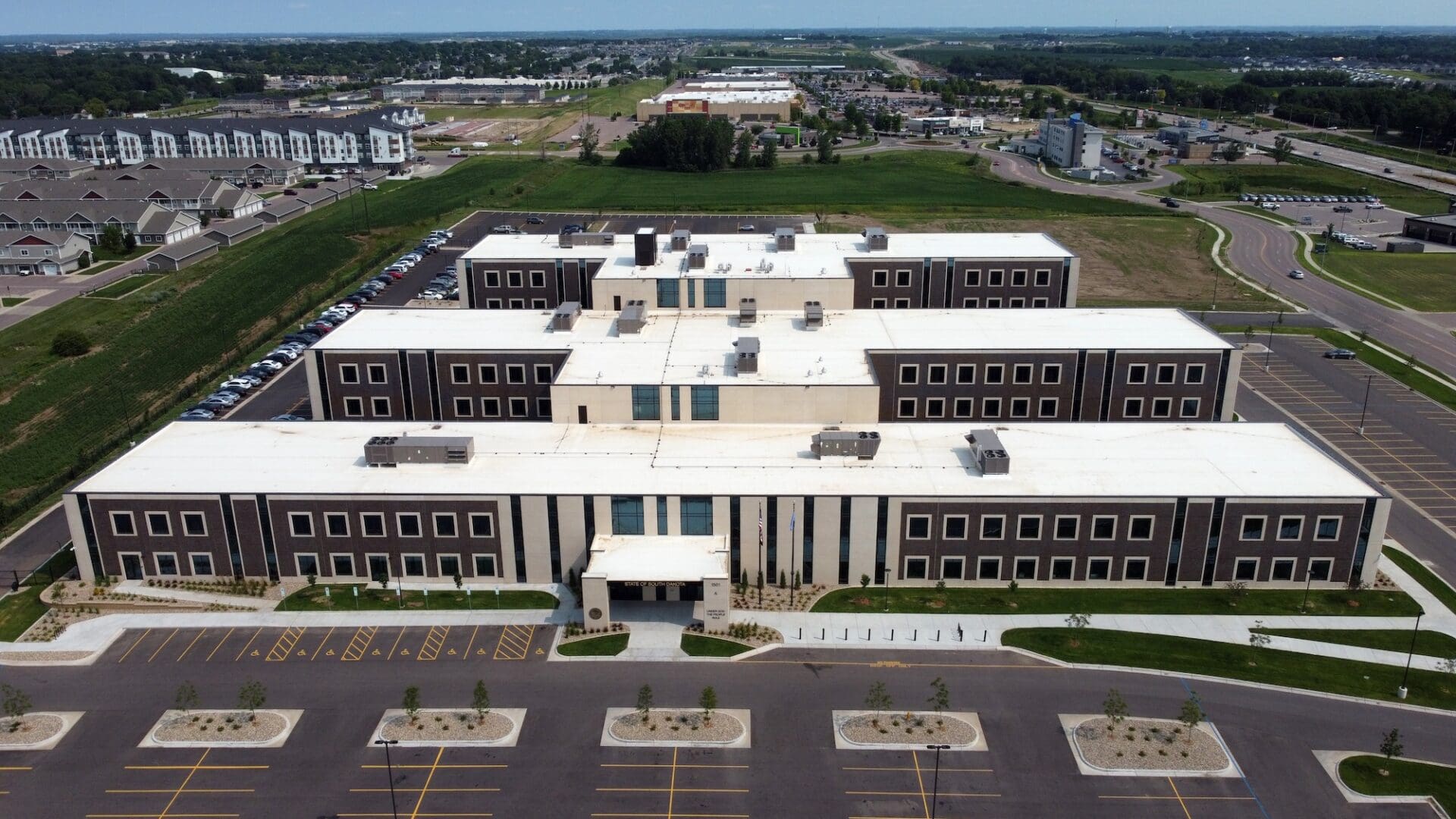
“This project is considerably larger than any other single project we’ve done,” vice president James Gaspar said. “The furniture alone is a much bigger project than others in the region, and once modular walls were included in the project scope, it became even greater.”
Beyond setting records for size, the building is intentionally meant to provide flexibility for state government well into the future, while providing much-needed updated space, security and efficiency today.
“Customer experience was the No. 1 priority in designing this building, and collaboration was a huge point, and they complement each other,” said Darin Seeley, commissioner of the Bureau of Human Resources and Administration.
“Both are reflected in this space. We combined 21 individual office leases into one building, and we created a place where customers can do more than one thing while they’re here, and agencies are working together to provide better service.”
Vision takes shape
Interstate Office Products’ work on the project came through a traditional route: responding to a request for proposals from the state of South Dakota.
“It was a very comprehensive process, beginning with submitting our qualifications in partnership with our manufacturer Steelcase, then moving into a committed pricing strategy,” said Kristi Christensen, executive vice president of sales and design.
The IOP team strategized internally to plan how they would manage a project of this size with tight timelines, active construction and rolling phases. Gaspar added.
“We knew we could coordinate and manage the need for additional capacity, especially on the installation side,” he said.
“We have strong relationships with regional subcontractors and worked with Steelcase to recommend additional resources for installing the modular walls, something we generally do in-house with our installation team. Due to the size, scope and time constraints, we knew we needed additional resources, and this was the most logical piece of the project to carve out for subcontracting.”
When the state decided to work exclusively with IOP and Steelcase, it was time to ideate.
“This was a significant opportunity for us, and many of our team members stepped up to support it,” IOP CEO Sheila Casiello said. “From the time we were awarded the bid in 2023 through installation this year, it became an incredibly comprehensive effort.”
Mark Payne served as IOP’s account manager, helping coordinate 13 agencies to gather input on their needs, current challenges and desired outcomes, and put together recommendations and floor plans.
“We started by reviewing all their current spaces,” he explained. “We wanted to see and understand their pain points and begin to get a sense of their wants and needs.”
The tours revealed dramatically different working conditions among the agencies, from clearly outdated and inefficient offices to some spaces where furniture was able to be reused in the new building.
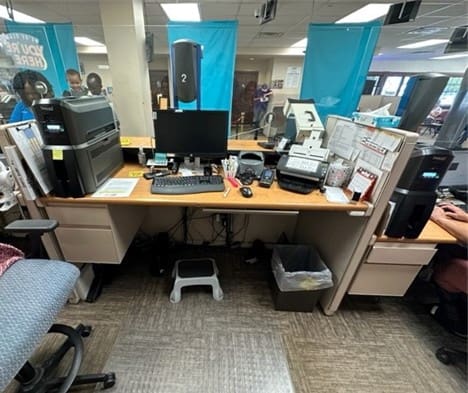
Customer service area before
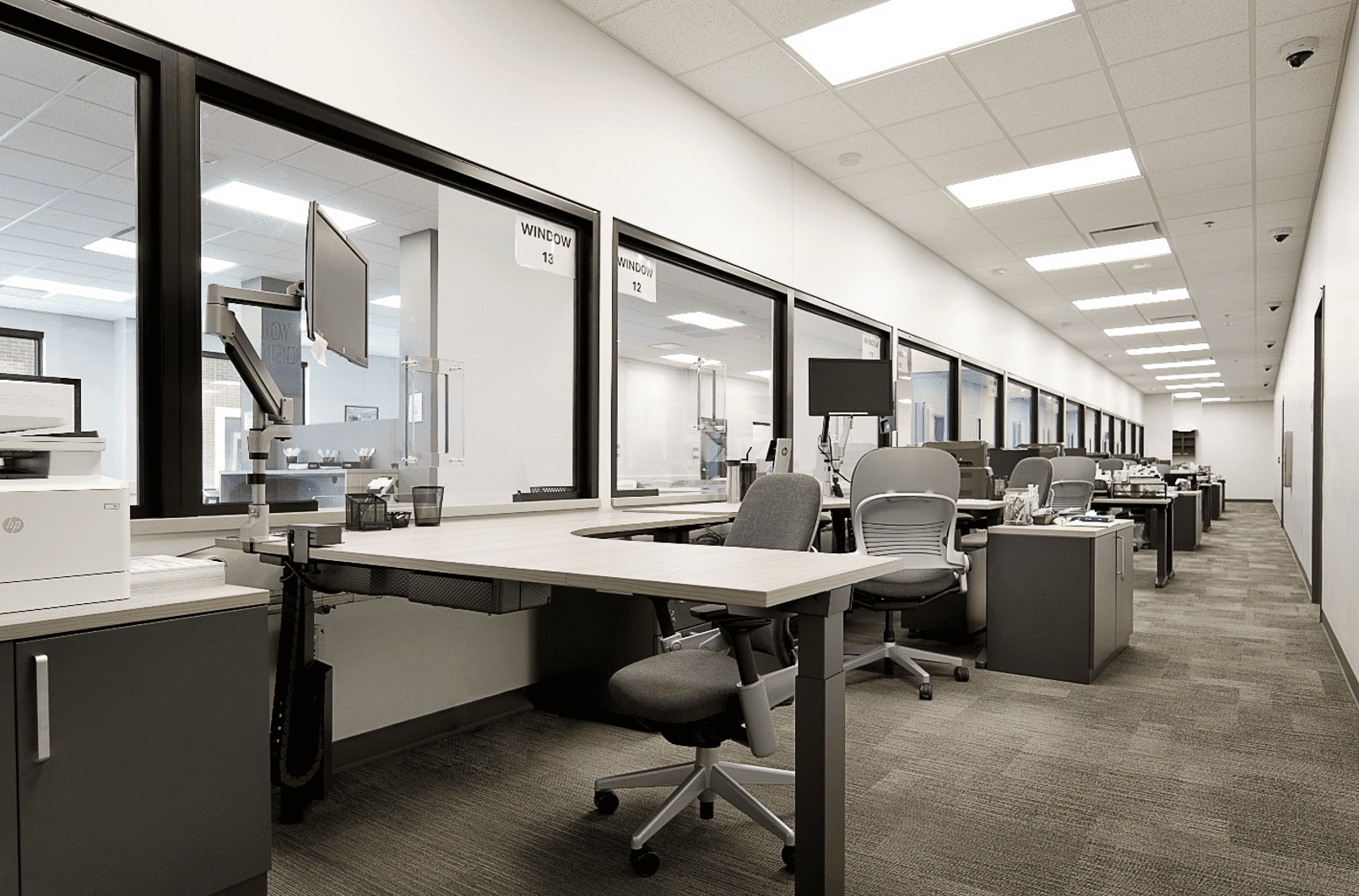
Customer service area after
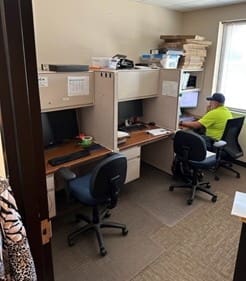
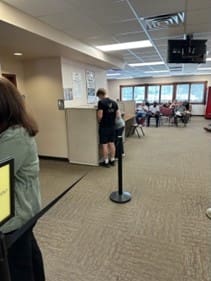
Waiting area before
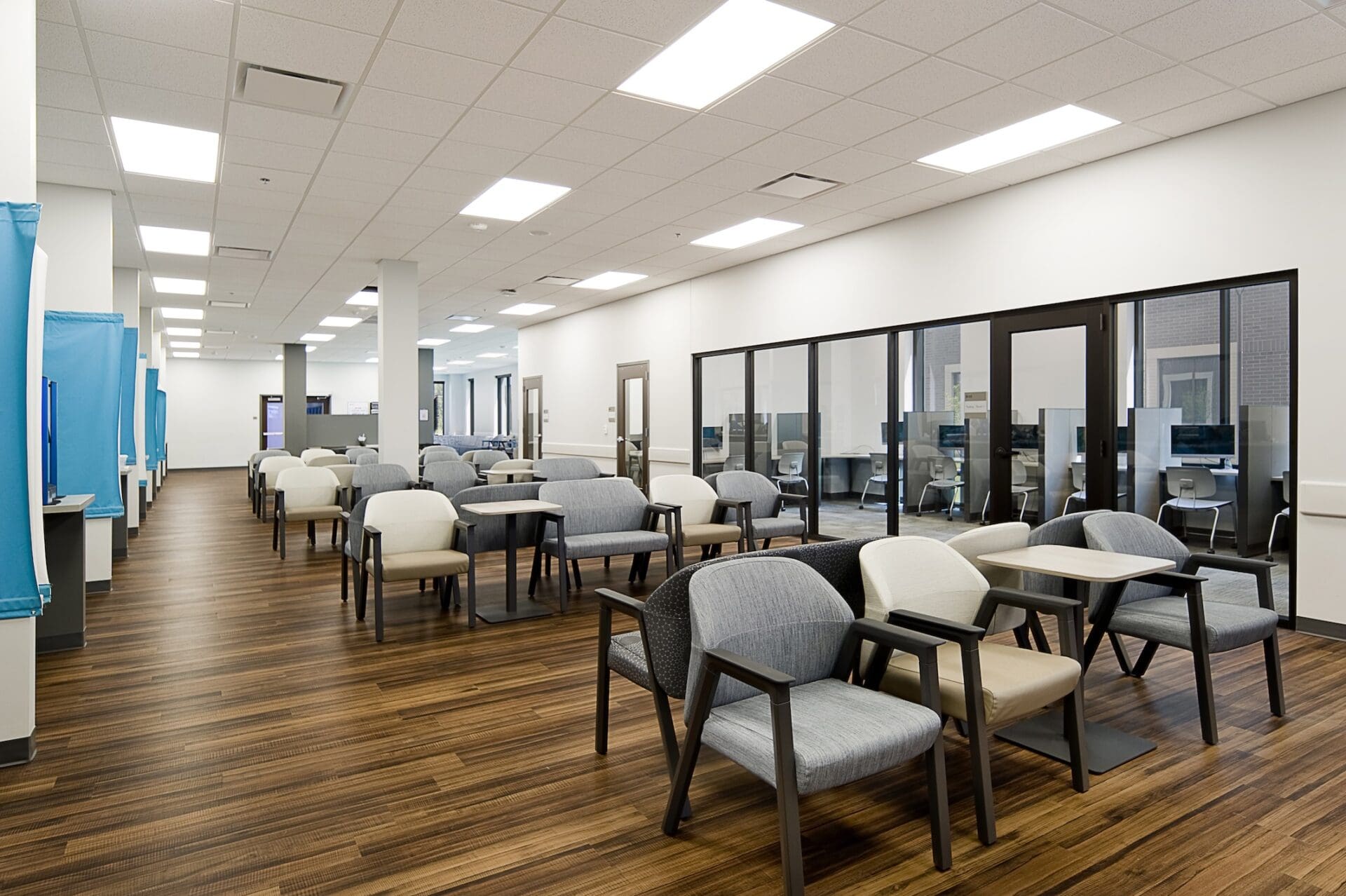
Waiting area after
“We heard concerns about privacy and sound control, as well as the teams’ collaboration and retention. Each agency determined what was most important to them as a long-term solution. As we worked through each of their concerns, there was not one single solution used throughout the spaces – each agency really addressed their own needs, and we helped them solve their individual challenges,” Christensen said.
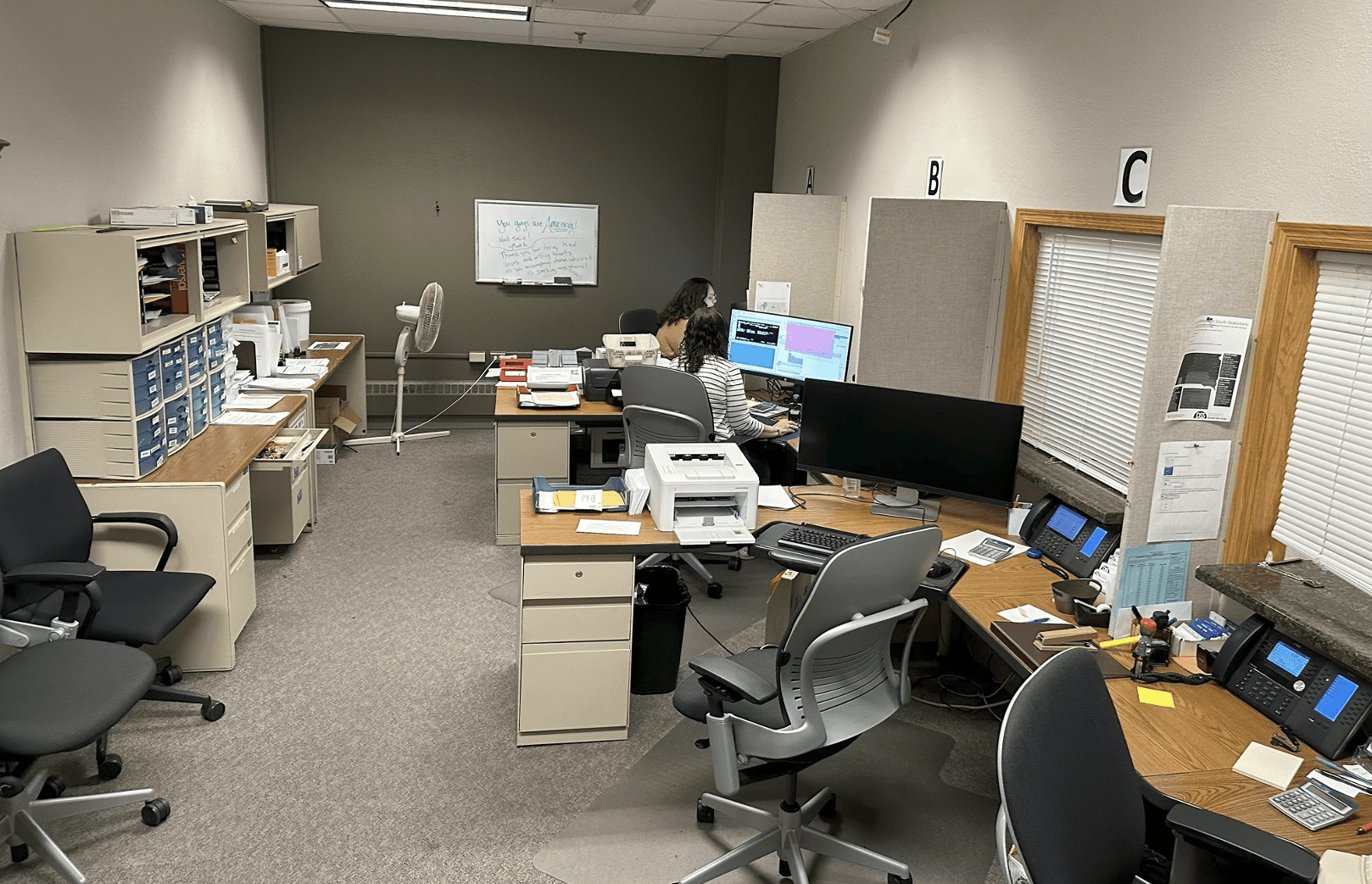
Team area before
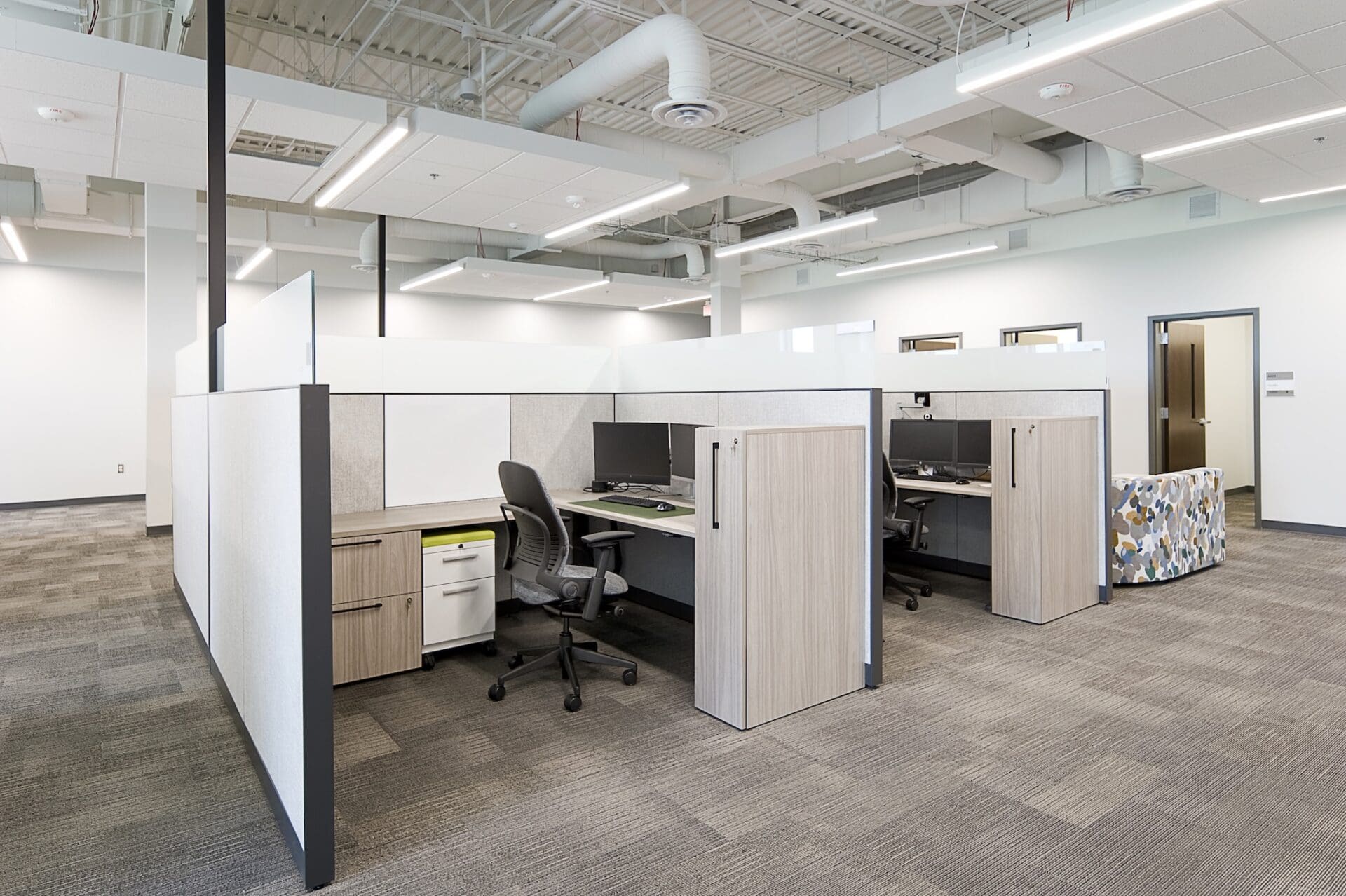
Team area after
“To ensure employees had a voice in the process, we used surveys across all agencies that gave us a baseline of their satisfaction with their current office and asked a wide variety of questions from their use of space to how they utilize technology.”
Big picture, “we wanted to look and feel like our competitors outside of state government from a workforce standpoint,” Seeley said. “We wanted a place that looked modern and not like stereotypical government office cubicles.”
From there, IOP interior designers Tori Mandel and Jenessa Neve, along with IOP and Steelcase leadership, held workshops with state teams, starting in the IOP Sioux Falls showroom, to help plan spaces that fell within state government standards while offering choices.
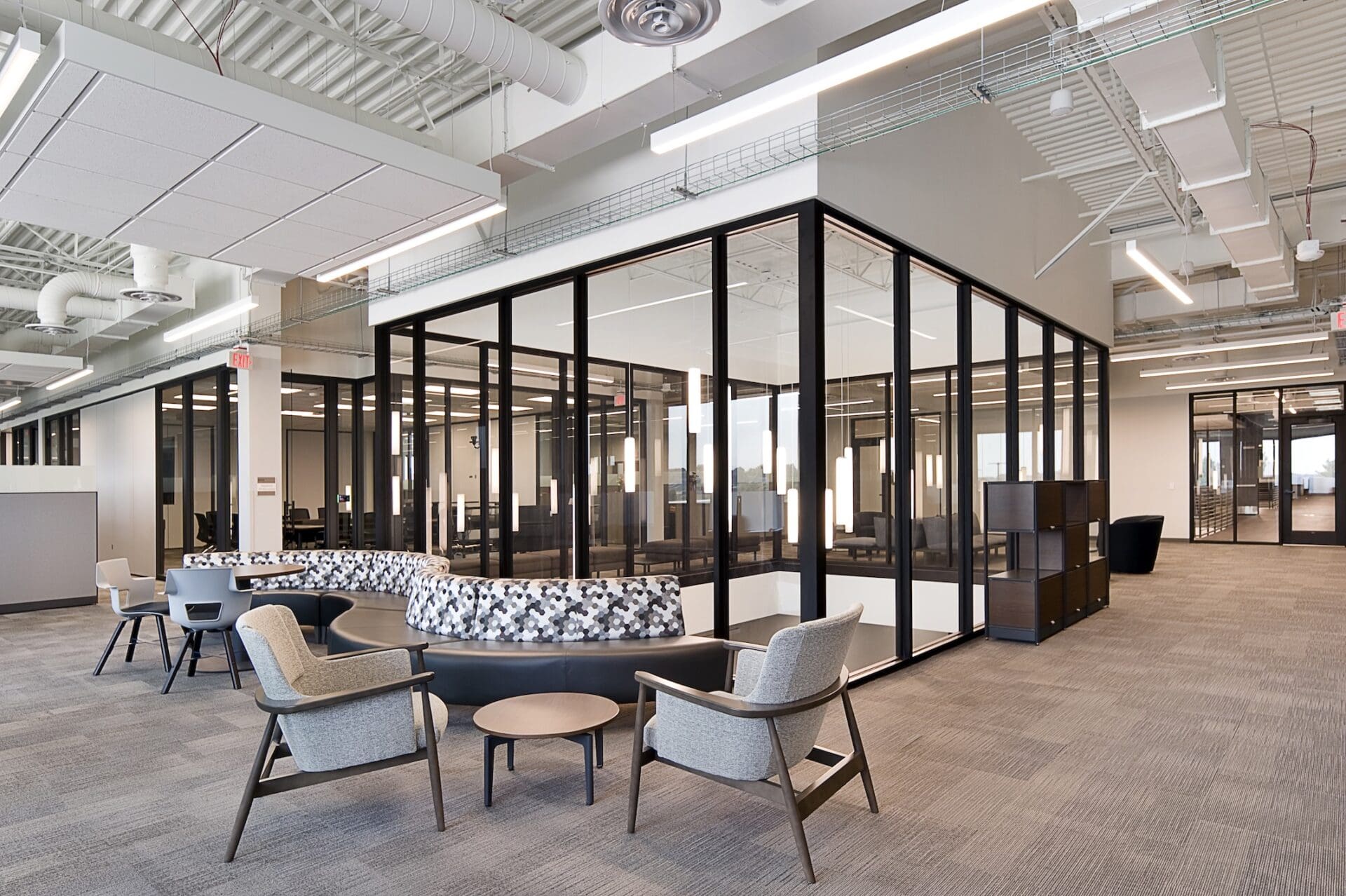
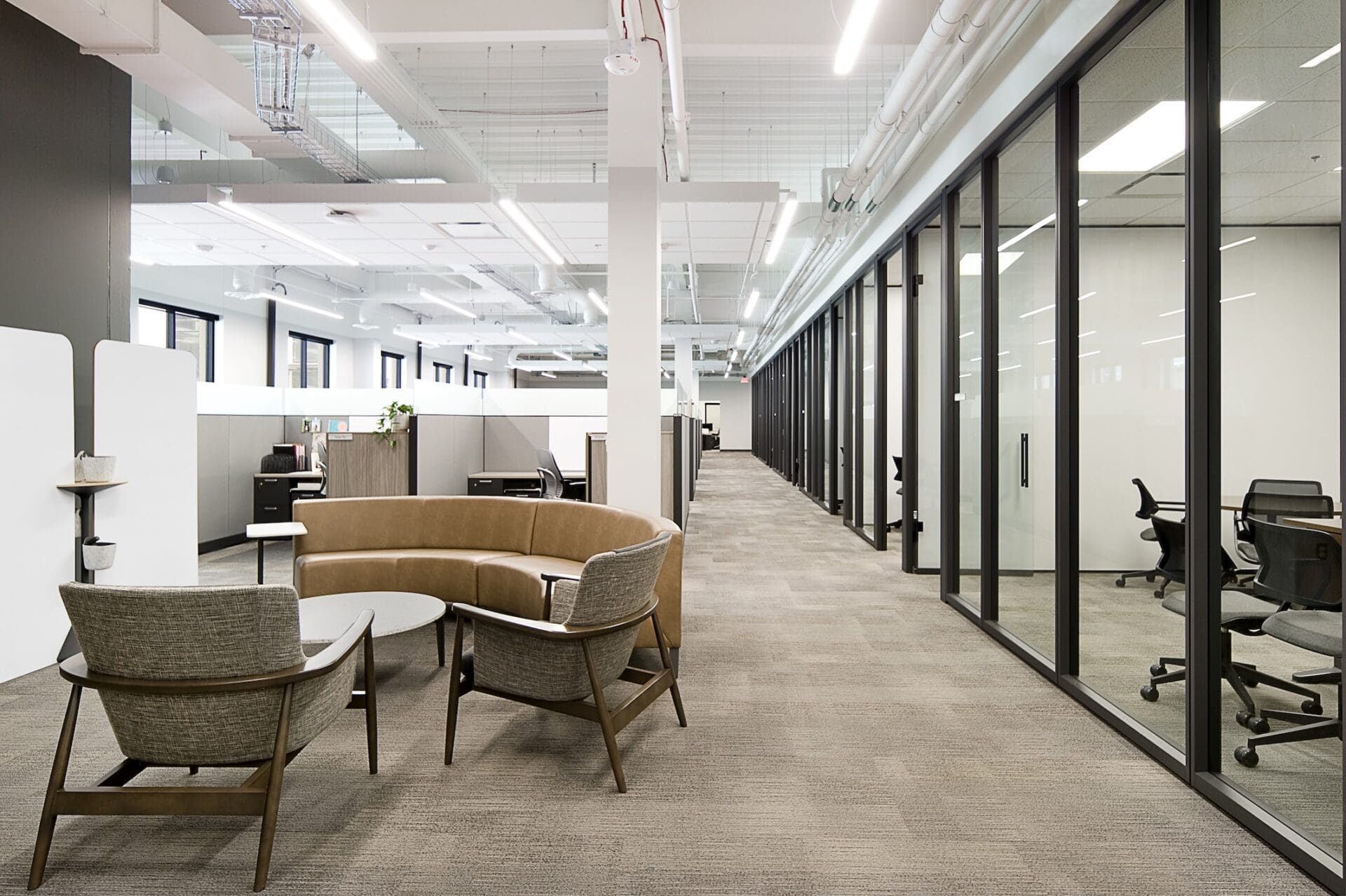
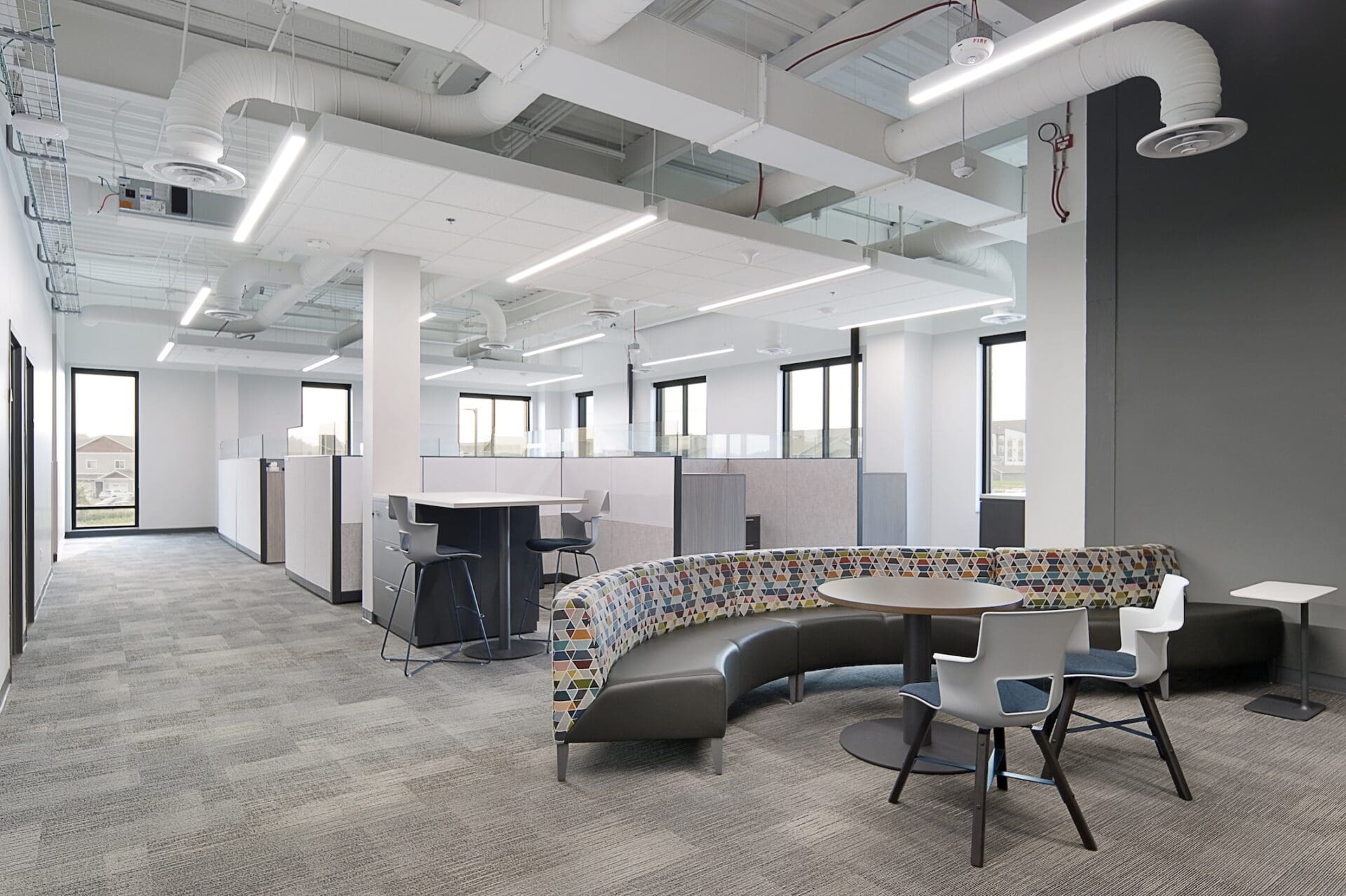
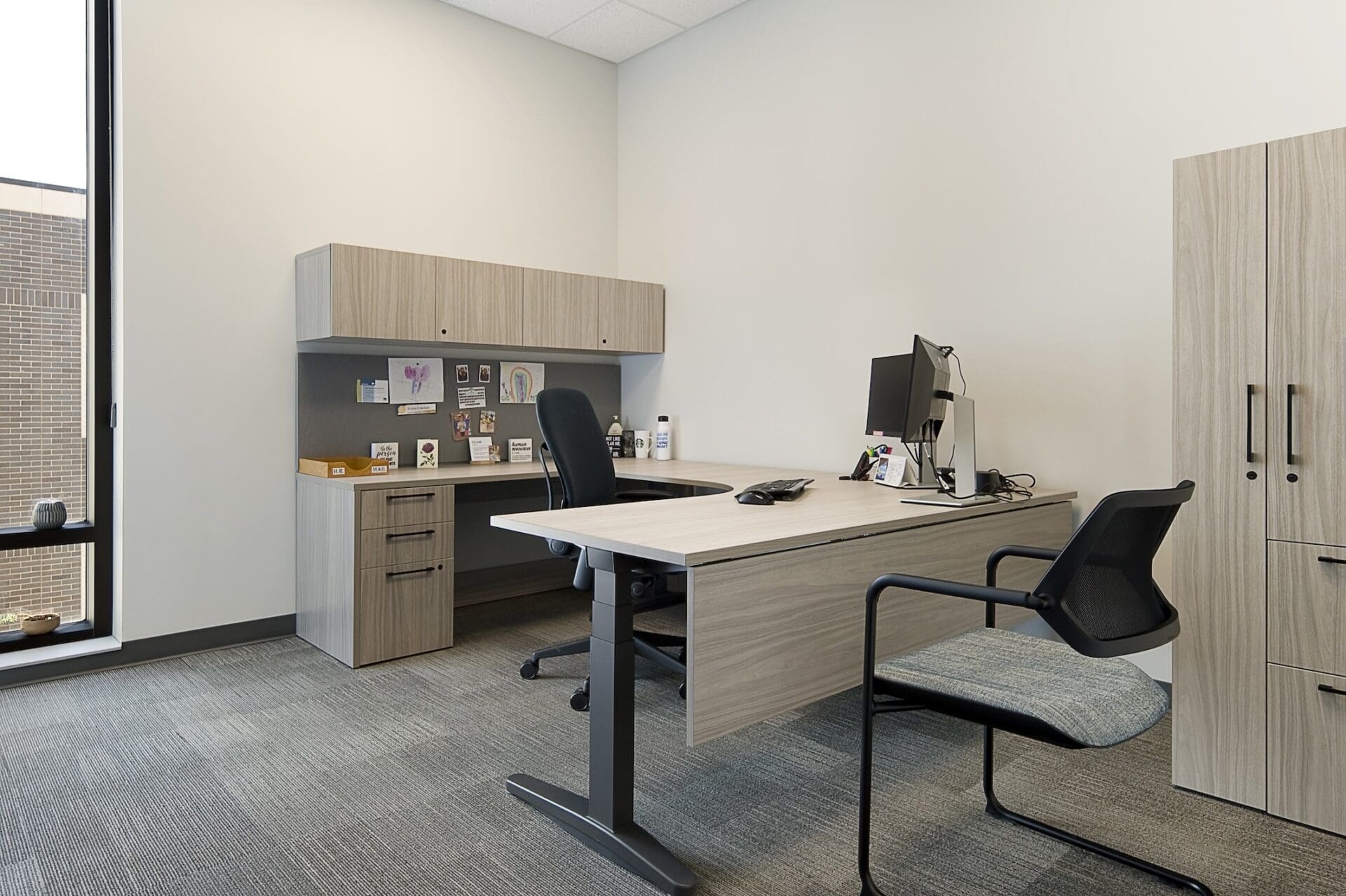
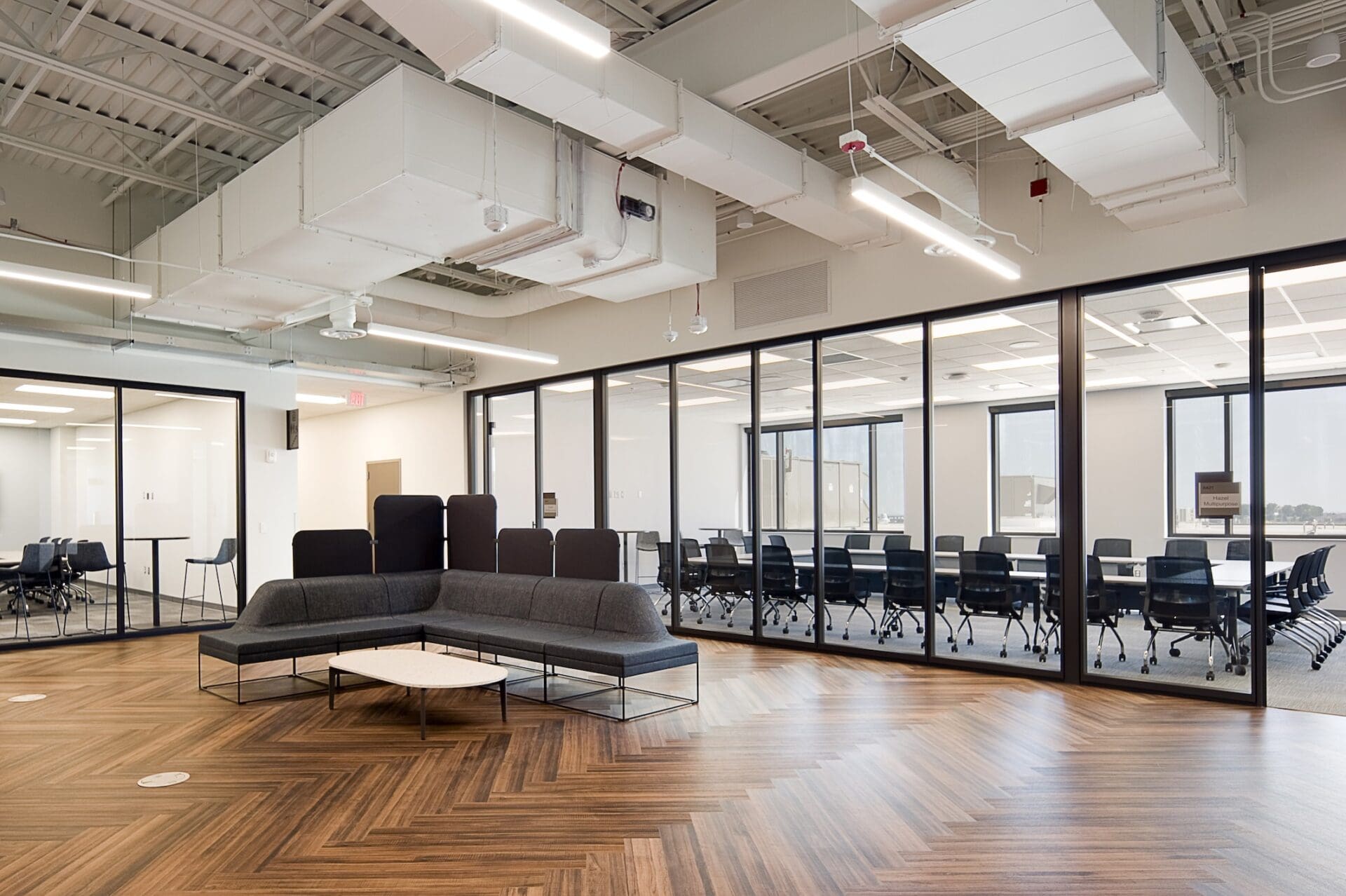
“Everyone has a height-adjustable desk, and the use of glass is consistent throughout the building to keep an open and bright feel,” Mandel said.
“Many departments came from dark, tall cubicles and wanted it to be a lighter, more open feel but also provide privacy. There are neutral wood tones used throughout, and each agency could work with colors and patterns to add a little personality within their space.”
The process “was really helpful,” Seeley said. “We would talk, and each team would see plan renderings of what they’d talked about and refine what was going to come, and then we’d talk again. It was a giant group, and they navigated those really complex conversations extraordinarily well.”
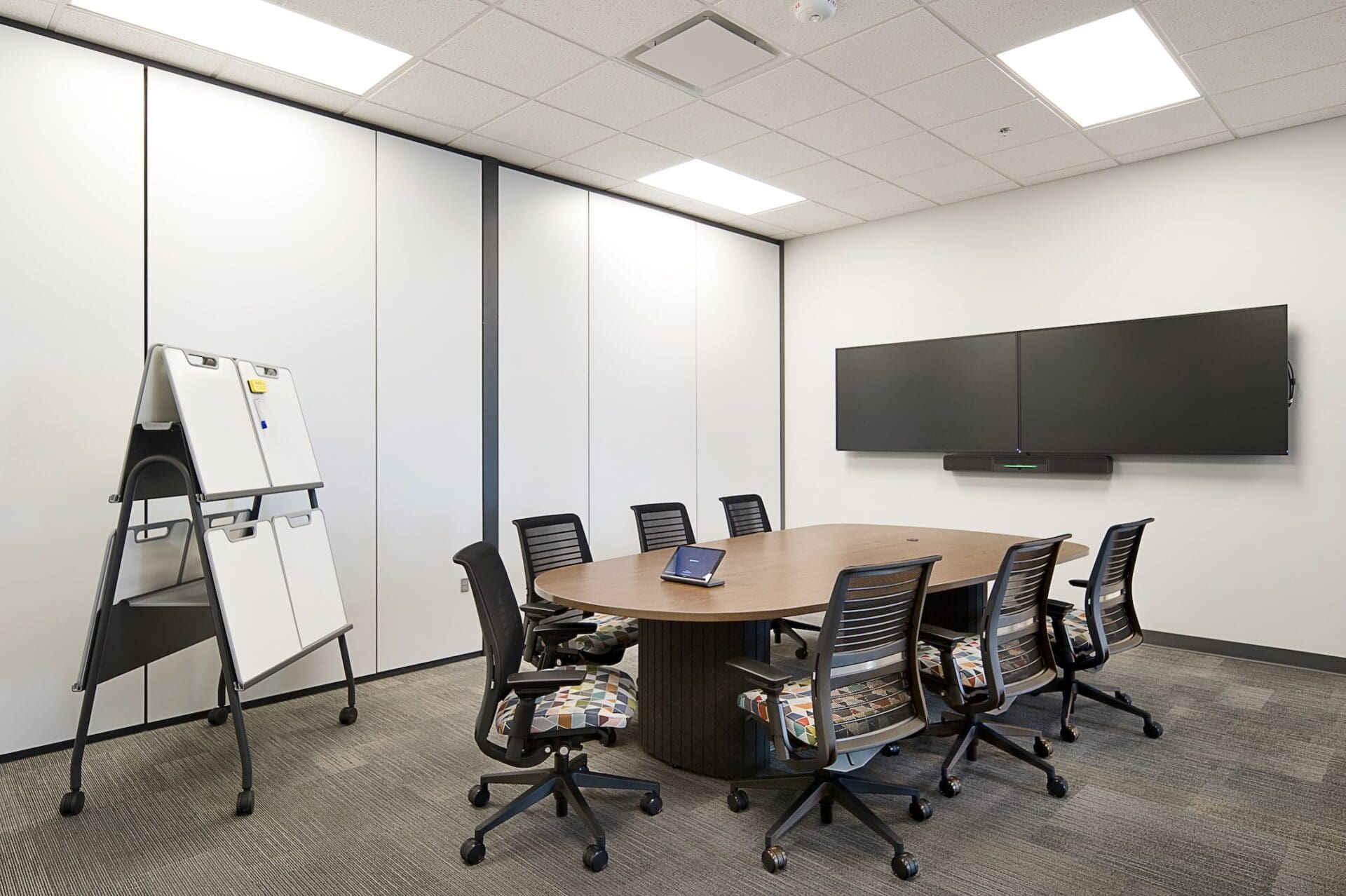
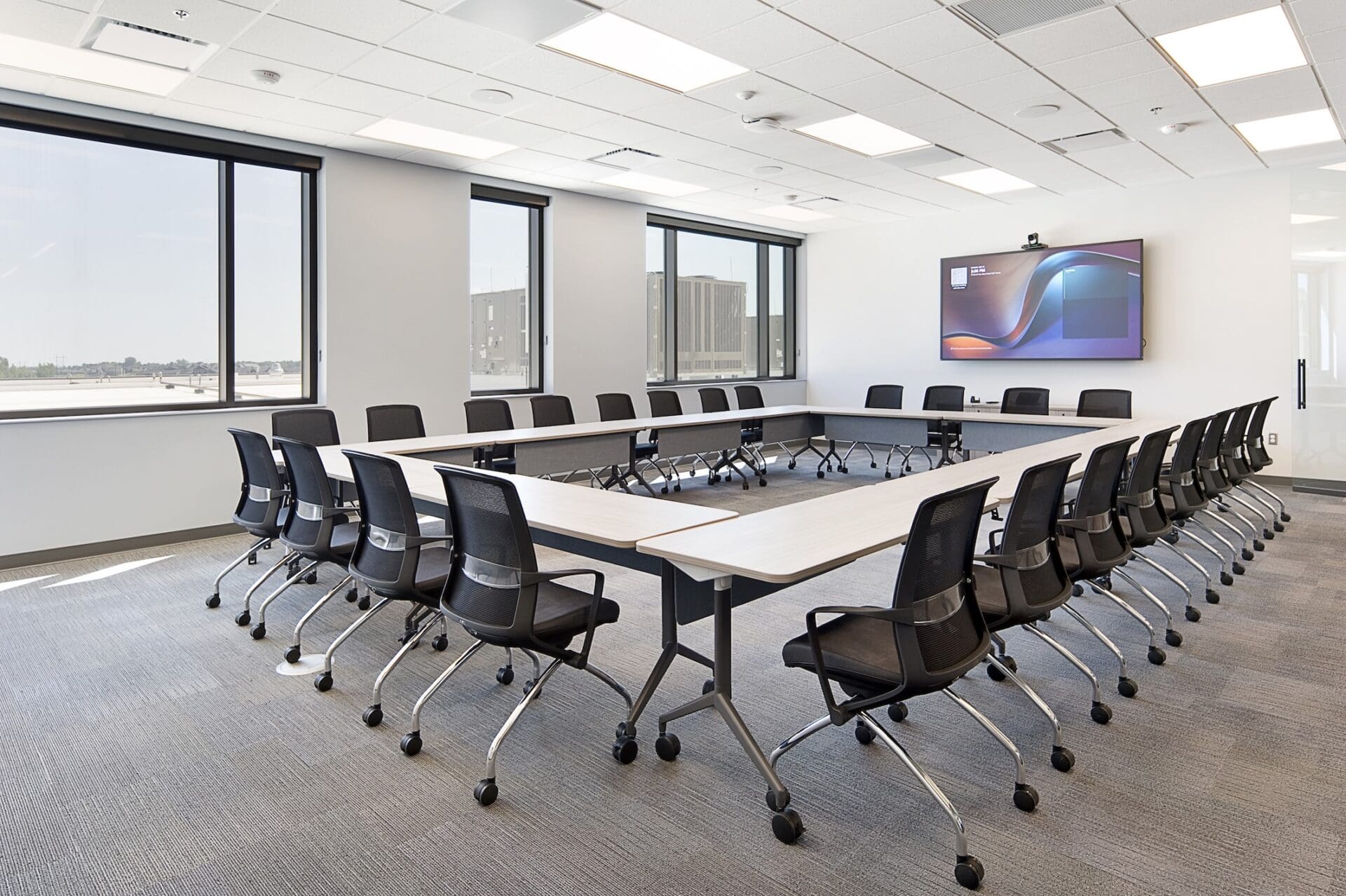
Each agency also has shared space, “and that was new to a lot of them,” Neve said. “We were able to introduce products they hadn’t seen before – things like the table collections designed for hybrid work to allow for a better meeting experience for people across the state.”
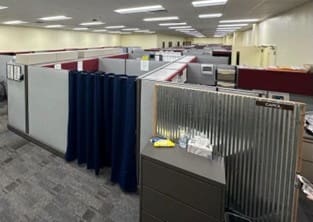
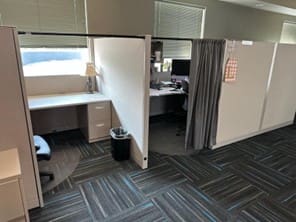
Workspaces before
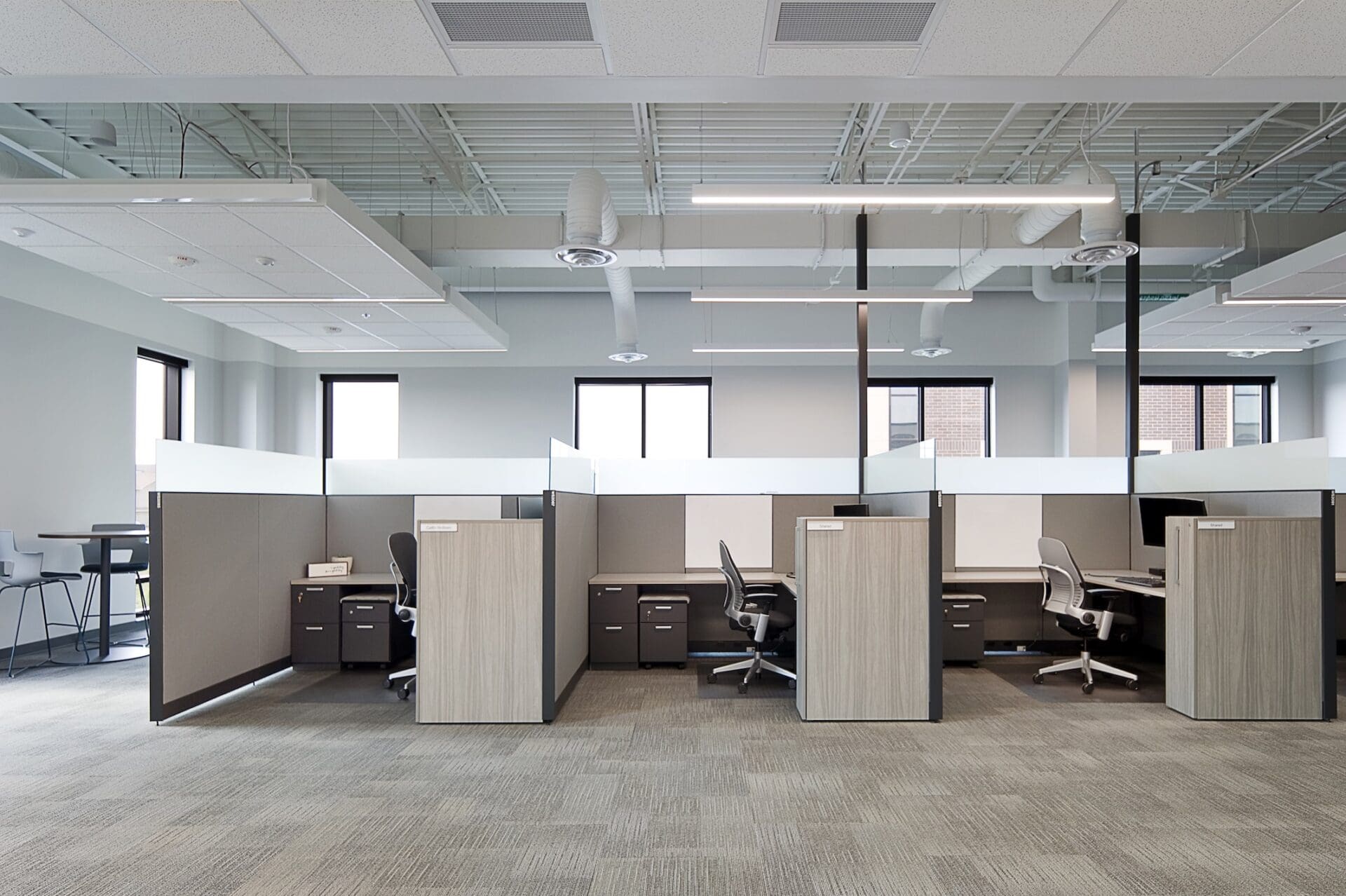
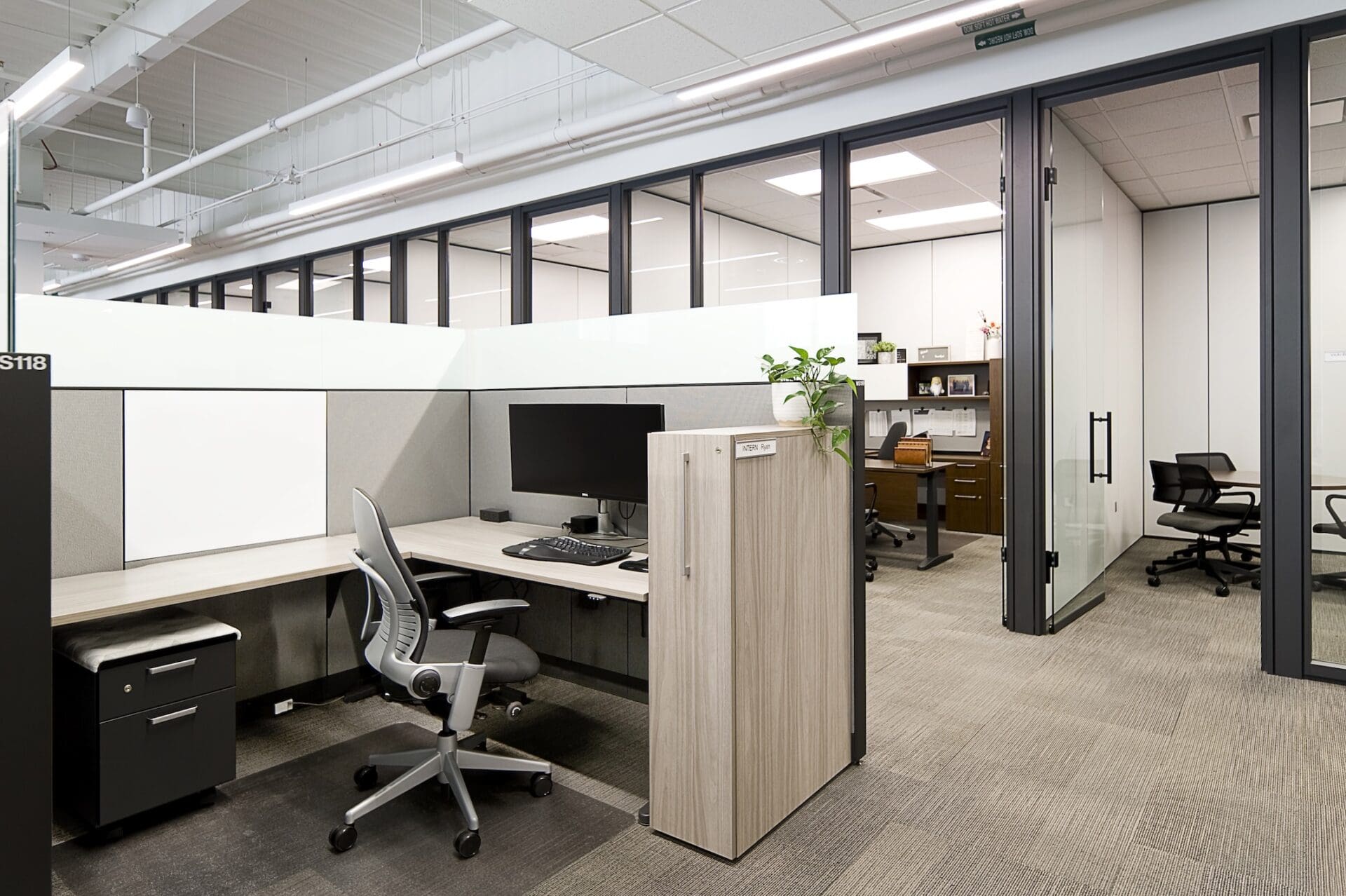
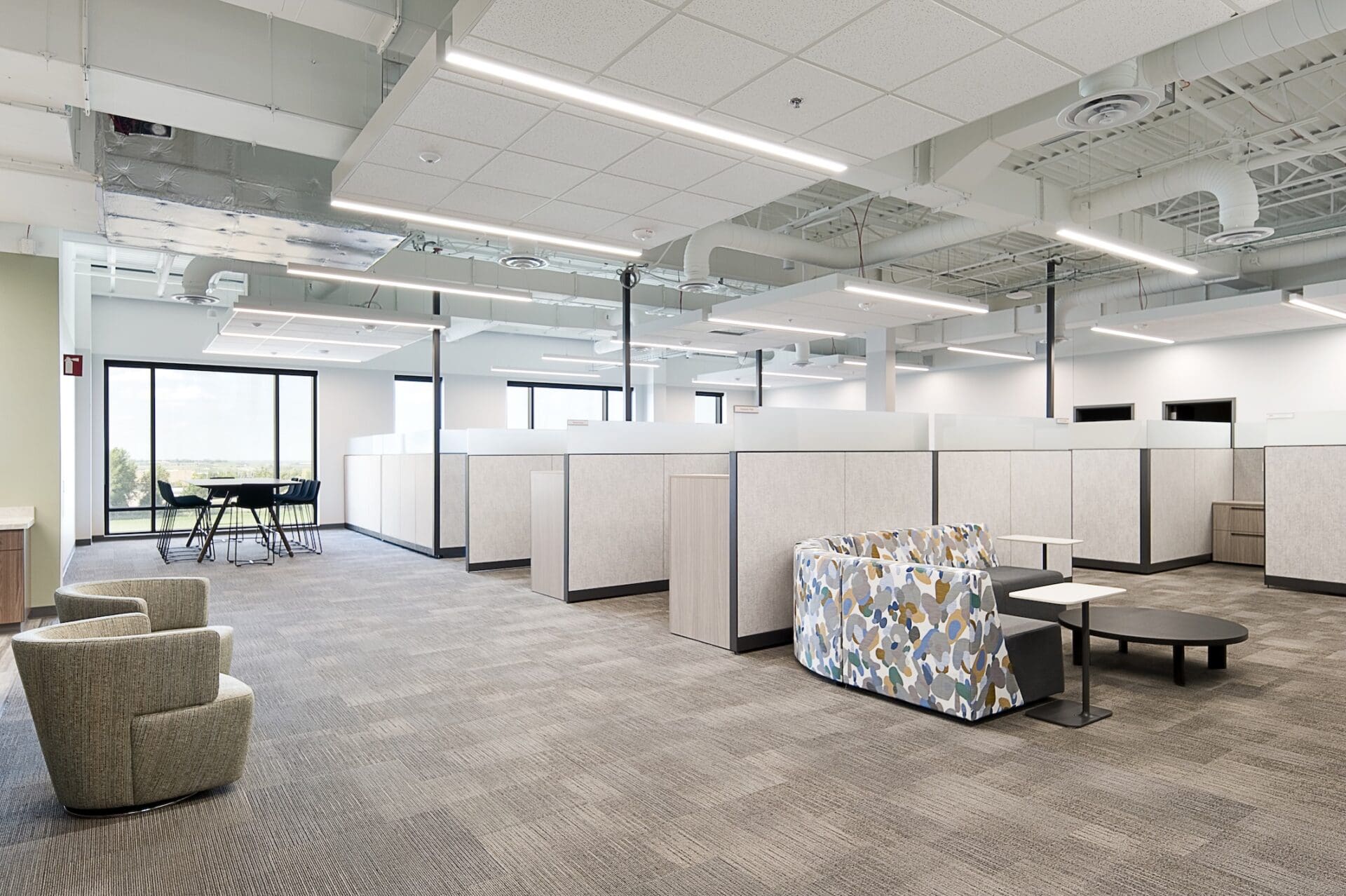
Workspaces after
Working with IOP “helped us understand the possible,” Seeley said. “They helped us understand the science of it in partnership with Steelcase, and that’s a game-changing relationship. We know we can’t just build for today, and they gave us the tools to ensure we can go from 600 to 800 people here when that’s needed.”
Public and collaborative spaces
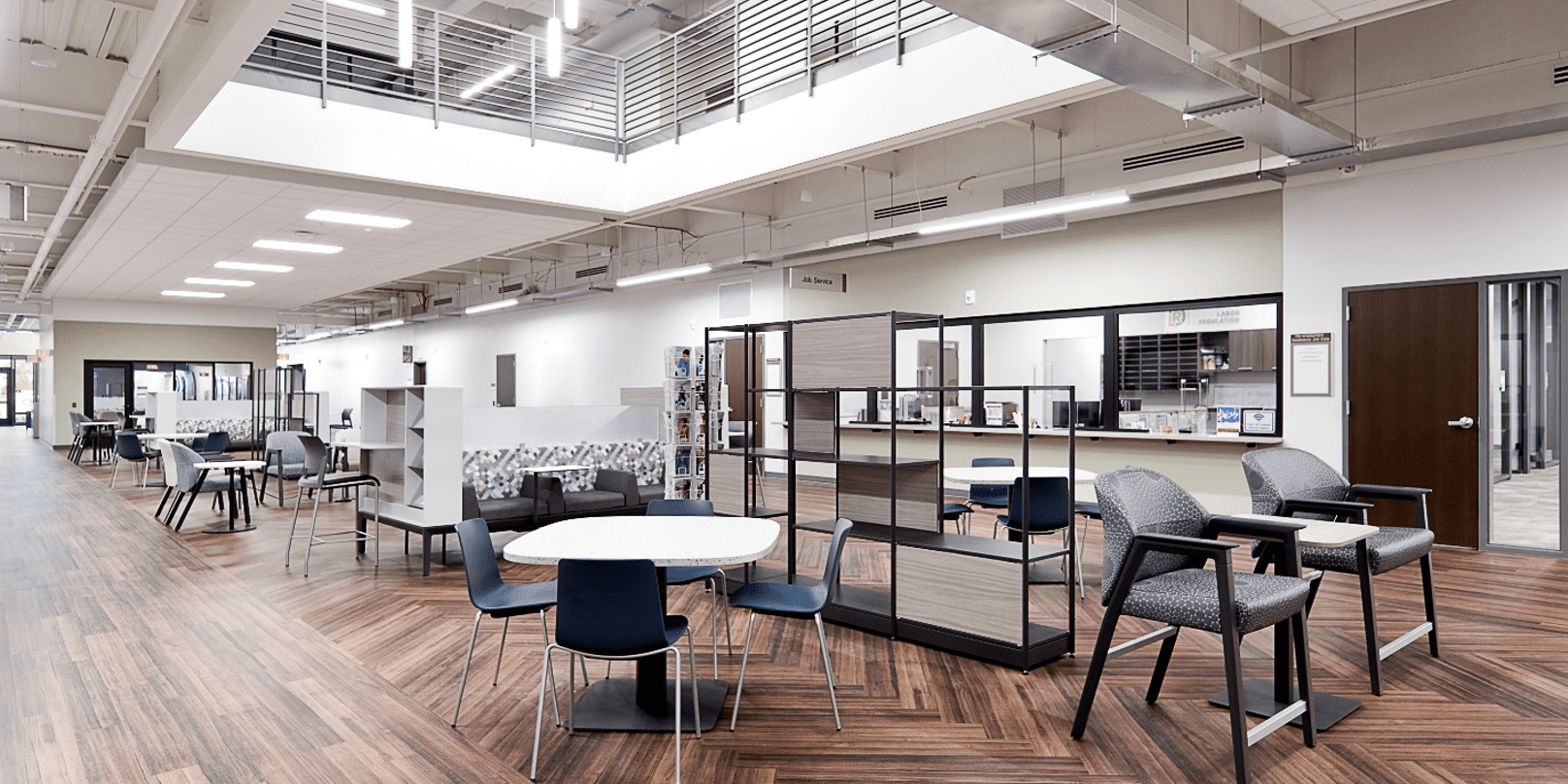
Sioux Falls One Stop’s first level is largely public facing.
The main entrance leads to an open floor plan with service counters for the Department of Social Services and an entrance to the Department of Health’s on-site clinic.
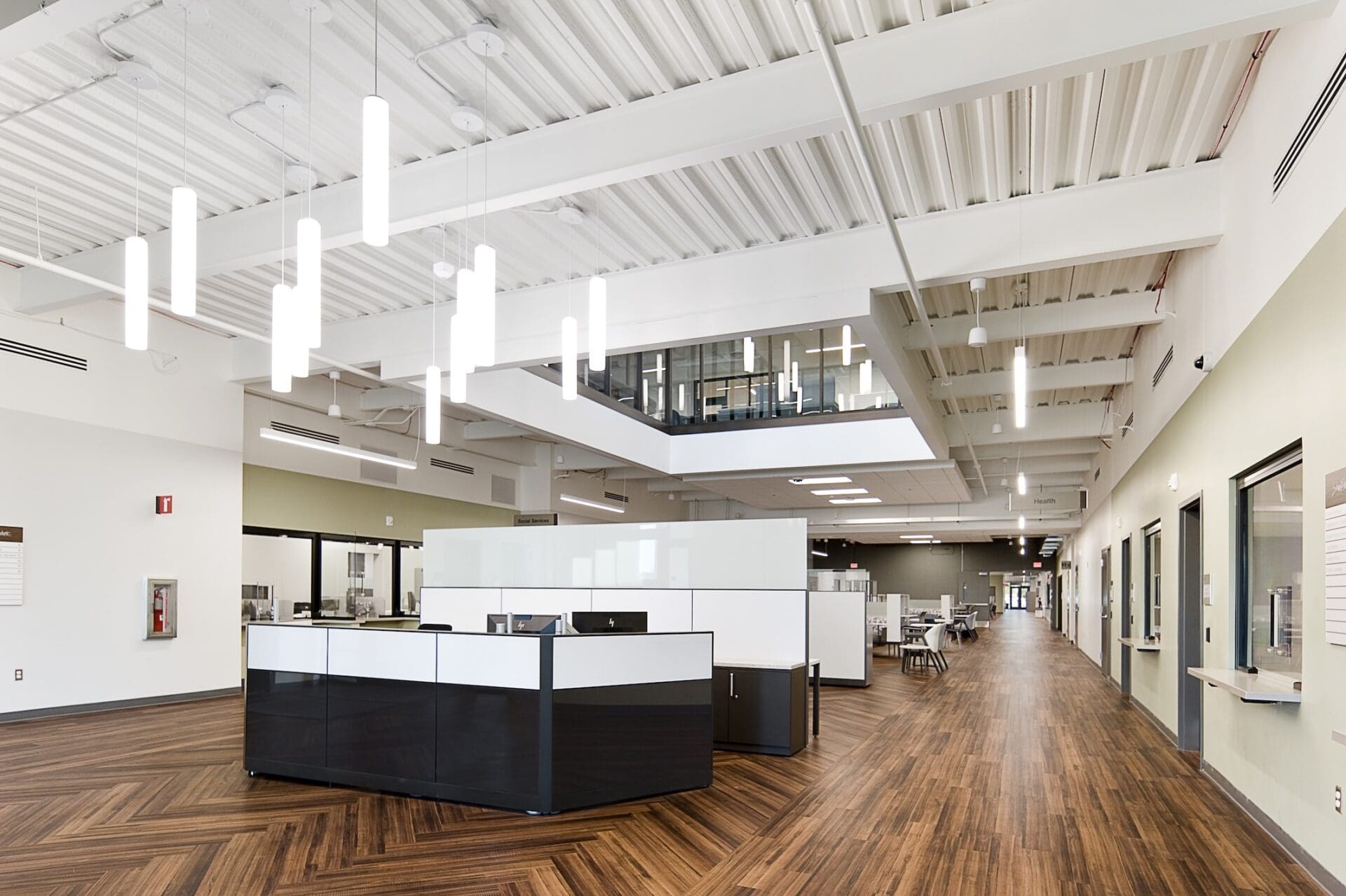
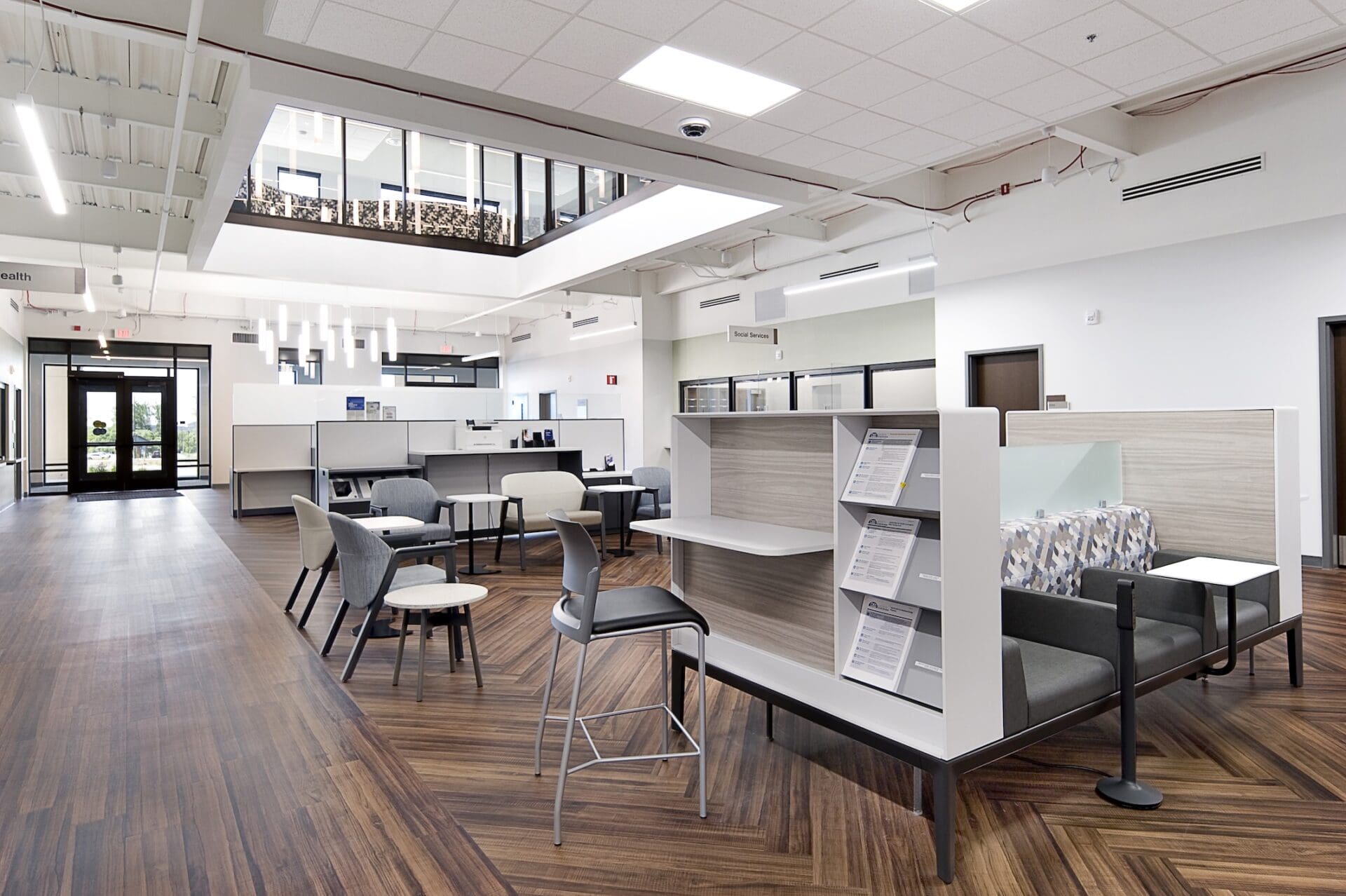
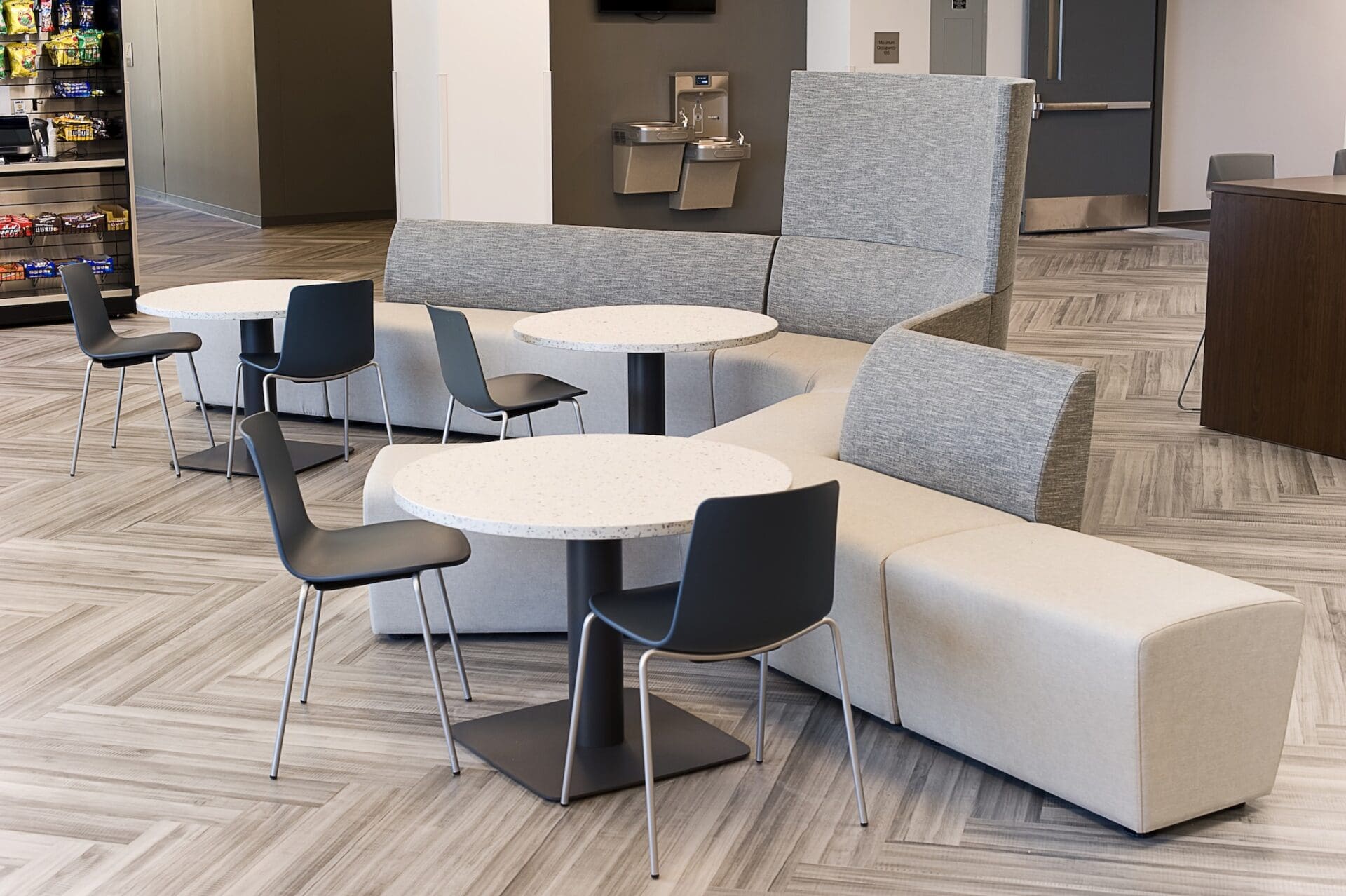
“We helped them select upholstery that will hold up to heavy traffic and included a variety of seating postures in the waiting areas,” Mandel said. “There’s love seat-styles, cafe-height seating, plus laptop-friendly tables so you can sit comfortably and work or hold a clipboard.”
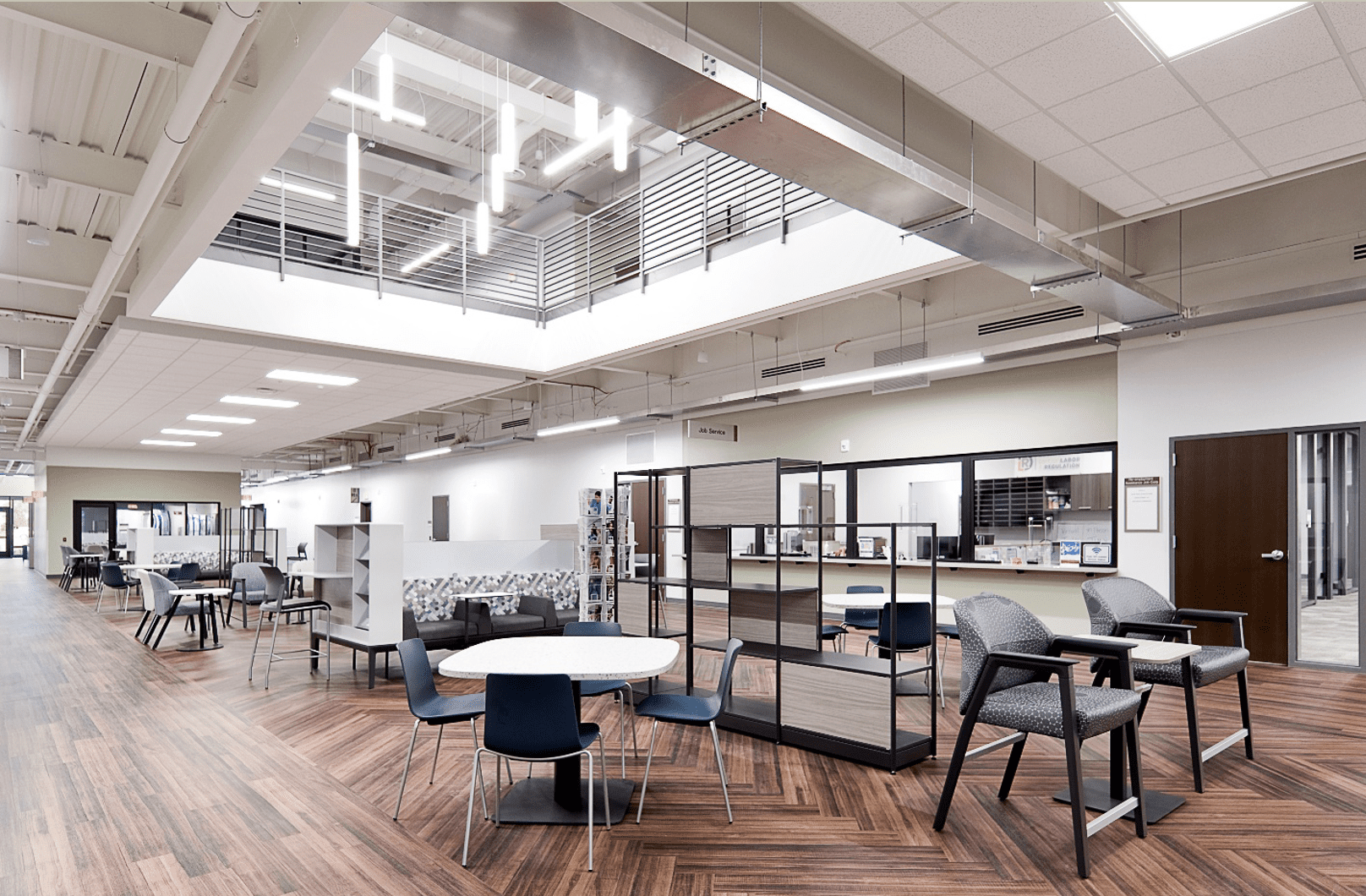
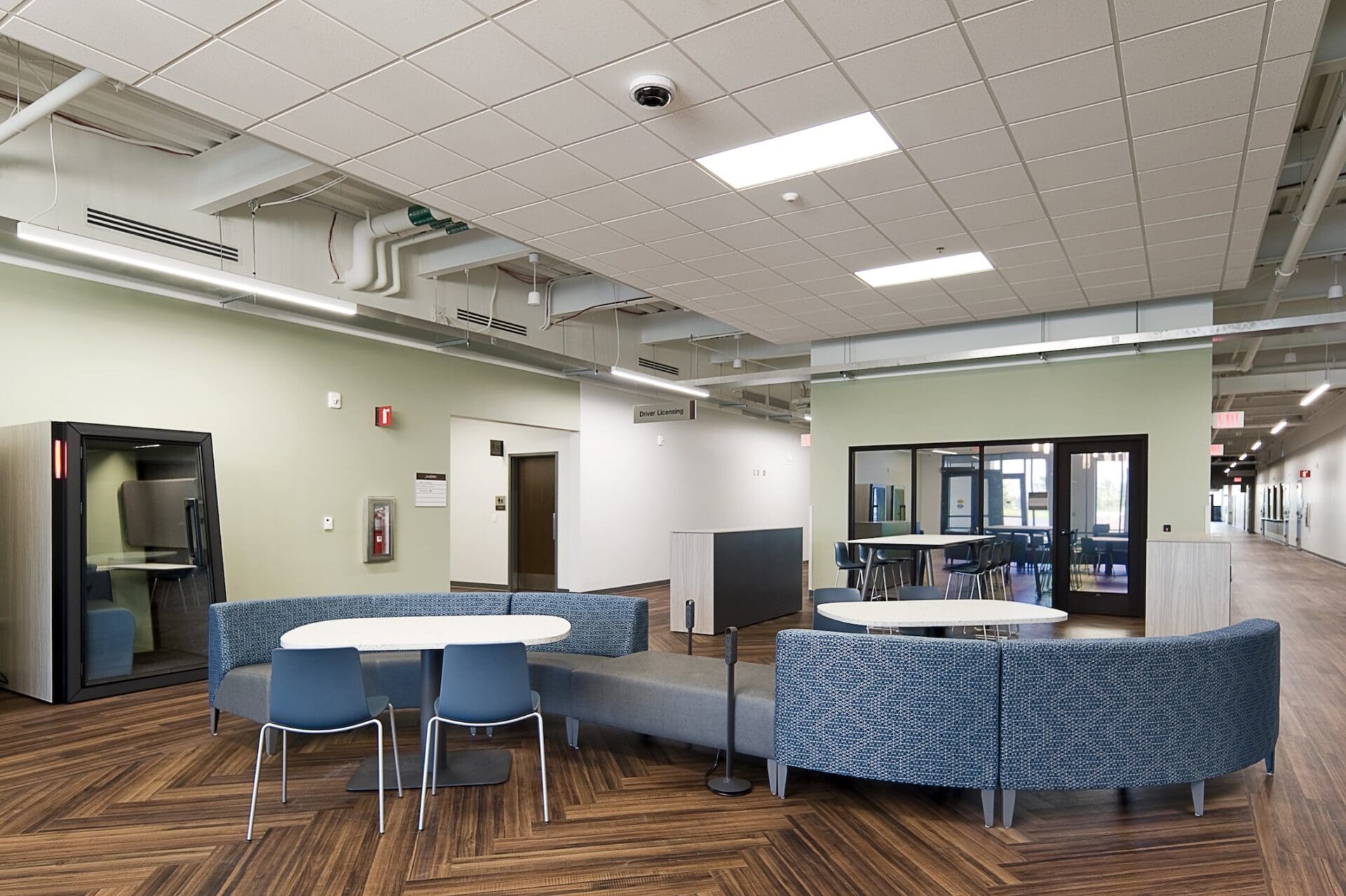
The state’s local driver’s license bureau also is in the building.
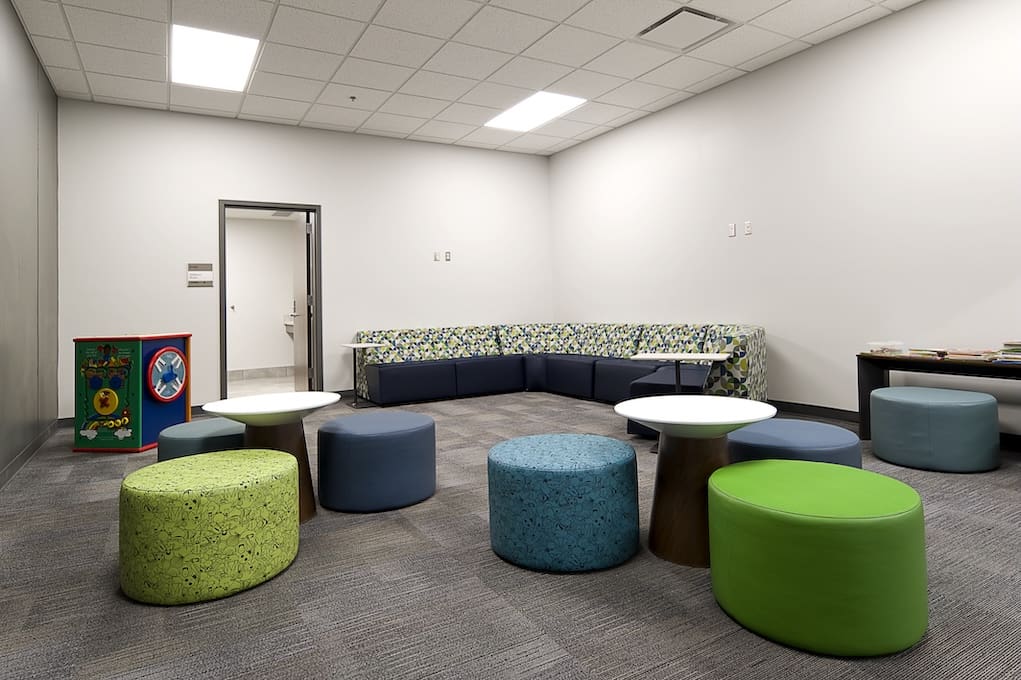
“They’re thrilled with how that turned out,” Payne said. “There are plenty of seating options, as well as a dedicated space for kids, like there is in the main lobby, which makes it comfortable for everyone.”
Having the Department of Social Services and the licensing bureau in the same building is key, Seeley said.
“Licensing is a mechanism to enforce child support,” he explained. “Now if you have a nonrenewable driver’s license, child support can be paid for in the same building. You can get your license renewed and set up a payment plan to take care of your kids in one stop.”
In areas dedicated to staff, multiple spaces are designed for common use.
“Inside the suites, you find staff in huddle spaces at almost any point of the day, as well as in multiple conference rooms,” Seeley said.
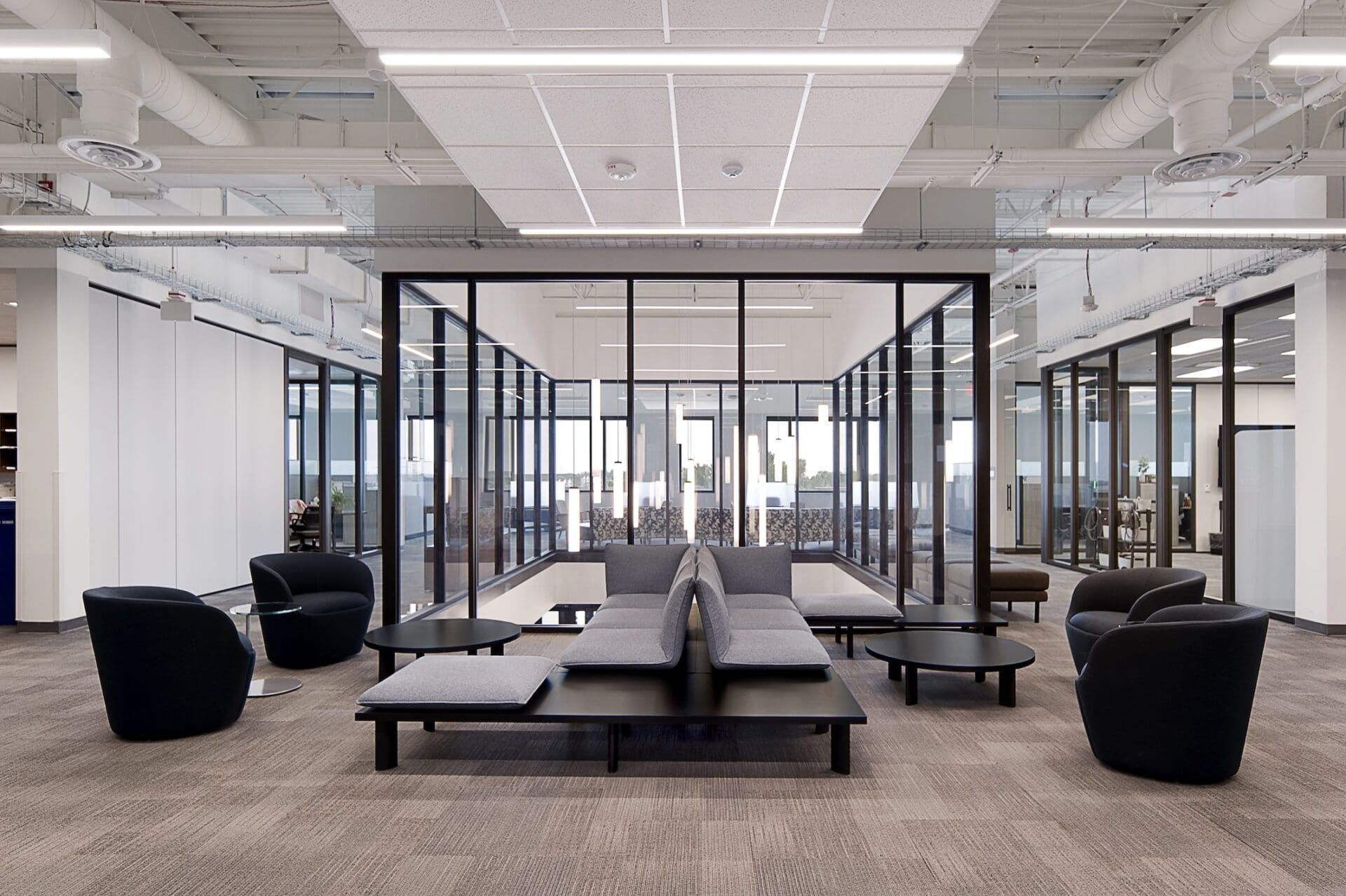
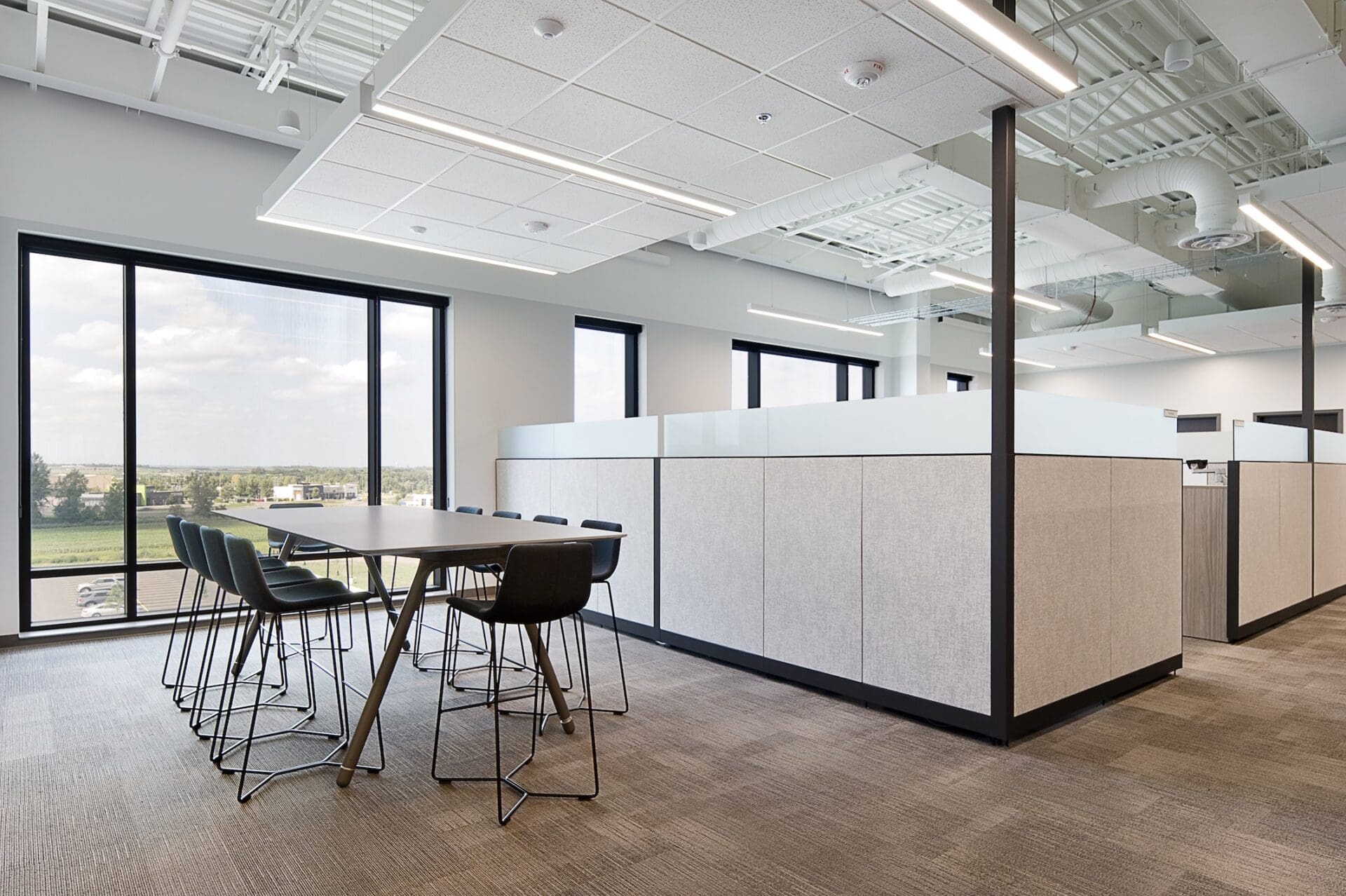
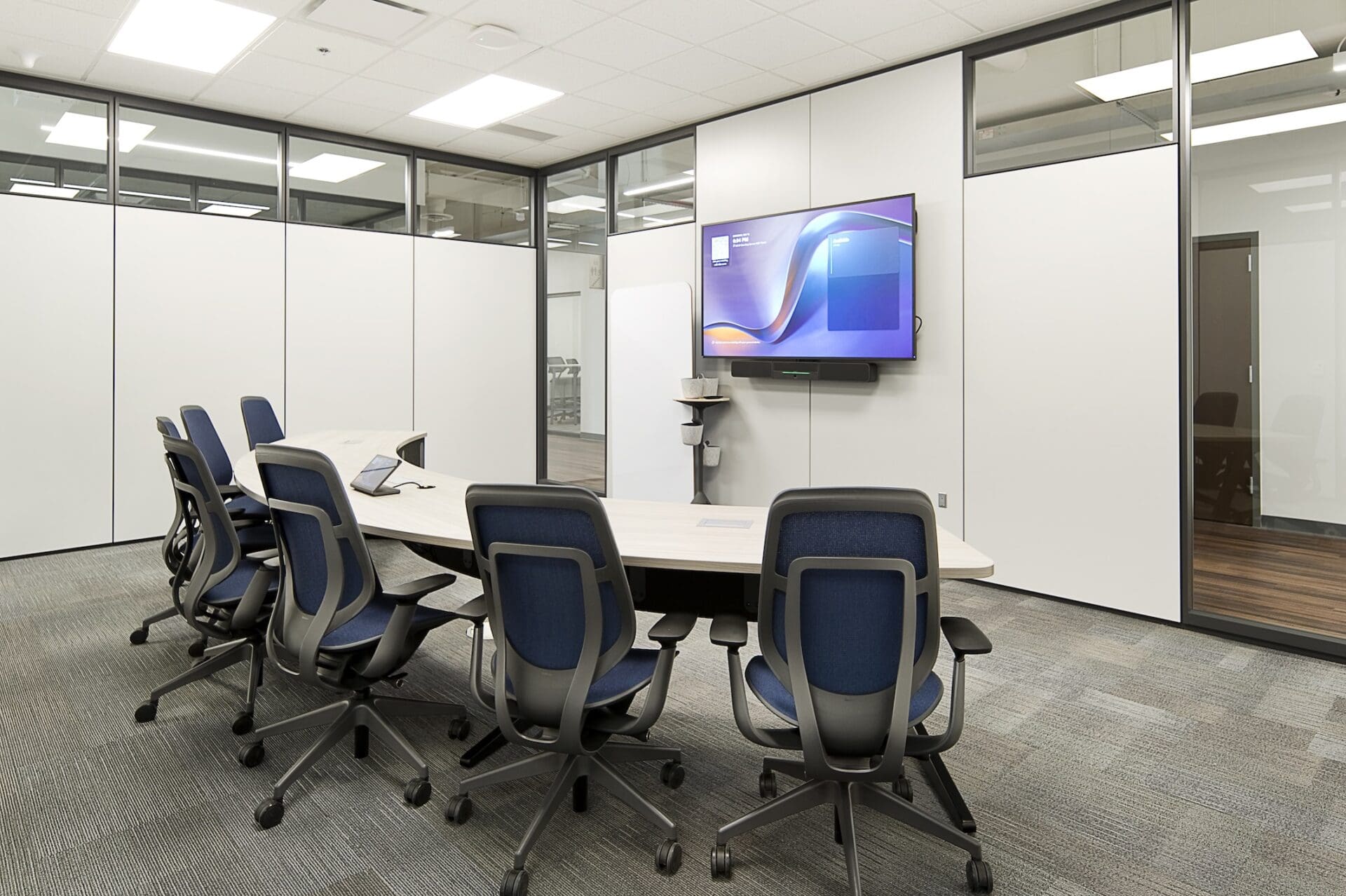
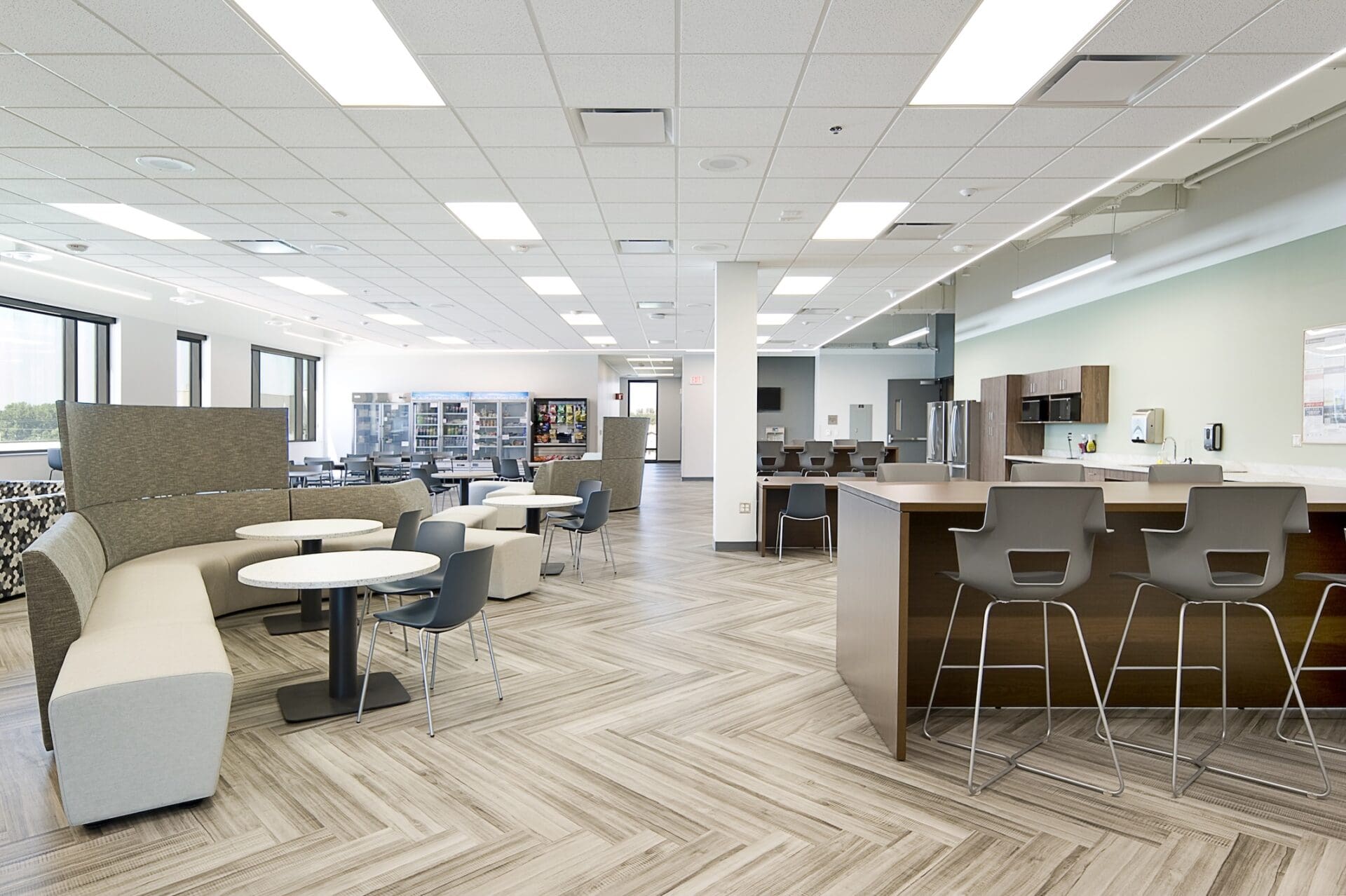
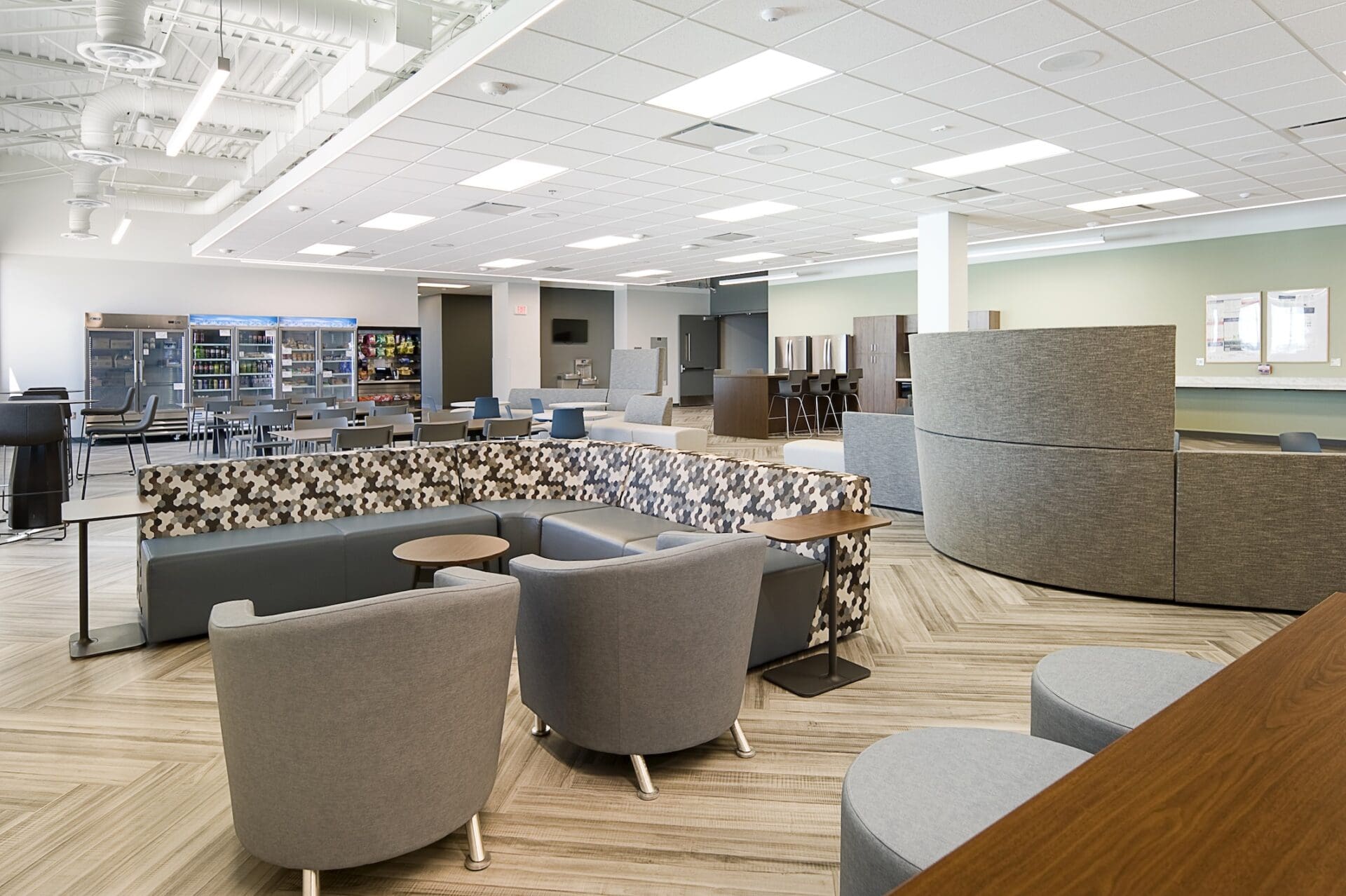
The Hub holds more than 100 people, with ample space for preparing lunch or snacks, while each office suite also has a nutrition area.
“I love The Hub, which serves as the building’s work cafe,” Christensen said. “The designers did a great job showing them what the space could be beyond just the lunch hour, and the occupants are embracing a new way of working away from their desks.”
Evolving walls
Behind the scenes, Sioux Falls One Stop expanded its scope with IOP as design for the building was finalized.
As agencies were introduced to the concept of modular walls, some of them – especially Social Services – embraced it.
“We know Social Services is where we’re going to have demand over time, and this is going to allow them to reconfigure offices and huddle suites as needed and change the wall layouts to create things like more landing space for remote workers or more workstations as needed, without having to do construction,” Seeley said.
Kaye Hansen was IOP’s interior designer who worked with the agencies that selected modular walls.
“They definitely gravitated toward the flexibility provided,” she said. “The majority of the walls are offices and collaboration spaces within the department, and they have several areas from a design standpoint where they’re already planning for future growth.”
At 4,500 linear feet, “it’s one of the largest projects Steelcase had to date at the time of order for their newest Everwall wall system,” Gaspar said.
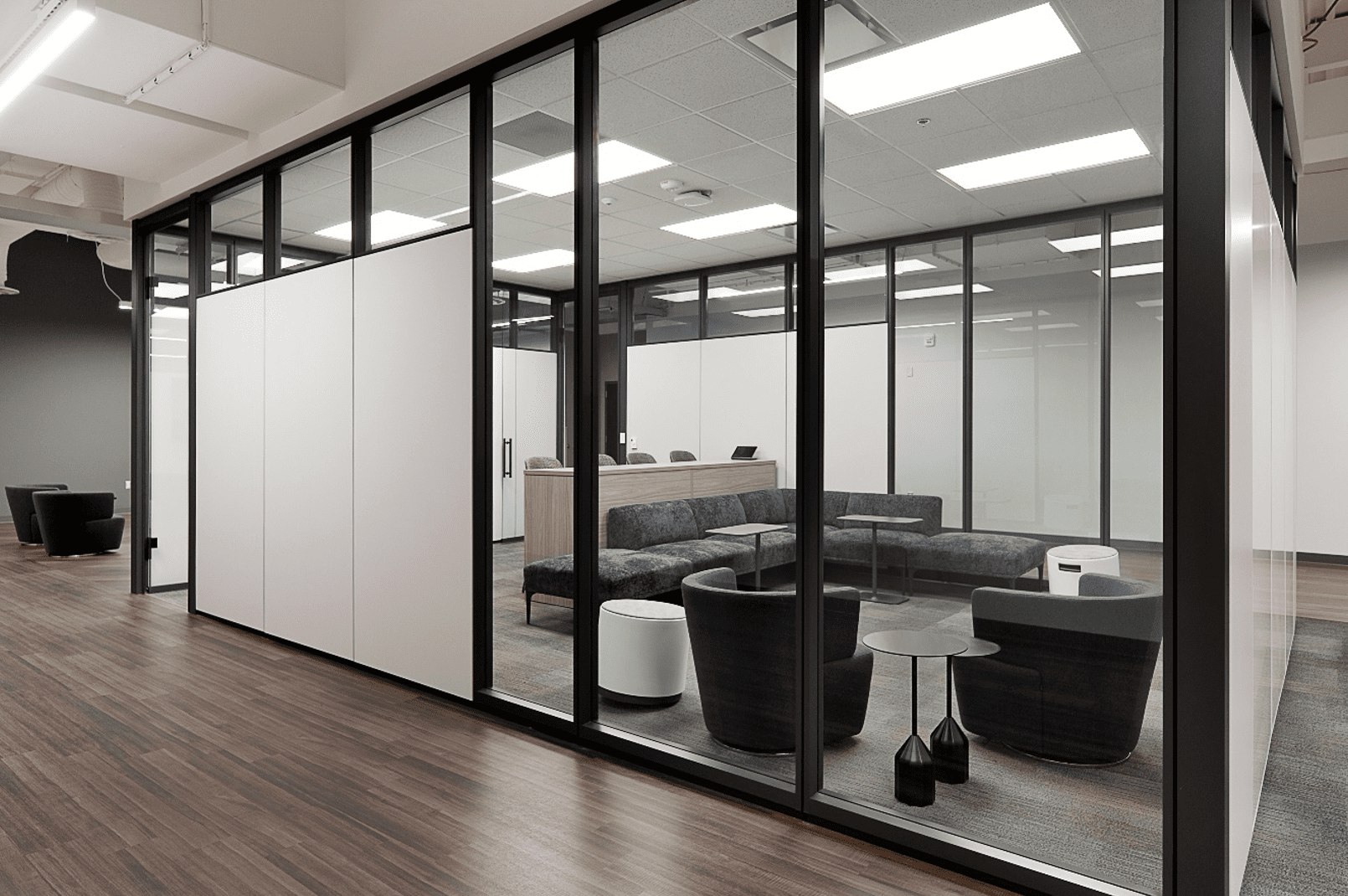
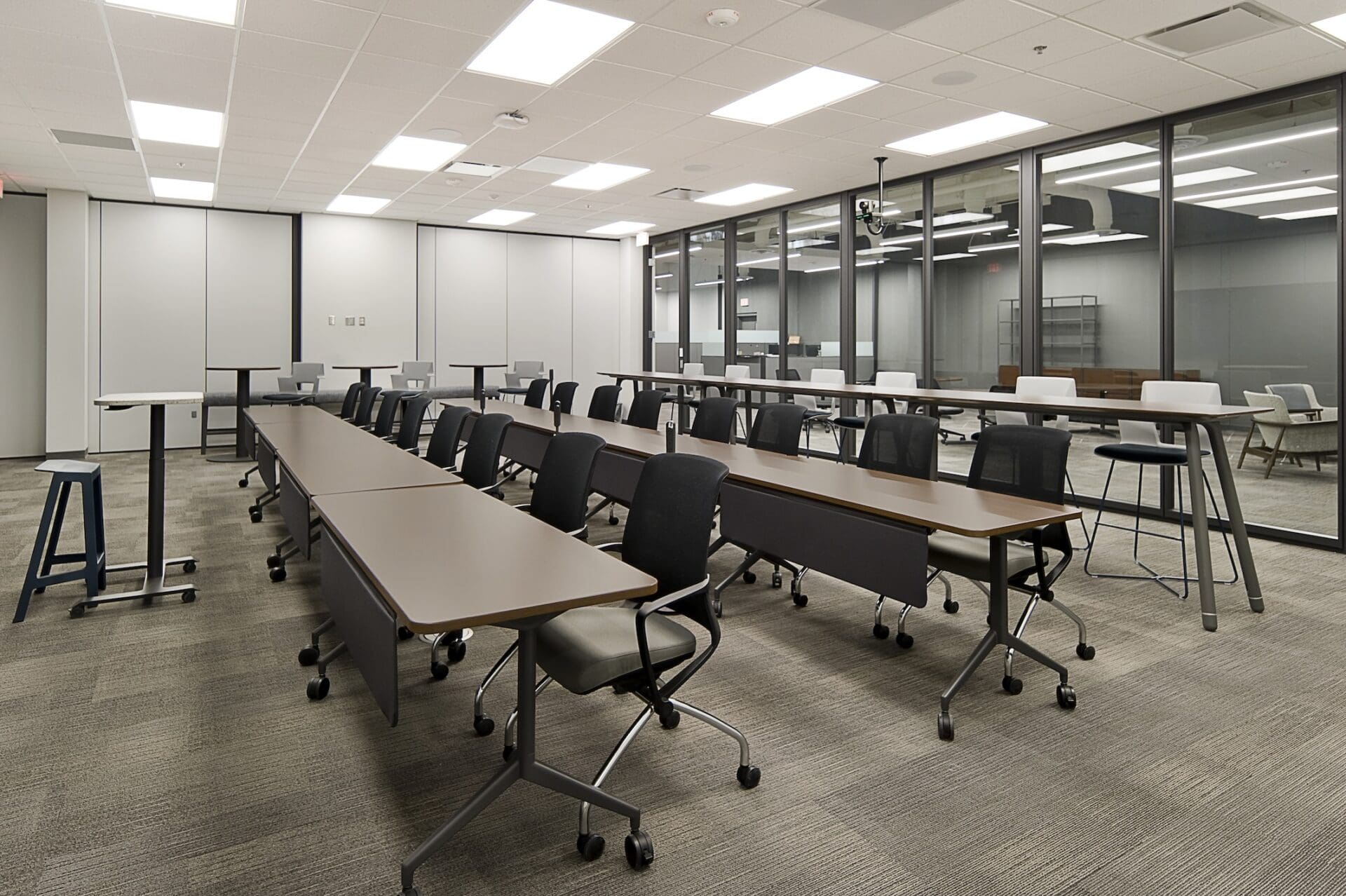
“Everwall is a prefabricated wall product that provides a nice aesthetic, excellent acoustics and fast installation. As preferences change in the future, whether it’s for more private offices, smaller offices or more collaboration space, they now can do that easily and with very little downtime or disruption to staff members.”
That not only sets up the state to adjust as needed for decades to come — it also ultimately saves time and money when the agencies are ready for changes.
“Normally, when you tear down a wall in traditional construction, it’s four to six weeks and includes coordinating several trades,” Casiello said. “We can tear down a conference room and reinstall it in another space or reconfigure a couple of rooms in two days with minimal disruption to the people working around the space.”
The approach “has made it possible for this to be a 30- or 50-year building without big structural changes,” Seeley said.
Making it happen
Even though IOP was brought into the process early, “the speed and scale of the building and the complexity of it required us to manage multiple processes to ensure everything was done on time,” Christensen said.
Weekly meetings involved IOP, architect CO-OP Architecture, general contractor McGough Construction, building owner Dream Design and multiple representatives of state agencies.
“From a logistics standpoint, it was a lot of scheduling coordination,” Casiello said. “We had teams moving in at the start of the year while construction was still occurring in other parts of the building. Generally, we commence work after the construction is substantially complete so we don’t have to be as structured on dock and lift or elevator scheduling. For this project, we had to be sure we received our semis between the contractor’s trades receiving their construction material. Overall, it’s our longest single installation ever.”
The communication “was done extraordinarily well,” Seeley said. “There were no surprises. Somehow, they kept on schedule, which is asking a lot in a building of this magnitude.”
A team at Steelcase helped “make sure we were on the radar 24/7 to get what we needed in a timely manner,” Payne added. “The state also assigned a facilities director, so through the process there was a point person, which was helpful in keeping everyone coordinated.”
Seeley witnessed the process firsthand.
“That part of their operation is amazing,” he said. “I even saw their CEO, Sheila, here one day helping put furniture together as I was giving a tour. ‘What are you doing in here in jeans?’ And she said, ‘Bringing it home.’ And I think that speaks volumes for the kind of team they have. They were all here making sure we got done on time, and not everyone would do that.”
Employee perspective
Now that almost all initial employees are working in the building, the impact of the investment is starting to be felt.
Karli Meyer oversees a team of 75 people as regional manager of economic assistance. They were among the first to move into the building earlier this year after relocating from East 10th Street.
“My previous desk was five desks cut apart and put together in a makeshift way, so this is completely updated, current space that allows me to meet with employees in a way that’s more comfortable and engaging. I was able to see the furniture options, which was really helpful to have a visual as to how it might work in your space,” she said.
“The office itself is really set up for staff to work cooperatively together. They’re grouped by workstation with their teammates, and we’ve really focused on collaborating with our sister agencies, and this building allows us to do that.”
For customers, “this modern space is a game-changer,” Meyer added. “It’s a completely different level of comfort using our services versus the previous building.”
She has noticed a difference in her team too.
“Absolutely. I check in with employees and ask what their favorite part of their role is, and 10 out of 10 lately it’s been the new space, just saying how it’s really improved morale and inspires them to deliver that high level of service. Our work is important to the public, and now we have a space that reflects that.”