Donor-funded program brings college, career advising to first high school
July 28, 2025
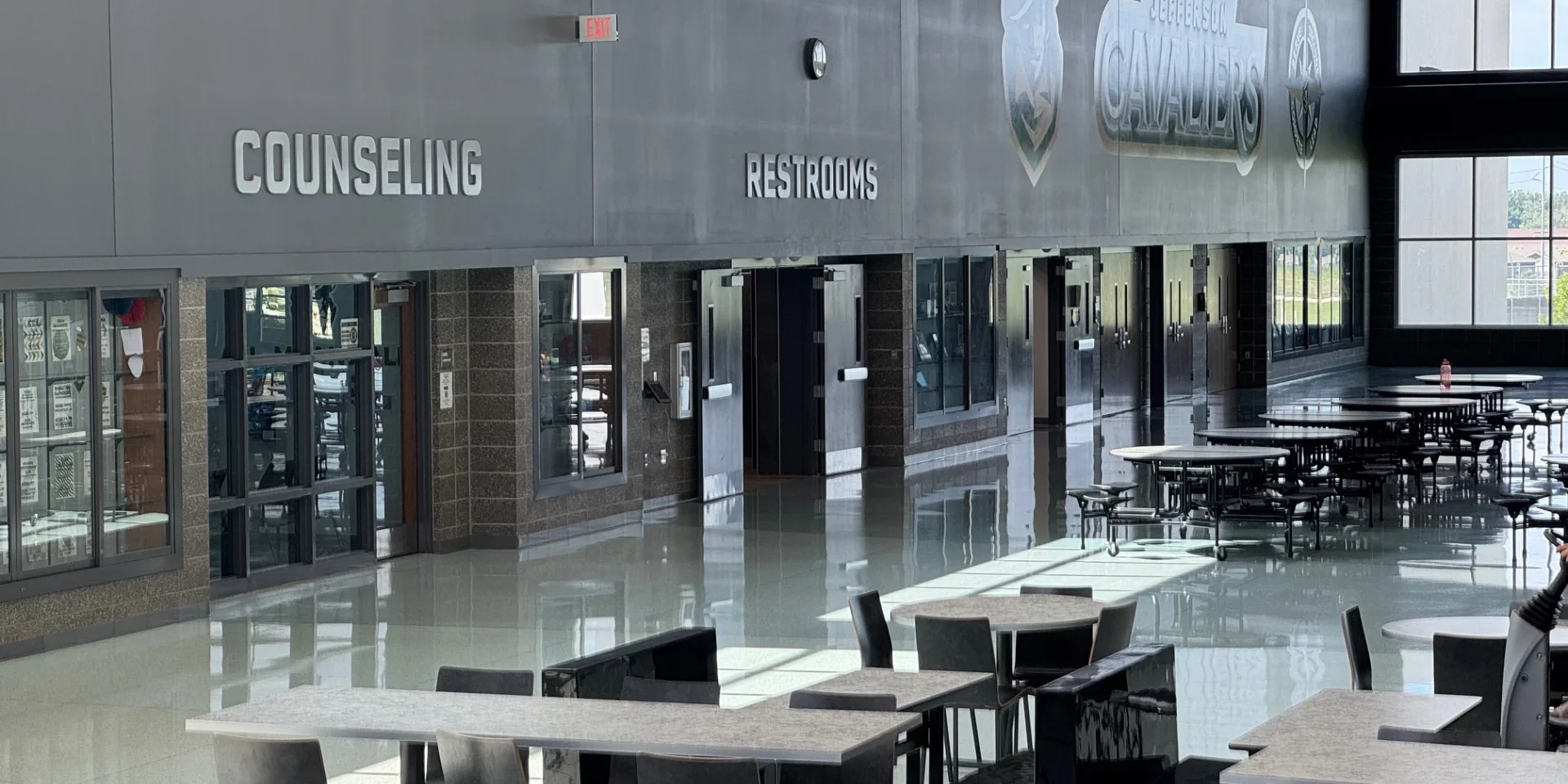
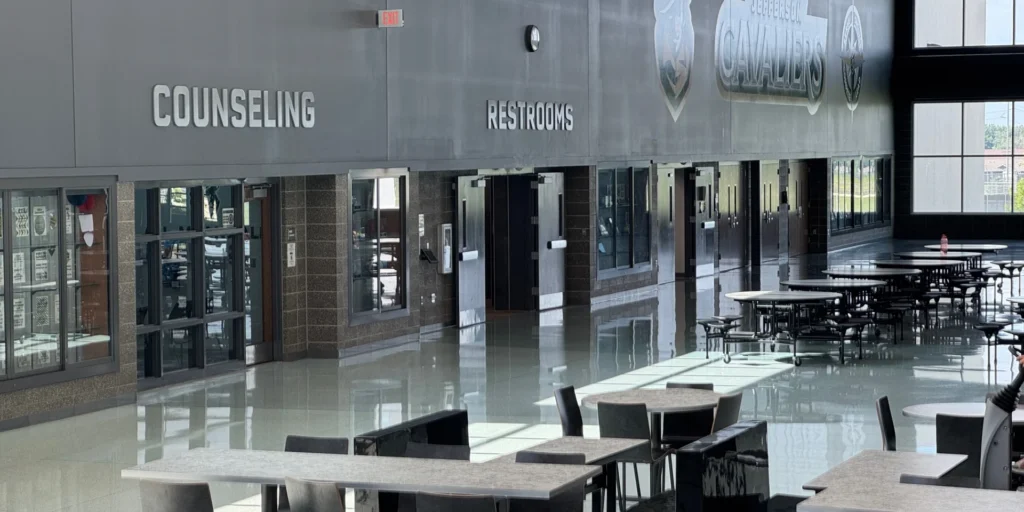
Students at Jefferson High School will have a new resource when the school year starts: dedicated college and career advisers.
A four-person team will be led by Jessica Carlson, the new director of college and career access, and is backed by a $400,000 donation to Promising Futures Fund, a Sioux Falls nonprofit with a mission of providing equity for kids in poverty.
“They will do nothing but help kids navigate their future,” Promising Futures president and CEO Steve Hildebrand said. “It’s another layer of support.”
The hope is to prove success at Jefferson and then scale to the city’s other public high schools as funding allows.
“The rate of poverty and diversity is high here, so it makes sense,” Hildebrand said.
At Jefferson, 45 percent of the approximately 1,800 students are nonwhite. Some of the city’s poorest neighborhoods send students to the school. In the class of 2024 — the most recent data available — 52 percent of students continued on to a college or technical school. The statewide average is closer to 62 percent.
“I look at it as huge potential,” Hildebrand said. “Eliminating the financial barriers, getting families comfortable to allow their child to take this next step.”
Hildebrand was motivated to bring the program forward after feedback on eighth grade field trips his nonprofit regularly coordinates to area universities. For many of the students, the trips mark their first visit to a college campus. They often leave excited and inspired — but then what?
A contact in Washington, D.C., reached out and shared a model that worked there — the DC College Access program — and Hildebrand saw how the idea could work in Sioux Falls, especially thanks to South Dakota’s new Freedom Scholarship program, which provides assistance to income-qualified students.
“That path to college is still a mystery for most people,” Hildebrand said. “College applications, finding scholarship money, figuring out where to go and what to do. And because it’s an expensive proposition, the mystery is scary for a lot of parents and students, and we want to take that mystery away. We will work very closely with families, not just students. We want to show what resources are available to make that path possible.”
While traditionally the role of helping students navigate college admissions might have fallen to guidance counselors, “their primary focus is on a lot of needs with students — whether that’s mental health, family, it all falls under counseling,” Jefferson principal Lance Siebenahler said.
“There’s certainly aspects like (talking about) what are your plans after high school, but the ability to meet with a family when no one has gone to college and walk through the steps to do that … it’s not we don’t want to do that, but it’s difficult to do all that plus the day-to-day operations.”
Carlson’s team will be dedicated to that, whether it’s explaining the free application for federal student aid, or FAFSA, exploring options for military service, helping with standardized test preparation or connecting students and families with scholarship options.
The team includes college and career advisers Jesus Gonzalez, Bradyn Medrano, Myah Selland and Kate Telkamp.
“I think it could be really impactful not only for the school district but the Sioux Falls community,” said Carlson, who previously was associate director of the academic success center at the University of Sioux Falls.
“I’ve always had a passion for trying to increase access to higher education for first-generation, low-income students. Education provides options, choices for people, and so it’s just being able to walk alongside students and families and figure out what that looks like, what they’re passionate about and break down barriers to make sure those paths are possible for them.”
The advisers will work with all students regardless of financial situation. The goal isn’t necessarily for all to attend college, either. Continuing straight to a job is one path if it’s part of a broader career development opportunity.
“This is providing kids with the opportunity to dispel myths and rumors and provide information to make a well-informed decision,” Siebenahler said. “We’re excited to partner to make sure kids are prepared to go to that next step.”
The hope is for the conversation to continue into the classroom, Hildebrand added.
“We want to start having teachers in ninth and 10th grade say ‘Why are you studying algebra today? This is how you can apply it to your future.'”
The advisers also will be able to point high school students toward allied programs, including options at the school district’s Career and Technical Education Academy and career-related programs organized by Avera and Sanford Health.
When students are interested in college, “we’re first and foremost going to talk about the 10 colleges and universities in South Dakota that provide the Freedom Scholarship,” Hildebrand said.
“If they’re interested in tech school, we’re going to talk about Build Dakota (scholarships). From a workforce standpoint … we’re going to expand the number of kids aware of them, and more kids are going to stay in South Dakota because of those scholarship programs.”
Military service also “could be really impactful for a lot of these kids,” he added. “We want to provide more opportunities if kids want to tour the Air Guard and Army base, so they can see front and center the potential careers. If you want to go to college or tech school, it’s paid for, so we want to get kids understanding this isn’t always about joining the military. This is about having a pretty incredible long-term prospect for the future.”
The advisers also will stay in touch with graduating seniors during the summer to make sure they’re getting to college or starting a job.
Hildebrand is in the early stages of raising the $1.3 million he estimates it will take to bring the program to all four public high schools for the 2026-27 school year.
“When kids are young and thinking about the future, often they don’t have a safe space to fully explore their dreams,” he said. “This isn’t for us to tell kids what to do. This is for kids to come in in a safe environment and have a discussion about their dreams and for us to help them figure out if there’s a path to that.”