Undergraduate research prepares USD School of Education students to lead in the classroom
July 11, 2024
This paid piece is sponsored by the University of South Dakota.
Spending time in classrooms, developing curricula and learning education best practices are essential aspects of preparing effective educators.
In the University of South Dakota School of Education’s Division of Teacher Residency & Education, students take their preparation one step further, engaging in impactful research projects to enhance their skills before leading their own classrooms.
“Our division has excellent programs that prepare and engage students,” said Jing Williams, associate professor in the School of Education.
“Our faculty members are also highly dedicated to preparing future teachers. They tie their teaching to real life as much as possible to ensure their students are ready for classrooms, and they design creative projects for their students to work on and encourage them to present at professional conferences.”

At the core of every successful research project is a powerful combination: meaningful support from faculty and the passion of students.
“If one thinks that undergraduate students only want to coast through the four years and get a diploma, they are wrong,” Williams said. “I see exceptional undergraduate students in my classes.”
One of Williams’ exceptional students is Lily Hilt, a rising senior majoring in elementary education. In collaboration with Williams and associate professor Susan Gapp, Ed.D., Hilt is researching strategies for K-5 teachers to align with the new South Dakota social studies standards.
The research team curated age-appropriate children’s books for classroom use and devised effective lesson plans around them. By identifying and evaluating these new resources, Hilt and her faculty mentors are empowering both current and future educators to effectively implement the new standards, aiding them in navigating this new educational landscape with confidence.
“What I find most gratifying about my research project is the potential impact it holds and the assistance it provides to both current and aspiring educators,” Hilt said. “As someone venturing into the teaching profession myself, I am particularly excited about the opportunity to apply the findings of my research and contribute to the growth and support of fellow educators.”
From Rapid City, Hilt is eager to leverage her newfound knowledge and her developed skills to serve students in her home state.
“Given that my ultimate aim is to teach in South Dakota, the implementation of the new South Dakota social studies standards holds significant importance for me in the classroom,” Hilt said. “My research experience has equipped me with valuable insights and resources to effectively teach these standards, ensuring that I can positively impact my future students’ learning experiences.”
Another elementary education student, Brooke Creviston, is engaging in research focused on a different area of education: higher education. A rising senior, Creviston is conducting a case study on ungrading in higher education, specifically at USD.
Ungrading is an alternative way to assess student learning that requires the instructor to offer in-depth feedback to students for each assignment without attaching points to it – an evaluation system used by Williams. Experiencing firsthand the benefits of this system, Creviston was inspired to explore how “ungrading” motivates college students to learn.
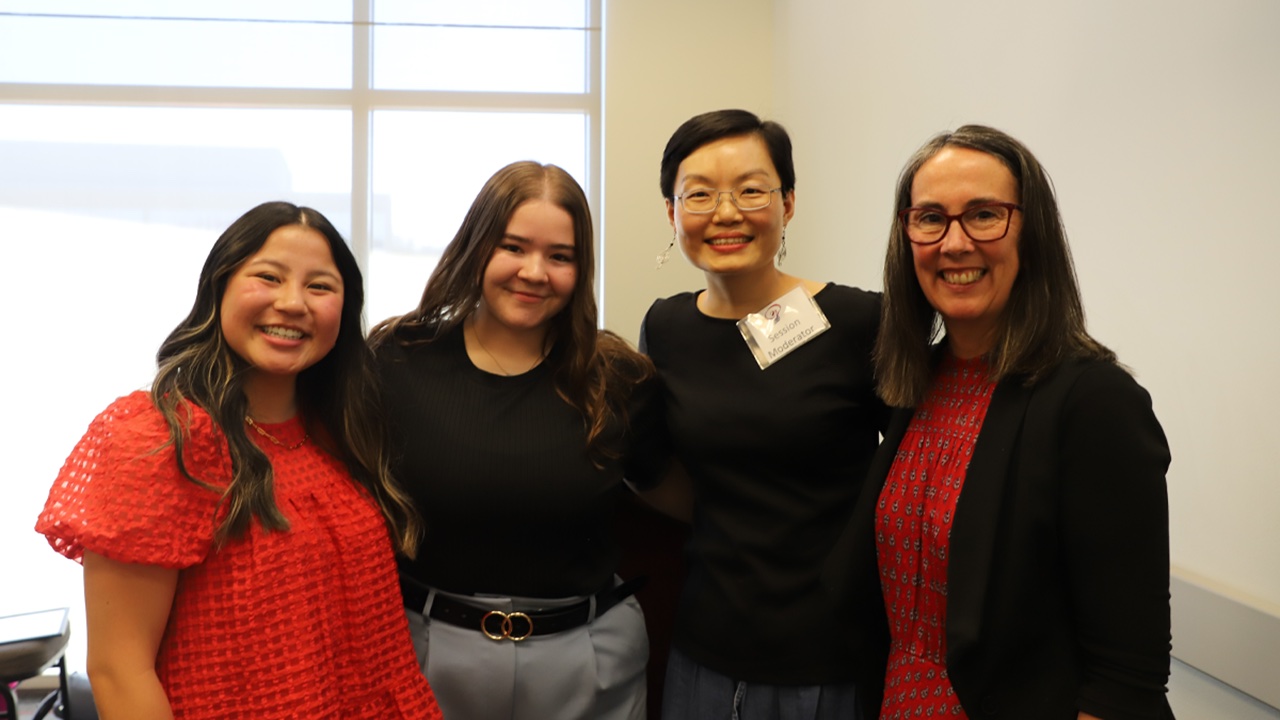
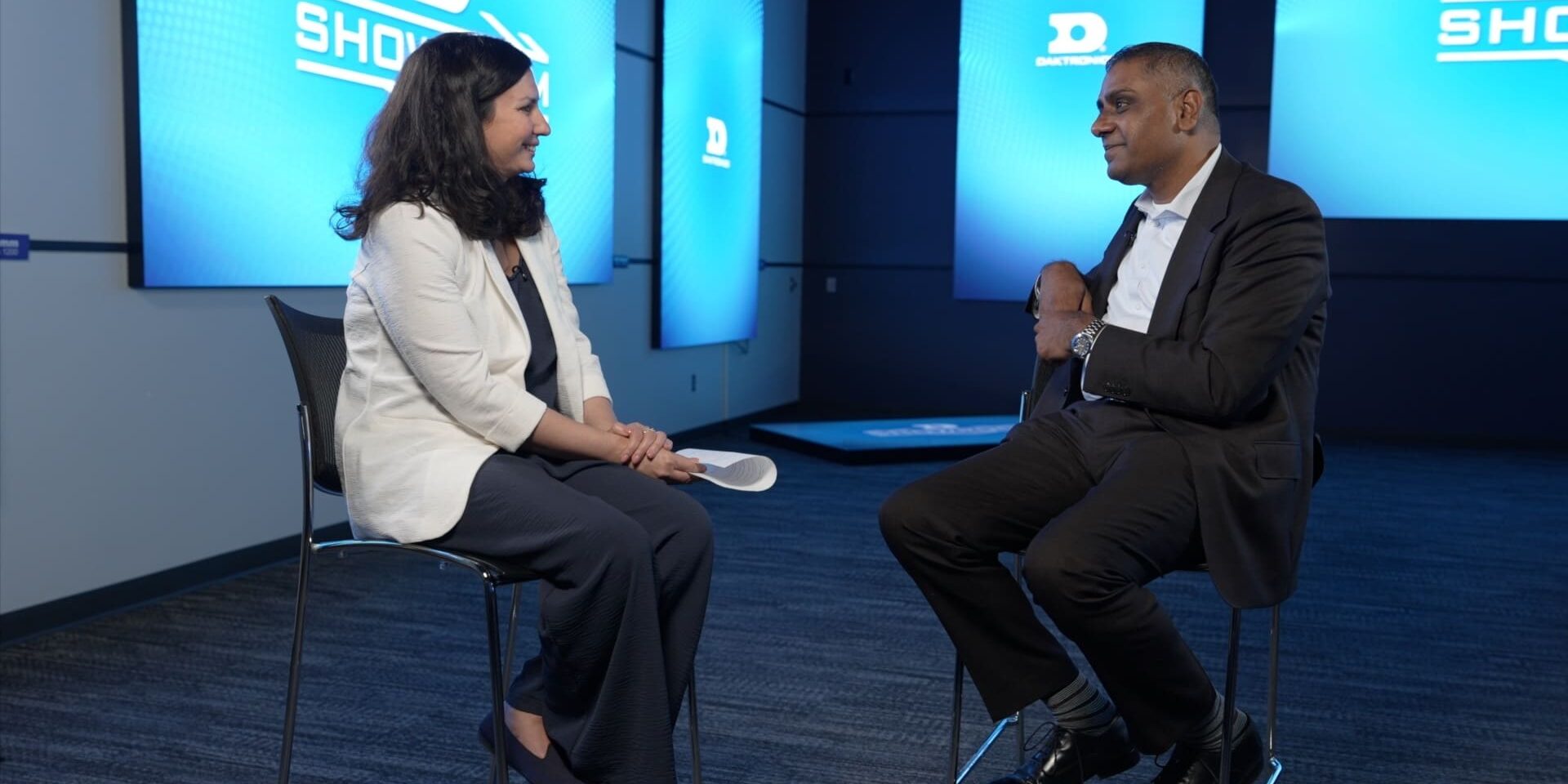
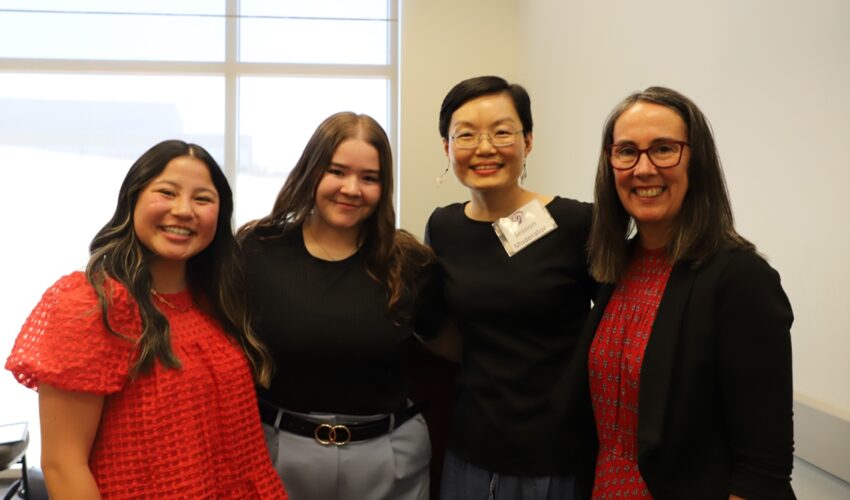
Lily Hilt, Brooke Creviston, Jing Williams and Sam Goldsmith, a doctoral student in curriculum and instruction
Through interviews with professors and students, Creviston found that participants find ungrading to be beneficial in academic, emotional and social spheres. Many students have discussed increased motivation, an appreciation for feedback-driven assessments and decreased anxiety and stress. Similarly, professors noted increased positive interactions with students and greater authentic interaction with course material.
“My research seeks to identify the most impactful grading practices for students,” Creviston said. “Rather than placing students in a state of survival in the classroom, ungrading can help ease anxiety and create a positive learning environment. I can contribute to the conversation on student-centered and authentic learning by presenting my research and informing others of what ungrading is.”
An aspiring educator from Sioux Falls, Creviston hopes to apply her findings to create an encouraging learning environment.
“Going into education myself, I’d like to create a school culture where students feel appreciated, heard and supported,” she said. “If ungrading can help us achieve that goal, I believe my research is impactful.”
Undergraduate research doesn’t just encourage students to ask questions and seek impactful solutions; it also enables them to develop independent critical thinking skills along with oral and written communication skills – assets that will set them apart in the workforce.
“In addition to advancing my studies in higher education, my research experience will undoubtedly help me achieve my goals,” Creviston said.
For Williams, supporting students in their undergraduate research endeavors is one of the most rewarding parts of her work.
“I feel lucky and grateful to work at USD where undergraduate research is highly valued,” Williams said. “I want to help undergraduate students be successful, and nothing makes me happier than seeing them achieve something they are proud of.”