Jodi’s Journal: One year later, downtown street scene has changed for the better
July 27, 2025
At first, I wondered if I was imagining it.
Maybe it was the day of the week. The time of day. The weather.
Turns out, it was none of the above.
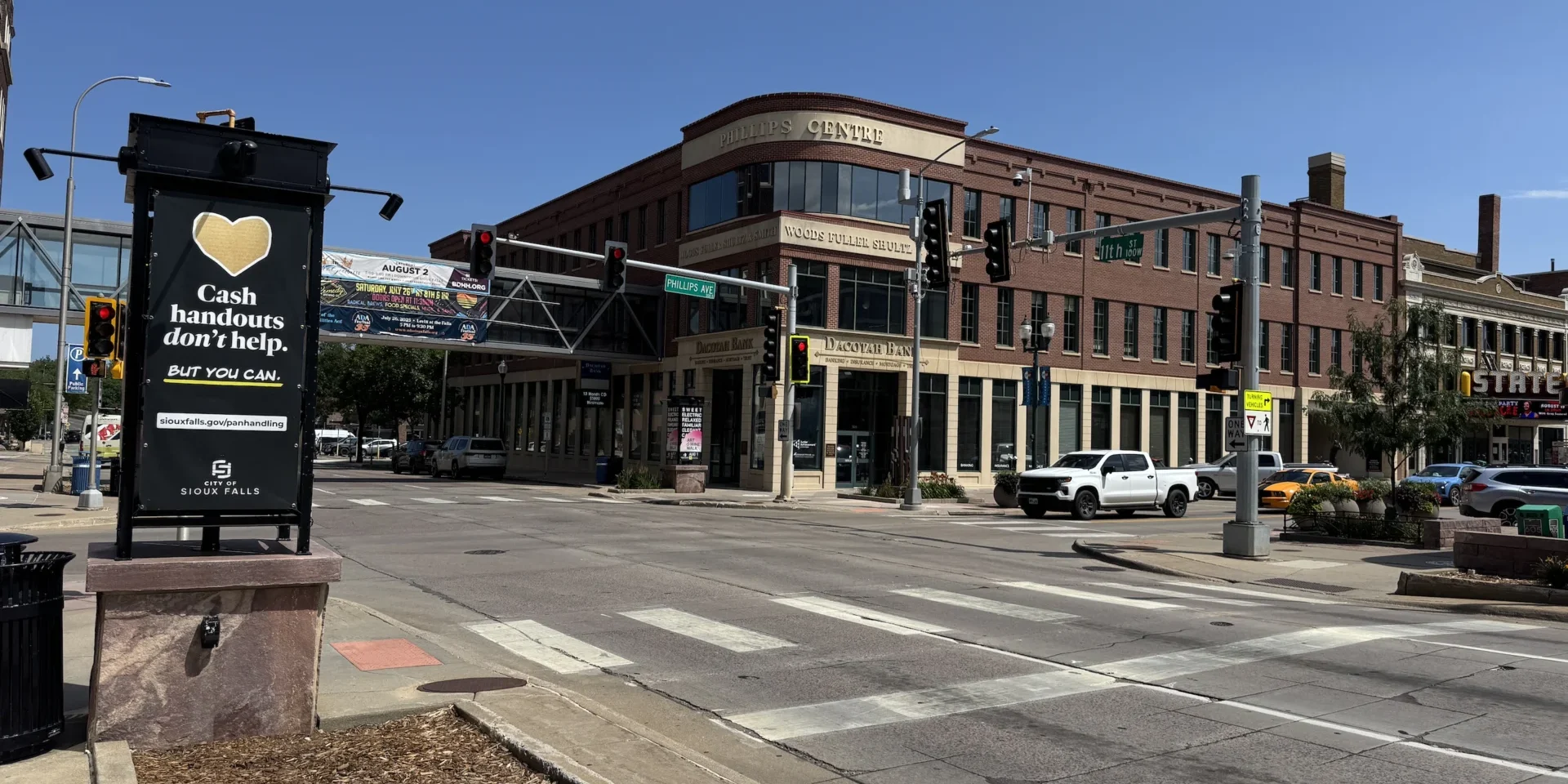
Because repeatedly, now, as I’ve walked throughout downtown Sioux Falls in essentially any direction, the difference is clear: The feeling on our streets has changed for the better.
One year ago, Mayor Paul TenHaken was in the midst of fielding more calls than he said he’d had on any issue in six years as mayor: the increased nuisance activity being experienced by people spending time on downtown streets.
“I can simplify it,” Police Chief Jon Thum said at the time. “If you are in South Dakota, you know where the fish are biting because there’s 100 boats on the lake. And as long as the fish are biting, the boats are still there. Word gets out.”
It does. And that can work in a community’s favor too.
This week, I sat down with Thum again and asked if my perception of the changes was correct.
“We haven’t seen nearly the amount of complaints and issues,” he said. “A lot of people are thanking us for our presence and commenting how downtown has a different feel this year, and that’s where we’ve been able to work together collectively.”
So what happened? A lot of things. It’s not, as Thum said, “one lever to pull. It’s a bunch of levers to pull.”
It’s a built-up street team with support both from the ambassadors of Downtown Sioux Falls Inc. and South Dakota Urban Indian Health, which is contracted by the city. It’s nonprofits like Midwest Street Medicine and our homeless shelters providing front-line care that helps connect with resources.
It’s our Police Department taking a zero-tolerance approach to behavior issues and our elected officials for giving law enforcement the tools they need to do it — banning alcohol possession at libraries, in parks and other places, whether in or out of a building, owned, leased or managed by the city and any public street, alley, highway or public sidewalk.
It’s also area businesses that heeded the city’s request to cut down on bargain-priced alcohol, and it’s increased public awareness. It’s a little tougher asking for money beneath a sign that discourages people from giving it.
“There’s a lot of proactive work … and we’ve been able to work together collectively,” Thum said. “There are stories of our nonprofits having success getting people to treatment or positive possibilities.”
It’s a critical point because my cause for celebration is not just that I think people who live, work and visit downtown now feel safer here and by extension more likely to spend time and invest here.
It’s equally because I have seen our collective approach make a positive impact on people who once spent their days loitering on downtown streets.
If you’ve not read our piece in partnership with Downtown Sioux Falls Inc. about their ambassador program, please do. It’s an eye-opening look at what their ambassadors experience daily as they build relationships with people experiencing homelessness.
Martin Dill, the lead ambassador and the original one for DTSF, deserves a lot of credit for building a team of people who work well together and have the demeanor necessary to connect with a challenging population.
“It’s a lot different this year,” he said. “Last year was crazy. We were overrun at the corner of 10th and Phillips in particular. There would be 10 to 15 people spread out between Coffea and the clock tower, and that’s just not happening right now. It’s vastly improved, and that’s on all levels.”
The stories he and his team have experienced are incredibly powerful, from the ambassador who literally struck a deal to buy a rope off a man who was about to use it to harm himself, to the one who saved a man face down in a puddle after other homeless people came to him for help, to Mike Nitz, known as “Pokey,” who delivered my most memorable anecdote of them all.
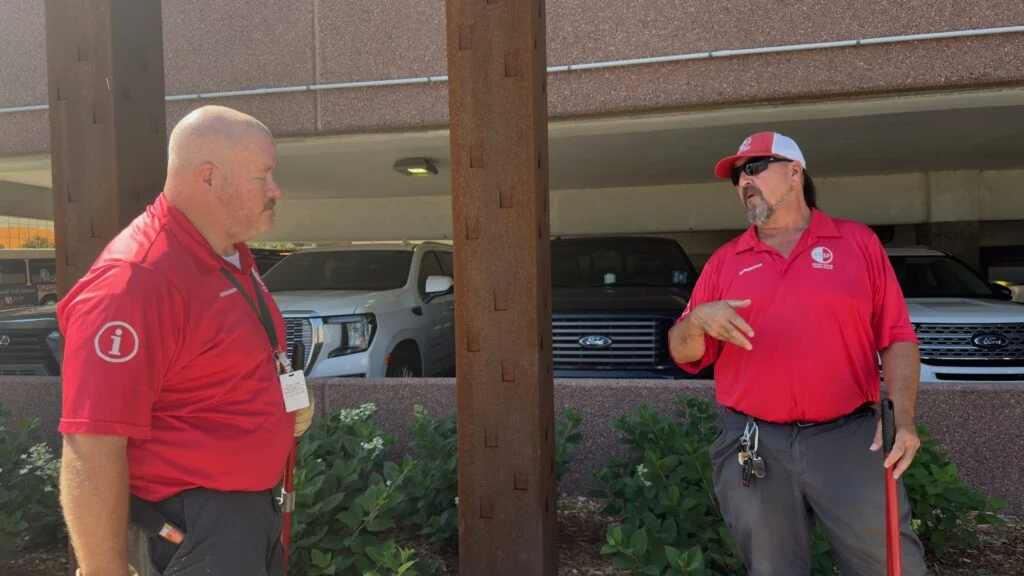
He has been an ambassador since last year. Before that, he was a machine operator, and before that, he was a lighting director who worked at the Washington Pavilion.
He knew Dill from the local music scene and decided the ambassador role was worth a try.
“I like to be honest. I can say there were times in my life when I was younger when I was a bit of a jerk. I’ve got a few strikes on the big karma wheel, and I’d like to change that,” he said. “Part of what I’ve been doing is trying to work on my positivity and helping humanity. Either we can go to war with the homeless and be fighting all the time, or we can get along and try to be friendly, and I really enjoy that part of the job.”
His first encounter didn’t exactly set the stage for that, though.
It was with a homeless man named Shawn, “who is a great guy when he’s sober,” Nitz said. “He’s even a nice guy drinking. But when he’s drunk, he hurts himself, and he’s really annoying. He was a big problem. We found him the first day I was out walking the street passed out on the sidewalk in front of one of the banks.”
They woke him up, “and he woke up wanting to fight,” Nitz said. “And tried to punch out the tarp on our Kubota. He missed and fell over, and we helped him up.”
They continued to meet up throughout the months ahead, until earlier this year, when word spread that Shawn had agreed to follow a relative to treatment in Oregon.
“The day before he went, he went around to talk to everybody downtown, all of his friends, and tell them goodbye,” Nitz said.
“He came walking up to me and said: ‘I just wanted to tell you goodbye. I’m going to miss you. You’re one of the good ones.’ And he tried to give me a hug and shook my hand,” Nitz said.
Afterward, he realized Shawn had slipped a $10 bill into his hand.
Nitz tried to call him back to retrieve it, but Shawn was gone.
“To go from him throwing a punch at an inanimate object to trying to give me a hug and tell me I was one of the good ones — I take that as a compliment,” Nitz said. “That’s one of the top things that’s happened since I’ve worked here. He didn’t so much say that I helped him, but I know that’s what it came down to. I had helped him.”
It’s about a lot more than reducing nuisance behavior, isn’t it? That’s one positive outcome, but how rewarding is it to know that we’re heading in a direction that is truly producing some win-wins?
“We by no means think ‘mission accomplished,'” Thum said. “But it really is an example of how collaborative efforts between government and nongovernment can really impact a problem and produce positive outcomes.”
It’s also a reminder that we can’t let up on what’s working — for all involved. We need to continue the level of investment, proactivity and vigilance that has led to this early encouraging result.
Downtown ambassadors bring powerful impact to Sioux Falls streets