
Jodi’s Journal: Living in a sales tax-free state

Aug. 10, 2025
For someone known to enjoy a little shopping, it has been an intriguing incentive for me.
No sales tax. On virtually anything under $500.
I’ve spent time recently in my hometown in Ohio, which happened to coincide with an expanded sales tax holiday. It began Aug. 1 and will continue through Thursday.
No sales tax is being charged on almost all tangible property, including electronics, clothing, books, home goods, sporting goods, dine-in food and pretty much anything else you’d consider buying. Most food already is exempt from sales tax unless it’s consumed on premise. The offer also applies to items purchased online and shipped to an Ohio address.
The tax exemption does not apply to services or to purchases of motor vehicles, watercraft, outboard motors, alcohol, tobacco, vapor products or any item containing marijuana. Those bigger-ticket items over $500 don’t count, either.
The event began as a tax-free weekend during back-to-school season. It expanded to 10 days last year and runs for two weeks this year.
“The timing of this year’s sales tax holiday not only supports families preparing for back-to-school, but also provides relief on other important household needs,” Gov. Mike DeWine said in a statement.
From a policymaker’s perspective, talk about a political win.
“The hardworking taxpayers deserve this well-earned break,” Ohio Senate President Rob McColley said in a statement. “It is the people’s money first, and they know how best to spend it. I strongly support any opportunity to boost the ability of Ohioans to provide for their families.”
I mean, the quote basically writes itself, right?
Reality felt a bit different.
Take Amazon, for instance. I decided to order some household items and immediately realized the starting prices had gone up considerably from what I’d paid previously. I wonder if that would have been the case if I were ordering from Sioux Falls.
As I shopped in stores and dined out, the difference wasn’t all that noticeable, if I’m being honest.
But still, maybe it was just me. I tried to do some searches on whether businesses notice a sizable increase in customers during sales tax holidays, which are fairly common in various states.
“Rather than stimulating new sales, sales tax holidays simply shift the timing of sales,” according a 2020 report from the Tax Foundation cited by journalistsresource.com, which noted the think tank has produced a version of the report several times going back at least to 2006.
Sales tax in the county my family is from usually is 8 percent — almost 2 percent higher than Sioux Falls. Again, the difference to me is not that noticeable as I travel back and forth.
But I’m also fortunate not to be on such a tight budget so as to track closely enough that I would register the savings.
It’s not a given that low-income households will see a sizable benefit from a sales tax holiday, though. Yes, it’s helpful savings on school supplies and back-to-school clothes if you’re able to afford that or need it. But households living paycheck to paycheck also likely aren’t able to upfront money to stock up on household items while taking advantage of the lower cost.
The concept still is worth thinking over, though, because I could see this resonating with South Dakotans and maybe sparking a little more discretionary spending for area businesses. I’ve found that value resonates within our community, especially when economic conditions aren’t as favorable.
At the same time, before offering any incentive like that, we need to consider raising sales tax across the board if we’re going to continue to emphasize reducing property tax.
In the city of Sioux Falls alone, one penny of sales tax can generate almost $100 million each year. An option to capture that revenue, while at the same time pairing a sales tax holiday to provide relief during the year, seems worth exploring.
Here’s how South Dakota in general stacked up nationally in 2024:
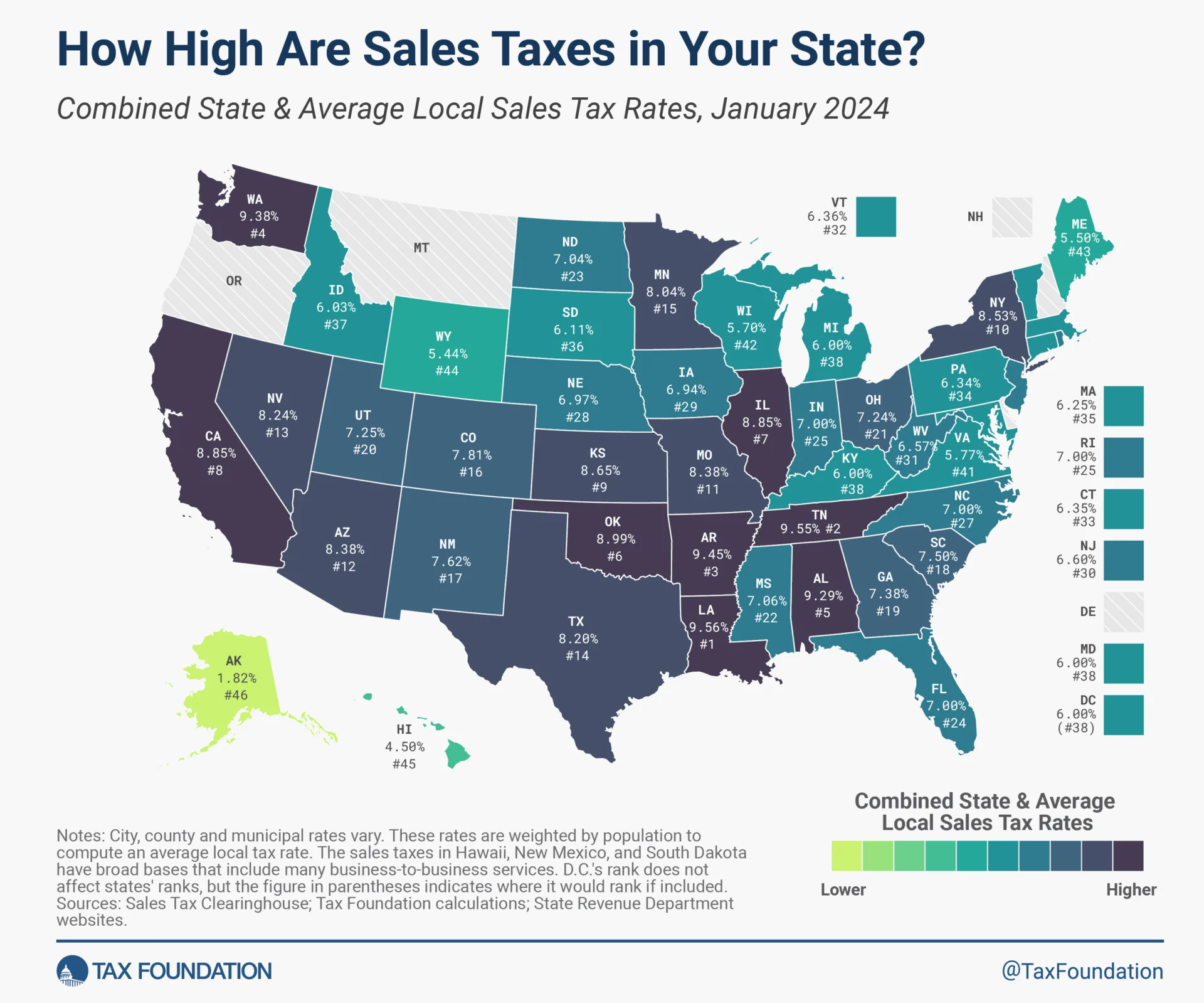
Our average of 6.11 percent, coming in at No. 36, is quite low, especially when you consider there’s no personal or corporate income tax to help fund government services.
If a holiday would help make even a slight increase more palatable all around, I’m all for it — even if I’m not sure how much the savings actually adds up.