Jodi’s Journal: Addressing street-level issues means creating new culture
Aug. 11, 2024
Business leaders talk a lot about workplace culture.
It’s what attracts and retains talent, and ultimately you can make a case that it determines organizational success.
Cities have cultures too.
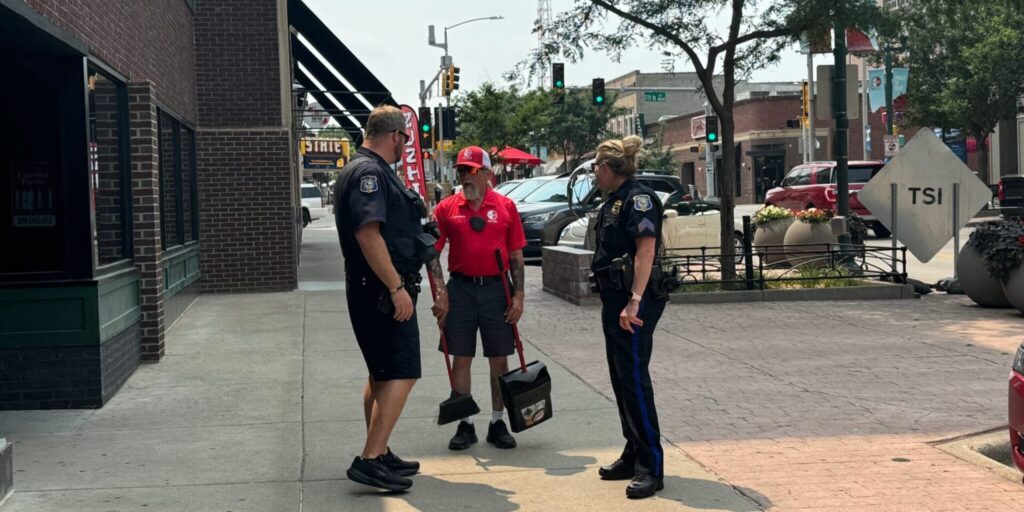
We all continually make choices that determine the culture of Sioux Falls — and last week, Mayor Paul TenHaken and Police Chief Jon Thum put out the strongest call I’ve heard to turn around an increasing issue I’ve noticed in recent weeks downtown and elsewhere around the city.
“I can simplify it,” Thum said. “If you are in South Dakota, you know where the fish are biting because there’s 100 boats on the lake. And as long as the fish are biting, the boats are still there. Word gets out.”
Because people in the Sioux Falls area and those who visit here tend to be caring and compassionate, they’re moved to give cash when asked for it on the street. The message from city leaders: It’s not helping.
In nearly all cases, the cash is going to cheap liquor used to feed an alcohol addiction, supported by easy access to cheap booze, they said. The effects, especially downtown, are counter to the culture I think most of us want to foster in Sioux Falls. Those who are downtown to live, work and support area businesses are left wondering if the risk — real or perceived because it doesn’t really matter at that point — is worth it.
I share TenHaken and Thum’s empathy for whatever in life happened to lead someone to spend most days aimlessly wandering our community, ensnared by addiction, mental illness or both in most cases.
But while we offer many resources to address those situations, we cannot, as a community, accept the resulting illegal behavior. We can’t normalize people passed out on sidewalks and in parks, harassing passersby for money, using fountains for bathrooms and threatening businesses.
I could go on for a long time with all the anecdotes I’ve heard and experienced in recent weeks — you can read some of them in this piece from last week — but the point is that now is the time to draw a hard line before this gets worse.
“We have all the tools to do this. We have a police force that cares … but they can’t do it alone,” business owner Tami Brown of The Spice & Tea Exchange said last week. “It takes all of us. We all must make the difficult choice to firmly say no to panhandlers.”
I thought she put it best when she said: “Send a message that we will not tolerate this behavior. Sioux Falls is not a place for easy handouts.”
The thing is — if loitering, excessive drinking and subsequent behavioral issues become uncomfortable or inconvenient, they do stop, or at least disperse.
I don’t see this when it’s too hot, too cold, too wet or even too crowded downtown.
So again, it’s a question of what culture are we fostering? How about this: Sioux Falls is not, as Brown said, a place for easy handouts. It’s a place where hard work is rewarded, where resources exist to help people help themselves but where the community is committed to quality of life for all and takes steps accordingly to protect it.
But, as the mayor and police chief said, this also is not just the city’s issue to address.
Cultures have outside influences too, and in this case we must look to the places and policies that are driving more transient activity into our community.
It was striking to hear that a homeless shelter in Sioux Falls found that more than one-third of its guests from May through July represented 28 states. Imagine if they’d also drilled down into how many South Dakota communities outside of the Sioux Falls metro area were represented.
Here’s the thing we know about care — physical, mental, emotional or otherwise — it’s generally best delivered close to home, near your best chance of a support system. But the fact is that in many South Dakota communities, the resources do not exist to care for what can be an incredibly challenging population.
Here’s a thought: Remember the $80 million surplus the state of South Dakota is proposing spending to pay down the cost of a new prison? What about reallocating that to build semipermanent housing for the chronically homeless in communities across the state — similar to the successful Safe Home model employed by Sioux Falls and Minnehaha County?
The state of South Dakota has an incredibly low debt level — I don’t think there’s an issue with future generations sharing further in the cost of a multigenerational project like a prison. But I do think cash immediately deployed into Safe Home-model housing with support services in communities across the state can provide the best chance at recovery for a population that otherwise seems destined to end up on the streets of Sioux Falls and Rapid City.
Thum acknowledged as much last week.
“What are the opportunities for the Mitchells, Hurons, Brookings, Watertown? What do services look like that are state funded and supported?” he said. “The easy button may be to say Sioux Falls and Rapid City.”
He said it with a touch of irony, of course, because nothing about this is easy for anyone involved.
But I give credit for strong leadership here, and I hope the community collectively responds. I encourage you to internalize this thought from the mayor:
“This challenge is small enough we can fix this,” TenHaken said. “This is a fixable problem, (but) if we don’t right now, in five years we’re going to have big problems.”
TenHaken calls for ‘tough love’ in addressing nuisance issues downtown