Infographic explains: How flexible work creates people-centered organizations

Sept. 24, 2024
This paid piece is sponsored by Click Rain Inc.
As companies strive to retain talent in a competitive and increasingly globalized job market, remote work and flexibility have become important ways to attract and keep employees who expect choice in their working location and schedule.
Sioux Falls-based agency group Click Rain Inc., which includes sister agencies Click Rain and Lemonly, believes flexibility is table stakes in today’s workplace. The company has long prioritized flexible work and people-centered culture across both its agencies, and they’ve learned a few best practices along the way.
Learn more in their infographic on the topic.
What is flexible work?
Flexible work is a model that empowers employees to work where, when and how they work best. Organizations that adopt flexible work have policies and benefits to match, as well as a culture of trust and autonomy that enables employees to shape their work around their life — not the other way around.
Flexible work can be a key part of building people-centered culture. Allowing team members flexibility to work where and when they work best has benefits for both employees and organizations. The aim of flexible work is to do what’s right for employees and smart for the company.

Where you work
Flexibility in your working location might look like choosing a certain number or schedule of in-office or remote days, or it may include open flexibility to work from anywhere any day of the week, with or without notice.
For Click Rain and Lemonly, a balance of freedom and structure has helped meet everyone’s needs and set shared expectations.
“We ask team members to indicate their expected mix of in-office, remote or hybrid days for a typical week, so they have a general idea of who’s going to be in the office. We strive for the right balance of practicality and flexibility in our approach — taking advantage of the great office space we’ve created and fostering in-person collaboration, while also empowering everyone to shape their day-to-day experience for what works best for them,” said Carissa Schoeffelman, vice president of administration at Click Rain Inc.
“Employees tell us they enjoy being in the office most when they’re surrounded by teammates, so we’ve tried to provide enough structure and open communication so that everyone knows what to expect from each other,” added Chris Prendergast, chief operations officer. “For us, it’s not about a leadership mandate or a rigid schedule. It’s about helping our whole team get the in-person camaraderie they’re seeking along with the flexibility we all want.”
The choice of where you work — whether it’s the office, your home, the neighborhood coffee shop or anywhere you have an internet connection and adequate focus — becomes more powerful in combination with flexibility in your schedule and a supportive culture.
When you work
A traditional 8-to-5 schedule and a continuous eight-hour workday just don’t work for everyone all the time. Everyday flexibility in your working hours helps accommodate life’s busyness, personal and family obligations and individuals’ rhythms of productivity and creativity. Whether it’s flexing time to accommodate appointments, errands and school pickup or breaking up your day to work when you’re at your best, flexibility in your schedule has a major impact on work-life balance.
Click Rain and Lemonly team members are free to work an 8-to-5 schedule if they like — and some do — but many adapt their working hours to their daily or weekly routine. Employees flex their time as needed to accommodate everyday obligations or breaks, and they make up time elsewhere in the week. Everyone shows up to their meetings and gets their work done without the need for a rigid, universal schedule. It’s that kind of simple, everyday flexibility that makes a real difference in people’s lives and job satisfaction.
How you work
In order to facilitate flexibility in where and when employees work, organizations may need to evolve their culture, policies, tools and norms so everyone feels supported and empowered to use that flexibility. So flexible work also encompasses aspects of how an organization gets work done.
Flexible work assumes a level of trust between everyone at a company — trust that everyone can manage their schedule and productivity wherever and whenever they’re working, trust from leaders and managers that work gets done and trust from employees that the organization fully supports and empowers flexibility.
The cultural evolution, team dynamics and changes in an organization’s policies, tools or equipment are all part of how flexible work is adopted by organizations. Over time, flexibility becomes part of an organization’s identity, ingrained in its DNA.
It comes down to offering choice
Flexibility in these areas doesn’t have to be all or nothing — having a level of choice is what’s important. The right balance will vary for each company and employee.
Options for flexible and remote work may vary by industry and type of work. For creative and knowledge workers, some level of flexibility has become widely normalized, accelerated by the work-from-home era of the early COVID-19 pandemic. Some other sectors lag behind or are restricted by their type of work or physical environment. Access to flexible and remote work may be, for the time being, mostly enjoyed by those engaged in white-collar jobs and knowledge work.
But companies that can offer flexibility should — and have good reason to — if industry trends and employee expectations mean those not offering flexibility benefits are left behind.
What are the benefits of flexible work?
Flexible work not only empowers employees to take control of their work-life balance and promotes individual well-being, but also offers benefits for the organization as a whole.

Companies who embrace remote work open their doors to talent from anywhere. Expanding their recruitment to include regional or national diversity improves a company’s chances of finding the right fit for a role because remote-friendly positions are highly competitive and appealing to employees. According to Gallup, 54 percent of office workers say they’d leave their job for one that offers flexible work time.
“The opportunity to work remotely was a huge reason why I was so excited to join the team,” said Ella Olsen, content writer at Lemonly. “Having been here a couple years and living a few hours away in Rochester, Minnesota, I really value the freedom and trust that comes with a flexible work schedule. I can more easily find an appropriate work-life balance without compromising on the quality of my work or my connections with the team.”
Flexible work also boosts employee engagement and job satisfaction and decreases turnover and burnout. Those positive outcomes translate to increased productivity and retention for employers.
“Flexibility, balance and excellence are all core to who we are as a company,” said Natalie Eisenberg, CEO of Click Rain Inc. “We don’t see people-centered culture and world-class work at odds with each other — in fact, they go hand in hand. We treat our people the best we can, pushing ourselves to continuously build on our great culture, and that makes our work even better. Our team and our clients both reap the benefits of our culture and flexibility.”
How do companies implement flexible work?
While flexible work offers many benefits for employees and employers alike, it requires effort and careful strategizing to be effective. To maximize the benefits of flexible work, companies should prioritize the remote and hybrid employee experience and embrace asynchronous communication.

When planning your flexible work strategy, consider how you’ll incorporate remote and hybrid flexibility into meetings, team-building activities and company policies. Here are some suggestions:
- Meetings: Include a videoconference link with every meeting invite, and invest in tools and equipment to enhance the remote and hybrid meeting experience, like meeting room cameras and screens so all participants can be seen and heard by everyone else.
- Inclusive events: Plan events and everyday fun in ways that allow everyone to participate regardless of their location. For example, share digital copies of any printed handouts, offer a virtual social activity in parallel to an in-person happy hour and set up social Slack channels around common interests for water-cooler conversation everyone can join in on.
- Policies: Audit your policies to make sure flexibility is ingrained in your daily practices and official guidelines. Check for any unconscious biases that favor in-office employees over remotes.
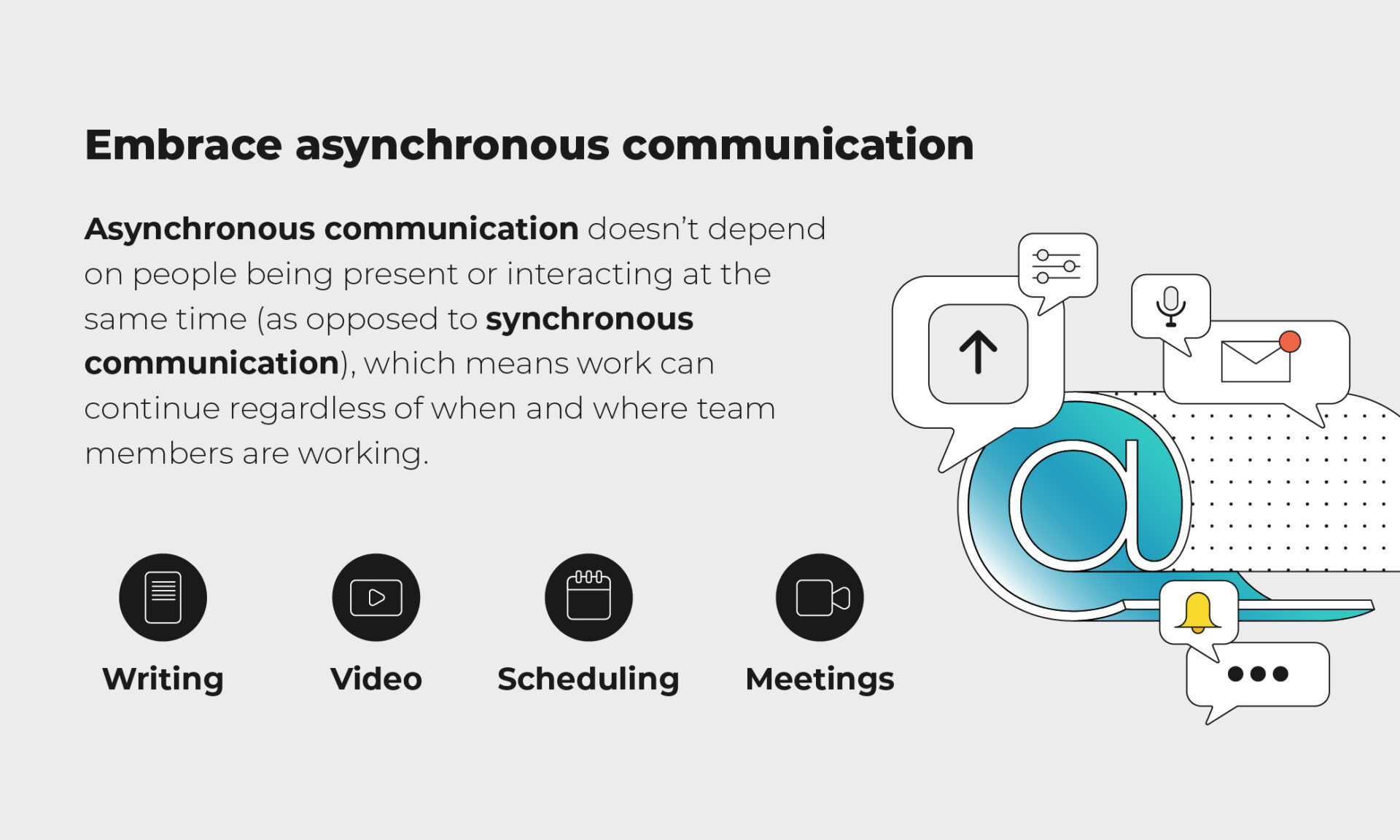
Asynchronous communication is essential to making flexible work effective. Consider how you can implement “async” communication with writing, video, scheduling and meetings.
- Writing: Written communication lets everyone read, think and respond on their own schedule. Document processes and decisions, and use asynchronous writing to replace unneeded meetings.
- Video: Tools like Loom let you share updates asynchronously with short videos and help reduce unnecessary meetings. Automated transcripts can jump-start note-taking and documentation.
- Scheduling: Encourage team members to own their calendars, including blocking off times they’ll be unreachable, either for focused work or breaks.
- Meetings: Schedule them sparingly and intentionally. Synchronous communication works best for discussion, problem-solving and team-building. Leave status updates and information sharing for asynchronous writing or video.
Flexible work at Click Rain Inc.
Sister agencies Click Rain and Lemonly implement flexible work in a number of ways through shared organizational policies and unique cultural norms. Both agencies have a history of championing progressive, people-centered culture and remote work.
“Lemonly’s very first employee was based in Serbia, and we’ve had a long history of remote team members over our 13 years, from New York to Vancouver, British Columbia,” said Amy Moore, Lemonly co-founder and executive creative director. “For a while, we were ahead of the curve in offering that remote flexibility. Now, it’s become normalized for most companies in our industry, and we think that’s a good thing. More flexibility and choice makes for a happier team, which makes for better work and a better company.”

Click Rain Inc. points to a few additional best practices recommended for other companies looking to implement flexible work:
- Clear, frequent communication: Team members use their Slack status and Google Calendar to set and share their working location and schedule, especially if they’re flexing time outside typical working hours.
- Remote-first tools and technology: The company’s innovative office space, equipment and everyday tools help ensure everyone is seen, heard and has a great experience collaborating from wherever they are.
- No-meeting blocks: Everyone is encouraged to keep Tuesday afternoons and Fridays free of meetings for focused work time.
- In-person events: The agencies prioritize occasions where their teams can come together for team-bonding and in-person collaboration. That includes bringing remote employees to Sioux Falls a couple of times a year or as able.
Having the right policies, tools and equipment, along with cultural norms that incentivize and accommodate flexibility, are all keys to making flexible work work.
“Our goal is that team members are fulfilled by their experience working here, and as a result, they’re better able to thrive in other areas of their lives too,” Eisenberg said. “That’s part of what being people-centered means to us.”
Embrace flexibility to empower success
Flexible work can be a key ingredient for a healthy and vibrant company culture. By empowering employees to work the way they work best, organizations unlock major benefits for their team and overall success.
See the full infographic from Click Rain Inc. about flexible work, created by Lemonly.