Finding a high level of colorectal cancer care — close to home
Aug. 13, 2024
This paid piece is sponsored by Avera Health.
With national accreditation, highly trained cancer experts and access to clinical trials, patients with colorectal cancer can receive the same high level of care that’s available at national cancer centers – close to home at Avera.
Each year in the United States, more than 150,000 people are diagnosed with colorectal cancer, according to the American Cancer Society. Lifetime risk is one in 23 for men and one in 25 for women. Expected to cause about 53,000 deaths this year, it’s the second-leading cause of cancer deaths for both men and women combined.
“At Avera, patients can get the cancer care they need without having to travel out of state for top-quality care,” said Dr. Jesse Guardado, surgeon and director of Avera’s participation in the national accreditation program for rectal cancer at Avera Cancer Institute.
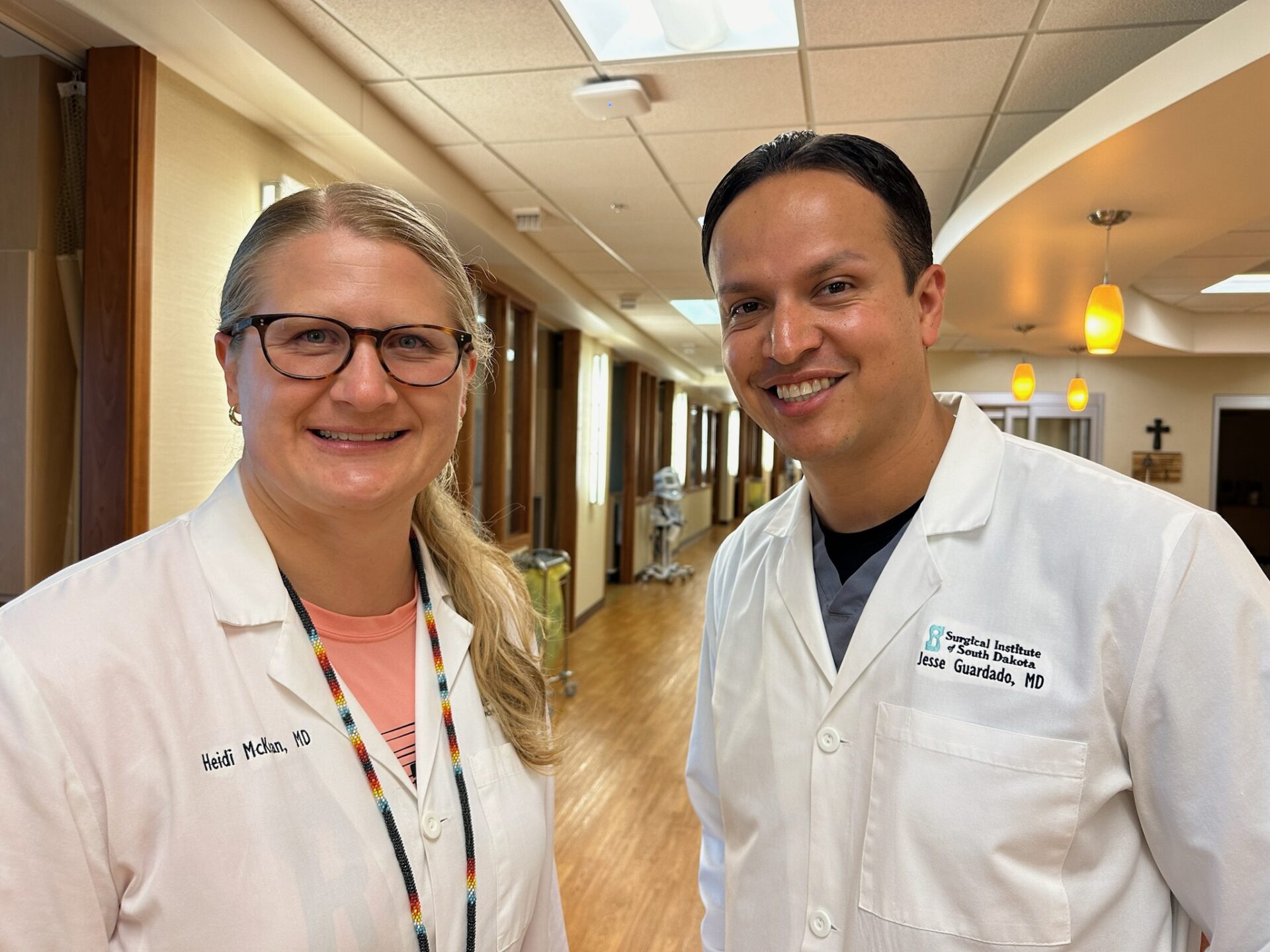
Dr. Heidi McKean and Dr. Jesse Guardado at Avera Cancer Institute
Depending on the type and stage of colorectal cancer, there are nationally recognized, evidence-based standard of care treatments that may include surgery, chemotherapy and/or radiation therapy. Patients also may qualify for clinical trials.
Nationwide, five-year survival rates for colorectal cancers that are localized or stage 1 are 90 percent, and Avera meets and often exceeds these outcomes. Yet there are more reasons that patients choose Avera.
“We have physicians who trained at world-renowned programs, and Avera patients appreciate our caring atmosphere,” said Dr. Heidi McKean, Avera Medical Group medical oncologist and Avera Gastrointestinal Oncology medical director.
“From the time patients come in the front door, our social workers, patient advocates, pharmacists, providers and infusion staff personalize every encounter,” McKean said.
Avera Cancer Institute earned three-year accreditation as part of the National Accreditation Program for Rectal Cancer from the American College of Surgeons. It’s the only regional program to achieve it. “More than two years of hard work went into earning this distinction. It’s not just a logo on a website,” McKean said. “It shows every patient will receive the highest quality of care.”
Colorectal cancer focuses on the lower abdomen, a part of the body dense with important muscles and digestive organs. Surgeries here are challenging. “The quality of surgical resection and rates of sphincter preservation are important to earning accreditation,” Guardado said. “Fewer patients face life with permanent colostomies.”
Put simply, cancer treatment can include:
- Chemotherapy: Use of drugs, either oral or injected, that are specialized to fight cancer.
- Radiation: Use of precise beams of energy to kill cancer cells and shrink or even eliminate the tumor.
- Surgery: Incisions are made to extract the tumor; part of the bowel may need to be removed to ensure clear margins. Minimally invasive procedures, with smaller incisions and less complications, are the norm.
- Immunotherapy: Use of medications that allow a patient’s immune system to help fight the cancer.
One newer approach is now standard of care that’s often recommended as a patient’s treatment plan. It’s called total neoadjuvant treatment, or TNT, and it means that chemotherapy and radiation occur before any surgery.
“Care for colorectal cancer has changed. Now, patients have chemotherapy and radiation treatment sooner. Most if it can occur closer to home. In the past, surgery in Sioux Falls was almost always part of a patient’s treatment,” Guardado said. “Now, some patients can avoid surgery and travel. Less travel means less stress.” Avera Cancer Institute’s six sites provide treatments like chemotherapy and radiation.
“After diagnosis, we try to use all possible methods to shrink the tumor. That’s TNT,” McKean said. Avera met nationally set guidelines in the shift to the TNT approach. “We’re seeing improved outcomes with this approach,” she added.
Surgery is then the next step in most cases. With Guardado, Avera offers a fellowship-trained colorectal surgeon for these complex cases. Yet in 20 percent to 30 percent of cases, the tumor is eliminated or reduced enough so that surgery is not required. “We’ve seen complete clinical response in 30 to 60 percent of patients,” Guardado added.
About 90 percent of Avera patients can get TNT near their hometowns.
“Like technology, cancer care changes rapidly. We bring those advancements to the treatment of every patient,” Guardado said.
Clinical trials can offer additional treatment options for colorectal cancer patients. Patients always are offered standard of care. “Yet clinical trials include the newest approaches for treatment,” Guardado said.
Avera participates in numerous clinical trials through the National Cancer Institute, along with leading-edge medications released in the private sector.
For example, two trials use immunotherapy to treat cancers that show abnormal or deficient mismatch repair proteins. Immunotherapy uses the body’s own defenses to fight the tumor. “We have about 5 to 10 percent of patients who qualify, and we’ve found great results for them,” McKean said.
“It’s important to realize that all the effective cancer drugs we now have were once a clinical trial,” she said.
Thanks to medical research and clinical trials, treatments and medical expertise continue to evolve. “We want to find better ways to treat cancer, always looking for a way to give more options or ones that are less difficult for the patient,” McKean said.
Everyone can help prevent deaths from colorectal cancer by getting recommended screenings. Screening colonoscopies are recommended beginning at age 45.
Learn more about cancer care at Avera.