Class projects open eyes to AI business possibilities
Feb. 23, 2022
This paid piece is sponsored by Dakota State University.
Caleb Nielsen hadn’t really been exposed to artificial intelligence before coming to Dakota State University, but coursework at the Madison university has shown him the opportunities for businesses to use the technology.
A computer information systems major from Walton, Nebraska, he sees that AI provides “many opportunities for businesses, ranging from cost savings to increases in productivity.”
Ethan Pinto, a data science major from North Carolina, agrees.
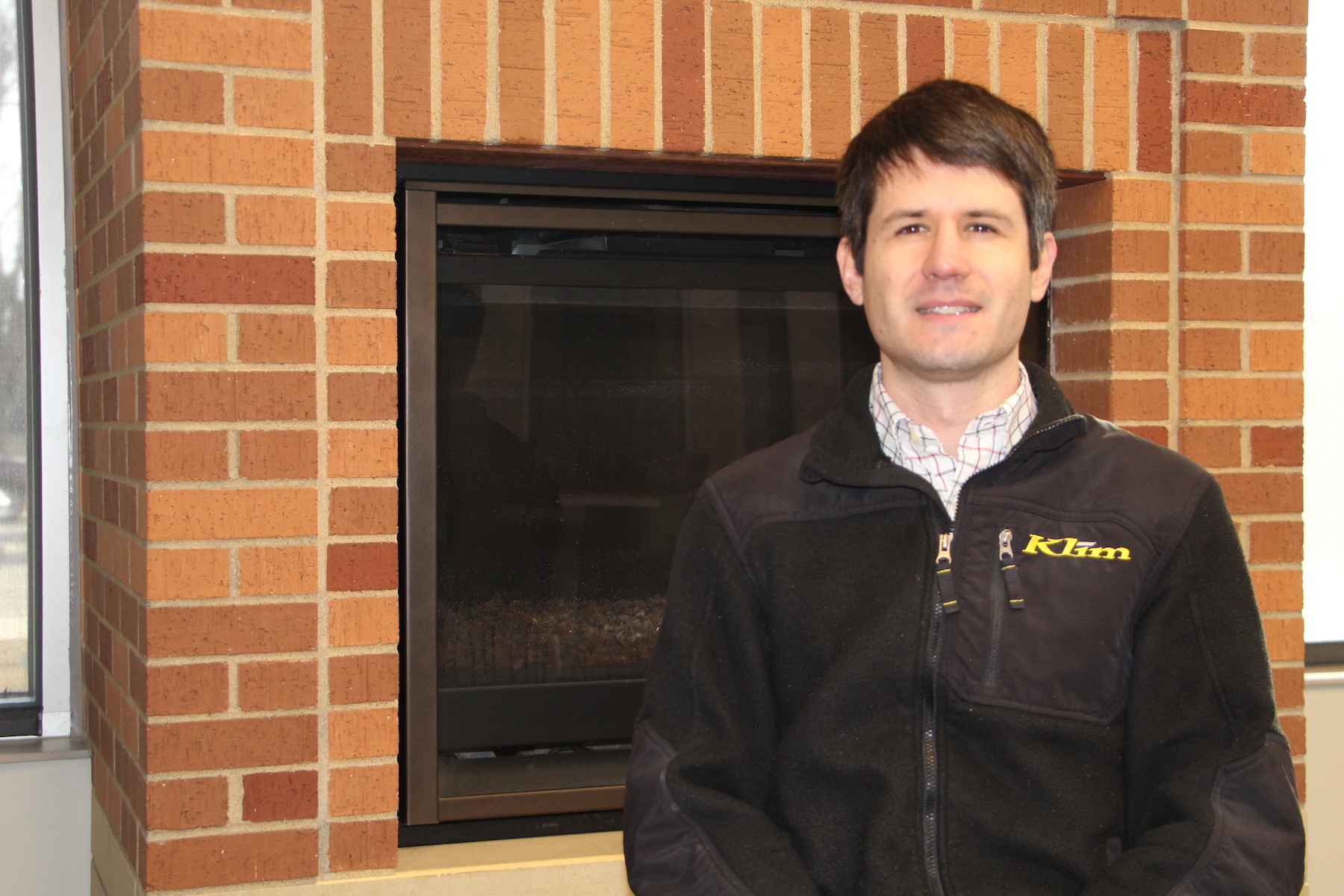
“AI — and analytics as a whole — is opening up a lot of opportunities for businesses” by allowing them to utilize the massive amount of data they are storing, the big data part of business intelligence, he said.
“Forecasting demand, for example, is extremely accurate at detecting consumer patterns, allowing businesses to operate more strategically,” Pinto added.
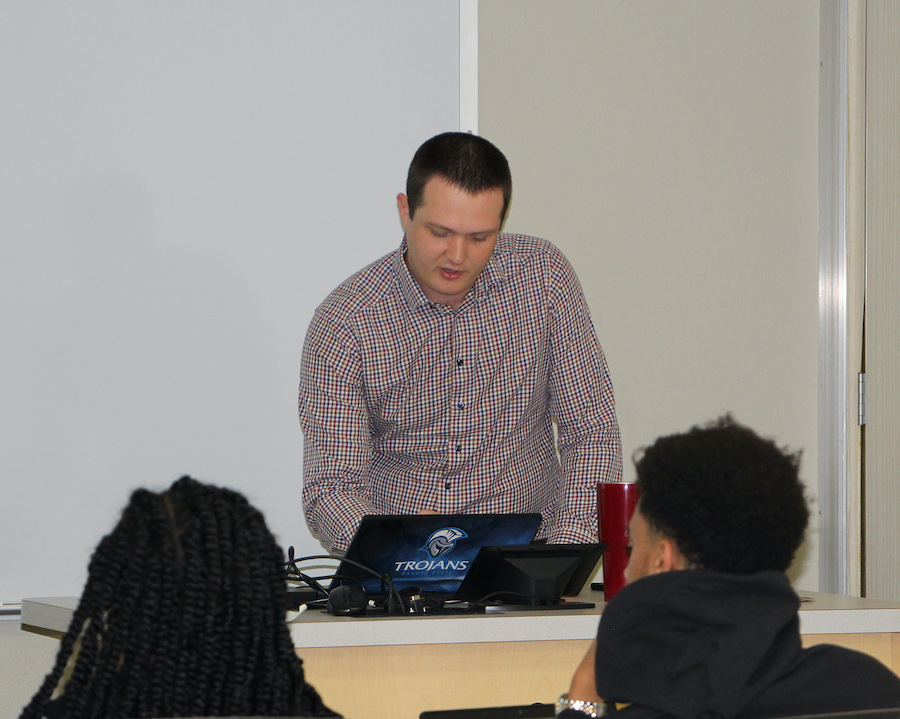
Andrew Behrens, instructor of information systems in the College of Business and Information Systems, said it is important to train students to learn, implement and evaluate models on data.
“This enables them to think critically about a business problem and try and solve the business problem.”
“While we are still in the relatively early stages of AI in the workforce, there will be plenty of opportunities for businesses to incorporate these models, from resume screening automation to self-driving cars,” Behrens said, so “students can work on a variety of different problems in a variety of different industries.”
In Behrens’ course on predictive analytics, students work on a project to explore these options.
Last fall, Nielsen explored a business problem, studying automation of a loan approval process. Throughout the project, he learned that cleaning the data was the most important part, he said.
“Useless data creates unnecessary noise for the model,” Nielsen said, adding that some data isn’t always complete. “Some values are empty or null, so I needed to determine how (or if) I should fill that data. Not knowing how to deal with null values can corrupt the data you’re working with, and corrupt data leads to corrupt models, which hurt more than help.”
Pinto said the class in predictive analytics, business intelligence and big data showed him the data analytics field and its possibilities. For his project, he chose to look at ways AI could improve health by studying CPAP therapy for sleep apnea patients.
“Sleep apnea is a serious sleep disorder, which causes a patient’s breathing to repeatedly stop and start during sleep,” he explained. “I used Python (a programming language) to analyze the patients’ CPAP data and determine contributing factors to recurring apnea events.”
He fed the data into several AI models to predict apnea occurrences, and the results identified contributing factors that could be used to improve the patients’ quality of sleep.
“The project provided me with an opportunity to apply Python programming and predictive analytics to a real-world problem,” Pinto said.
“I think the most exciting possibilities of AI and deep learning are in health care. With AI and the amount of patient data now available, powerful tools for automating health risk assessments and disease predictions are already being used. In that regard, AI is saving lives, and I think there’s nothing more important than that.”
Models and other forms of automation are being implemented in the health care and financial sectors, Behrens said, but “just implementing the models are not enough. They need to be evaluated and tested to ensure they are doing what they are supposed to do. That is one of the crucial parts of solving these business problems,” he said.
There is another question with AI, the concern that the technology will replace people and take away jobs. The students don’t see this.
“AI, as we know it, will always need a human element, and many jobs can’t be automated,” Pinto said.
Nielsen worked on task automation projects during a summer internship with a local health care provider.
“Our goal wasn’t to take away or replace jobs, which we made clear to upper management,” he explained. “Our goal was to make our co-workers’ jobs easier,” freeing up time for them to focus their energy on more important tasks.
“The goal of AI is to upgrade jobs,” he said.

Nielsen is studying abroad in Scotland, but after he graduates in May, he plans to earn a master’s degree in business analytics at the University of Nebraska at Lincoln. After that, he’d like to work in the data sector.
Pinto’s career goals are in database administration.