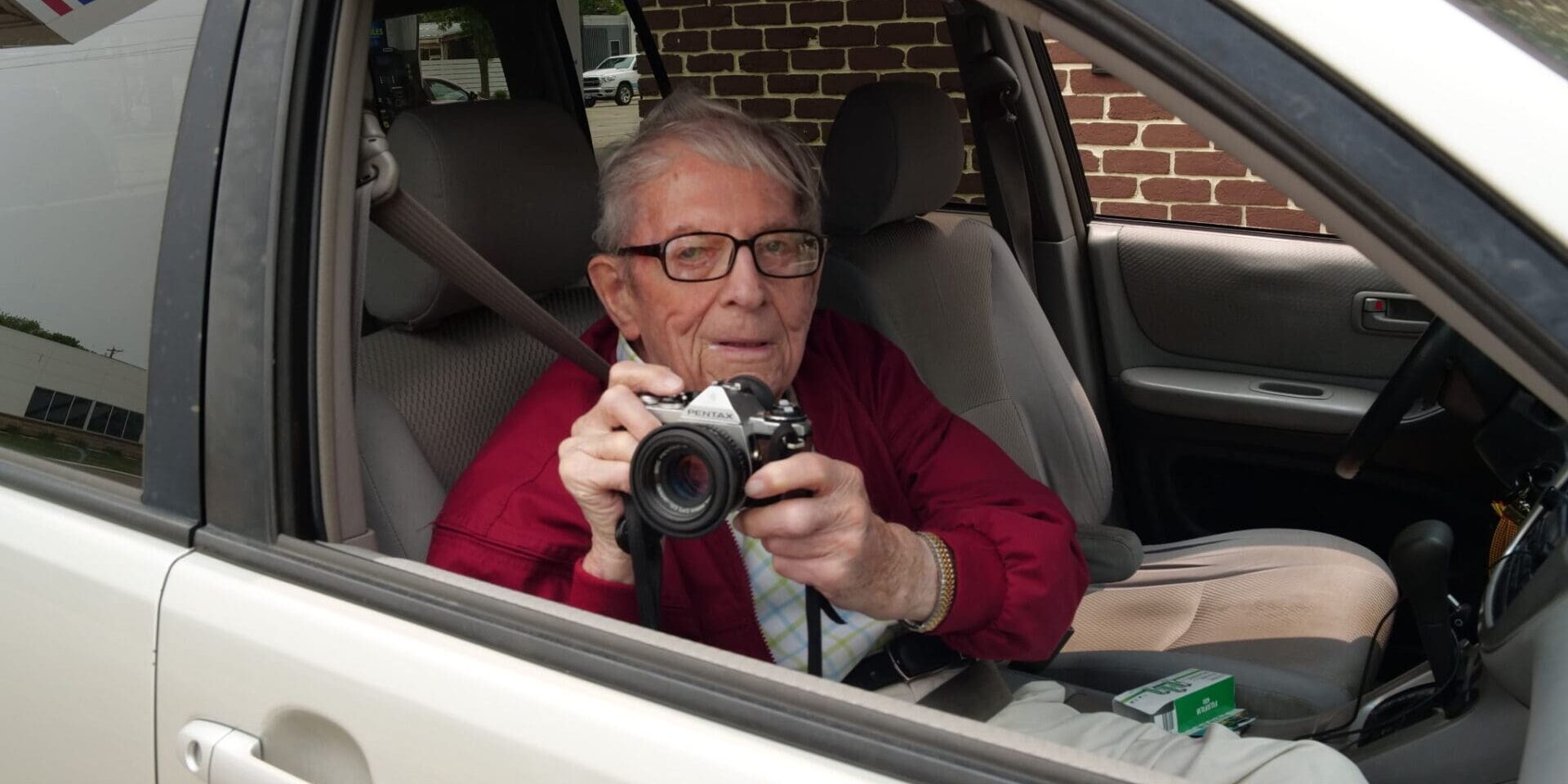
Photographer who chronicled Sioux Falls history dies at 99
March 12, 2026
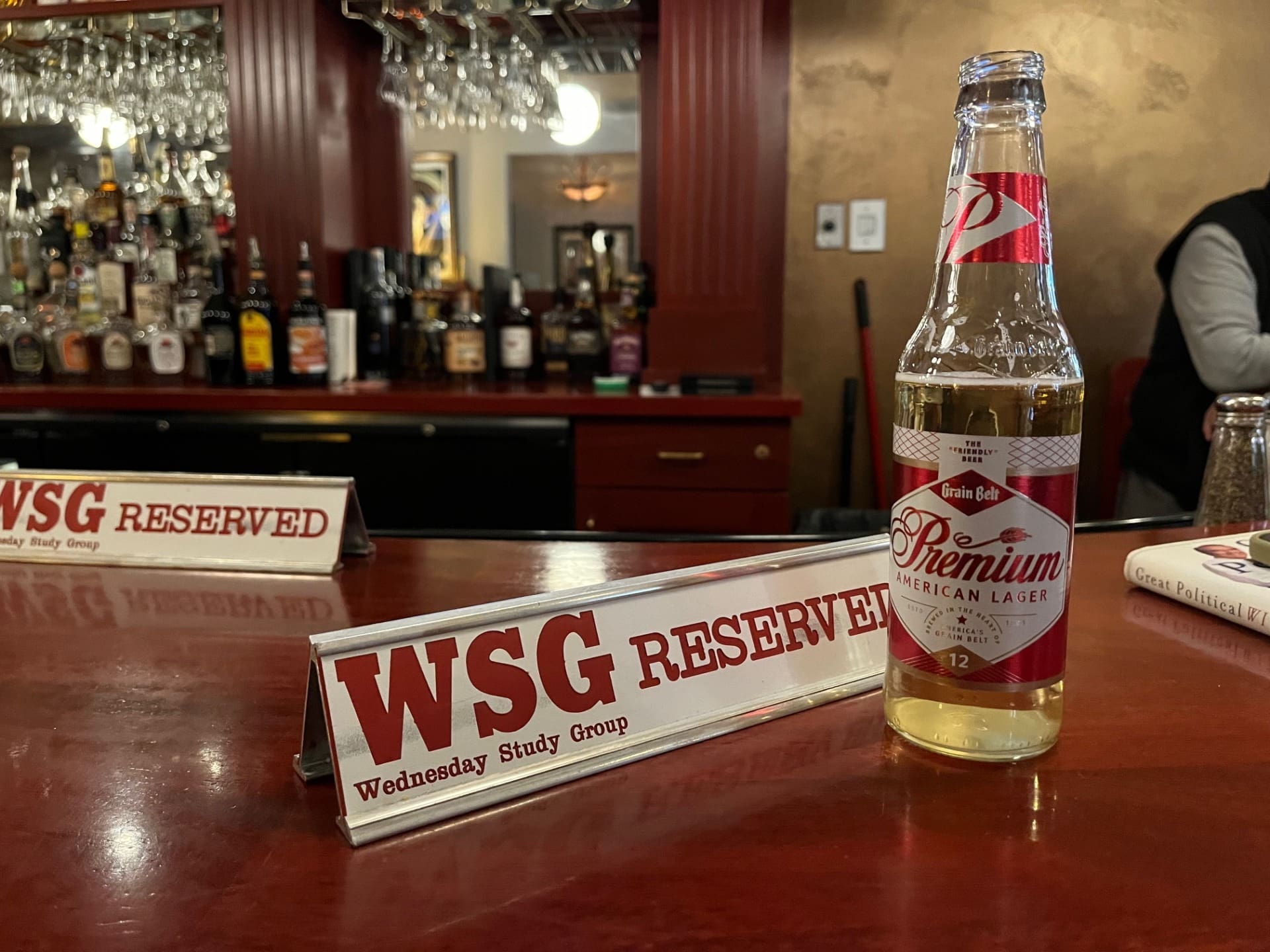
Bottles of Grain Belt sat atop the bar at Minervas late Wednesday afternoon, but the man who usually ordered that particular brand of beer wasn’t there.
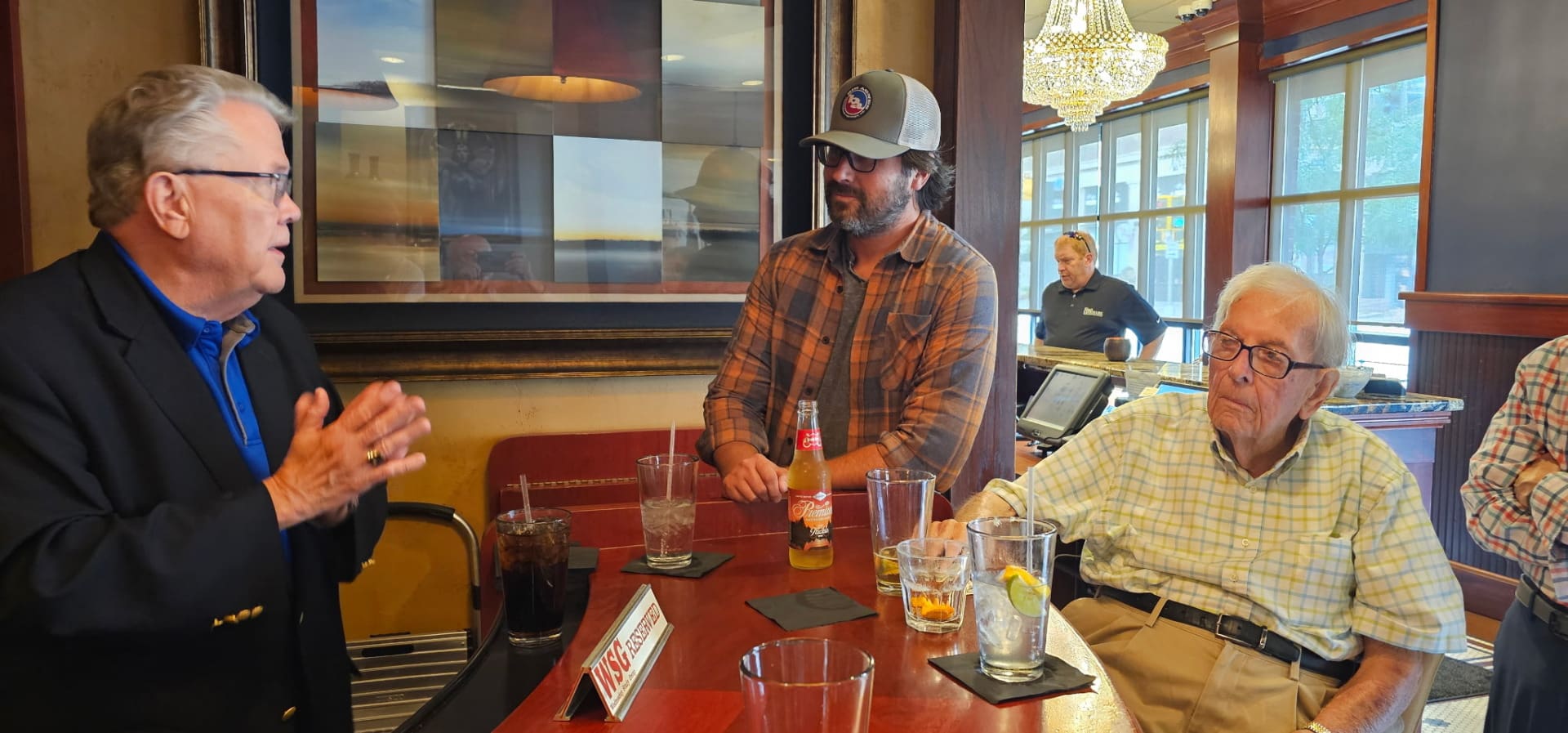
Instead, member of the Wednesday Study Group had ordered the Grain Belt in tribute to Bill Pay, a Sioux Falls photographer and historian who died Tuesday at the age of 99. If the African proverb “When an old person dies, a library burns to the ground” is true, then in Pay’s death, a library filled with picture books is gone.
But while his memories may be gone, his photographs can be seen in locations such as the Phillips Avenue Diner. Several years ago, Siouxland Heritage Museums acquired almost 1,100 of Pay’s iconic photos, many showing how downtown Sioux Falls changed from the 1950s to the 1990s.
“They’re one of those very iconic collections that span a time period,” executive director Bill Hoskins said. “There weren’t a lot of photographers taking pictures of the town, of the city as it changed and developed. They fill an important hole in the historic record.”
Pay began photographing Sioux Falls when he was a high school student and only quit in the past couple of years when his mobility slowed and he could no longer drive.
But for more than seven decades, the Sioux Falls resident whose family roots stretched back more than 130 years photographed buildings and bridges, banks and businesses, factories, farmland and a family or two.
Along the way, he recorded the history of a constantly changing city and made an impact on the people he met both professionally and personally. Even though filmmaker Zeke Hanson is almost 60 years younger than Pay, they became close friends when they met about a year ago.
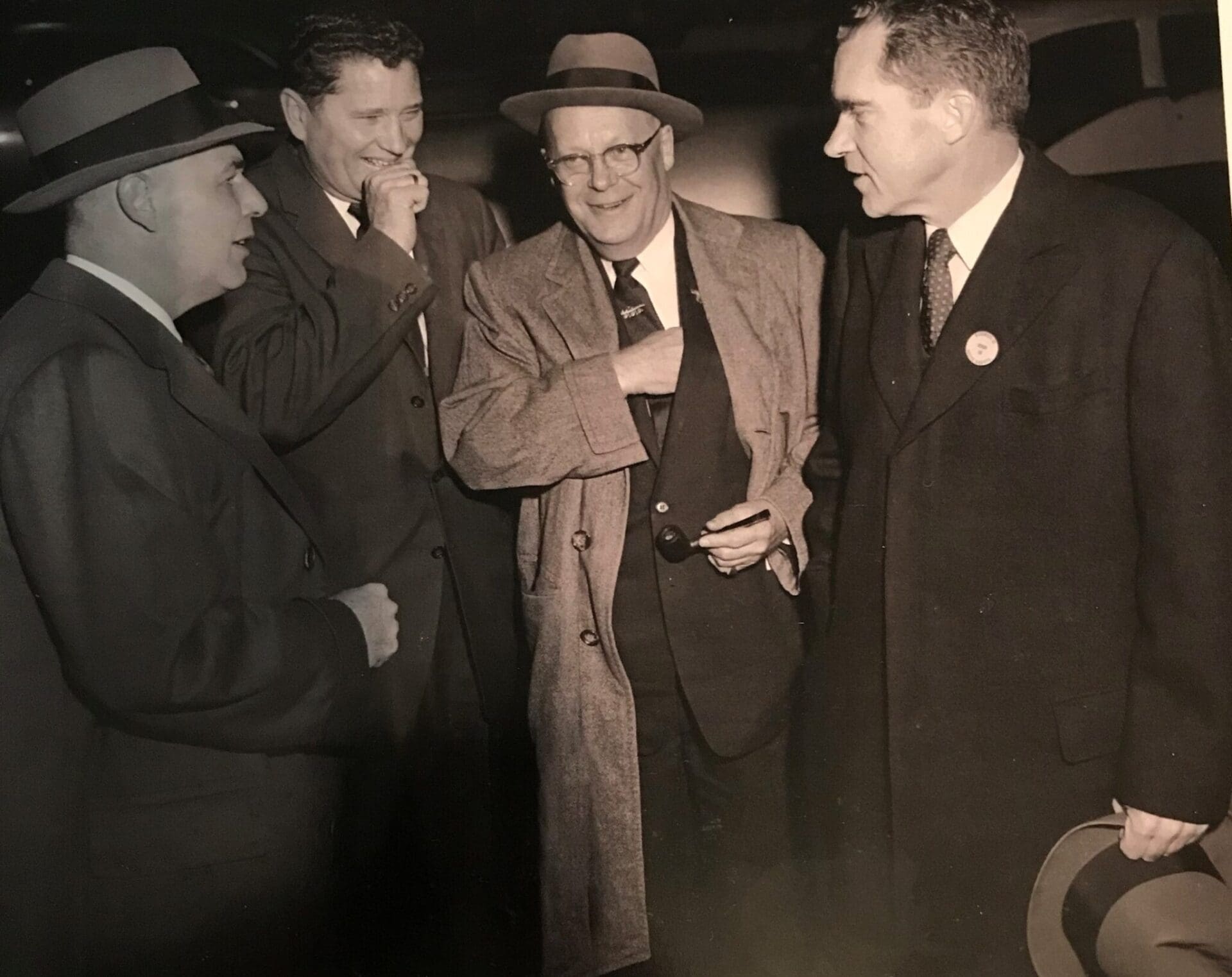
Hanson met Pay when he asked the older man to take part in an independent short documentary on his career and work. That single interview turned into weekly phone calls and visits.
“I only knew him for the last year of his life, but everybody I ran into loved him,” Hanson said. “We bonded over photography. We re-created some of the pictures he took 70 years ago. We were able to mutually call each other friends, and that’s how I’ll always think of him.”
The two men updated Pay’s early works in the summer of 2025. In a taped interview they did for the StoryCorps project, Pay said: “I have this collection of pictures I took between 1953 and a month ago, the 1950s and ’60s and up into ’70s. The town’s changed a lot. People who have businesses like to have pictures of what Sioux Falls used to be at their own location.”
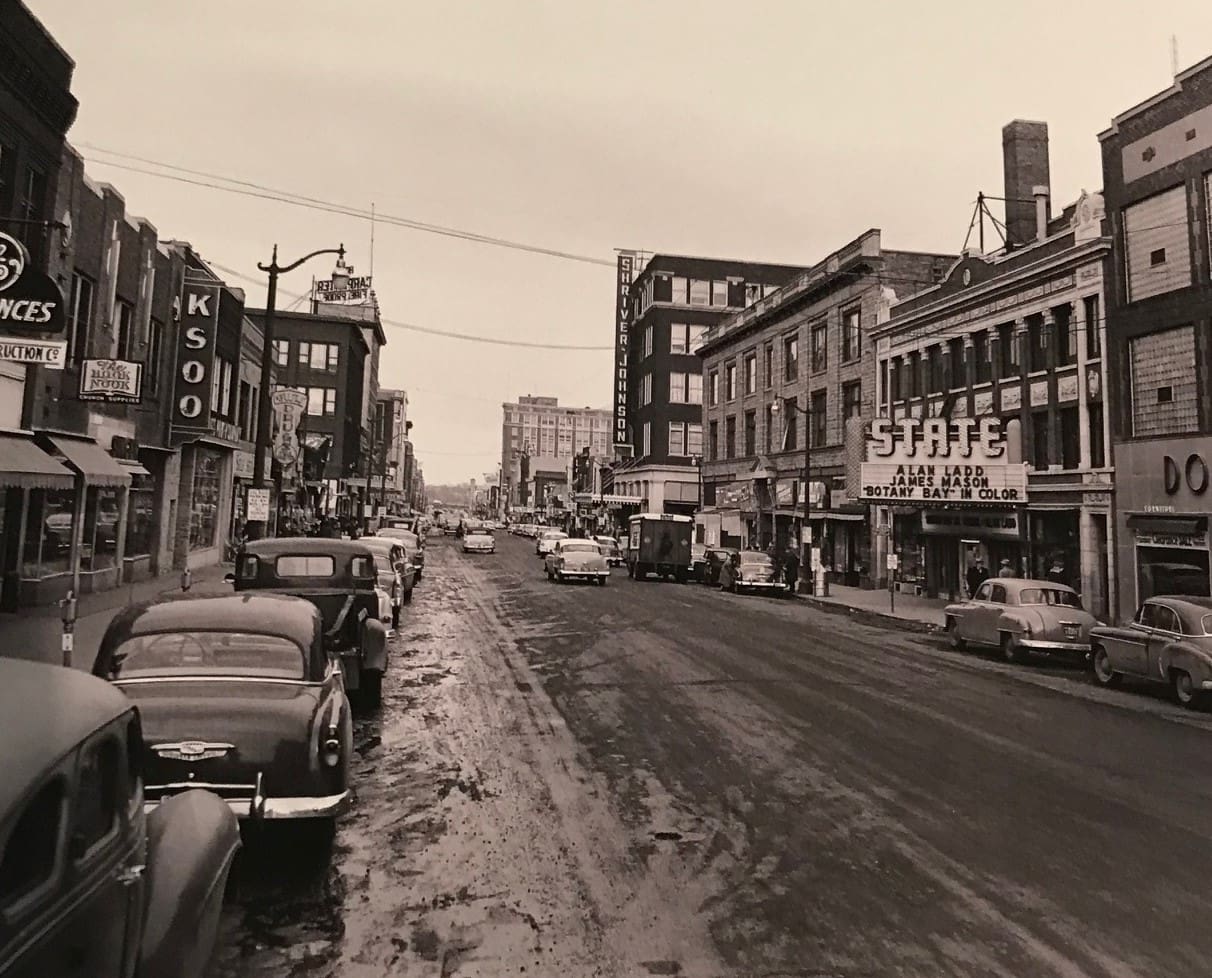
For a time, Pay operated a store that sold cameras and other equipment and developed films shipped to him from 150 pharmacies in a four-state area. His store was in a strip mall on Minnesota Avenue at 30th Street, when the city limits ended at 33rd Street.
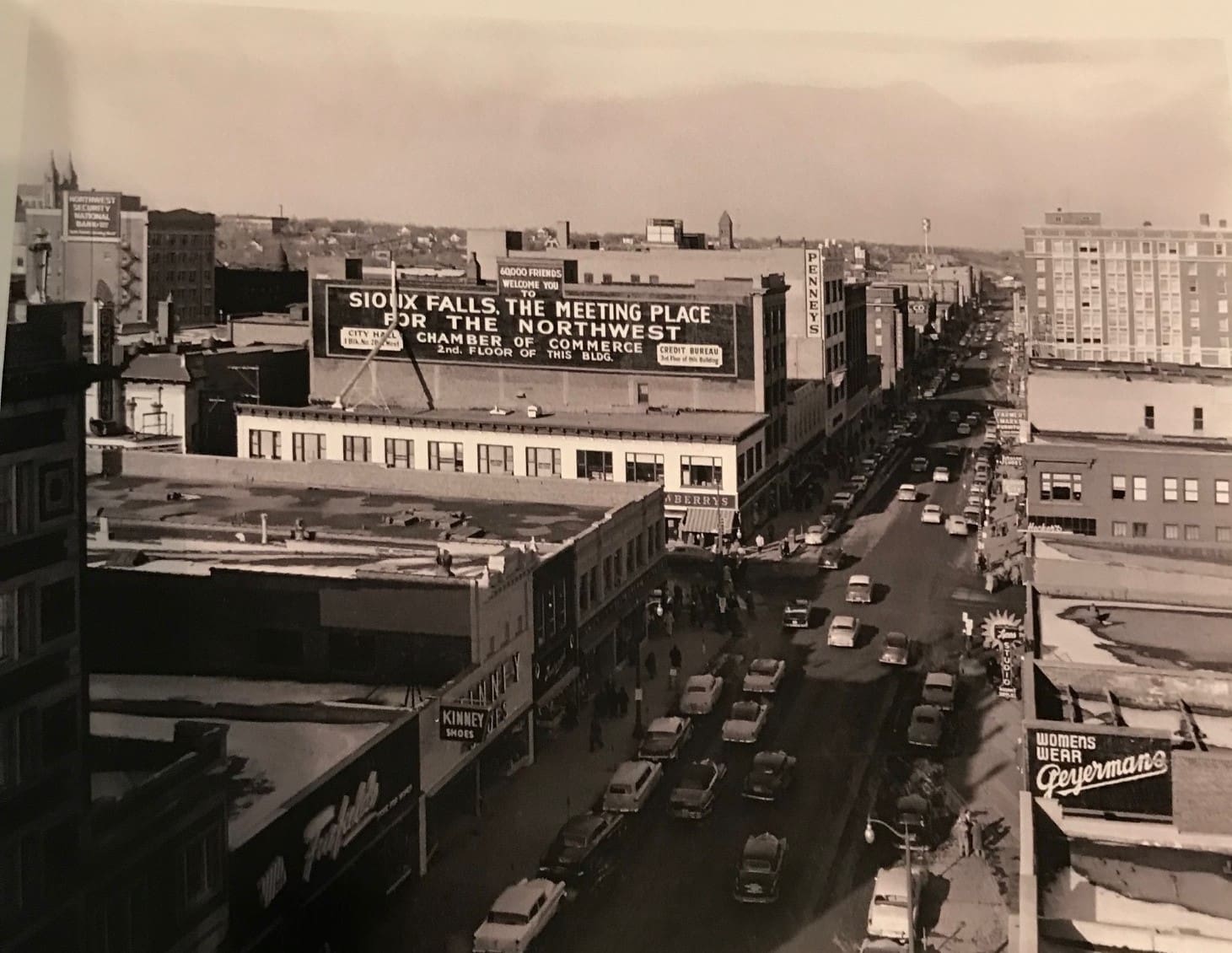
Technology moved from black-and-white processing to color photos. Eventually, it advanced to the point where customers could develop their own, and Pay closed his store to focus on commercial photography. One of his most famous photos dates to 1960. It shows a sign that proclaims 60,000 friends welcome visitors to Sioux Falls.
Pay’s first job was at a bakery frying doughnuts. He lasted two weeks. He already owned his own camera, one he described as sophisticated for the day. He was not old enough to drive a car. Despite that, a downtown Sioux Falls portrait photographer, Emil Hanson, hired the 15-year-old to run errands. Soon, however, Pay began taking pictures for Hanson. This was during World War II, when local photographers were scarce, and Pay began shooting photographs as part of Hanson’s contract with the Argus Leader newspaper.
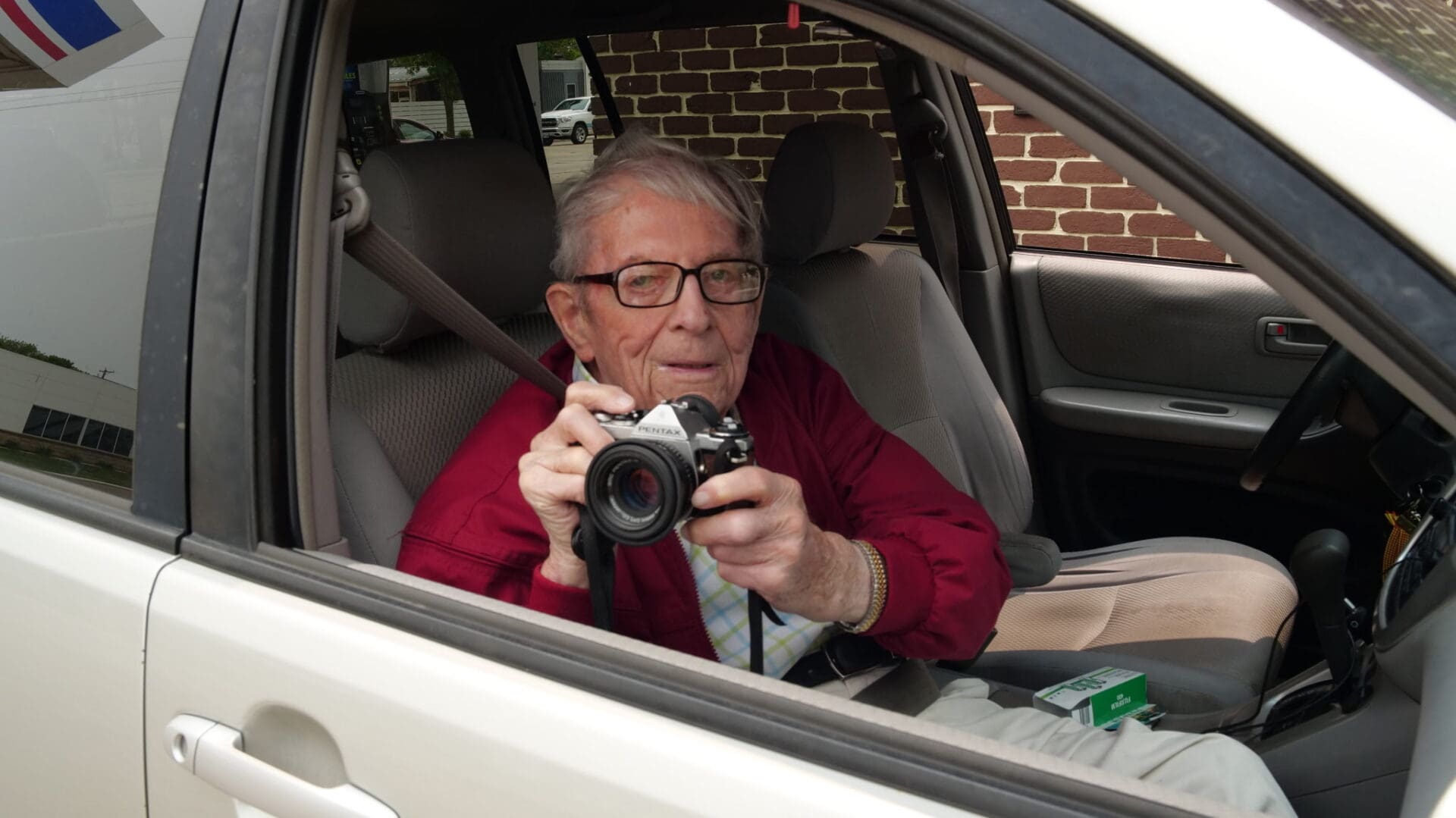
A decade later, during the mid-1950s, Pay was still working downtown. Bob Scott also worked downtown, selling newspapers at 12th Street and Phillips Avenue.
“At age 9, I knew who he was,” Scott said. “He was around. He was a nice fellow and good to us kids. I only knew him a bit but never forgot him.”
In October 2009, Scott retired and joined the Wednesday Study Group, once again encountering the man he had admired as a boy. Scott and Pay had countless conversations about the Sioux Falls they both remembered, not only at Minervas but in Pay’s apartment, with his photographs covering the table before them.
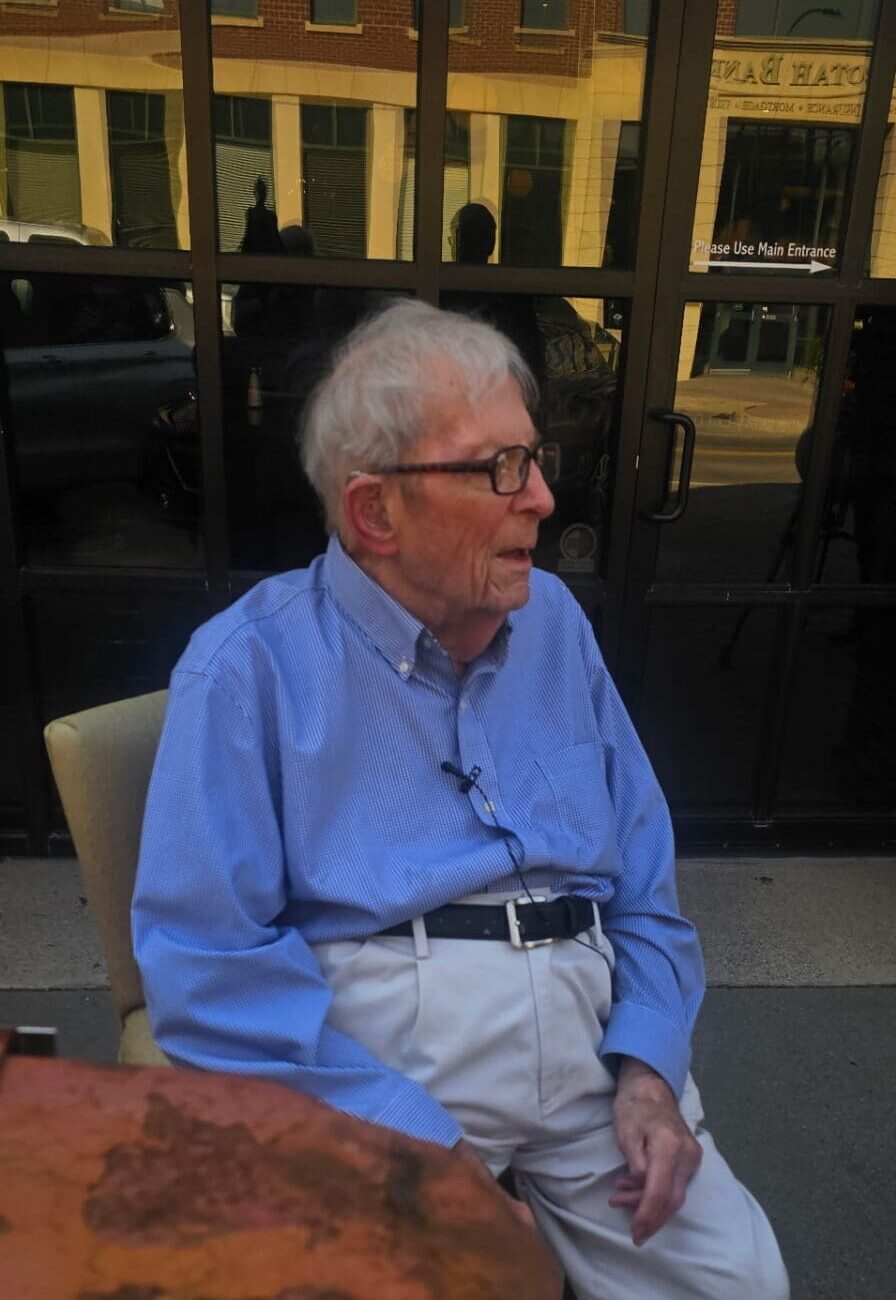
“We had many great conversations about the days way back when,” Scott said. “The visits I had with him, I would have sat at his house all evening. We’ll miss him, but we just have so much to be grateful for from Sioux Falls, the way he loved Sioux Falls, the way he saw life.”
Pay’s curiosity never faltered. Wednesday Study Group members like to pose trivia questions to each other, and Pay was rarely stumped.
“He would sit right there, he’d come up with the answer to something, you’d say how the heck did you do that? He was that way,” Charlie Anderson said. “Trivia, you’d give him trivia, he’d not only answer that question, he’d give you background.”
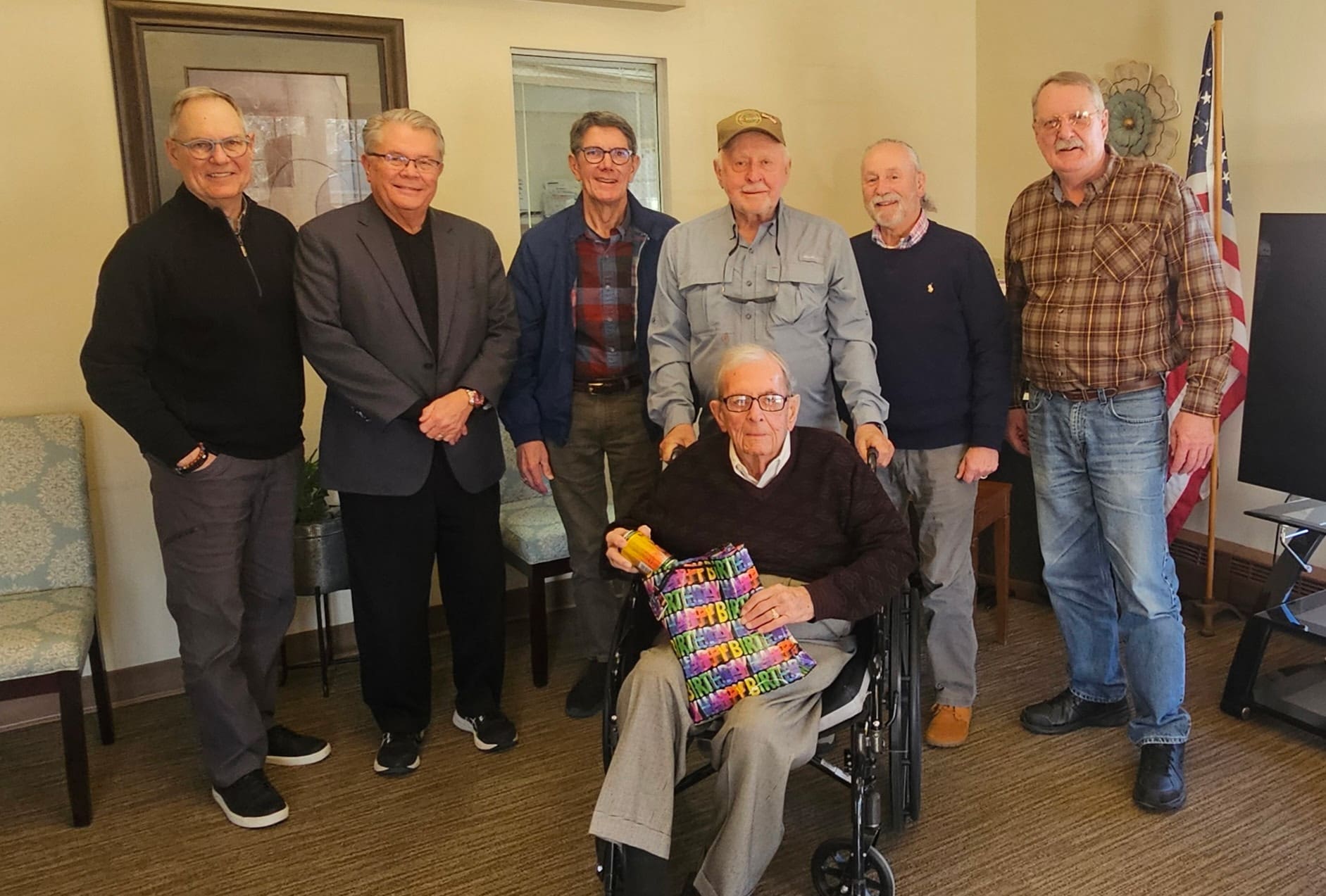
Added another Wednesday Study Group member, Charlie Hoffman: “For 99 years of age, he talked questions about things I had to think about. Two weeks ago, he was asking questions that were technical, hard questions, something about the beef industry.”
Pay displayed a wry sense of humor, Hanson said. He was also personable. “Everywhere he went, he was the life of the room,” the filmmaker said.
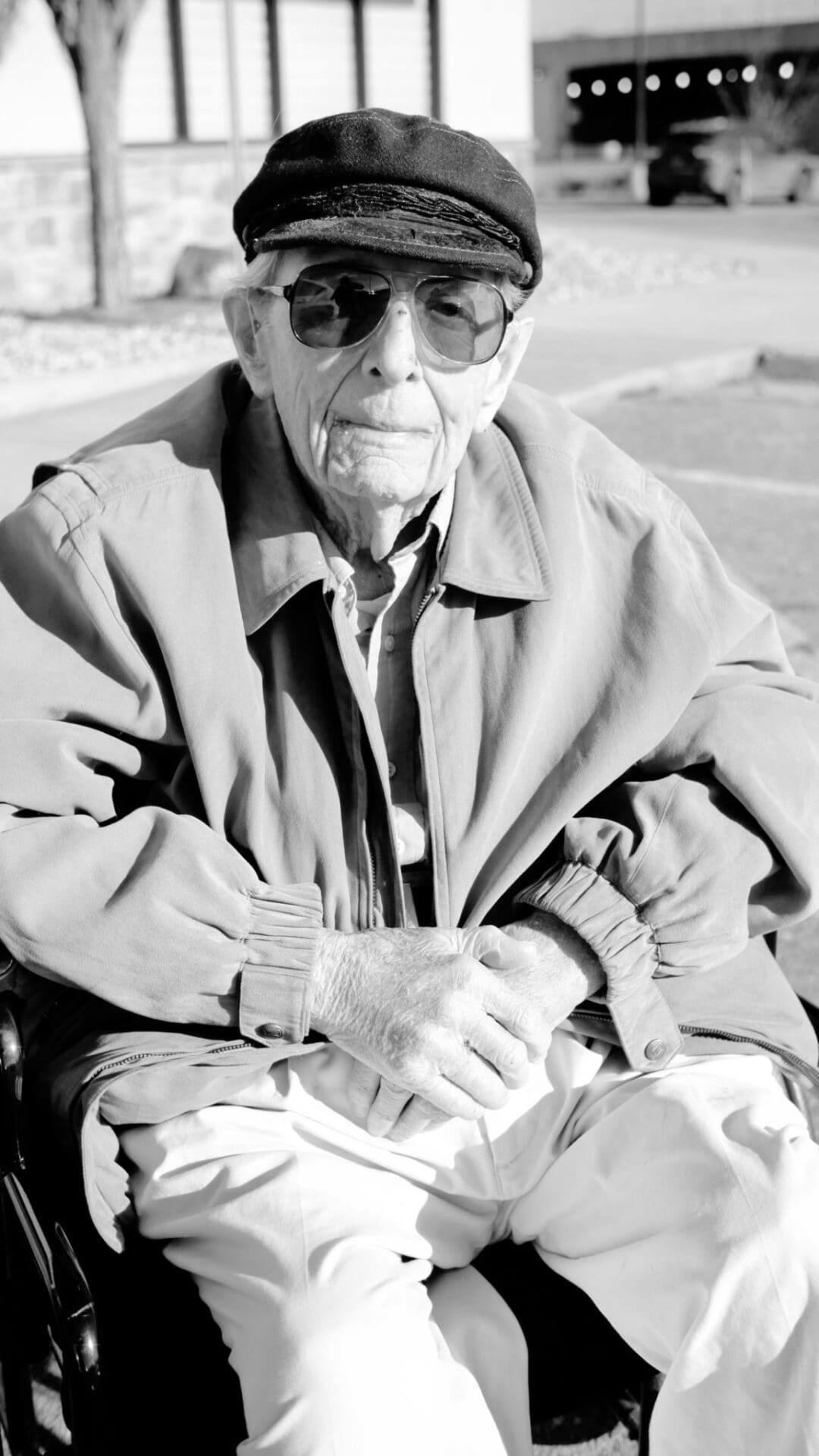
“He was such a good friend, and everybody loved him,” said longtime friend Duane Waack. “I never heard a bad word about him ever.”
Like Pay, Waack is a photographer. He admired the work done by his friend. Pay’s focus on the city, particularly his fondness for aerial photography, means the city in the future will benefit from the care Pay took in preserving its present before it became the past.
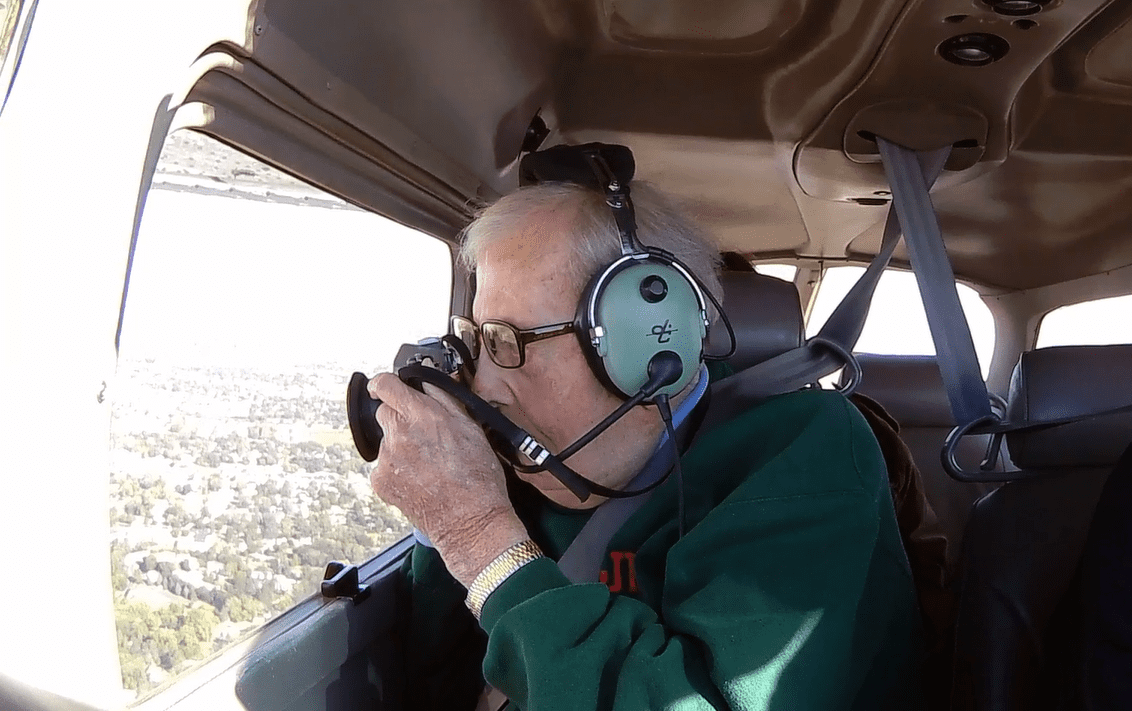
Pay’s photographs can be seen on display in businesses all over Sioux Falls, Scott said. Pay was there when the Queen Bee Mill burned down in 1956. He was there when the Zip Feed Mill failed to implode as planned in 2005.
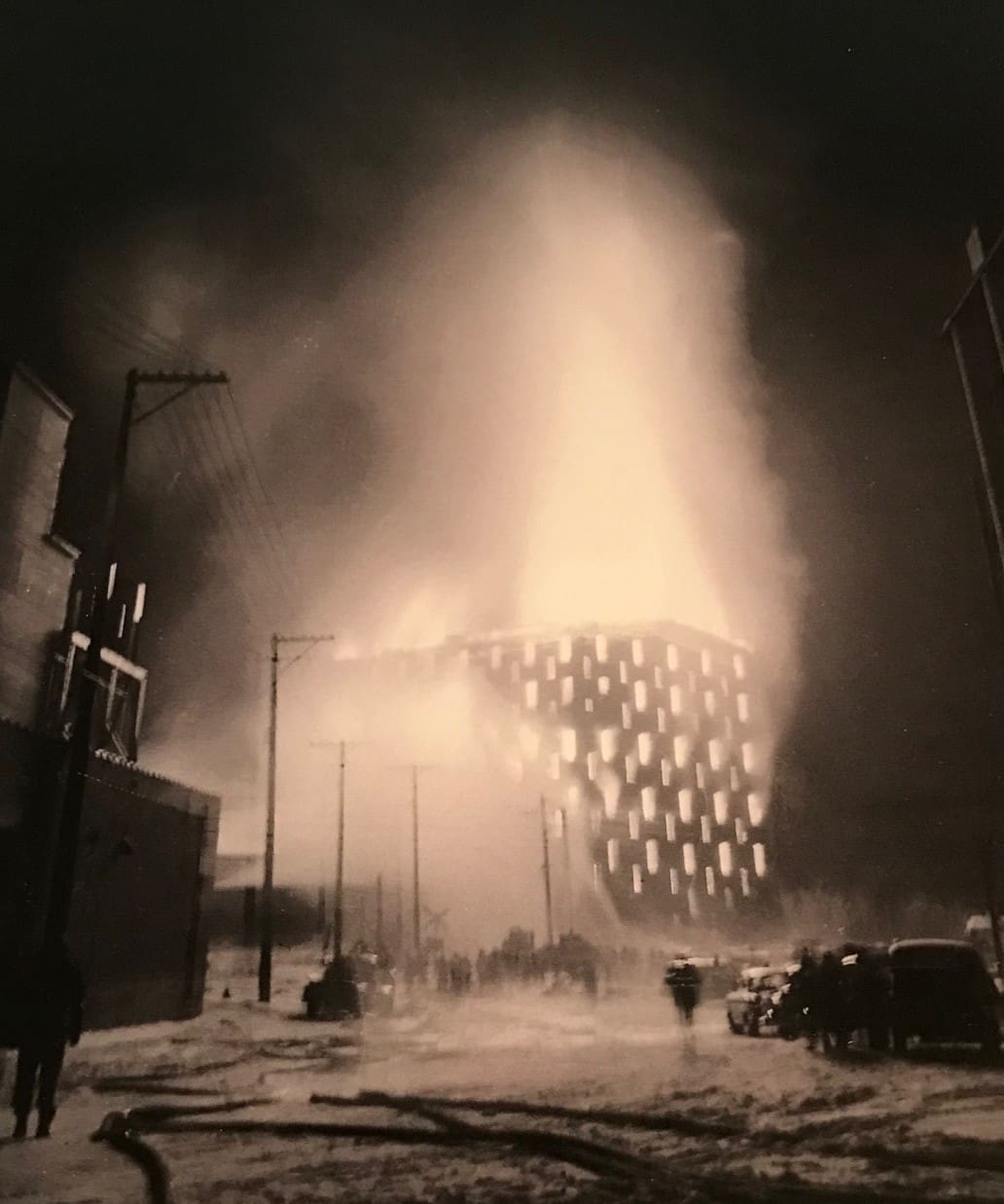
“He had energy, he was a pretty happy guy, and he loved what he was doing,” Scott said.
Pay knew that people enjoyed seeing the glimpses of the past that he had captured for so many years. Longtime residents could look at a picture of the old JCPenney store on Phillips Avenue and remember when it had the first and only escalator.
When they look at his historic photos, they can look back at their own past, Pay said in the StoryCorps interview.
“People remember,” he said. “The ’50s and ’60s is a while ago, but there are still people running up and down the street.”
Information on a memorial service will be updated when released through Heritage Funeral Home.