How Avera helps more women understand their breast cancer risk
Feb. 19, 2025
This paid piece is sponsored by Avera.
One in eight women will develop breast cancer during their lifetime, but up to one in five women are estimated to be at high risk for the disease because of age, family history, genetics, breast density or other risk factors.
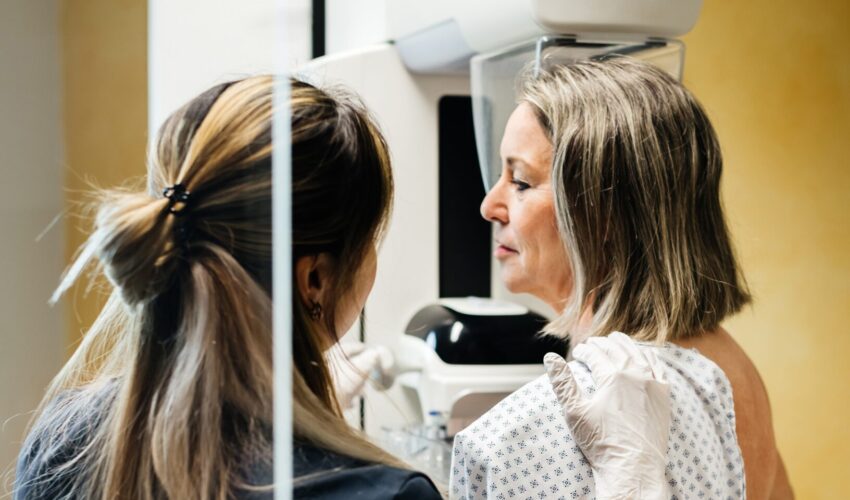
A new mammography software program at Avera is designed to help identify women that are at a higher risk of developing breast cancer. Once identified, Avera is able to guide patients to resources that can help minimize their risk of getting diagnosed in later stages, when breast cancer is more serious. Each year, more than 300,000 cases of breast cancer are diagnosed, with 42,000 breast cancer deaths.
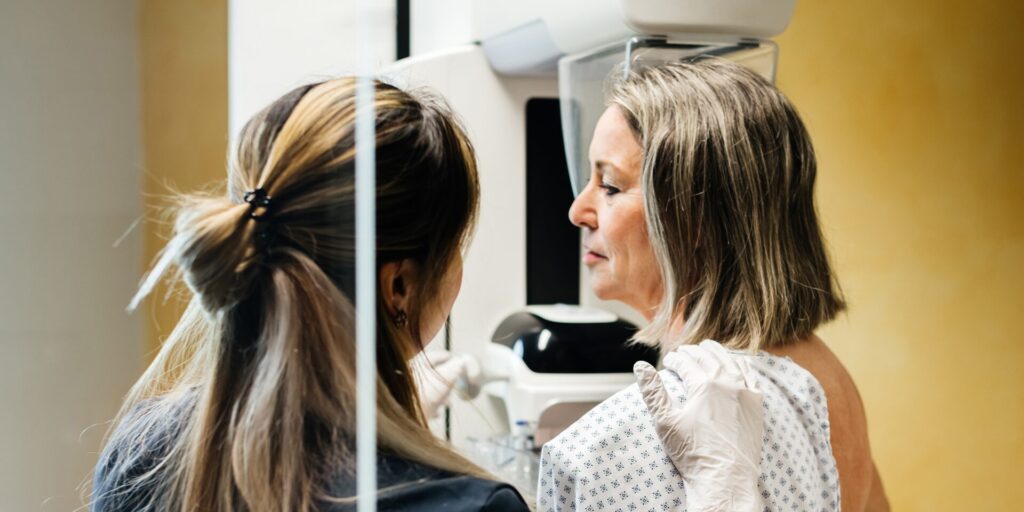
At all Avera screening mammogram appointments, women get the Tyrer-Cuzick Risk Assessment, a tool that’s used nationwide to estimate a woman’s risk of developing breast cancer. Patients take the electronic survey either through email or text link, or via a tablet at the mammogram appointment. Survey software is integrated with mammography software, so breast density is accounted for as part of the score. The risk assessment score becomes part of the radiology results, so the woman can get referred to Avera’s High Risk Breast Clinic, or the woman can self-refer to this clinic as well.
“In the past, identifying a woman at high risk has been a very manual process. This is a game-changer,” said Tara Kocourek, Avera director of breast health.
The Tyrer-Cuzick Risk Assessment scores risk on a variety of factors such as:
- Age.
- Height and weight.
- Family history of breast or ovarian cancer and any known BRCA gene mutations in family members.
- Breast conditions, including density and hyperplasia.
- Medical history, including age at first period, age at menopause, age at first childbirth and number of children.
- History of hormone replacement therapy.
If a woman scores 20 percent or higher risk, she is considered at high risk and can be referred to Avera’s High Risk Breast Clinic in Sioux Falls or the High Risk Breast Clinic in Mitchell. Being identified as high risk does not guarantee a breast cancer diagnosis, but it does mean you may benefit from more frequent imaging. A woman with a high-risk score may be eligible for more frequent clinical breast exams and mammograms, as well as screenings using other imaging means, including contrast enhanced spectral mammogram, or CESM, and breast MRI.
“Screening mammograms are a great tool and are very effective at annual screening for breast cancer,” Kocourek said. “Breast cancer can especially be difficult to detect in dense breasts.” CESM and breast MRI are helpful because they capture different types of images. “Using this combination of tools, we have a greater chance of finding breast cancer at its earliest stages for these high-risk patients.”
Women at higher risk will meet with a genetic counselors and discuss genetic testing options. “Genetic counseling appointments at Avera are free, and if a patient decides to move forward with genetic testing, the genetic counselor can help them determine what’s covered under their health insurance plan,” said Jessica Tisher, Avera genetic counselor.
BRCA genetic mutations can increase lifetime risk of breast cancer by up to 72 percent and ovarian cancer by up to 58 percent. It also increases risk for pancreatic, prostate and male breast cancer. “With a BRCA2 mutation, men can have up to a 7 percent lifetime risk for male breast cancer, and so when men test positive for BRCA mutation, they can be seen in the high-risk clinic as well,” Tisher said.
Genetic testing is an important source of information for decision-making, “especially for someone considering preventive surgery like removal of the breast tissue to avoid cancer,” Tisher added. Younger women that aren’t of age for screening mammograms can discuss their risk with their primary care providers and can be referred to the high-risk clinic as well. “You don’t have to be past 40 to be proactive about your breast cancer risk,” Kocourek said. For example, if a woman’s mother had breast cancer at age 40, she should begin screening for breast cancer 10 years earlier at age 30.
In the past year since the risk assessment was implemented at mammography appointments, more than 4,000 women have been identified as high risk throughout the Avera system.
“And we also hear the personal stories that tell us how well the program is working,” Kocourek said.
For example, a woman knew she had a family history of breast cancer but didn’t think it was necessary to begin early screenings. “At age 40, at her first mammogram, when the Tyrer-Cuzick score was high on her mammogram report, her primary care provider referred her into our High Risk Breast Clinic, and we ordered a CESM, which found very early-stage breast cancer,” Kocourek said.
“That’s the why,” Kocourek said. “Because we’re using this platform, we’re hearing of cases like this, and that’s the most rewarding part of this whole program — being able to find cancers early along with discussing risk reduction strategies for anyone at a higher risk of developing breast cancer.”
Learn more about breast cancer screening, diagnosis and care at Avera.