Routine physical leads to lifesaving discovery
Jan. 8, 2025
This paid piece is sponsored by Sanford Health.
Joe Hutmacher is strong.
At home, he’ll ride on a motorcycle and handle it with ease. At the gym, he’ll stack on 45-pound plate after 45-pound plate – bench-pressing it like it’s a pencil.

Routine checkup, rare diagnosis
But his strength was put to the test in a different way a year ago. He was experiencing frequent indigestion, and at first, he didn’t think much of it.
Two of his three sons play college football. Both are starting centers — one at the University of Nebraska, the other at Northern State University.
When your weekends are usually booked up with college football, tailgating is part of the experience. Hutmacher thought the indigestion might’ve been from frequent game day food and didn’t give it a second thought.
However, at a routine physical with his primary care provider at Sanford Chamberlain, Hutmacher discovered he had a gallstone partially blocking his bile duct.
He and his team scheduled a procedure in Sioux Falls to get the gallstone removed.
“And I’ll never forget waking up from the procedure. He said: ‘We got that gallstone out. Everything went good.’ And the next words he said, ‘but you have some surgery in your future, my friend,’” Hutmacher recalls.
He learned he had high grade dysplasia, a precancerous condition where there are severely abnormal cells in the inner lining of the stomach.
Dr. Mouhanna Abu Ghanimeh, a gastroenterologist at Sanford Health, took a biopsy during the procedure and said he would call Hutmacher with the results.
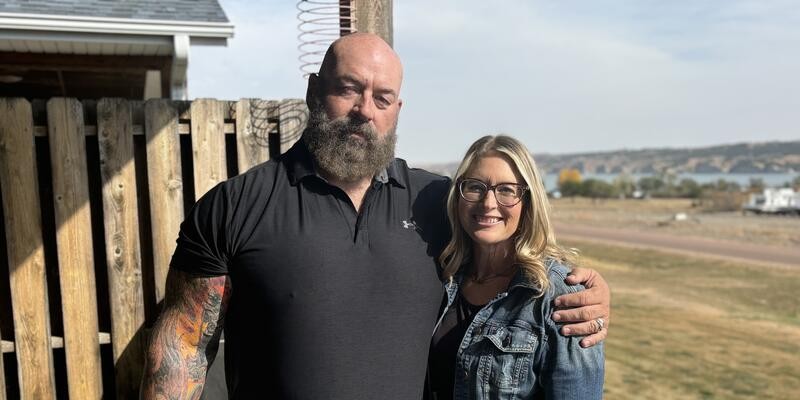
Hutmacher was walking his dogs along the banks of the Missouri River when he got the call revealing he had ampullary cancer.
The aggressive form of cancer manifests in the ampulla of Vater, a small opening in the small intestine where the pancreatic and bile ducts meet.
He and his wife were scared.
“I was a total wreck,” said Hutmacher’s wife, Laura. “And, of course, you go to Dr. Google and then everything spirals from there.”
Hope through fear
But there were two reasons to be optimistic.
Because Hutmacher was proactive and sought care right away, they caught it before it had any time to spread.
Sanford Health is one of the only health care systems in the Midwest that has a robotic option for Whipple surgery, the kind of procedure Hutmacher would need. The team that does it is in Sioux Falls.
Dr. Thavam Thambi-Pillai, a transplant and hepatobiliary surgeon, said the benefits of the robotic Whipple procedure can’t be overstated.

“It’s more precise and more finer movements. And, of course, you do this all through a smaller incision, so patients recover faster and go home faster, feel less pain, and they can start chemotherapy sooner,” Thambi-Pillai said.
Dr. Hassan Turaihi is a colorectal surgeon and partners with Thambi-Pillai. He said they’re able to fully operate through 8-millimeter port sites – making the incredibly complex procedure, which takes six to eight hours to complete, minimally invasive.
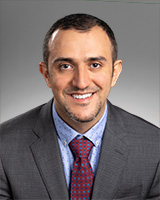
“Hospital stays are anywhere between five to seven days. People stay in the ICU for about one to two days, and then in terms of recovery, it takes about six months before people feel like they’re back to normal. So it is a physically demanding operation, not just on the surgeon but also on the patient,” Turaihi explained.
‘I just can’t thank him enough’
During recovery, Hutmacher’s aforementioned strength was tested greatly. He said he metaphorically leaned all his 350 pounds on wife Laura for support.
“She was the rock. I don’t know what I would’ve done without her. She was there every step of the way. I found out how much she really loved me,” Hutmacher said, chuckling.
“It’s a gut punch hearing the words (you have cancer). Talking with my wife, she was pretty insistent that I can make it through the whole process. She wasn’t having it any other way.”
Laura Hutmacher’s worries were eased in part through Thambi-Pillai’s confidence. If she could tell the doctor one thing today, it would be:
“Thank you so much for the care that you gave him, for your abilities, for not doubting that you’re going to be able to do this, the reassurance you gave me and how you would be able to do it,” she said through tear-filled eyes. “I just can’t thank him enough, never.”
Today, the Hutmachers are back to doing the things they love: riding the motorcycle, lifting weights and tailgating – with the occasional Rob Zombie concert thrown in here and there.
Hutmacher said his take-home message is don’t wait to seek care. He’s alive today because of it.
“Dr. Thambi and Dr. (Christopher) Sumey both said that was a good gallstone you had because it quite literally saved your life.”