A Night for Change: Unveiling the mission partners for Seeds of Change
Nov. 16, 2023
This paid piece is sponsored by POET.
When people and places on the other side of the world often feel distant or intangible, it takes remarkable individuals to turn preconceived notions on their heads.
Seeds of Change, an international nonprofit organization established by POET founder and CEO Jeff Broin and his wife, Tammie, hosted its annual fundraiser, A Night for Change, on Nov. 2. And since it’s not entirely feasible to bring 400-plus people to Africa for a night, the Seeds of Change brought Africa to them by spotlighting its boots-on-the-ground partners who are driving the organization’s core missions.
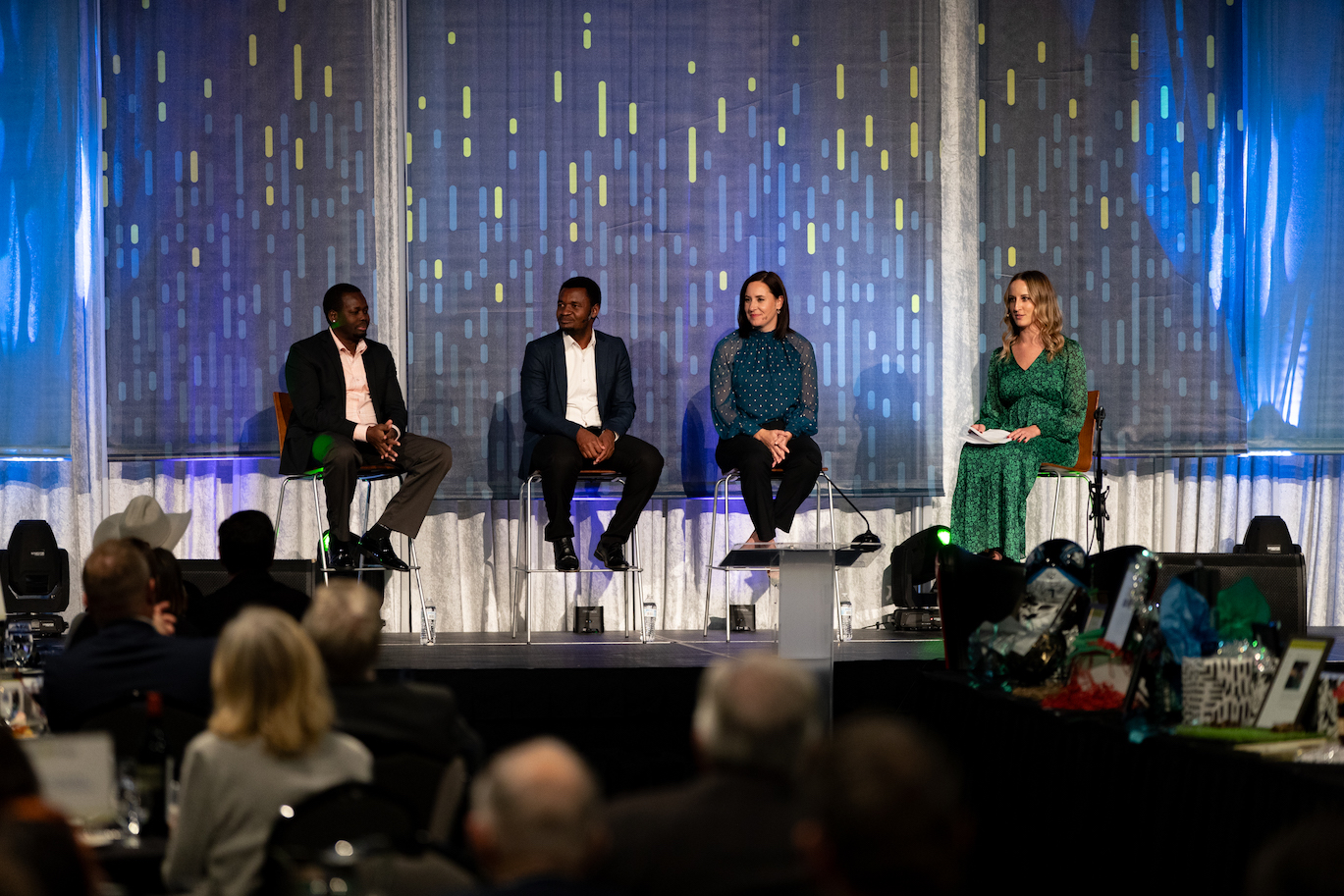
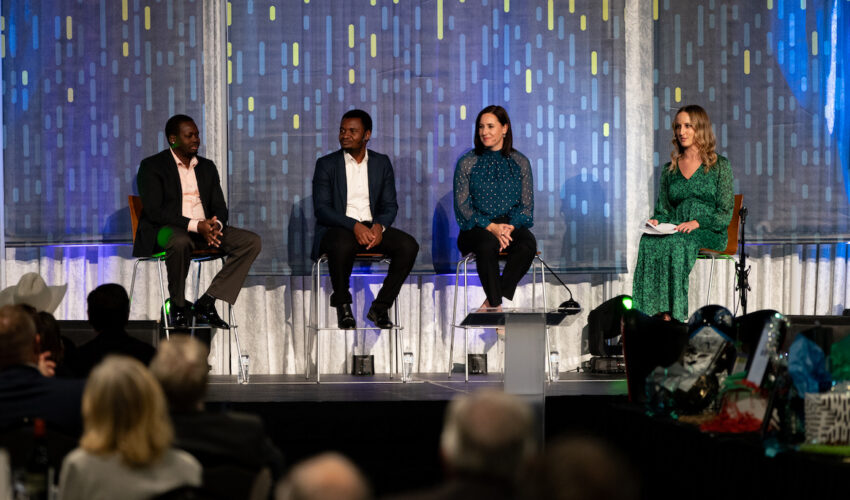
Offering a glimpse into their powerful stories, Seeds of Change vice president Miranda Broin moderated a panel featuring Kelly Shaughnessy, David Mysoki and William Deng, each representing one of Seeds of Change’s three core programs: missions Hope, Grow and Thrive, respectively. These leaders shared their inspiring journeys, revealing how they are working to break the cycle of poverty, transform agriculture and provide health care in some of the world’s most vulnerable communities.
Mission Hope
“I got started in Kenya in 2009 when I went on a mission trip, and I had the opportunity to serve at a school in the slums of Nairobi,” Kelly Shaughnessy said. “When I first went there, I was incredibly touched by the beauty of the children and the hope that they had for their future — and also completely crushed by the reality that their opportunities to reach that future were really limited.”
Shaughnessy leads a large portion of Seeds of Change’s youth- and education-centered initiative, called Mission Hope, in Kenya, impacting women and children through her work. She has been partnering with the organization since 2018 and has been doing development work since her first visit to Kenya — focused on breaking the cycle of poverty through education, nutrition and mental health support.
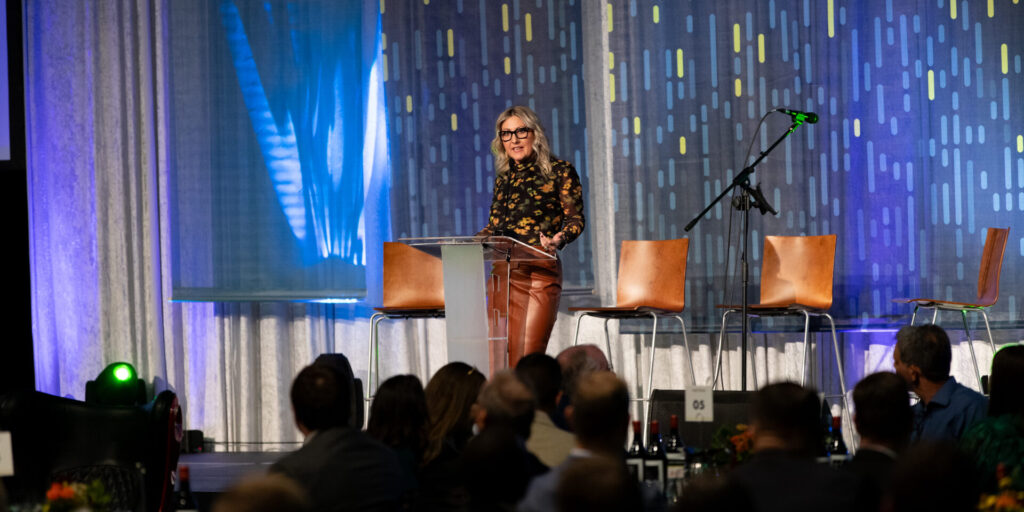
Seeds of Change executive director Macy Kaiser welcomes the audience at A Night for Change.
“Mission Hope is pretty aptly named because education brings hope to a lot of places,” Shaughnessy said. “I think without education, there really is no hope. And so we often stress through Seeds of Change just how important education is in countries like Kenya, especially for young women. On top of educating, we really needed to help these kids have an opportunity for food at school. Because when you are in a classroom and you don’t know where your next meal is going to come from, it’s very difficult to study and focus on school rather than thinking about having food.”
In just the past year, Seeds of Change has been able to bring food, support and education to more than 65,000 young people in Kenya and Uganda. Its Mission Hope initiative also provides high school scholarships to 160 girls and 100 full-ride university scholarships.
“Studies around the world have shown that when you empower a woman, you empower your community because women are more likely to empower their children, their family and their community at large.”
Mission Grow
“I was the first one in my family to go through secondary school and then was the first one in my village to go to a university,” David Mysoki said. “While I was studying, I chose to study agriculture so I’d be able to go back home and support my family. I chose to go back to Nairobi because I really wanted to give back to the village where I was born and schooled.”
Mysoki is an agronomist with Farm Input Promotions Africa, which is an organization that partners with Mission Grow, Seeds of Change’s agricultural initiative. He and his team support African farmers, helping them achieve food security, making them more resilient and ultimately transforming their lives.
“A good harvest in Africa is 26 bushels per acre, and most families have one acre of farmland at most,” Mysoki said. “In America, the average is 177 bushels per acre. That’s a night-and-day difference. But now with Mission Grow, we can teach a farmer to be able to prepare their land and put in the right seed, while at the same time doing affordable fertilization and proper planting with simple measuring tools. Their crops are now able to grow and feed their families.”
So far, Seeds of Change has worked with nearly 444,000 farmers through Mission Grow, using a system of peer advisers to train them in proper farming techniques and methodologies. The program has been translated for use in 14 countries and has impacted over 5.3 million lives through improved agricultural techniques, helping farmers grow their way out of extreme poverty and achieve food security.
“We have success stories of youth who had dropped out of school, but after three growing seasons, their families are able to afford school fees and can send them back to finish school. Then, these young people can better provide for their families,” Mysoki said.
Seeds of Change believes this has launched a ripple effect that will create prosperity for future generations — and it’s only the beginning.
Mission Thrive
“Before we built the medical clinic, when people in the community would get sick, their family members would have to carry them for two days to get to the nearest hospital or clinic,” William Deng said. “Many would not survive the trip. Now, we not only have a new clinic nearby, but we have a motorbike to transport people to the clinic faster. We treat them and transport them free of charge. A clinic in our community has not only brought health but also peace of mind.”
Deng, now a resident of Aberdeen, spearheads efforts surrounding community development in his home community of Aweil, South Sudan, helping individuals, families and communities gain access to education, health care, clean water and economic development. Deng — who escaped to the U.S. at age 14 to pursue a better life — partners with Mission Thrive, Seeds of Change’s initiative to promote human health with an emphasis on health care and clean water access.
“Before I worked with Seeds of Change, my team was doing one project every three to four years,” Deng said. “When I partnered with Seeds of Change, we were able to build a medical clinic within one year, which was huge for the community. Since we built and opened a medical clinic in Aweil, there have been no fatalities in that community. People have hope and peace of mind now.”
The clinic serves a population of more than 132,000 in the surrounding area and sees an average of 82 patients on a weekly basis. Amazingly, there have been no fatalities since the opening of the clinic in 2021. Seeds of Change also partnered with Deng to build a well that is providing more than 8,200 individuals with access to clean running water, with more projects on the horizon.
“The first patient of the clinic was a young boy who was bitten by a snake,” Deng said. “Usually, a person would not survive a snake bite because there is not enough time to get them to health care. He survived, and his story spread quickly to the community. Now, children can play outside without fear. They can be children again because they have peace of mind and hope.”
In a world that often seems marred by distance and disconnection, Seeds of Change and its dedicated partners and supporters help bridge the gap between seeing a need and creating tangible change.
The inspirational stories shared during A Night for Change are just a few of the thousands like them — and there are so many others still waiting to be heard. They remind us that, when we come together, we can all have an impact in creating hope, prosperity and generational change in communities around the globe. These partners embody the true spirit of Seeds of Change, demonstrating that progress and compassion know no borders.