Pediatric specialists collaborate to provide advanced care
June 2, 2025
This piece is sponsored by Sanford Health.
Bernadette Heptig is an 18-month-old who loves light-up toys, dancing to music and playing with her big brother, Johnathan. Her parents, Jeris and Erikka, say she’s usually happy if someone is showing her attention.
When Bernadette was 4 months old, her parents noticed she wasn’t growing as quickly as their older child had. Their pediatrician was concerned and referred her for extra testing to find the cause.
“We thought it was going to be bumping up her calories to make her a little chunkier,” Erikka Heptig said. “We didn’t really think that there was going to be a huge underlying issue.”
Establishing the clinic
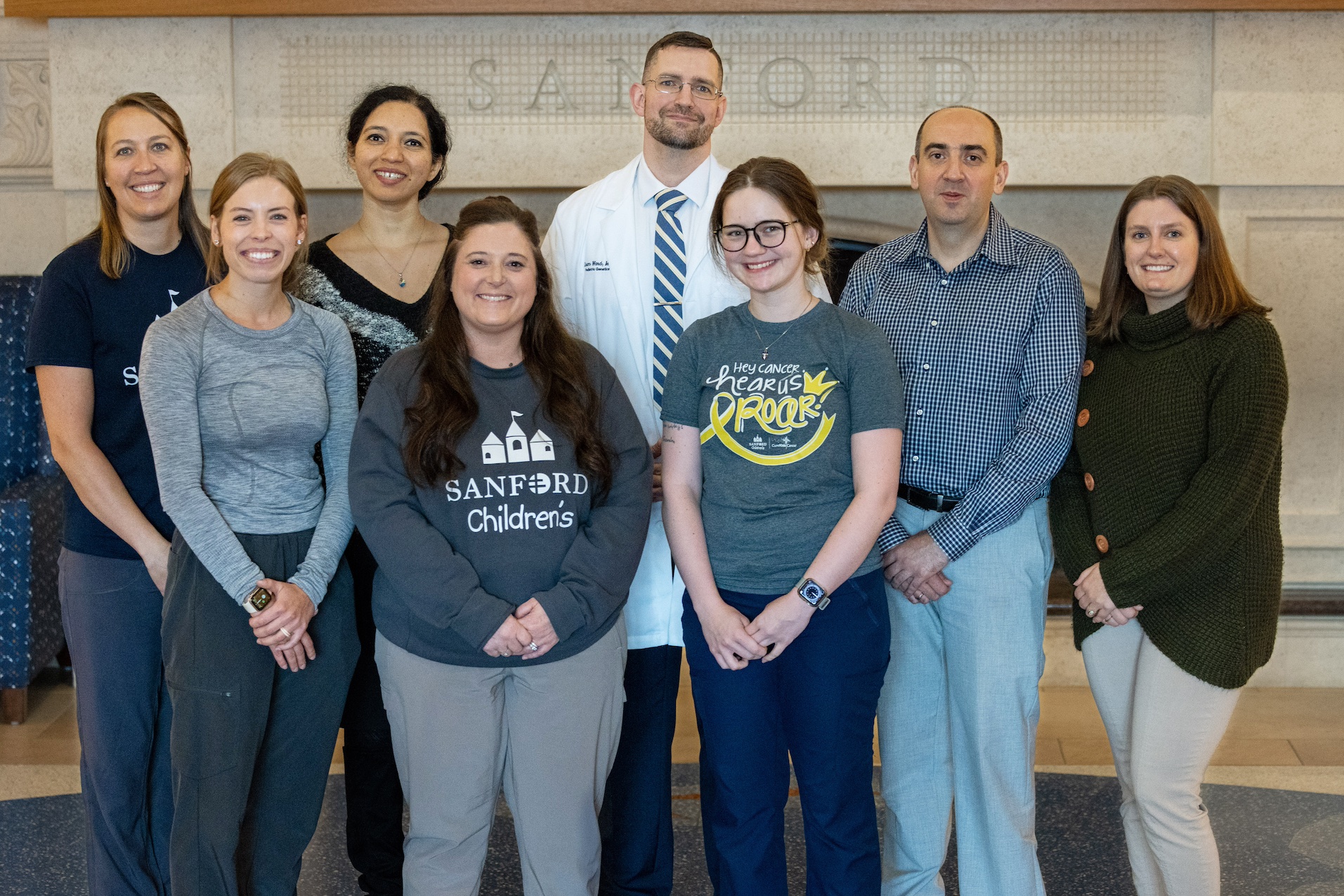
Around the same time Bernadette was born, Dr. D. Isum Ward, a pediatric geneticist at Sanford Children’s, was working with pediatric neurologists Dr. Shalome Dsouza, and Dr. Mohamad Saifeddine to establish a new multidisciplinary clinic designed to help kids who were showing signs of developmental delays.
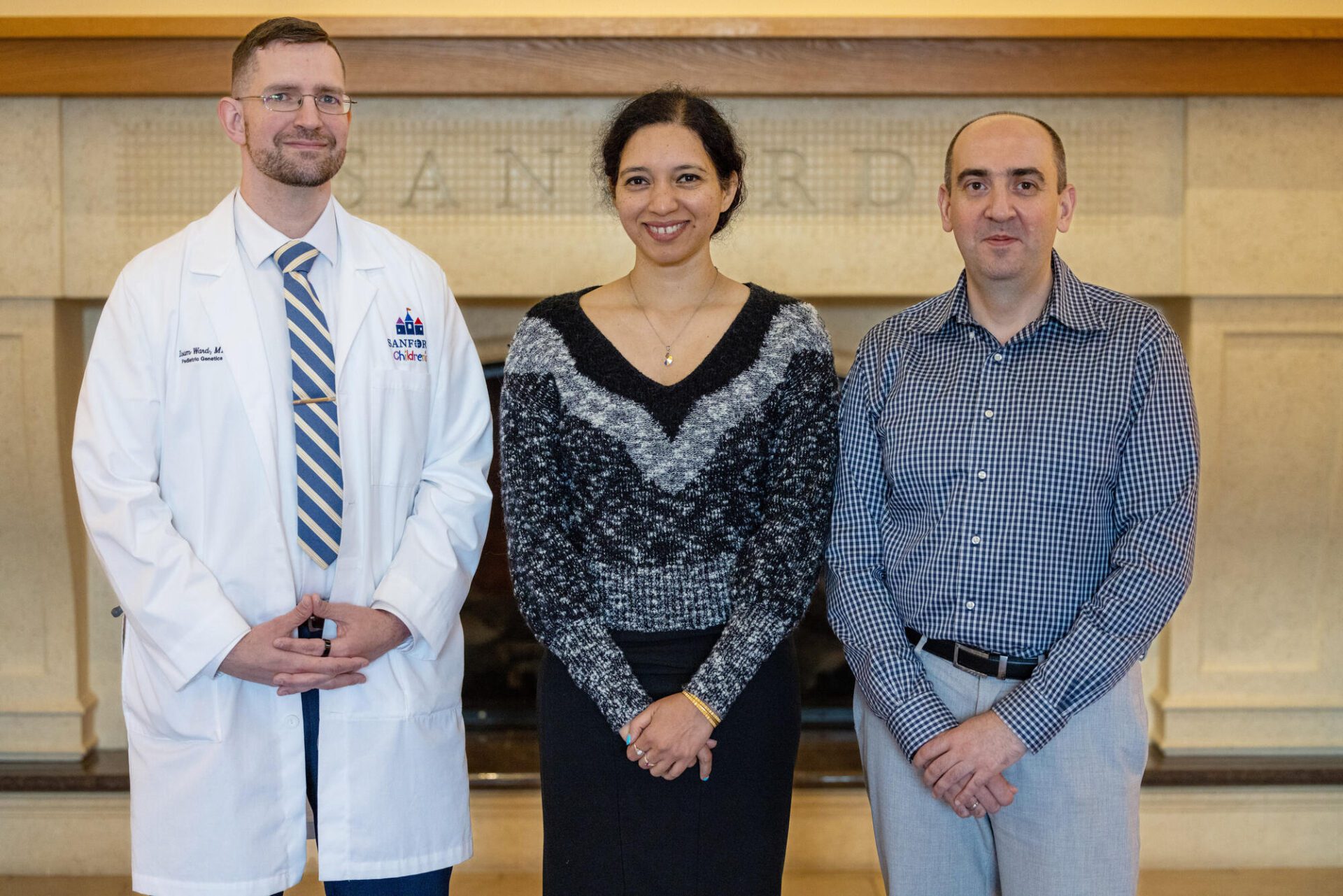
“We knew of a couple of patients who would’ve had better outcomes if their conditions had been recognized and diagnosed earlier,” Ward said. “We had the technology in the genetics department to get answers quickly. We just didn’t have way to identify who was at risk.”
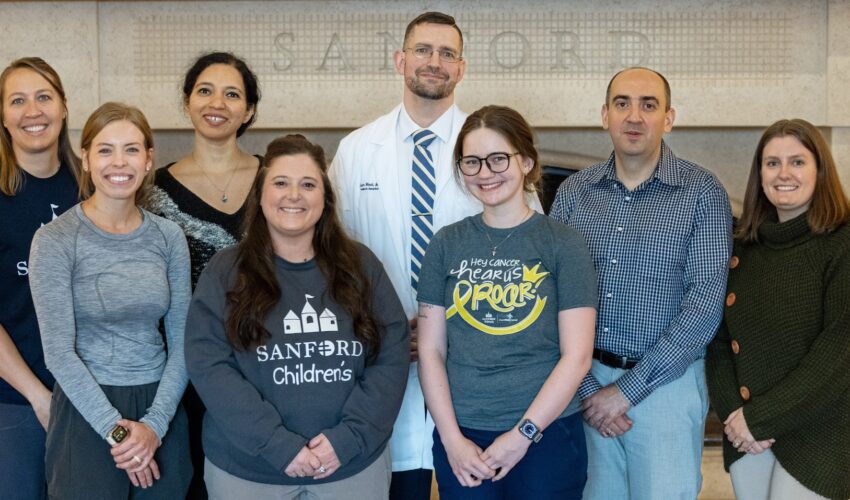
Together, the team launched the Early Neurogenetics Accelerated Group Evaluation, or ENGAGE, Clinic, where they use genetic testing as the first-line evaluation to establish a diagnosis.
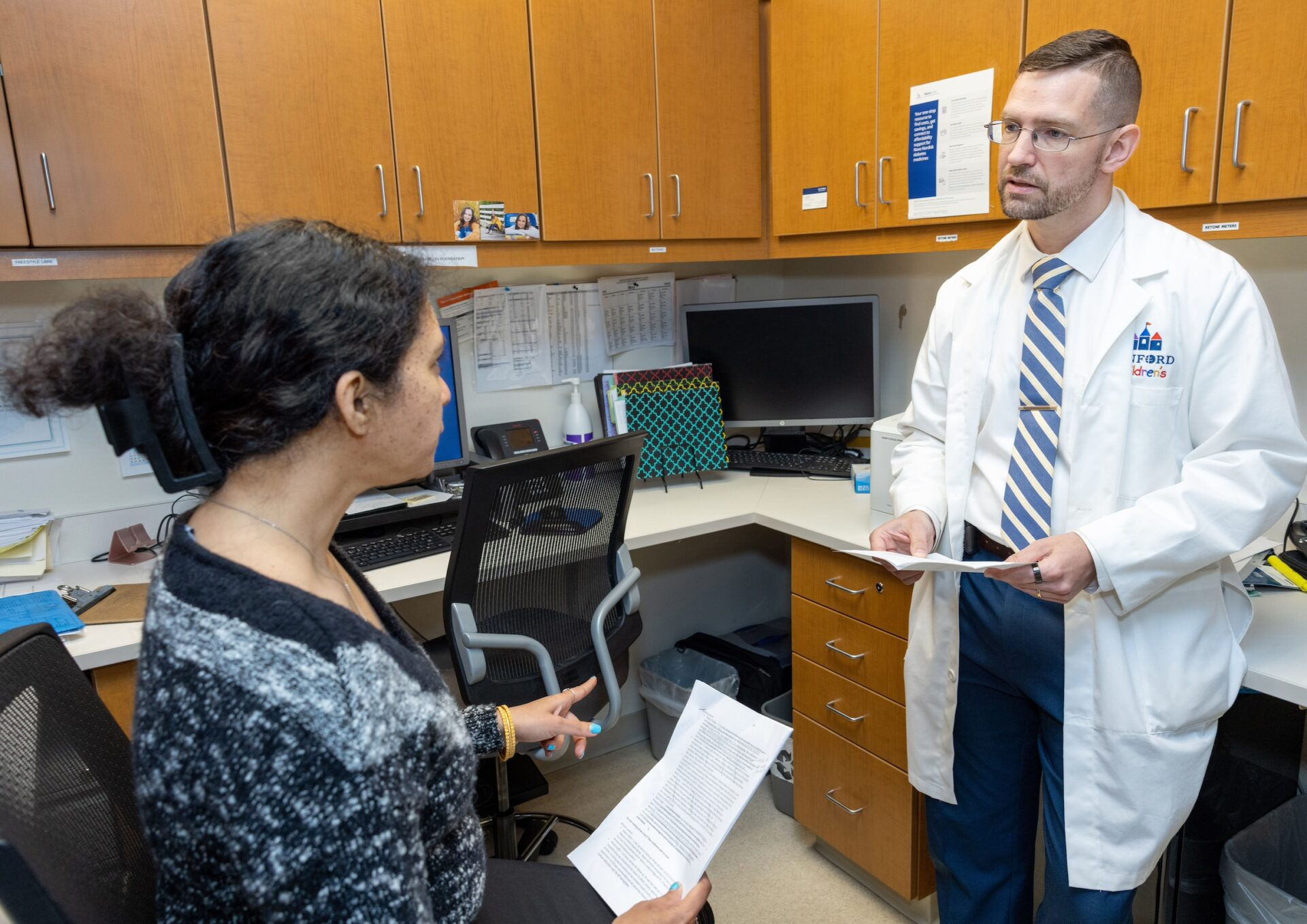
While it is a genetics-first approach, it’s not a genetics-only approach. A neurologist helps identify the nature of the delays. A genetic counselor prepares the family for testing and follows up on the results. Physical and occupational therapists help identify the practical needs of the child as the team works towards diagnosis. It takes the whole team to establish a plan for each patient.
This cross-specialty strategy isn’t unique. The ENGAGE Clinic is one of almost 20 multidisciplinary clinics at Sanford Children’s. For families with children facing complex diagnoses, the convenience of seeing multiple providers at once and having them work together for your child is powerful.
“Here in the Midwest, people may drive quite far for an appointment,” Ward said. “It’s a big deal to be able to see everybody in one trip.”
And even though the Heptigs live in Sioux Falls, they are young, working parents who are busy caring for their two children. A one-stop appointment for Bernadette was appealing.
And for the team at the ENGAGE Clinic, Bernadette’s needs aligned perfectly with the care they offered.
Finding answers for Bernadette
The Heptigs first met Ward during Bernadette’s initial evaluation. Soon after genetic testing, he gave them her diagnosis: Type A congenital disorder of glycosylation.
“I had never heard about it before,” Heptig said. “It’s a very, very rare thing.”
In genetics, there is no such thing as a “typical” diagnosis. Since starting the clinic a year and half ago, the team has yet to make a repeat diagnosis.
“Any individual genetic condition usually occurs one-in-thousands but often even one-in-tens-of-thousands,” Ward said.
Bernadette’s diagnosis revealed she should be seeing more specialists.
“She needed a hematologist, an immunologist, evaluations of her heart, swallowing function and kidneys – it’s a whole-body condition,” Ward said.
Though Bernadette’s care has grown beyond just the ENGAGE Clinic, her family is grateful for the access to specialty care Sanford Children’s provides.
“We’ll probably be coming to Sanford Children’s Hospital until she’s 18,” Heptig said. “And it’s very convenient to have all of her doctors in one place.”
Cutting-edge care unlike anywhere else
The ENGAGE Clinic is designed to reach patients early – typically before their second birthday. The sooner a neurodevelopmental delay is addressed, the more likely a patient is to have positive outcomes.
“If a child under 2 years old has any health concern that’s related to the brain, they get seen within two weeks of referral,” Ward said. “To my knowledge, there’s nowhere else in the country where you can call and get a neurogenetics appointment this quickly.”
For a clinic that only meets once a week, it’s an impressive timeline that the team is proud of.
“We can share ideas, coordinate activities and make quick decisions,” Ward said. “And patients get better care because of that dynamic exchange of information.”
Learn more about specialized care for kids at sanfordhealth.org.